


Cartridge Dust Collector Filter
In industrial environments, maintaining air quality and protecting downstream equipment from particulate contamination is a critical operational requirement. The cartridge dust collector filter serves as the primary component in modern dust collection systems, offering a high-efficiency alternative to traditional baghouse filters. For engineers and facility managers, selecting the appropriate filtration media and structural design is essential to balance filtration efficiency, energy consumption, and long-term durability.
As a specialist in custom stainless steel filtration solutions, Kaifil provides the technical expertise required to navigate the complexities of industrial air filtration. Whether dealing with high-temperature exhaust, corrosive chemical vapors, or abrasive particulates, understanding the engineering fundamentals of cartridge filters is the first step toward optimizing system performance. For more information on our full range of industrial solutions, you may visit our Main Page to review product options and application support.
The Evolution of Industrial Dust Collection Technology
Historically, industrial dust collection relied heavily on fabric filter bags. While effective for many applications, baghouses often require large footprints to accommodate the necessary filtration surface area. The transition to cartridge dust collector filters represented a significant shift in engineering design. By utilizing pleated media, cartridge filters provide a much higher surface-area-to-volume ratio than cylindrical bags.
This compact design allows for smaller collector housings, which is particularly advantageous in facilities with limited floor space. Furthermore, the rigid structure of a cartridge filter—often supported by internal metal cores and external cages—enables more effective cleaning via pulse-jet systems. In demanding industrial sectors such as chemical processing and metalworking, the shift toward high-performance metal-based or reinforced cartridge components has improved the reliability of these systems under extreme conditions.
Design Parameters of High-Performance Cartridge Filters
The performance of a cartridge dust collector filter is determined by several interlocking design parameters. Engineers must evaluate these factors based on the specific characteristics of the dust and the air stream being treated.
Pleat Geometry and Spacing
The primary advantage of a cartridge filter is its pleated structure. However, pleat density must be carefully engineered. If pleats are too tightly packed, the "bridge" effect can occur, where dust becomes trapped deep within the pleat folds and cannot be dislodged during the cleaning cycle. This leads to a rapid increase in differential pressure and reduced filter life. High-quality filters utilize specialized spacing techniques, sometimes involving embossed media or synthetic separators, to ensure the pleats remain open and accessible for both filtration and cleaning.
Structural Integrity
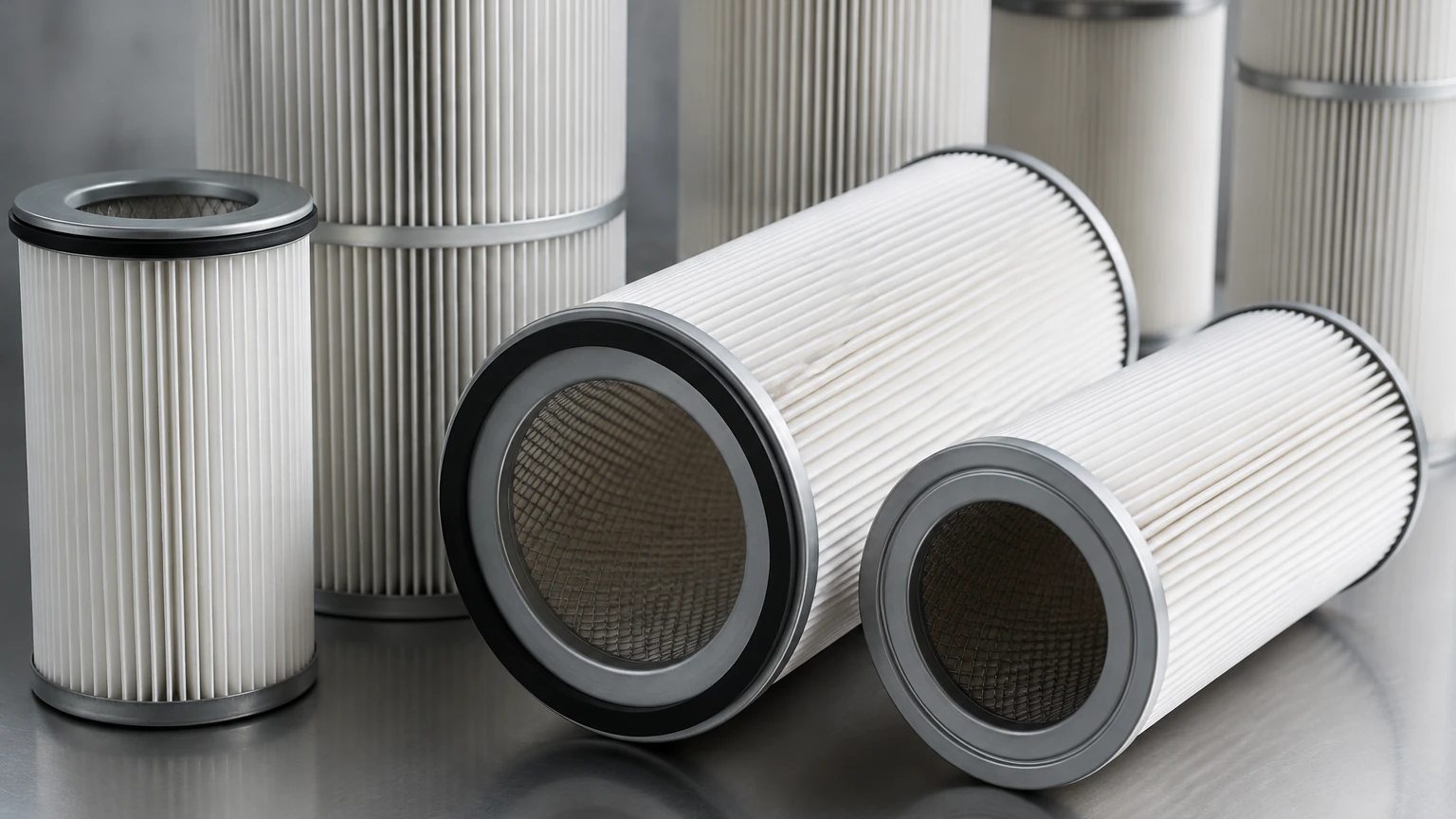
Unlike liquid filters, dust collector cartridges are subjected to frequent high-pressure pulses of compressed air during the cleaning cycle. This requires robust structural components. A typical industrial-grade cartridge includes:
* Inner Core: Usually made of perforated stainless steel or galvanized steel, providing the necessary collapse strength.
* End Caps: These must be securely bonded to the media to prevent bypass. In corrosive or high-temperature environments, stainless steel end caps are preferred over plastic or thin-gauge metal.
* Gaskets: High-performance gaskets (such as EPDM, Silicone, or Viton) ensure a leak-proof seal against the collector manifold.
Material Selection: Stainless Steel and Precision Metal Media
While many standard cartridge filters use cellulose or polyester media, specialized industrial applications often demand the durability of metal. Kaifil specializes in stainless steel wire mesh and sintered metal components that are integrated into cartridge designs for the most challenging environments.
Stainless Steel Wire Mesh
For applications involving high temperatures or abrasive particles, stainless steel wire mesh is an ideal filtration medium. It offers precise pore sizes, excellent mechanical strength, and the ability to be cleaned and reused multiple times. In a cartridge dust collector filter, wire mesh can serve as the primary filtration layer or as a protective support for finer membranes.
Chemical and Thermal Resistance
In chemical processing and pharmaceutical manufacturing, filters are often exposed to aggressive solvents or acidic vapors. 304 or 316L stainless steel provides the necessary corrosion resistance to maintain structural integrity where synthetic materials would degrade. Furthermore, in metal smelting or power generation, where exhaust temperatures can exceed the melting point of standard polymers, metal-based cartridge components are the only viable solution for long-term operation.
Operational Efficiency: Filtration Mechanisms and Pressure Management
Understanding how a cartridge dust collector filter captures particles is vital for selecting the right micron rating. Filtration occurs through four primary mechanisms:
1. Inertial Impaction: Larger particles strike the filter fibers directly due to their momentum.
2. Interception: Mid-sized particles follow the airflow but come into contact with the fibers as they pass.
3. Diffusion: Very small particles (sub-micron) move erratically due to Brownian motion, eventually hitting a fiber.
4. Sieving: Particles larger than the pore size are physically blocked.
The Importance of Differential Pressure
Differential pressure (the difference in pressure between the dirty side and the clean side of the filter) is the most critical metric for monitoring filter health. A high differential pressure indicates that the filter is loaded with dust and requires cleaning or replacement. By selecting a filter with high permeability and optimized pleat geometry, facilities can maintain a lower baseline differential pressure, which significantly reduces the energy required by the system's fan or blower.
Customization and OEM Engineering for Specialized Applications
Every industrial facility has unique requirements based on their specific dust characteristics—such as particle size distribution, moisture content, and explosivity. Standard off-the-shelf filters often fall short in specialized environments. This is where OEM and customized filtration solutions become essential.
Customization options include:
* Tailored Dimensions: Adjusting the height, outer diameter, and inner diameter to fit legacy collector housings.
* Specialized Coatings: Applying PTFE membranes for better dust release or antistatic treatments for combustible dust applications.
* Enhanced Support: Utilizing heavier gauge stainless steel cores for high-vacuum or high-pressure systems.
By working closely with a manufacturer like Kaifil, engineers can develop filtration components that are specifically engineered for the rigors of their process, ensuring higher reliability and fewer unplanned shutdowns.
Maintenance Protocols and Service Life Optimization
The longevity of a cartridge dust collector filter depends heavily on the effectiveness of the cleaning system and the maintenance schedule. Most modern collectors use a pulse-jet cleaning mechanism, where a burst of compressed air is fired down the center of the cartridge, expanding the media and shedding the accumulated dust cake.
Pulse-Jet Optimization
For effective cleaning, the pulse pressure and duration must be correctly calibrated. If the pulse is too weak, the dust cake remains; if it is too strong, it can damage the media or force fine particles deeper into the substrate (pore blinding). Regular inspection of the pulse valves and solenoids is a critical maintenance task.
Replacement Cycles
While metal-based filters offer significantly longer lifespans and can often be ultrasonically cleaned, all filters eventually reach the end of their service life. Signs that a cartridge needs replacement include:
* Inability to return to a low baseline differential pressure after cleaning.
* Visible dust emissions on the clean side of the collector (indicating a leak or media rupture).
* Physical deformation of the cartridge structure.
Evaluating Total Cost of Ownership in Industrial Filtration
When purchasing a cartridge dust collector filter, the initial purchase price is only one component of the total cost of ownership (TCO). A comprehensive evaluation should include:
* Energy Costs: Filters that maintain a lower differential pressure require less fan power, leading to substantial energy savings over time.
* Maintenance Labor: Higher-quality filters that last longer reduce the frequency of filter changes, saving labor costs and reducing system downtime.
* Compressed Air Consumption: Efficient dust release reduces the frequency of cleaning pulses, saving expensive compressed air.
* Waste Disposal: Durable, cleanable filters (such as stainless steel mesh options) generate less waste compared to disposable cellulose cartridges.
For many high-demand industrial applications, investing in precision-engineered metal filtration components provides a much lower TCO despite a higher upfront cost. These filters offer the reliability needed to maintain compliance with environmental regulations and protect the health of the workforce.
Conclusion
Selecting the right cartridge dust collector filter is a complex engineering decision that impacts the efficiency, safety, and profitability of industrial operations. By focusing on material compatibility, structural integrity, and optimized design, technical professionals can ensure their dust collection systems perform at peak capacity.
Kaifil remains committed to providing high-performance, customized stainless steel filtration solutions that meet the rigorous demands of the modern industrial landscape. From initial design and material selection to OEM production, our goal is to deliver dependable components that solve the most challenging filtration problems. To explore our technical capabilities and product range further, please visit our Main Page and connect with our engineering team for personalized support.
