


Natural Gas Fuel Filter
In industrial power generation, chemical processing, and large-scale heating systems, the purity of the fuel stream is a primary determinant of equipment longevity and operational efficiency. A natural gas fuel filter serves as the critical line of defense between the gas supply line and sensitive downstream components such as gas turbines, internal combustion engines, and high-pressure burners. Without effective filtration, contaminants inherent in the gas stream—ranging from pipeline scale to compressor oil aerosols—can cause catastrophic mechanical failure, inefficient combustion, and frequent unscheduled downtime.
For engineers and procurement professionals, selecting the appropriate filtration system requires a deep understanding of the specific contaminants present, the flow dynamics of the system, and the material science behind the filter elements. As a specialized manufacturer of stainless steel filtration solutions, Kaifil provides the technical expertise and custom manufacturing capabilities necessary to meet these demanding industrial requirements. For more information on our full range of capabilities, visit our Main Page.
The Critical Role of Filtration in Natural Gas Systems
Natural gas, while often considered a "clean" fuel, is rarely free of impurities when it reaches the point of use. These impurities enter the stream during extraction, transportation through aging pipeline infrastructure, or via compression stations. The primary objective of a natural gas fuel filter is to ensure that the gas entering the combustion chamber or turbine meets the strict cleanliness specifications set by equipment manufacturers (OEMs).
Protecting Downstream Equipment
In gas turbines, even microscopic particulates can cause erosion on high-speed turbine blades, leading to aerodynamic imbalances and reduced efficiency. In reciprocating engines, contaminants can clog fuel injectors or cause abrasive wear on cylinder liners. High-efficiency filtration prevents these issues by capturing solids and liquids before they reach the engine's fuel rail.
Maintaining System Efficiency
Contaminants in the fuel stream can lead to fouling of heat exchangers and control valves. By removing these substances, filters help maintain the intended flow rates and thermal efficiency of the system. This not only reduces fuel consumption but also extends the intervals between major overhauls.
Identifying Common Contaminants in Natural Gas
To specify the correct natural gas fuel filter, one must first identify what needs to be removed. Contaminants in natural gas are generally categorized into three types: solids, liquids, and aerosols.
Solid Particulates
These include pipe scale (iron oxide), sand, grit, and weld slag. These materials are often found in newer pipelines or those undergoing maintenance. Solid particles are typically abrasive and can cause rapid wear on moving parts and precision orifices.
Liquid Contaminants
Water and liquid hydrocarbons (condensates) are common in natural gas streams. If these liquids reach the combustion zone, they can cause "slugging," which leads to flame instability or physical damage to the equipment. Furthermore, water in the presence of carbon dioxide or hydrogen sulfide can form corrosive acids that attack the fuel system piping.
Aerosols and Mists
Compressor oil carryover is a frequent challenge in natural gas distribution. These fine oil mists (aerosols) are too small to be captured by standard particulate filters and require specialized coalescing technology to be effectively removed from the gas stream.
Engineering Considerations for Stainless Steel Filter Elements
When designing or selecting a natural gas fuel filter, the material of the filter element is paramount. Stainless steel is the industry standard for high-reliability applications due to its mechanical strength and chemical resistance.
Material Selection: 304 vs. 316 Stainless Steel
Most industrial gas filters utilize 304 or 316L stainless steel wire mesh or sintered metal. 316L is preferred in environments where sour gas (containing H2S) is present, as it offers superior resistance to pitting and stress corrosion cracking. Stainless steel elements are also capable of withstanding high differential pressures without collapsing, a critical safety feature in high-pressure gas lines.
Micron Ratings and Filtration Efficiency
Filtration accuracy is measured in microns (μm). For natural gas applications, filters are typically rated from 0.3 microns for coalescing applications to 10-50 microns for coarse particulate removal. It is essential to distinguish between "nominal" and "absolute" micron ratings. An absolute rating ensures that 99.9% of particles above the specified size are captured, providing a higher level of protection for precision equipment.
Pleated vs. Cylindrical Designs
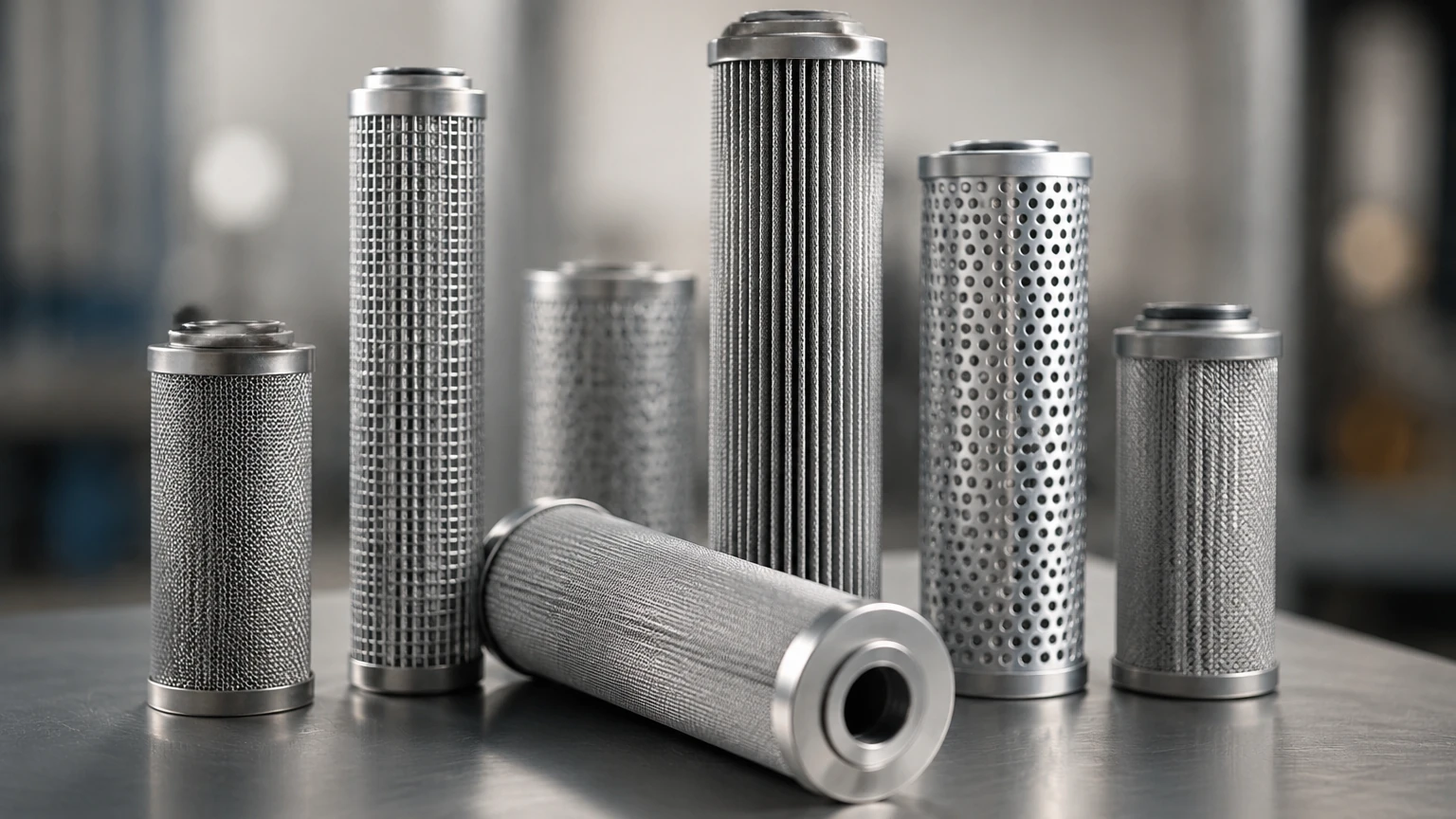
To maximize the surface area and extend the service life of the filter, many natural gas fuel filter elements use a pleated design. Pleating increases the effective filtration area within the same footprint, which reduces the initial pressure drop and allows for a higher dirt-holding capacity. For high-viscosity liquids or heavy particulate loads, robust cylindrical mesh filters may be used for their ease of cleaning and structural integrity.
Coalescing vs. Particulate Filtration: Choosing the Right Mechanism
Not all filters operate on the same physical principles. Depending on the contaminants identified, an engineer must choose between particulate filtration and coalescing filtration.
Particulate Filtration
Particulate filters use a barrier method (sieving) to trap solid particles on the surface or within the depth of the filter media. These are typically installed as "pre-filters" to protect more sensitive coalescing stages or as "last-chance" filters immediately upstream of the fuel injectors.
Coalescing Filtration
Coalescing filters are designed specifically to remove liquids and aerosols. As gas passes through the media (often a multi-layered stainless steel mesh or fiber matrix), small liquid droplets collide and merge into larger drops. These larger drops then drain by gravity to a sump at the bottom of the filter housing. This process is essential for removing compressor oil and water mists that would otherwise pass through a standard particulate filter.
Technical Selection Criteria for Industrial Gas Filters
Selecting the right natural gas fuel filter involves more than just matching a pipe size. Engineers must evaluate several technical parameters to ensure the filter performs reliably under all operating conditions.
1. Operating Pressure and Temperature: The filter housing and element must be rated for the maximum allowable working pressure (MAWP) of the system. Natural gas systems often operate at high pressures, requiring heavy-duty stainless steel constructions that meet ASME or equivalent pressure vessel codes.
2. Flow Rate and Velocity: High gas velocities can cause "channeling" in some filter media or lead to the re-entrainment of captured liquids. The filter must be sized to keep the velocity low enough for efficient capture while handling the peak flow requirements of the engine or turbine.
3. Allowable Pressure Drop (ΔP): Every filter introduces a restriction to the flow. A high initial pressure drop reduces the available fuel pressure at the engine. Selection should aim for a low clean pressure drop (typically <2-5 psi) to allow for a longer service life as the filter becomes loaded with contaminants.
4. Seal Compatibility: The O-rings and gaskets used in the filter housing must be compatible with the gas composition. Viton (FKM) or Buna-N (NBR) are common choices, but specialized elastomers may be required for gases containing high concentrations of aromatics or at extreme temperatures.
Optimizing Service Life and Maintenance Cycles
The total cost of ownership for a natural gas fuel filter is heavily influenced by its maintenance requirements. A well-engineered filtration system includes features that simplify monitoring and servicing.
Differential Pressure Monitoring
The most effective way to determine when a filter element needs replacement is by monitoring the differential pressure across the unit. Installing ΔP gauges or transmitters allows operators to track the loading of the filter in real-time. Elements are typically replaced when the pressure drop reaches a pre-defined limit (e.g., 15-25 psi), preventing the risk of element rupture or fuel starvation.
Cleanable vs. Disposable Elements
One of the primary advantages of stainless steel wire mesh filters is their cleanability. Unlike synthetic or paper cartridges, stainless steel elements can often be cleaned using ultrasonic baths or backflushing, significantly reducing long-term waste and replacement costs. However, for ultra-fine coalescing applications, disposable high-efficiency cartridges may still be necessary to ensure absolute purity.
Drainage Systems
For coalescing filters, the accumulation of liquids in the sump must be managed. Manual drain valves are common, but automated liquid drain traps are preferred in unmanned stations to prevent the sump from overflowing and allowing liquids to carry over into the downstream line.
Custom OEM Filtration Solutions from Kaifil
In many industrial applications, off-the-shelf filtration products fail to meet specific spatial constraints, pressure requirements, or filtration nuances. This is where custom engineering becomes vital. Kaifil specializes in the design and manufacture of bespoke stainless steel filtration components tailored to the unique needs of the natural gas industry.
Our capabilities include:
* Custom Micron Ratings: Engineering mesh structures to provide exact filtration levels for specific fuel types.
* High-Pressure Construction: Manufacturing filter elements capable of withstanding extreme differential pressures without deformation.
* Specialized Alloys: Utilizing 316L, Monel, or Inconel for highly corrosive or high-temperature gas streams.
* OEM Integration: Working directly with equipment manufacturers to develop integrated filtration solutions that fit within compact engine skids or turbine enclosures.
By focusing on precision manufacturing and rigorous quality control, Kaifil ensures that every natural gas fuel filter component provides the reliability required for critical industrial infrastructure. Whether you are looking to replace existing elements or design a new filtration system from the ground up, our team provides the technical support necessary to optimize your fuel gas conditioning process.
For technical specifications, selection advice, or to discuss your specific project requirements, please contact our engineering team through our Main Page. We are committed to delivering high-performance filtration solutions that protect your assets and enhance your operational efficiency.
