


Micron Bag Filter
In industrial liquid processing, the micron bag filter serves as a fundamental component for removing particulate matter from fluid streams. These filters are utilized across a wide spectrum of industries, from chemical processing and water treatment to food and beverage production. Choosing the correct micron bag filter requires a deep understanding of filtration mechanics, material science, and the specific hydraulic demands of the application. For engineers and procurement teams, the goal is to balance filtration efficiency with operational longevity and cost-effectiveness.
Industrial filtration systems often rely on bag filters due to their high dirt-holding capacity and relatively simple installation. However, the term "micron bag filter" encompasses a vast array of technical specifications. Navigating these options requires an analysis of micron ratings, material compatibility, and the structural integrity of the filter media.
The Fundamentals of Micron Ratings in Industrial Filtration
The most critical specification of any micron bag filter is its micron rating. A micron (micrometer) is one-millionth of a meter. In filtration, this rating indicates the size of the particles that the filter media is designed to capture. However, the rating itself is not a binary indicator of performance; it must be understood through the lens of efficiency.
Nominal vs. Absolute Ratings
Most standard felt or mesh bag filters are "nominally" rated. A nominal rating suggests that the filter will trap a high percentage (typically 60% to 80%) of particles at the specified micron size. This is suitable for applications where total removal of every single particle is not required, such as pre-filtration or general industrial cooling water.
In contrast, "absolute" ratings refer to filters that can capture 99% or more of particles at the specified size. Achieving absolute filtration usually requires multi-layered media or high-precision metal mesh. Engineers must determine the sensitivity of downstream equipment or the purity requirements of the final product to decide between nominal and absolute ratings. Over-specifying an absolute filter for a non-critical process can lead to premature clogging and unnecessary operational costs.
Material Compatibility and Selection Criteria
The chemical and thermal environment of the application dictates the material of the micron bag filter. Selecting the wrong material can lead to fiber migration, chemical degradation, or structural failure of the filter bag.
Synthetic Fibers
* Polypropylene: The most common material for bag filters due to its excellent chemical resistance to acids and alkalis. It is generally limited to temperatures below 200°F (93°C).
* Polyester: Preferred for higher temperature applications (up to 300°F or 149°C) and provides good resistance to most oxidizing agents and petroleum solvents.
* Nylon: Often used in monofilament mesh bags, nylon offers good resistance to alkalis and solvents but is sensitive to certain acids.
Stainless Steel and Precision Metal Mesh
For demanding industrial environments, stainless steel wire mesh becomes the material of choice. While synthetic bags are often disposable, stainless steel components—such as those produced by Kaifil—offer durability and reusability. Stainless steel mesh is essential for high-pressure systems, cryogenic applications, or processes involving aggressive solvents that would degrade synthetic polymers. By visiting the Main Page, technical teams can explore how custom metal filtration components integrate into high-performance systems to provide consistent micron-level precision.
Engineering Performance: Flow Rates and Pressure Drop
When integrating a micron bag filter into a system, engineers must calculate the expected flow rate and the resulting pressure drop (Delta P). The pressure drop is the difference in pressure between the upstream and downstream sides of the filter.
Initial and Terminal Pressure Drop
Every filter creates an initial pressure drop when clean. As the micron bag filter captures contaminants, the pores of the media become restricted, and the pressure drop increases. Engineers must define a "terminal pressure drop"—the point at which the bag is considered full and must be replaced or cleaned.
Operating a filter beyond its terminal pressure drop risks several failures:
1. Bypass: High pressure can force particles through the media or around the seals.
2. Structural Failure: The filter bag may burst, releasing all captured contaminants into the downstream flow.
3. Pump Strain: The increased resistance can cause excessive wear on system pumps.
To optimize performance, the filter housing should be sized so that the initial pressure drop is minimal (typically less than 2 PSI). This provides the maximum "dirt-holding" window before the bag reaches its terminal limit.
Construction Details: Seams, Rings, and Sealing
The efficiency of a micron bag filter is only as good as its seal. If fluid can bypass the filter media, the micron rating becomes irrelevant. There are two primary areas where bypass occurs: the seams of the bag and the interface between the bag and the housing.
Welded vs. Sewn Seams
Traditional bag filters are sewn together. While effective for many applications, the needle holes created during sewing can allow bypass of particles larger than the micron rating. For high-precision applications, welded seams are preferred. Ultrasonic or thermal welding fuses the material together, creating a seamless bond that ensures all fluid passes through the filter media.
Sealing Rings and Flanges
The top of the bag is fitted with a ring or flange designed to seat firmly within the filter housing. Common materials include:
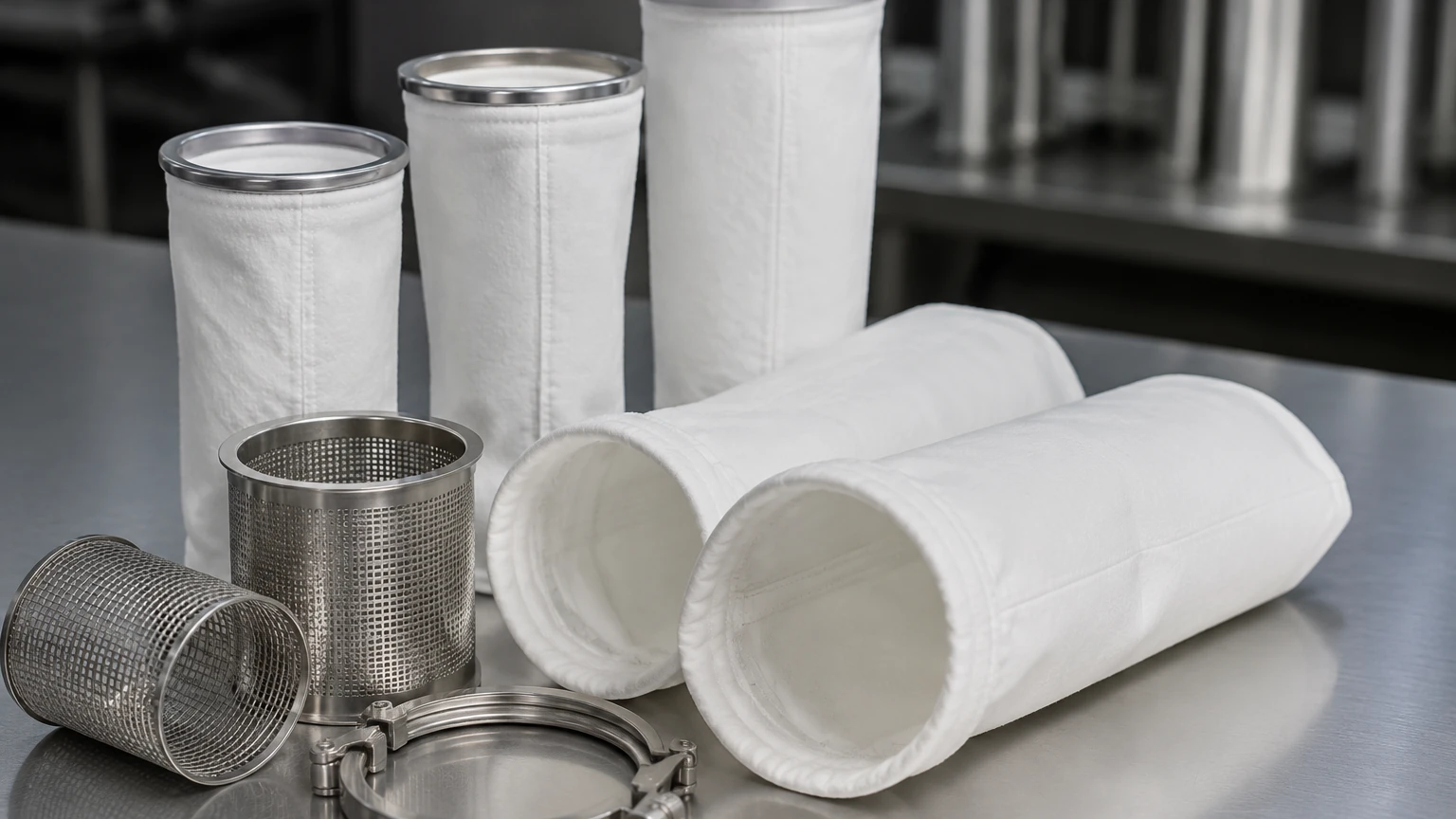
* Steel/Stainless Steel Rings: These provide a rigid seal and are often sewn into the top of the bag. They rely on the pressure of the housing lid to create a seal.
* Plastic Flanges (V-Rings): Often made of polypropylene or polyester, these flanges are designed to snap into place, providing a more positive, leak-proof seal that is less dependent on lid pressure.
Application-Specific Requirements
Different industries have unique demands that influence the choice of a micron bag filter. Understanding these nuances is vital for successful implementation.
Chemical Processing
In chemical manufacturing, compatibility is the primary concern. The filter must withstand varying pH levels and potential solvent exposure. Precision is also key in catalyst recovery, where a specific micron bag filter is used to capture expensive catalyst particles for reuse.
Food and Beverage
Filters used in this sector must comply with FDA and international food safety standards. Materials must be non-shedding to prevent fiber migration into the product. Common applications include the filtration of edible oils, syrups, and beverages to ensure clarity and remove spoilage organisms.
Pharmaceutical and Biotech
These applications often require absolute-rated filters and high-purity materials. The micron bag filter may serve as a pre-filter to protect more expensive membrane filters downstream. Cleanliness and the ability to withstand sterilization processes (such as autoclaving or SIP) are critical.
Evaluating Total Cost of Ownership (TCO)
The purchase price of a micron bag filter is only a small fraction of its total cost. Engineers should evaluate the TCO by considering the following factors:
1. Labor Costs: How often does the bag need to be changed? Frequent changes in high-volume processes can lead to significant labor expenses and system downtime.
2. Disposal Costs: Synthetic bags are typically single-use. In some regions, disposing of used filters—especially those contaminated with hazardous chemicals—can be expensive.
3. Product Loss: Every time a filter housing is opened to change a bag, there is a risk of product loss or contamination.
4. Energy Consumption: A filter that operates at a high average pressure drop requires more pump energy than a more efficient or larger filter system.
In many high-demand scenarios, moving toward a custom stainless steel filtration solution can significantly reduce TCO. Reusable metal mesh filters can be cleaned and returned to service, eliminating the recurring cost of disposables and reducing the environmental footprint of the facility.
Customization and OEM Solutions
Standard off-the-shelf filters do not always meet the rigorous demands of specialized industrial equipment. Customization allows engineers to specify exact dimensions, micron ratings, and structural reinforcements. Whether it is a unique housing size or a requirement for reinforced mesh to handle high-viscosity fluids, custom engineering ensures that the filtration component performs reliably under specific stress conditions.
Manufacturers like Kaifil specialize in these custom configurations, providing the technical expertise needed to develop filtration components that fit seamlessly into OEM equipment. From selecting the appropriate grade of stainless steel to determining the optimal weave for a wire mesh filter, professional guidance is essential for achieving peak performance.
Conclusion: Making an Informed Selection
Selecting the right micron bag filter is a technical decision that impacts the efficiency, safety, and profitability of an industrial process. By focusing on factual performance data—such as absolute vs. nominal ratings, chemical compatibility, and hydraulic limits—engineers can ensure they choose a solution that meets their specific needs.
For those seeking reliable, high-performance filtration components, it is important to work with manufacturers who understand the complexities of industrial environments. Reviewing technical specifications and exploring custom capabilities on the Main Page can provide the necessary foundation for optimizing your filtration system. Whether you are filtering process water, chemicals, or food products, the right micron bag filter is the first line of defense in maintaining product quality and protecting downstream assets.
