


Technical Guide to Specifying and Installing Woven Wire Fence on T Posts
In industrial, agricultural, and specialized containment sectors, the structural integrity of a perimeter or barrier depends heavily on the synergy between the support structure and the mesh medium. While often associated with filtration, high-quality Woven Wire Mesh serves as a critical component in heavy-duty fencing systems. When engineers and project managers look to deploy a woven wire fence on t posts, the selection process transitions from simple hardware procurement to a detailed analysis of material science, mechanical tension, and environmental resistance.
This guide examines the engineering considerations required to successfully implement woven wire systems using T-posts, focusing on material grades, weave patterns, and the technical parameters that ensure long-term performance in demanding industrial environments.
The Fundamentals of Woven Wire Mesh in Structural Applications
Before discussing the installation of a woven wire fence on t posts, it is essential to understand the technical characteristics of the mesh itself. Unlike welded wire, where intersections are fused, woven mesh is created by interlacing wires over and under one another. This construction allows for a degree of flexibility and energy absorption that is vital for fences subjected to physical impact or high wind loads.
Weave Types and Mechanical Stability
Industrial mesh is typically produced in several weave styles, each offering different levels of structural rigidity:
1. Plain Weave: The most common specification where each warp wire crosses alternately over and under each shute wire. It provides a consistent aperture size and is the standard for most fencing applications.
2. Twill Weave: Used for heavier wire diameters that might be too stiff for plain weaving. This allows for a more robust mesh without sacrificing the precision of the opening.
3. Dutch Weave: While primarily used in high-pressure filtration, certain heavy-duty Dutch weaves are utilized in specialized security fencing where high density and opacity are required.
For those specifying materials for large-scale projects, reviewing Plain, twill and dutch woven wire mesh in SS304/316L — rolls, cut mesh and framed panels. Send mesh count or micron target for a technical quote. is a necessary step to determine which configuration aligns with the project's tensile requirements.
Engineering Requirements for Woven Wire Fence on T Posts
The choice of a T-post as a support structure is driven by its ease of installation and cost-effectiveness in varied terrains. However, when paired with Woven Wire Mesh, several engineering factors must be calculated to prevent system failure, such as post-spacing, embedment depth, and wire gauge.
Post Selection and Spacing
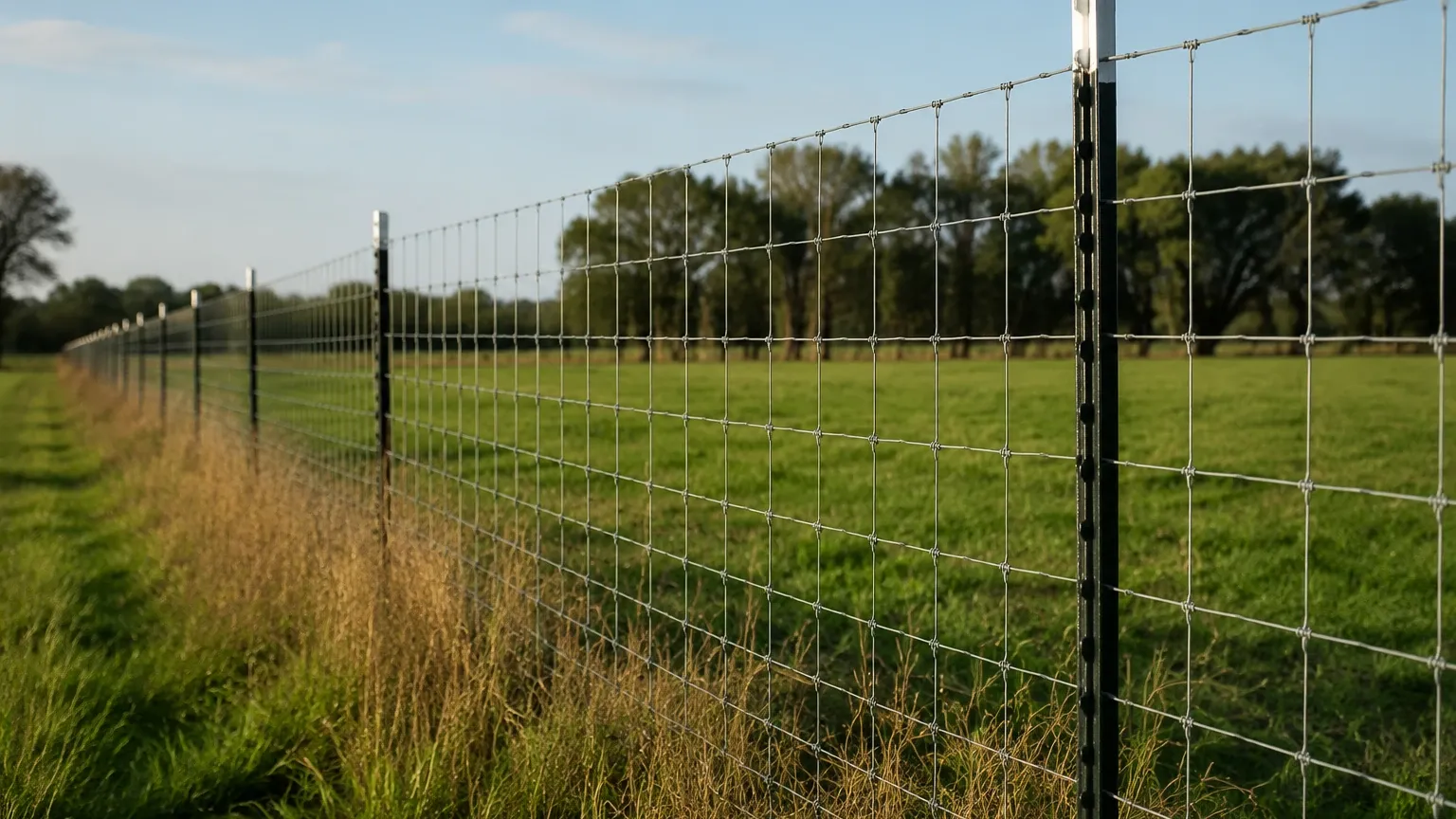
T-posts are typically manufactured from high-strength rail steel. For an industrial-grade woven wire fence on t posts, the weight of the mesh (especially if using 300-series stainless steel) requires posts with a higher weight per linear foot (typically 1.25 lbs/ft or 1.33 lbs/ft).
Spacing is generally recommended at 8 to 12 feet. Shorter intervals are necessary in areas with high wind shear or where the mesh is expected to contain heavy loads. If the mesh count is high or the wire diameter is thick, the increased surface area will create a "sail effect," necessitating deeper post-embedment and potentially the use of heavy-duty corner braces.
Load Distribution
One of the primary advantages of using woven wire on T-posts is the ability of the mesh to distribute tension across the entire horizontal plane. Unlike individual strands of barbed wire, the interlaced structure of the mesh ensures that a localized impact is dissipated across multiple wires and posts, reducing the likelihood of a breach.
Material Selection: SS304 vs. SS316L for Harsh Environments
Material longevity is the most significant factor in the total cost of ownership (TCO) for industrial fencing. While galvanized steel is common in standard agricultural settings, industrial environments—such as chemical processing plants, coastal facilities, or food production zones—require the superior corrosion resistance of stainless steel.
Grade 304 Stainless Steel
SS304 is the industry standard for general-purpose industrial mesh. It offers excellent resistance to oxidation and is suitable for most outdoor environments. It provides the necessary tensile strength to maintain a taut woven wire fence on t posts without excessive stretching over time.
Grade 316L Stainless Steel
In environments exposed to chlorides, saline air, or aggressive chemicals, SS316L is the preferred specification. The addition of molybdenum in 316L prevents pitting corrosion. For facilities located near the ocean or those using corrosive cleaning agents, 316L mesh ensures that the fence does not lose its structural integrity due to localized metal loss. Furthermore, the "L" (Low Carbon) designation in 316L improves weldability if the mesh needs to be framed or attached to custom brackets.
Step-by-Step Installation and Tensioning Techniques
Installing a woven wire fence on t posts requires precision to ensure the mesh does not sag. Sagging not only compromises the aesthetic and security of the barrier but also leads to premature wear at the contact points between the wire and the post.
1. Post Driving and Alignment
Posts must be driven into the ground using a manual or pneumatic post driver. The "anchor plate" or "spade" of the T-post must be fully submerged to provide lateral stability. Alignment is critical; even a minor deviation in the line of posts can cause uneven tension across the Woven Wire Mesh, leading to "waves" in the finished fence.
2. Corner and End Post Bracing
T-posts are excellent for line support but are generally insufficient for corners or ends where the highest tension is applied. Engineers should specify heavy-duty steel pipe or timber posts for corners, utilizing an "H-brace" or "N-brace" configuration to anchor the system. The woven mesh is then stretched between these braced points.
3. Stretching the Mesh
Using a fence stretcher or a come-along tool, the mesh is pulled taut. For stainless steel Woven Wire Mesh, it is important to reach the manufacturer-specified tension without exceeding the elastic limit of the wire. Over-stretching can thin the wire diameter and reduce the service life of the material.
4. Securing with T-Post Clips
The mesh is secured to the T-posts using specialized wire clips. These clips should be made of a compatible material (ideally stainless steel if using stainless mesh) to prevent galvanic corrosion. The clips should allow for slight movement to accommodate thermal expansion and contraction, which is particularly relevant for long runs of metal fencing.
Evaluating Filtration and Containment Performance
While this guide focuses on fencing, the technical overlap with filtration is significant. In many industrial B2B scenarios, a woven wire fence on t posts acts as a primary filter or screen. For example, in water treatment bypasses or debris containment systems, the mesh size (aperture) must be precisely calculated.
Mesh Count and Aperture Precision
The "mesh count" refers to the number of openings per linear inch. A higher mesh count provides finer containment but increases the weight and wind resistance. When selecting a mesh for a T-post installation, engineers must balance the need for containment (e.g., keeping out specific wildlife or debris) with the structural limitations of the support posts.
If the application requires high-precision filtration in addition to structural containment, the manufacturing quality of the Woven Wire Mesh becomes paramount. Inconsistent wire diameters or irregular weaving can lead to weak spots that fail under the tension required for a T-post fence.
Common Risks and Mitigation Strategies
Failure to properly specify a woven wire fence on t posts can lead to several common industrial issues:
* Galvanic Corrosion: Occurs when dissimilar metals (e.g., zinc-coated clips on stainless mesh) come into contact in the presence of an electrolyte. Always match the alloy of the fasteners to the mesh.
* Vibration Fatigue: In high-wind areas, the mesh can vibrate against the T-posts. Using rubber grommets or high-tension clips can mitigate the mechanical wear caused by this friction.
* Soil Heaving: In cold climates, frost heave can displace T-posts. Specifying longer posts that reach below the frost line is a standard engineering requirement for permanent installations.
Customization and OEM Manufacturing Capabilities
For many B2B applications, standard off-the-shelf fencing does not meet the rigorous demands of the site. This is where custom manufacturing becomes essential. Industrial suppliers like Kaifil provide customized solutions that go beyond standard rolls of mesh.
Project managers should confirm the following before procurement:
* Custom Slitting: Can the mesh be provided in specific widths to match the height of the T-posts without waste?
* Edge Treatments: For safety and structural integrity, are the edges of the mesh knuckled or welded to prevent fraying?
* Material Certification: Can the supplier provide MTRs (Material Test Reports) to verify the alloy composition (SS304/316L)?
By working with a manufacturer that understands both the filtration and structural properties of Woven Wire Mesh, engineers can ensure that their woven wire fence on t posts meets the specific mechanical and chemical requirements of their facility.
Conclusion: Selecting the Right Partner for Precision Mesh
Implementing a woven wire fence on t posts is a technical task that requires a deep understanding of material properties and mechanical forces. Whether the goal is perimeter security, debris containment, or a large-scale industrial barrier, the quality of the Woven Wire Mesh is the determining factor in the system's longevity and effectiveness.
By prioritizing high-grade stainless steel (SS304 or SS316L) and adhering to rigorous installation standards, organizations can deploy fencing solutions that withstand the most demanding industrial environments. For those in the planning stages of a project, consulting with a specialist in precision metal components ensures that the mesh specification is optimized for both performance and total cost efficiency.
