


Coalescer Cartridge Filter
In industrial fluid processing, the separation of immiscible liquids or the removal of liquid aerosols from gas streams is a critical requirement for protecting downstream equipment and ensuring product purity. The coalescer cartridge filter serves as the primary component in these separation systems. Unlike standard particulate filters that simply trap solid contaminants, a coalescer utilizes the physical properties of the fluid to merge small droplets into larger ones, facilitating gravity-based separation.
For engineers and procurement teams, selecting the right coalescer technology requires a deep understanding of fluid dynamics, material compatibility, and the specific requirements of the application. This guide explores the technical foundations of coalescer cartridge filters, their construction, and the engineering considerations necessary for optimal performance in demanding industrial environments.
The Engineering Principles of Coalescence
Coalescence is a multi-stage process designed to separate a discontinuous phase (the droplets) from a continuous phase (the main fluid). This is typically achieved through three distinct physical mechanisms occurring within the filter media:
1. Interception and Capture: As the contaminated fluid passes through the depth of the filter media, the dispersed droplets come into contact with the fibers or mesh. Because of the high surface energy of the media, these droplets are intercepted and held.
2. Merging (Coalescence): Once captured, the small droplets move along the fibers and collide with other droplets. These collisions cause the droplets to merge, forming larger, heavier drops. The efficiency of this stage depends heavily on the surface tension of the fluids and the hydrophobic or hydrophilic nature of the media.
3. Release and Separation: When the merged droplets reach a sufficient size, the drag force of the fluid flow overcomes the surface attachment force. These enlarged droplets are released from the downstream side of the media. Due to the difference in density between the two phases (e.g., water and oil), the large droplets either sink to the bottom or rise to the top of the housing for collection and removal.
In many high-performance systems, a coalescer cartridge filter is followed by a separator stage. The separator is typically made of a material that repels the coalesced phase (such as a hydrophobic stainless steel mesh for water-in-fuel applications), ensuring that only the clean continuous phase passes through.
Material Selection and Construction
The performance of a coalescer cartridge filter is largely determined by its construction materials and the arrangement of its media layers. While many standard coalescers use fiberglass or synthetic polymers, industrial-grade solutions often incorporate metal components for structural integrity and longevity.
Media Layers
High-efficiency coalescers often feature a graduated density structure. The inner layers provide pre-filtration to remove solid particulates that could clog the coalescing media. The middle layers consist of fine fibers designed specifically for droplet merging, while the outer layers facilitate the release of large droplets.
Structural Support
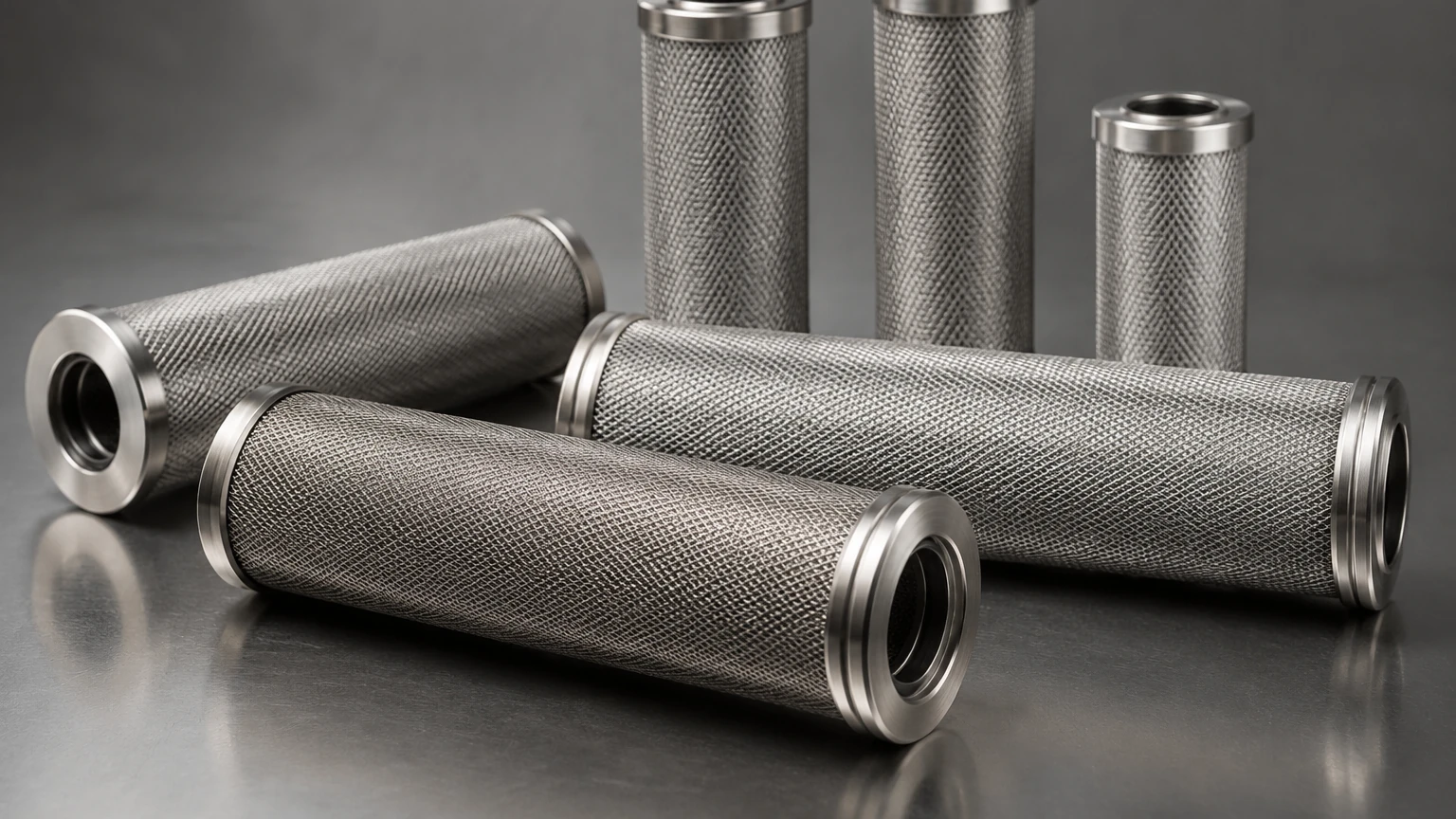
In high-pressure or high-viscosity applications, the internal support core and outer cage must withstand significant differential pressure. Stainless steel is the preferred material for these components due to its resistance to corrosion and mechanical stress. Manufacturers like Kaifil specialize in providing custom stainless steel components that ensure the coalescer remains stable under fluctuating flow conditions. For more information on custom metal filtration components, you can visit the Main Page.
End Caps and Seals
The choice of gaskets and end cap adhesives is vital for chemical compatibility. In the chemical processing and pharmaceutical industries, seals must be resistant to aggressive solvents and high temperatures. Common materials include Viton, EPDM, and PTFE, selected based on the specific fluid profile of the operation.
Key Performance Indicators for Engineers
When evaluating a coalescer cartridge filter, technical professionals must look beyond simple micron ratings. The following metrics are essential for determining the suitability of a filter for a specific process:
Separation Efficiency
Efficiency is often expressed as the percentage of the dispersed phase removed. For instance, a high-quality fuel coalescer might be required to reduce water content from 5,000 ppm to less than 5 ppm. This is influenced by the droplet size distribution in the influent and the flow velocity through the media.
Differential Pressure (Delta P)
The pressure drop across the coalescer is a critical factor in system design. A "clean" pressure drop indicates the initial resistance of the media, while the "terminal" pressure drop dictates when the cartridge must be replaced. High differential pressure can lead to "breakthrough," where the velocity of the fluid becomes so high that it shears the coalesced droplets back into smaller ones, negating the separation process.
Surface Tension and Surfactants
The presence of surfactants (surface-active agents) can significantly degrade coalescer performance. Surfactants lower the interfacial tension between the two liquids, making droplets more stable and harder to merge. Engineers must confirm if the fluid contains additives or contaminants that act as surfactants, as this may require specialized media treatments or a larger filtration footprint to reduce flux rates.
Applications Across Industrial Sectors
Coalescer cartridge filters are indispensable in any industry where fluid purity and equipment protection are paramount. Their versatility allows them to be adapted for both liquid-liquid and gas-liquid separation.
* Petrochemical and Refining: Removing water from hydrocarbons is essential to prevent corrosion in pipelines and protect downstream catalysts. Coalescers are used in the production of diesel, jet fuel, and gasoline to meet stringent international purity standards.
* Natural Gas Processing: In gas streams, coalescers remove liquid hydrocarbons and water aerosols. This protects compressors from liquid slugging and prevents the formation of hydrates that can block pipelines.
* Power Generation: Steam turbines and large diesel engines rely on clean lubricating oil and fuel. Coalescer filters remove moisture that can cause oil oxidation, bearing failure, and injector damage.
* Chemical Processing: During chemical synthesis, it is often necessary to separate aqueous and organic phases. Precision-engineered coalescers allow for continuous separation, improving process efficiency compared to traditional settling tanks.
Selection and Customization Considerations
Choosing an off-the-shelf coalescer is not always feasible for specialized industrial applications. Customization ensures that the filter is optimized for the specific flow rate, temperature, and chemical environment of the facility.
Sizing the System
One of the most common mistakes in coalescer selection is undersizing the housing. Coalescence is a velocity-sensitive process. If the fluid moves too quickly through the media, the droplets do not have sufficient time to merge and settle. Engineers should calculate the "flux rate" (flow per unit of surface area) to ensure it remains within the manufacturer's recommended limits for the specific fluid viscosity.
Compatibility and Durability
In harsh environments, such as offshore oil platforms or high-temperature chemical plants, standard synthetic filters may fail prematurely. Utilizing stainless steel wire mesh or sintered metal components can extend the service life of the filter assembly. These materials offer the advantage of being cleanable in some applications, though most high-efficiency coalescing stages are designed as disposable cartridges to ensure consistent performance.
Total Cost of Ownership (TCO)
While the initial purchase price of a coalescer cartridge filter is important, the TCO includes the cost of downtime, replacement frequency, and the potential damage to downstream equipment. A high-quality filter with a robust stainless steel support structure may have a higher upfront cost but provides greater reliability and lower long-term expenses through extended service intervals.
Maintenance and Troubleshooting
To maintain the integrity of a filtration system, a proactive maintenance schedule is required. The primary indicator of coalescer health is the differential pressure gauge. An abrupt increase in pressure usually indicates a high load of solid contaminants, which can blind the coalescing media. Conversely, a sudden drop in pressure might indicate media rupture or a failed seal, allowing bypassed fluid to contaminate the downstream flow.
Regular fluid analysis is also recommended. By monitoring the concentration of the dispersed phase in the effluent, operators can detect a decline in coalescing efficiency before it impacts the final product or equipment performance. If efficiency drops while the pressure remains normal, it may indicate the presence of surfactants or a change in the fluid's physical properties (such as temperature or viscosity) that the current filter was not designed to handle.
Conclusion
The coalescer cartridge filter is a sophisticated tool that relies on precise engineering and material science to achieve effective phase separation. For engineers, the key to success lies in understanding the interplay between fluid velocity, media properties, and the specific challenges of the application. By focusing on high-quality construction and appropriate sizing, industrial operations can achieve reliable, long-term filtration performance that protects critical assets and ensures product quality.
For those seeking specialized filtration solutions, partnering with a manufacturer that understands the nuances of custom metal components and industrial requirements is essential. Exploring the technical resources and product options available on the Main Page can provide further guidance in selecting the right filtration technology for your specific needs.
