


Cutting Oil Filtration
In the realm of precision machining and metalworking, the integrity of the cooling and lubrication system is paramount. Cutting oil filtration is not merely a peripheral maintenance task; it is a critical engineering process that directly influences tool longevity, surface finish quality, and the overall operational efficiency of CNC machines, lathes, and grinding equipment. As industrial demands for tighter tolerances and faster production cycles increase, the role of high-performance stainless steel filtration components becomes indispensable.
For engineers and facility managers, understanding the nuances of cutting oil filtration is essential for optimizing fluid life and reducing the total cost of ownership. By implementing robust filtration strategies, manufacturers can mitigate the risks associated with contaminated fluids, such as premature tool wear and machine downtime.
Understanding the Role of Cutting Oil Filtration in Precision Machining
Cutting oils serve multiple purposes: they lubricate the interface between the tool and the workpiece, carry away heat generated during the machining process, and flush away metal chips. However, as the oil circulates, it inevitably becomes contaminated with metallic fines, swarf, and external pollutants like tramp oil or atmospheric dust.
Effective cutting oil filtration systems are designed to remove these contaminants before the fluid is recirculated. Without adequate filtration, the metallic particles act as an abrasive slurry, leading to "secondary cutting." This phenomenon occurs when small chips are caught between the tool and the workpiece, causing micro-scratches, dimensional inaccuracies, and accelerated degradation of the cutting edge. By maintaining the purity of the oil, manufacturers ensure that the fluid performs its primary functions without introducing new variables into the machining environment.
Contaminant Types and Their Impact on Fluid Performance
To select the appropriate filtration solution, it is necessary to identify the specific types of contaminants present in the system. In most metalworking applications, contaminants fall into three categories:
1. Macro-particles (Chips and Swarf): These are the visible remnants of the machining process. While relatively easy to remove with coarse screens, if left unmanaged, they can clog pumps and settle in the sumps of machine tools.
2. Fine Particulates: Often ranging from 1 to 50 microns, these particles are the most damaging to precision components. They are small enough to enter the lubrication gap but hard enough to cause significant abrasive wear.
3. Chemical and Biological Contaminants: Tramp oils (leaked hydraulic or way oils) and bacterial growth can alter the chemical balance of the cutting oil, leading to reduced lubricity, foul odors, and skin irritation for operators.
High-quality stainless steel wire mesh filters are particularly effective at addressing fine particulates. Unlike disposable paper or fabric filters, stainless steel media provides consistent pore sizes and structural integrity, ensuring that even under high pressure, the filtration efficiency remains stable.
Evaluating Filter Media for Cutting Oil Applications
When specifying components for a cutting oil filtration system, the choice of filter media is the most critical decision. Stainless steel is often the preferred material for industrial applications due to its mechanical properties and resistance to the additives found in modern cutting fluids.
Stainless Steel Wire Mesh
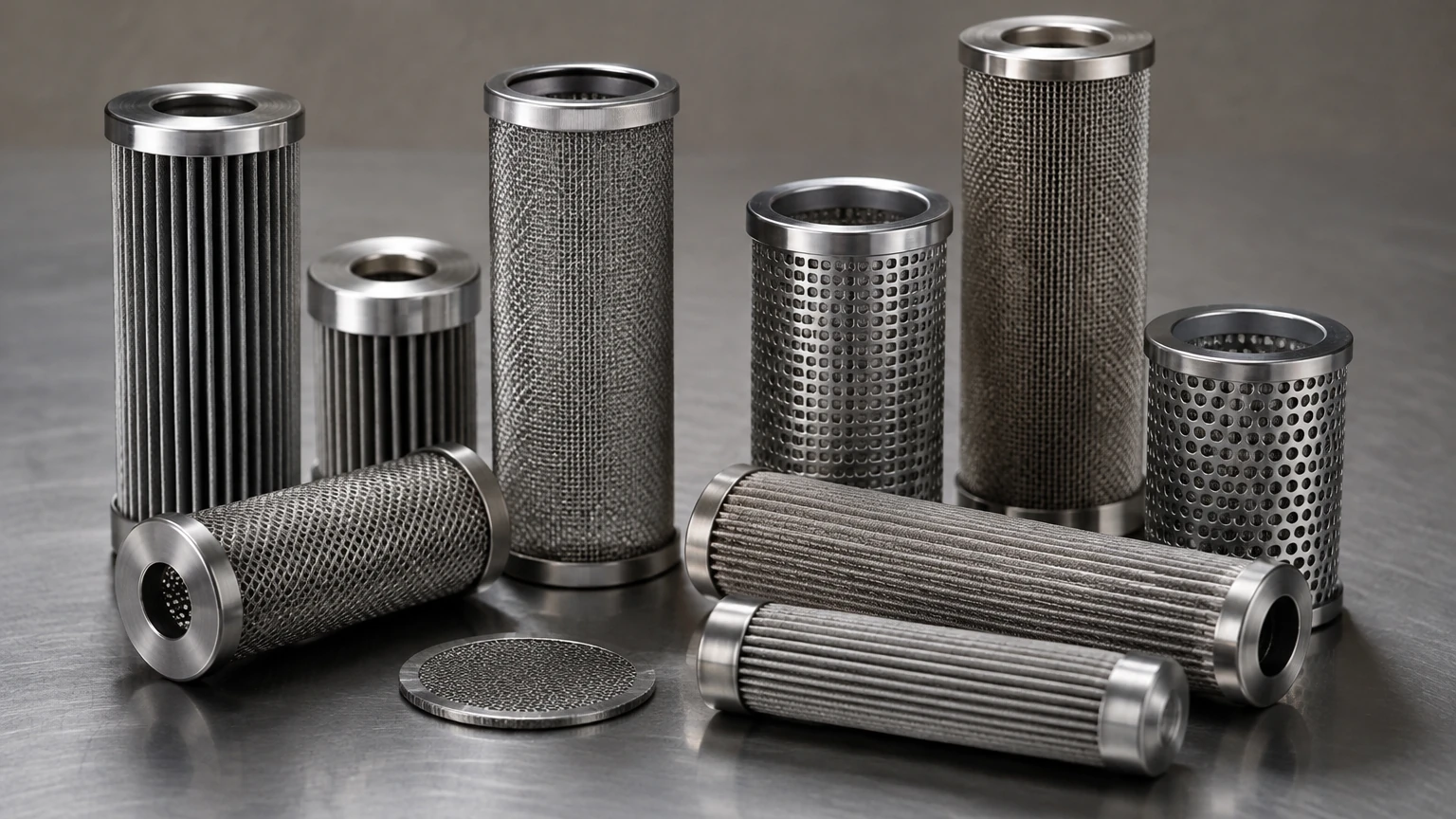
Stainless steel wire mesh filters offer precise surface filtration. They are characterized by their ability to be cleaned and reused, which significantly reduces the environmental impact and long-term consumable costs. For cutting oil applications, pleated wire mesh designs are frequently used to increase the effective filtration area, allowing for higher flow rates within a compact footprint.
Sintered Metal Fiber and Powder
For applications requiring extremely fine filtration (down to sub-micron levels), sintered metal components provide a depth-loading capability. These are ideal for high-pressure coolant systems where protecting high-speed spindles and through-tool cooling channels is a priority.
Material Compatibility
Most cutting oils contain extreme pressure (EP) additives, such as sulfur or phosphorus. These chemicals can be corrosive to certain polymers or low-grade metals. Utilizing 304 or 316L stainless steel ensures that the filter cartridge will not degrade or react with the fluid, maintaining the purity of the oil over thousands of cycles. For more information on specialized filtration components, visit our Main Page.
Technical Considerations: Flow Rate, Pressure Drop, and Micron Ratings
Engineering a filtration system requires a balance between several technical variables. An oversized filter may be unnecessarily expensive, while an undersized filter will lead to frequent bypass events or pump cavitation.
* Micron Rating: This defines the size of the particles the filter is intended to capture. For general machining, a 20-40 micron rating may suffice. However, for precision grinding or honing, filtration levels may need to reach 5 microns or less. It is important to distinguish between nominal and absolute ratings; absolute ratings provide a guaranteed capture rate for a specific particle size.
* Flow Rate (GPM/LPM): The filter must be able to handle the maximum output of the coolant pump. If the flow rate exceeds the filter's capacity, the differential pressure will rise rapidly, potentially triggering a bypass valve and allowing unfiltered oil back into the machine.
* Differential Pressure (ΔP): This is the difference in pressure between the inlet and outlet of the filter. A clean filter should have a low initial ΔP. As the filter captures contaminants, the ΔP increases. Monitoring this value is the most reliable way to determine when a stainless steel filter element requires cleaning.
Long-Term Operational Benefits and Cost Considerations
While the initial investment in a high-quality cutting oil filtration system using stainless steel components may be higher than using disposable alternatives, the total cost of ownership (TCO) is significantly lower.
1. Extended Fluid Life: By removing the fines that catalyze oxidation and bacterial growth, the interval between full oil changes can be doubled or even tripled.
2. Reduced Tooling Costs: Cleaner oil means less friction and heat at the cutting zone. This can lead to a 20-50% increase in tool life, depending on the material being machined.
3. Improved Part Quality: Consistency in fluid cleanliness leads to consistency in surface finish, reducing scrap rates and the need for secondary polishing operations.
4. Waste Reduction: Reusable stainless steel filters eliminate the need to dispose of oil-soaked cartridges, which are often classified as hazardous waste.
Customization and Engineering Requirements for OEM Solutions
Every machining environment is unique, and off-the-shelf filtration solutions may not always meet the specific requirements of a high-volume production line. Customization is often necessary to integrate filtration directly into the machine's footprint or to handle specific types of metal alloys, such as aluminum or titanium, which produce unique chip geometries.
When working with a manufacturer like Kaifil, engineers should be prepared to confirm the following specifications:
* Housing Dimensions: The physical space available for the filter assembly.
* Connection Types: Threaded (NPT/BSP), flanged, or quick-connect fittings.
* Operating Temperature and Pressure: Ensuring the filter can withstand the thermal and mechanical stresses of the system.
* Cleaning Methods: Whether the system will be manually cleaned or utilize an automated backwashing mechanism.
Customized stainless steel filter cartridges can be engineered with specific pleat counts and support cores to handle high-viscosity oils or high-pressure surges without collapsing.
Maintenance Protocols for Stainless Steel Filtration Components
To maintain the efficiency of cutting oil filtration, a disciplined maintenance schedule is required. Unlike disposable filters that are simply discarded, stainless steel elements are designed for restoration.
* Ultrasonic Cleaning: This is the most effective method for removing fine metallic dust embedded deep within the wire mesh. It uses high-frequency sound waves to create cavitation bubbles that dislodge contaminants without damaging the mesh structure.
* Chemical Cleaning: For filters contaminated with heavy oils or biological films, specialized degreasers or detergents can be used, provided they are compatible with the stainless steel grade.
* Inspection: During each cleaning cycle, the filter should be inspected for signs of mechanical wear, such as mesh fraying or seal degradation. Replacing O-rings and gaskets regularly is a low-cost way to prevent bypass leaks.
Conclusion: Selecting the Right Filtration Partner
Effective cutting oil filtration is a cornerstone of modern manufacturing excellence. By focusing on high-quality materials, precise engineering, and regular maintenance, facilities can achieve significant gains in productivity and sustainability. When selecting a filtration partner, it is vital to choose a manufacturer that understands the rigors of industrial environments and can provide the technical support necessary for complex applications.
Kaifil specializes in providing these high-performance, customized stainless steel filtration solutions. From material selection to final production, our expertise ensures that your machining processes remain clean, efficient, and cost-effective. For a comprehensive look at our capabilities and to discuss your specific filtration needs, please visit our Main Page.
