


Conical Strainer Pump Suction
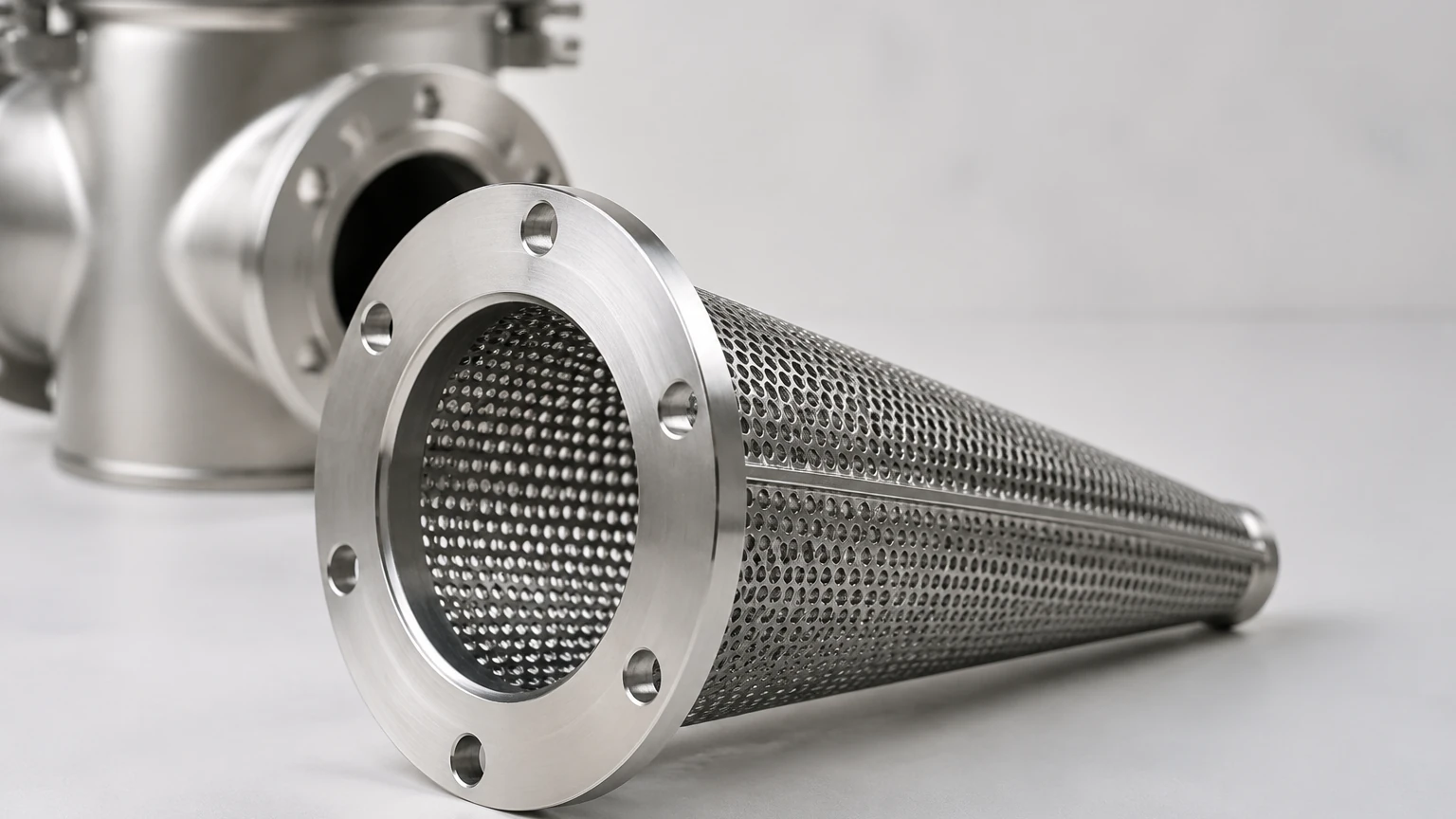
In industrial fluid handling systems, the protection of centrifugal and positive displacement pumps is a fundamental engineering requirement. Among the various methods used to safeguard these critical components, the conical strainer pump suction configuration remains one of the most effective and versatile solutions. Often referred to as "witch’s hat" strainers due to their distinct shape, these components are designed to capture oversized solids, welding slag, and debris that could otherwise cause catastrophic mechanical failure or significant abrasive wear to pump impellers and seals.
For engineers and procurement teams, selecting the correct conical strainer involves more than just matching a pipe diameter. It requires a deep understanding of fluid dynamics, material compatibility, and the specific operational parameters of the pump system. As a specialist in custom stainless steel filtration, Kaifil provides precision-engineered components that address these technical challenges across diverse industrial sectors.
The Role of Conical Strainers in Pump Systems
The primary function of a conical strainer in a pump suction line is to act as a mechanical barrier. During the commissioning phase of a new plant, pipes often contain debris such as scale, bolts, or construction waste. Even in established systems, process upsets or upstream equipment failures can introduce contaminants into the flow stream.
Unlike permanent basket strainers, which often require dedicated housings and significant space, a conical strainer is designed to be installed directly between two pipe flanges. This makes them an ideal choice for space-constrained environments or as a temporary measure during system startup. However, in many industrial applications, particularly those involving relatively clean fluids where occasional debris is the only concern, these strainers are used as permanent protection devices.
Engineering Considerations: Pressure Drop and NPSH
When designing a conical strainer pump suction assembly, the most critical technical factor is the impact on the pump’s Net Positive Suction Head (NPSH). Pumps require a specific amount of pressure at the suction inlet to prevent cavitation—a phenomenon where vapor bubbles form and collapse, leading to impeller damage and loss of efficiency.
Every filtration element introduces a pressure drop ($ΔP$). In suction applications, this $ΔP$ must be kept to an absolute minimum. To achieve this, engineers must evaluate the following:
1. Open Area Ratio: This is the ratio of the total area of the holes in the strainer to the cross-sectional area of the inlet pipe. A standard conical strainer typically offers a 100% to 300% open area. For high-viscosity fluids or systems where low pressure drop is mandatory, ratios of 500% or higher are often specified.
2. Flow Velocity: Higher velocities increase the pressure drop exponentially. Ensuring the strainer length is sufficient to distribute the flow across a larger surface area helps mitigate this risk.
3. Mesh vs. Perforation: A strainer can be constructed from perforated plate alone or reinforced with a fine wire mesh. While mesh provides finer filtration, it also increases resistance. The selection must balance the required filtration rating (microns) with the allowable pressure loss.
Material Selection for Industrial Environments
Industrial filtration components must withstand not only the mechanical stresses of flow but also the chemical environment of the process fluid. Kaifil utilizes high-grade stainless steel to ensure long-term durability and resistance to corrosion.
* Grade 304 Stainless Steel: Suitable for general industrial applications, water treatment, and non-corrosive chemical environments. It offers excellent structural integrity and cost-effectiveness.
* Grade 316/316L Stainless Steel: The preferred choice for the pharmaceutical, food and beverage, and chemical processing industries. The addition of molybdenum provides superior resistance to chlorides and pitting corrosion.
* Specialty Alloys: For highly aggressive environments involving acids or high temperatures, specialized materials may be required to prevent premature failure of the filter element.
Beyond the alloy, the construction method is vital. Precision welding and reinforced rings ensure that the strainer can withstand the differential pressure that occurs if the element becomes partially blinded by debris.
Design Variations and Customization
No two industrial processes are identical, which is why customization is a core component of effective filtration. When specifying a conical strainer pump suction solution, several design variations can be adjusted to meet specific site requirements.
Length-to-Diameter (L/D) Ratio
Standard conical strainers come in "short" and "long" versions. A longer cone provides a greater surface area, which reduces the frequency of cleaning and lowers the initial pressure drop. However, the available straight-run piping at the pump suction may limit the allowable length of the strainer.
Flow Direction
Conical strainers can be designed for flow from the "inside-out" or "outside-in."
* Inside-Out: Debris is collected inside the cone. This is generally preferred for temporary startup applications because it makes it easier to remove the debris when the strainer is pulled from the line.
* Outside-In: Debris is collected on the exterior of the cone. This configuration is sometimes used in specific housing designs or where the structural integrity of the cone needs to be supported by an internal perforated core.
Reinforcement
For high-pressure applications or large pipe diameters (e.g., 12 inches and above), the conical element may require a heavy-duty perforated metal backing to support a finer wire mesh. This prevents the mesh from collapsing or tearing under the force of the fluid flow.
For more information on customized designs and engineering support, you can visit the Main Page to review product options and application support.
Installation Best Practices
The performance of a conical strainer is heavily dependent on correct installation. Because these units are held in place by the compression of pipe flanges, the following steps are essential:
1. Gasket Selection: Ensure that gaskets are used on both sides of the strainer flange ring to prevent leaks. The thickness of the strainer's ring must be accounted for in the piping layout.
2. Orientation: In horizontal suction lines, the orientation of the cone can affect air pocket formation. While the cone is symmetrical, the surrounding piping must be designed to prevent the entrapment of air, which could lead to pump priming issues.
3. Straight Pipe Run: Ideally, there should be a straight run of pipe before the pump suction to allow the flow profile to stabilize after passing through the strainer.
Maintenance and Monitoring
A common mistake in industrial operations is the "install and forget" approach to suction strainers. If a conical strainer becomes clogged, the resulting pressure drop can starve the pump, leading to cavitation and mechanical seal failure.
Differential Pressure Monitoring
Installing pressure gauges upstream and downstream of the strainer is the most effective way to monitor its condition. A significant increase in the differential pressure indicates that the strainer is full of debris and requires cleaning.
Cleaning Cycles
In temporary startup applications, the strainer should be removed and cleaned after the initial circulation period (often 24 to 48 hours). In permanent installations, cleaning cycles should be established based on the observed accumulation of solids. Because conical strainers are "between-flange" components, cleaning requires the line to be depressurized and the pipe joint to be broken, which should be factored into maintenance scheduling.
Total Cost of Ownership and OEM Solutions
When evaluating the cost of a conical strainer pump suction component, engineers must look beyond the initial purchase price. A poorly designed or low-quality strainer can lead to high operational costs through:
* Energy Loss: Excessive pressure drop requires the pump to work harder, increasing electricity consumption.
* Maintenance Labor: Frequent cleaning due to undersized surface area increases downtime.
* Equipment Damage: If a strainer fails structurally, the resulting debris (and the strainer itself) can destroy the pump internals.
Kaifil addresses these concerns by providing high-performance filtration components designed for longevity. By working closely with global customers, Kaifil develops OEM solutions that are tailored to the specific flow rates, particle sizes, and chemical exposures of each application. This precision manufacturing ensures that the filtration solution contributes to the overall efficiency of the industrial process rather than becoming a bottleneck.
Conclusion
The conical strainer pump suction setup is a vital line of defense in industrial fluid systems. By selecting the appropriate material, sizing the open area correctly, and adhering to rigorous installation and maintenance standards, engineers can significantly extend the service life of their pumping equipment. Whether for temporary startup protection or permanent debris management, a well-engineered stainless steel conical strainer provides the reliability and performance required in demanding industrial environments.
For technical assistance in selecting the right filtration parameters or to explore custom manufacturing capabilities, professional guidance is essential to ensure that the chosen component meets the specific engineering rigors of the intended application.
