


Oil Filter for Air Compressor
In industrial compressed air systems, the lubrication circuit is often referred to as the lifeblood of the machinery. For oil-injected screw compressors, the lubricant performs four vital functions: cooling, sealing, lubricating, and cleaning. To maintain the integrity of these functions, the oil filter for air compressor units must operate with high efficiency and reliability. As a critical component in the maintenance of the air end, the oil filter is responsible for capturing contaminants that could otherwise cause catastrophic mechanical failure or significantly reduce the service life of the equipment.
Selecting the correct filtration solution requires a deep understanding of the technical requirements of the compressor system, the environmental conditions of the facility, and the specific material properties of the filter media. For engineers and procurement teams, evaluating an oil filter involves more than just checking compatibility; it requires an analysis of filtration efficiency, pressure drop, and durability under varying thermal loads.
The Critical Role of Oil Filtration in Compressed Air Systems
The primary objective of an oil filter for air compressor applications is to remove solid particles—such as dust, metallic wear debris, and carbon deposits—from the circulating oil before it reaches the air end. In a rotary screw compressor, the oil is injected directly into the compression chamber to seal the gaps between the rotors and to absorb the heat generated during compression.
If the oil is contaminated, these particles act as abrasives. Even microscopic debris can score the precision-ground surfaces of the rotors or damage the high-speed bearings. Furthermore, contaminants can accelerate the oxidation of the oil, leading to the formation of varnish and sludge. These byproducts can clog internal passageways, reduce cooling efficiency, and eventually lead to a total system shutdown. By maintaining oil cleanliness, the filter ensures that the lubricant remains effective at protecting the internal components from friction and heat.
Technical Specifications: Understanding Micron Ratings and Flow Rates
When specifying an oil filter for air compressor systems, engineers must prioritize two main technical metrics: the micron rating and the flow capacity.
Micron Rating and Beta Ratio
The micron rating indicates the size of the particles the filter is capable of capturing. However, a simple nominal rating is often insufficient for industrial applications. Technical professionals look for the absolute rating or the Beta Ratio (β). The Beta Ratio describes the filtration efficiency by comparing the number of particles of a specific size upstream of the filter versus downstream. For example, a filter with a β20 = 75 means that for every 75 particles of 20 microns entering the filter, only one passes through, representing 98.7% efficiency. High-performance industrial filters often target a specific ISO 4406 cleanliness code to ensure the oil meets the manufacturer’s requirements for the air end.
Flow Rate and Pressure Drop
An oil filter must be able to handle the full flow of the lubrication circuit without creating an excessive pressure drop (ΔP). A high initial pressure drop indicates that the filter is too restrictive, which can lead to oil starvation at the bearings, especially during cold starts when the oil viscosity is high. Engineers must balance the need for fine filtration with the need for high flow rates. As the filter accumulates debris, the pressure drop increases. Most industrial housings include a differential pressure gauge to signal when the filter has reached its holding capacity and requires replacement.
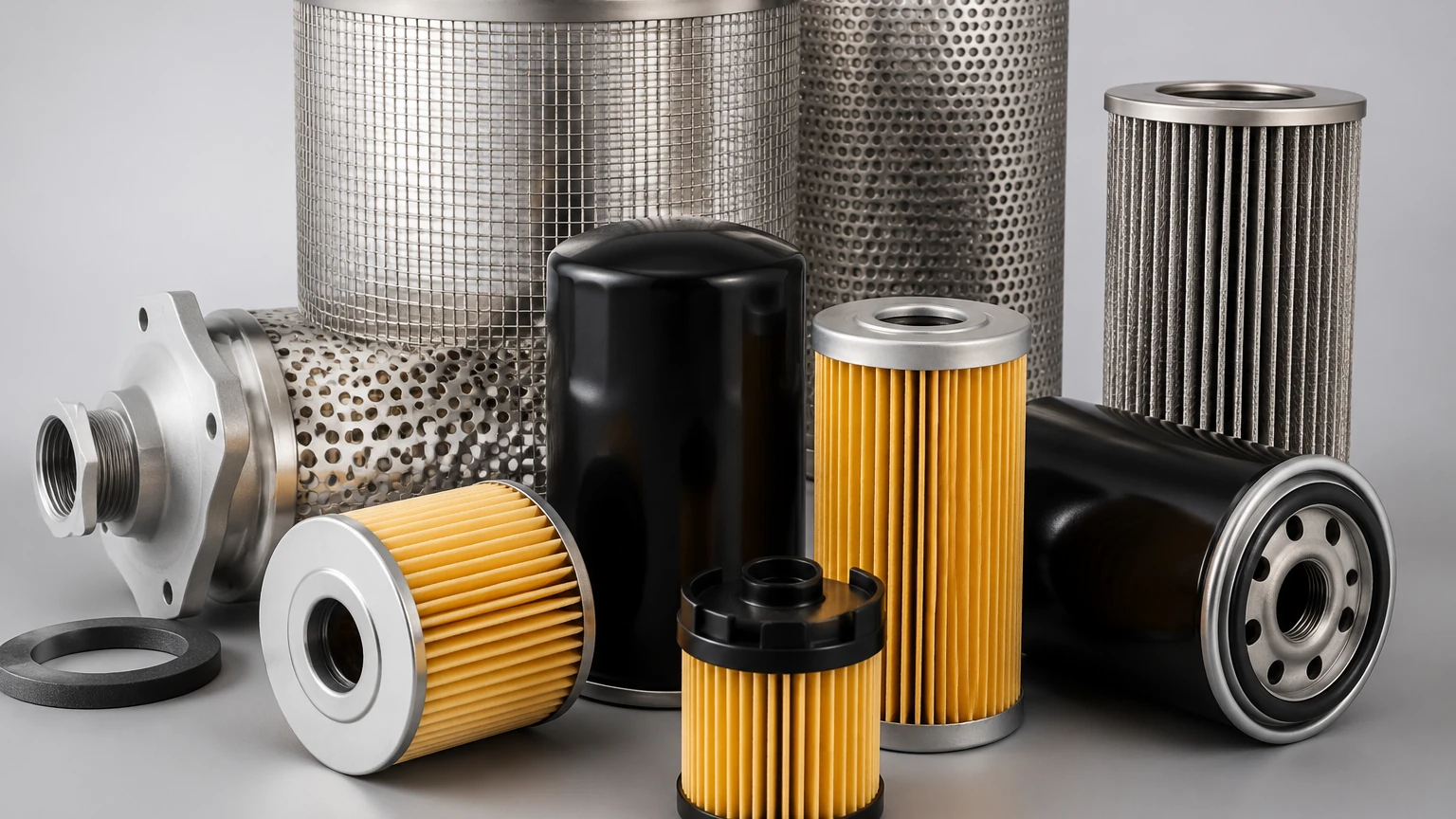
Material Science: Comparing Cellulose, Synthetic, and Stainless Steel Mesh
The choice of filter media significantly impacts the performance and longevity of the oil filter for air compressor units.
1. Cellulose Media: Traditional paper-based filters are cost-effective and suitable for standard applications. However, they are susceptible to degradation if the oil contains moisture or if the operating temperatures are consistently high. Cellulose fibers can also swell, increasing the pressure drop prematurely.
2. Synthetic (Fiberglass) Media: Synthetic micro-glass fibers offer higher dirt-holding capacity and better chemical resistance than cellulose. They feature a more uniform pore structure, allowing for higher filtration efficiency at lower pressure drops.
3. Stainless Steel Wire Mesh: For demanding industrial environments where durability and reuse are priorities, stainless steel mesh filters are often the preferred choice. These filters, such as those manufactured by Kaifil, provide exceptional resistance to high temperatures and corrosive lubricants. Unlike disposable media, precision-engineered metal mesh can be cleaned and returned to service, making it an ideal solution for custom industrial applications where standard filters fail to meet durability requirements.
Engineering Considerations for High-Performance Air Compressor Filters
Beyond the media itself, several engineering features define a high-quality oil filter for air compressor systems.
The Bypass Valve
Most compressor oil filters are equipped with an internal bypass valve. This is a safety mechanism designed to protect the engine or air end from oil starvation. If the filter element becomes completely clogged or if the oil is too thick to pass through the media (common in cold weather), the bypass valve opens to allow unfiltered oil to reach the machinery. While this prevents immediate mechanical seizure, it introduces contaminants into the system. Therefore, the bypass valve's cracking pressure must be precisely calibrated to the compressor's operational parameters.
Housing and Seal Integrity
Industrial compressors operate under significant pressure and vibration. The filter housing must be constructed from heavy-gauge steel or aluminum to prevent bursting or fatigue-related leaks. Furthermore, the seals (typically Viton or Nitrile) must be compatible with the specific type of compressor oil used—whether it is mineral-based, semi-synthetic, or a full synthetic polyalphaolefin (PAO) or ester-based lubricant.
Maintenance Protocols and Differential Pressure Monitoring
A proactive maintenance strategy is essential for maximizing the lifespan of both the oil filter and the compressor. Relying solely on fixed hour intervals (e.g., every 2,000 hours) can be risky if the compressor operates in a dusty or high-temperature environment.
Monitoring Differential Pressure
The most accurate way to determine the health of an oil filter for air compressor is to monitor the differential pressure. An increase in ΔP indicates that the filter is reaching the end of its effective life. Modern smart compressors often have sensors that alert the operator when the pressure drop exceeds a pre-set threshold.
Oil Analysis
Regular oil analysis can provide insights into the effectiveness of the filtration system. If an analysis shows a high concentration of wear metals or silica, it may indicate that the current filter's micron rating is too coarse or that the filter has bypassed. Integrating oil analysis with filter inspections allows maintenance teams to adjust replacement cycles based on actual operating conditions rather than generic estimates.
Customization and OEM Solutions for Specialized Compressor Applications
In many specialized industrial sectors—such as chemical processing, offshore oil and gas, or food and beverage—standard off-the-shelf filters may not suffice. These environments often require filters that can withstand extreme pH levels, high pressures, or stringent hygiene standards.
Custom stainless steel filtration components, like those found on the Kaifil Main Page, offer the flexibility needed for these demanding applications. Customization options include:
* Variable Filtration Grades: Tailoring the weave of the stainless steel mesh to achieve specific filtration accuracies.
* Structural Reinforcement: Adding internal support cores or external shrouds to handle high-pressure surges.
* Material Selection: Utilizing 304, 316L, or specialized alloys to ensure compatibility with aggressive synthetic lubricants or corrosive atmospheres.
By working with a manufacturer capable of providing OEM and customized filtration solutions, engineering teams can ensure that their air compressor systems are protected by components designed specifically for their operational challenges.
Total Cost of Ownership (TCO) and ROI
When evaluating the cost of an oil filter for air compressor units, it is important to look beyond the initial purchase price. The Total Cost of Ownership (TCO) includes the cost of the filter, the labor for replacement, the cost of oil lost during filter changes, and the potential cost of downtime.
High-quality filters may have a higher upfront cost but often provide a better ROI through:
* Extended Service Intervals: Higher dirt-holding capacity means fewer filter changes.
* Reduced Component Wear: Better filtration leads to fewer repairs on the air end and bearings.
* Energy Savings: A lower average pressure drop across the filter reduces the load on the compressor motor, leading to lower energy consumption over time.
For many facilities, transitioning from standard disposable filters to high-performance or cleanable metal filters can result in significant long-term savings and improved system reliability.
Conclusion
The oil filter for air compressor is a fundamental safeguard in any industrial pneumatic system. Whether dealing with a standard rotary screw compressor or a specialized high-pressure unit, the choice of filtration directly impacts the efficiency, safety, and longevity of the equipment. By focusing on technical specifications such as micron ratings, material compatibility, and pressure drop, and by considering the benefits of customized stainless steel solutions, engineers can optimize their filtration strategy.
Reliable filtration is not just about keeping the oil clean; it is about ensuring the continuous, cost-effective operation of the entire compressed air infrastructure. For those seeking specialized components or technical guidance on industrial filtration, it is advisable to Review product options and application support to find the most suitable solution for specific engineering requirements.
