


Coalescer Design
In industrial process engineering, the separation of immiscible liquids or the removal of entrained liquid mists from gas streams is a critical requirement for protecting downstream equipment, ensuring product purity, and meeting environmental regulations. Coalescer design is the specialized engineering discipline focused on facilitating the merging of small droplets into larger ones to enable gravity-based separation. Unlike standard filtration, which primarily removes solid particulates, a coalescer operates on the principles of surface chemistry and fluid dynamics to manage multi-phase fluid systems.
For engineers and procurement teams, understanding the nuances of coalescer design is essential for selecting a system that offers high separation efficiency, low pressure drop, and a long service life. This guide explores the technical foundations, material considerations, and engineering parameters necessary for effective industrial coalescence.
Principles of Industrial Coalescence
Coalescence is a multi-stage process. It begins with the interception of small, dispersed-phase droplets by a media surface. As these droplets accumulate, they collide and merge (coalesce) into larger globules. Once these globules reach a sufficient size, the gravitational forces acting upon them overcome the viscous drag of the continuous phase, allowing them to settle (in liquid-liquid systems) or fall (in liquid-gas systems) into a collection sump.
Stokes' Law and Separation Velocity
The fundamental physics governing coalescer design is rooted in Stokes' Law, which defines the settling velocity of a droplet in a fluid medium. The formula is expressed as:
$$v = \frac{2gr^2(\rho_p – \rho_f)}{9\eta}$$
Where:
* v is the settling velocity.
* g is the gravitational acceleration.
* r is the droplet radius.
* ρp is the density of the droplet.
* ρf is the density of the continuous fluid.
* η is the dynamic viscosity of the continuous fluid.
From this equation, it is evident that doubling the droplet radius increases the settling velocity by a factor of four. Therefore, the primary goal of coalescer design is to maximize the growth of droplet size to accelerate separation. This is achieved by passing the mixture through a specialized media bed designed to promote droplet contact.
Core Engineering Parameters in Coalescer Design
Designing an effective coalescer requires a deep analysis of the fluid properties and the operational environment. Engineers must balance several competing factors to achieve optimal performance.
1. Interfacial Tension (IFT)
Interfacial tension is the measure of the force existing at the interface between two immiscible liquids. High IFT (above 20 dynes/cm) generally allows for easier coalescence. However, in many industrial applications, the presence of surfactants or specialized chemicals reduces IFT, resulting in stable emulsions with very fine droplets (often less than 10 microns). In such cases, the coalescer design must incorporate high-surface-area media with specific surface energies to break the emulsion.
2. Flux Rate and Residence Time
The flux rate—the volume of fluid passing through a unit area of media per unit of time—is a critical design constraint. If the flux rate is too high, the velocity of the fluid can shear the coalesced droplets back into smaller fragments, a phenomenon known as re-entrainment. Proper design ensures sufficient residence time within the media bed to allow for droplet growth while maintaining a velocity low enough to prevent turbulence.
3. Viscosity and Temperature
Viscosity significantly impacts the movement of droplets through the continuous phase. Higher viscosity fluids resist droplet movement, necessitating larger vessel sizes or specialized media configurations. Since viscosity is temperature-dependent, coalescer design must account for the full range of operating temperatures the system will encounter. In some cases, pre-heating the fluid is necessary to improve separation efficiency.
Material Selection and the Role of Stainless Steel Media
The choice of coalescing media is perhaps the most vital aspect of the design process. The media must provide a large surface area, possess the correct wetting characteristics, and withstand the chemical and thermal demands of the application.
Stainless Steel Wire Mesh
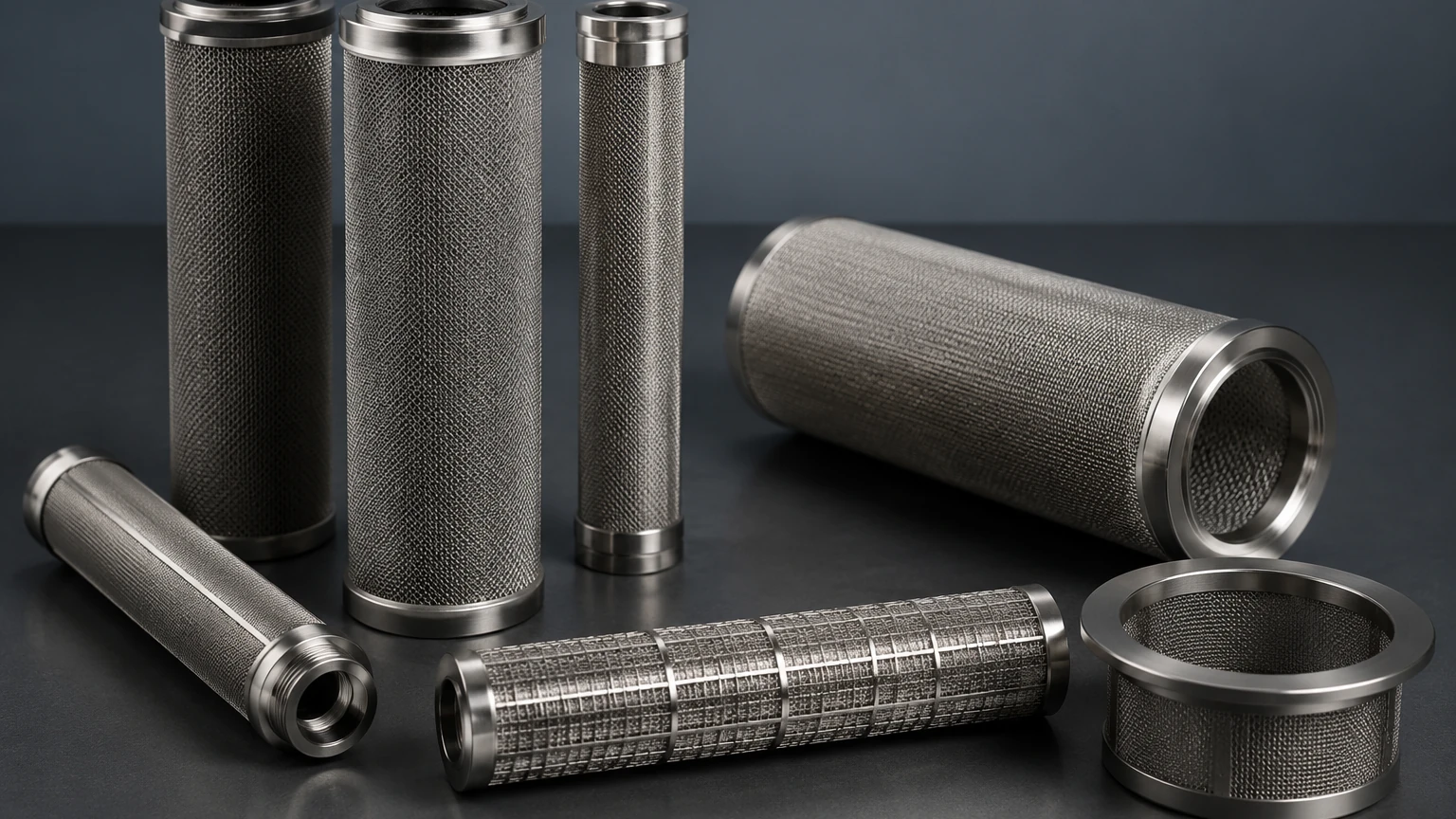
For many heavy-duty industrial applications, stainless steel wire mesh is the preferred material for coalescing elements. Stainless steel offers several advantages:
* Durability: Unlike synthetic fibers, stainless steel can withstand high-pressure differentials and mechanical stress without deforming.
* Chemical Compatibility: Stainless steel (typically 304 or 316L) is resistant to a wide array of solvents, hydrocarbons, and corrosive chemicals found in pharmaceutical and chemical processing.
* Thermal Resistance: It maintains structural integrity at elevated temperatures where polymers might melt or degrade.
* Cleanability: Stainless steel media can often be cleaned and reused, reducing the total cost of ownership compared to disposable cartridges.
Surface Wetting Properties
Effective coalescer design relies on the media being "preferentially wetted" by the dispersed phase. For example, if removing water from oil, the media should be hydrophilic (water-attracting). If removing oil from water, the media should be oleophilic. Stainless steel surfaces can be mechanically or chemically treated to alter their surface energy, ensuring that droplets spread across the wires and merge more effectively.
For more information on material specifications and custom filtration components, you can visit the Main Page of our technical resource center.
Structural Components and Housing Considerations
A coalescer is more than just the internal media; the housing and internal architecture play a significant role in performance. A well-engineered coalescer vessel typically includes:
* Inlet Diffusers: These components reduce the velocity of the incoming fluid and distribute it evenly across the face of the coalescing elements, preventing localized high-velocity zones.
* Support Grids: High-strength grids or perforated cores are used to support the coalescing media, ensuring it does not collapse under the pressure of the fluid flow.
* Separation Chambers: In liquid-liquid coalescers, a secondary stage (often using hydrophobic separator elements) is frequently employed to prevent any remaining small droplets from exiting the vessel.
* Sump and Drainage: A dedicated area for the collected phase to accumulate, equipped with level sensors and automated drain valves to ensure continuous operation.
Performance Evaluation and Maintenance Strategies
Once a coalescer is in operation, its performance must be monitored to ensure it meets the required separation standards. The two primary metrics used are separation efficiency and differential pressure.
Separation Efficiency
Efficiency is typically measured by comparing the concentration of the dispersed phase at the inlet versus the outlet. In high-performance systems, outlet concentrations are often required to be below 10 parts per million (ppm). Regular fluid sampling and laboratory analysis are necessary to verify that the coalescer design is performing as intended.
Differential Pressure (ΔP)
As the coalescer media captures fine solids along with liquid droplets, the resistance to flow increases. Monitoring the pressure drop across the unit is the most reliable way to determine when maintenance is required. A sudden spike in ΔP may indicate a surge in solid contaminants, while a gradual increase is expected over the life of the element. In stainless steel systems, backwashing or ultrasonic cleaning may be used to restore the media to its original state.
Common Risks and Design Pitfalls
Failure to account for certain variables can lead to poor separation or premature element failure. Common risks in coalescer design include:
1. Surfactant Poisoning: Surfactants can coat the coalescing media, changing its surface energy and preventing droplets from sticking. This often requires the use of pre-filtration or specialized clay treaters to remove surfactants before they reach the coalescer.
2. Solid Contamination: Coalescers are not primary filters. If the process fluid contains high levels of solid particulates, these will clog the fine pores of the coalescing media. Effective design usually includes a dedicated particulate filter upstream of the coalescer.
3. Flow Fluctuations: Coalescers are sensitive to flow rate changes. Rapid increases in flow can cause "slugging," where large volumes of the dispersed phase are pushed through the system simultaneously, overwhelming the separation capacity.
Customization and OEM Solutions for Specialized Applications
Because every industrial process has unique fluid dynamics and chemical profiles, a "one-size-fits-all" approach to coalescer design is rarely successful. Customization allows engineers to tailor the pore size, media density, and housing geometry to the specific needs of the application.
For instance, in the food and beverage industry, coalescers must meet stringent sanitary standards, requiring 316L stainless steel with high-polish finishes to prevent bacterial growth. In hydraulic systems, the focus may be on compact design and high-pressure capability to fit within existing machinery footprints.
Working with a manufacturer that understands the complexities of metal filtration and coalescence ensures that the final product is optimized for the specific viscosity, density, and interfacial tension of the target fluids. By focusing on precision engineering and high-quality materials, industrial facilities can achieve reliable, long-term separation performance that protects both their equipment and their product quality.
