


Anfd Dryer
In the realm of high-purity industrial processing, particularly within the pharmaceutical and fine chemical sectors, the Agitated Nutsche Filter Dryer (ANFD) stands as a cornerstone of efficient solid-liquid separation. An anfd dryer is a versatile piece of equipment designed to perform multiple operations—filtration, cake washing, and drying—within a single, closed vessel. This integration not only streamlines the production workflow but also minimizes the risk of cross-contamination and exposure to hazardous substances. For engineers and procurement teams, understanding the technical nuances of the ANFD system, particularly the critical role of the filtration media, is essential for optimizing process yield and ensuring long-term equipment reliability.
At the heart of every anfd dryer is the filter plate. As a manufacturer specializing in precision stainless steel filtration solutions, Kaifil recognizes that the performance of the entire system is often dictated by the quality and design of this specific component. Selecting the right filter media involves more than just picking a micron rating; it requires a deep dive into material compatibility, mechanical strength, and the specific rheological properties of the slurry being processed.
The Integrated Process: From Slurry to Dry Powder
The primary advantage of the anfd dryer is its ability to handle a complete batch cycle without transferring the product between different machines. This "one-pot" processing approach is critical for maintaining sterile conditions and protecting operators from potent active pharmaceutical ingredients (APIs).
1. Filtration Stage: The process begins by charging the vessel with slurry. Under pressure (often nitrogen) or vacuum, the liquid is forced through the filter media at the bottom of the vessel. The solids are retained, forming a filter cake. The design of the filter plate must account for the initial "bridge" formation of particles to ensure clear filtrate from the start.
2. Cake Washing: Once the mother liquor is removed, the agitator can be lowered to reslurry the cake with a wash solvent or to perform displacement washing. This step is vital for removing impurities. The filter media must withstand the mechanical stresses of the agitator moving through the cake while maintaining a uniform flow of the wash liquid.
3. Drying Stage: After the final wash, the vessel is heated via a jacket, and a vacuum is applied. The agitator continuously stirs the cake to ensure uniform heat transfer and to break up lumps. During this stage, the filter media acts as a barrier, preventing the fine powder from being pulled into the vacuum system while allowing vapors to escape.
Critical Component: The Multi-Layer Sintered Filter Plate
For an anfd dryer to operate at peak efficiency, the filter plate must be exceptionally robust. Standard wire mesh or filter cloths often fail under the mechanical pressures of the agitator or the thermal cycles of the drying phase. This is where multi-layer sintered wire mesh becomes the industry standard.
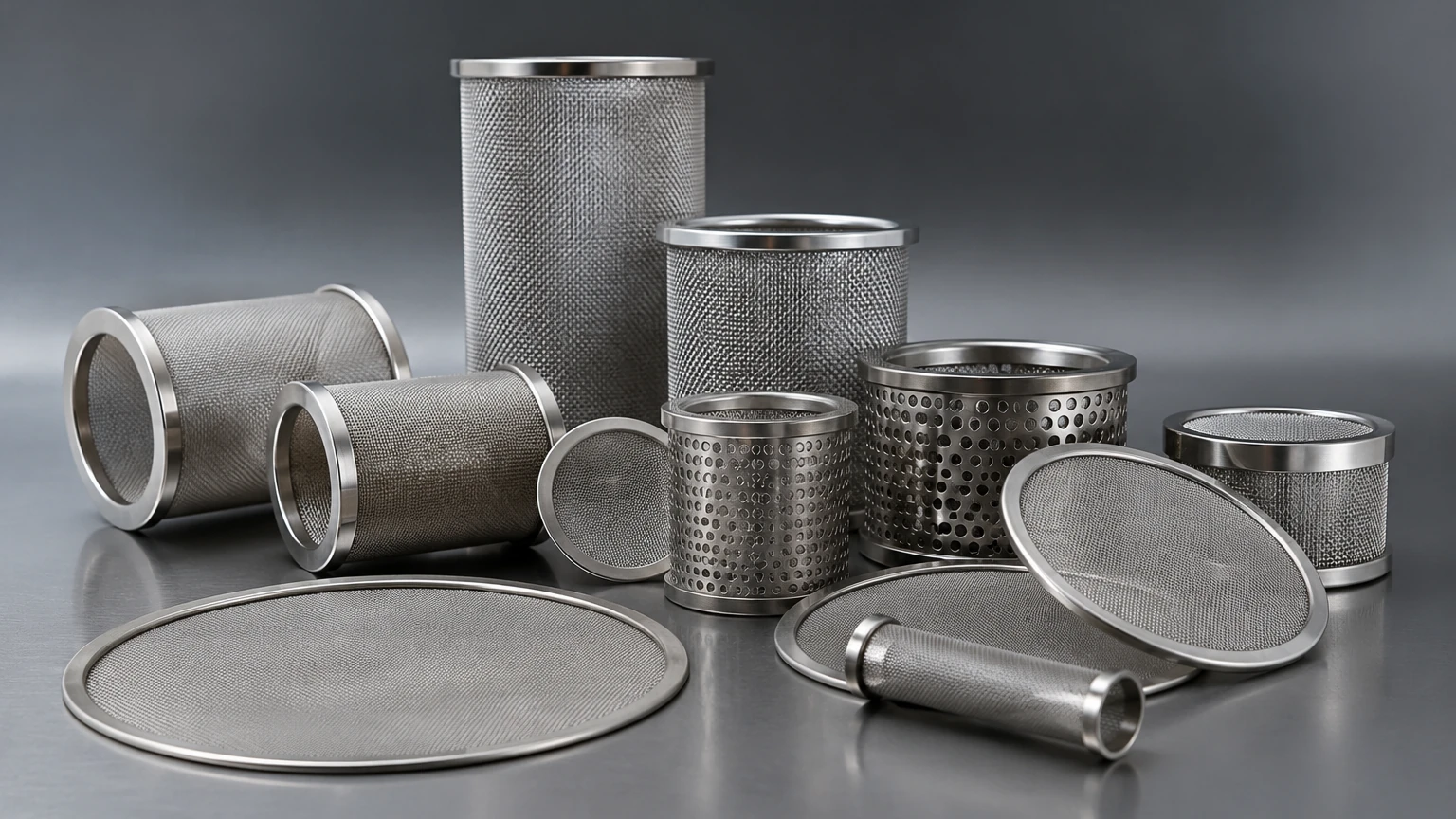
Kaifil specializes in the production of these sintered metal components. A typical filter plate for an anfd dryer consists of several layers of stainless steel wire mesh—ranging from two to seven layers—that are diffusion-bonded (sintered) together under high temperature and pressure. This process creates a monolithic structure that offers several key advantages:
* Mechanical Integrity: Unlike single-layer meshes, sintered mesh does not fray or migrate. It can withstand the downward pressure of the agitator and the upward pressure of back-pulsing or cleaning cycles without deforming.
* Fixed Pore Geometry: The sintering process locks the wires in place, ensuring that the filtration rating remains constant even under high-pressure differentials. This is critical for maintaining consistent batch quality.
* High Permeability: Despite its strength, the structure is designed to offer low resistance to flow, which reduces filtration time and energy consumption during the drying phase.
Engineering Selection Criteria for ANFD Filter Media
When specifying a filter plate for an anfd dryer, engineers must evaluate several technical parameters to ensure the component is fit for purpose. These considerations directly impact the total cost of ownership and the quality of the final product.
Material Compatibility
While Stainless Steel 316L is the standard for many applications due to its corrosion resistance and cost-effectiveness, certain chemical processes involve highly aggressive solvents or acids. In these cases, specialized alloys such as 904L, Hastelloy C22, or C276 may be required. The choice of material must account for both the liquid phase (solvents/acids) and the potential for stress corrosion cracking during the drying phase when temperatures rise.
Micron Rating and Particle Retention
The selection of the filtration rating (e.g., 5, 10, or 20 microns) must be balanced against the particle size distribution of the product. A mesh that is too fine may lead to rapid blinding and extended filtration times, while a mesh that is too coarse will allow valuable product to pass through into the filtrate. Engineers should also consider the "absolute" vs. "nominal" rating, as the precision of the sintered mesh provided by Kaifil ensures a more predictable retention profile.
Thermal and Mechanical Stress
The anfd dryer undergoes significant temperature fluctuations, from ambient during charging to high temperatures during vacuum drying. The filter plate must have a thermal expansion coefficient compatible with the vessel's mounting structure to prevent buckling. Furthermore, the plate must support the weight of the wet cake, which can be substantial in large-scale industrial units.
Operational Challenges: Blinding, Cleaning, and Mechanical Stress
One of the most common issues in anfd dryer operation is the blinding of the filter media. This occurs when fine particles become lodged within the pores of the mesh, reducing flow and increasing batch times. To mitigate this, the filter plate design must facilitate effective Clean-in-Place (CIP) and Sterilize-in-Place (SIP) procedures.
Sintered metal plates are particularly well-suited for CIP because their smooth surface and lack of "dead zones" allow for thorough rinsing. In many cases, back-flushing with a clean solvent or gas can dislodge particles trapped on the surface. For more stubborn deposits, ultrasonic cleaning of the removed plate may be necessary, a process that sintered mesh can withstand repeatedly where traditional cloths would be destroyed.
Another challenge is the mechanical interaction between the agitator and the filter plate. The clearance between the agitator blades and the filter surface is often minimal to ensure maximum cake recovery. If the filter plate is not perfectly flat or if it bows under pressure, there is a risk of mechanical contact, which can lead to metal contamination of the product or catastrophic failure of the filter media.
Customization and OEM Integration for Industrial Applications
Every industrial process has unique requirements, and a one-size-fits-all approach to filtration rarely yields the best results. Kaifil provides extensive customization options for anfd dryer components, working closely with equipment manufacturers (OEMs) and end-users to develop tailored solutions.
Customization options include:
* Variable Layer Configurations: Adjusting the number and type of mesh layers to optimize for specific flow rates or mechanical loads.
* Integrated Support Grids: For large-diameter dryers, adding a heavy-duty support grid to the sintered plate to prevent sagging.
* Segmented Designs: Providing filter plates in segments (e.g., pie-shaped pieces) to facilitate easier installation and replacement through the vessel's manway.
* Surface Treatments: Electropolishing or specialized coatings to improve cake release and enhance corrosion resistance.
By focusing on these technical details, Kaifil helps engineers ensure that their anfd dryer operates with maximum uptime and minimal maintenance intervention.
Total Cost of Ownership and Performance Evaluation
While the initial cost of a high-quality sintered metal filter plate may be higher than alternative media, the total cost of ownership (TCO) is significantly lower when considering the lifespan and process efficiencies. A durable stainless steel filter can last for years with proper maintenance, whereas filter cloths may need replacement after every few batches, leading to increased downtime and labor costs.
Furthermore, the performance of the filter plate directly affects the drying time. A plate with optimized permeability allows for faster vapor removal, which can shave hours off a drying cycle. In a high-volume production environment, these time savings translate directly into increased throughput and higher profitability.
To ensure you are selecting the most effective filtration components for your specific application, it is essential to consult with experts who understand both the metallurgy and the fluid dynamics involved in industrial filtration. For more information on our range of custom stainless steel filter cartridges and wire mesh solutions, you can Review product options and application support on our Main Page.
Conclusion
The anfd dryer is a sophisticated piece of engineering that requires equally sophisticated filtration components to function effectively. By selecting high-performance sintered wire mesh filter plates, manufacturers can achieve greater process consistency, reduce the risk of contamination, and lower their overall operational costs. Whether you are designing a new system or looking to upgrade an existing unit, focusing on the quality and engineering of the filter media is the key to mastering the complexities of agitated nutsche filtration and drying. Kaifil remains committed to providing the technical expertise and manufacturing precision necessary to support these demanding industrial applications, ensuring that every batch meets the highest standards of purity and quality.
