


Reticulated Polyurethane Foam Structure
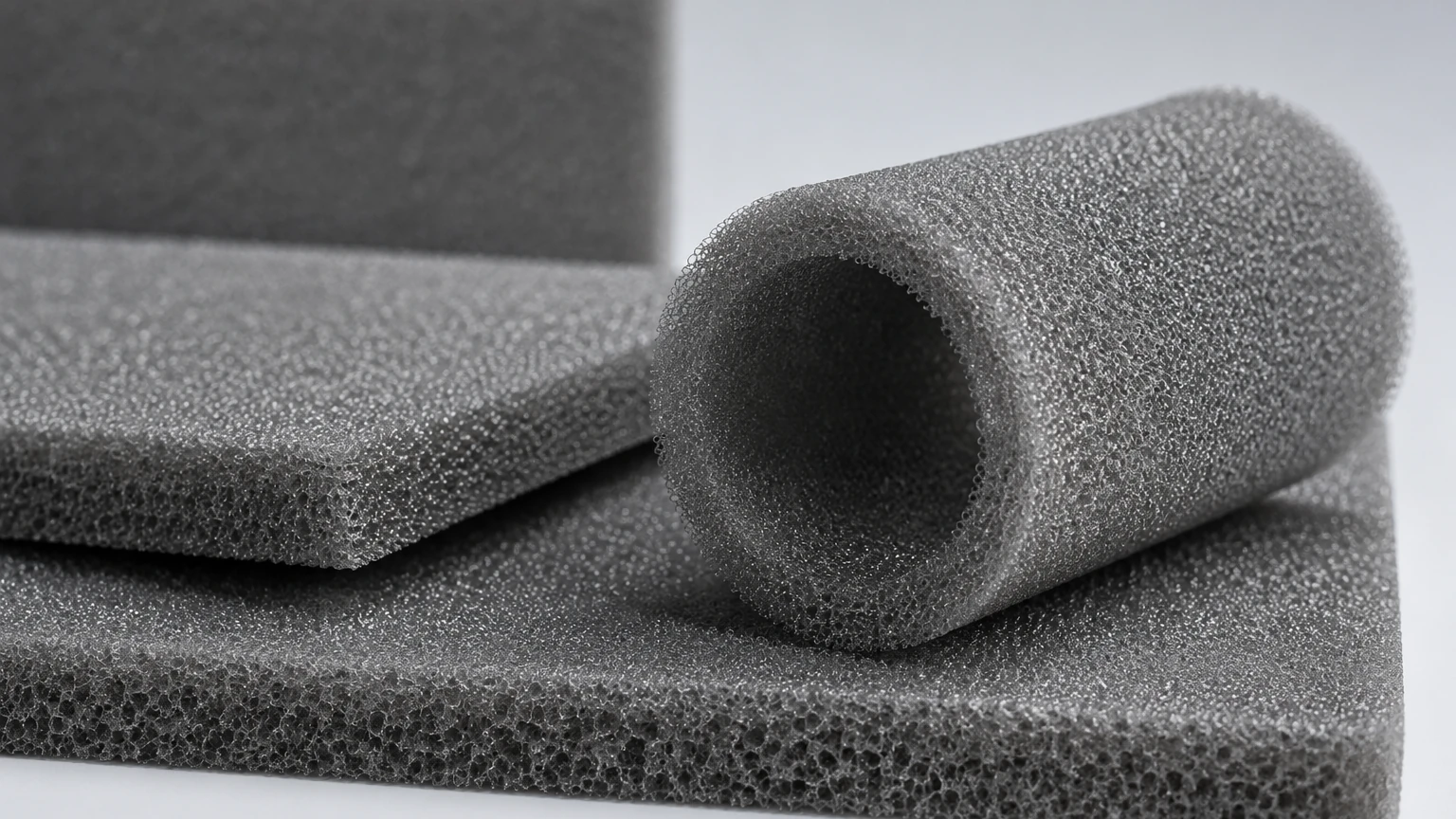
In the landscape of industrial filtration and material science, the reticulated polyurethane foam structure represents a pinnacle of engineered porosity. Characterized by a three-dimensional, open-cell skeletal framework, this material is devoid of the thin membranes (or "windows") typically found in standard polyurethane foams. For engineers and procurement specialists, understanding the nuances of this structure is essential when evaluating media for air filtration, fluid management, and as a precursor for advanced metal filtration components.
While reticulated foam serves a wide array of light-to-medium duty applications, industrial environments often demand the robustness of metallic alternatives. At Main Page, the focus remains on translating these complex filtration requirements into durable stainless steel solutions that withstand the rigors of chemical processing and high-pressure hydraulics.
Understanding the Morphology of Reticulated Foam
The fundamental characteristic of a reticulated polyurethane foam structure is its high void volume, typically ranging from 90% to 98%. Unlike conventional foam, which contains a mix of open and closed cells, a fully reticulated foam consists only of the polymer "struts" or ribs. This creates a dodecahedron-like geometry—a series of interconnected 12-to-14-sided polyhedral cells.
Cell Geometry and Surface Area
From an engineering perspective, the geometry of the cell determines the mechanical properties and filtration efficiency of the material. The struts form a tortuous path for fluids and gases, which is critical for depth filtration. Because the membranes have been removed, the internal surface area is maximized relative to the volume, allowing for high dust-holding capacity and low initial pressure drop.
In industrial filtration, the density of these cells is measured in Pores Per Inch (PPI). Standard ranges typically fall between 10 PPI (large, coarse pores) and 100 PPI (very fine, dense pores). Selecting the correct PPI is a balance between the required filtration efficiency and the allowable resistance to flow.
The Engineering Process: Creating the Reticulated Network
The transformation from a standard flexible foam to a reticulated polyurethane foam structure requires specialized post-processing. There are two primary industrial methods used to achieve this: thermal reticulation and chemical reticulation.
Thermal Reticulation (The "Zapping" Process)
Thermal reticulation is the most common method for producing high-quality filtration foam. The foam blocks are placed in a large vacuum chamber, which is then filled with a precise mixture of explosive gases (usually hydrogen and oxygen). Upon ignition, a controlled flash flame sweeps through the foam. The flame has enough energy to melt the thin, high-surface-area cell membranes but not enough to melt the thicker structural struts. This results in a clean, open-cell framework with smooth, fire-polished struts that offer minimal resistance to fluid flow.
Chemical Reticulation (The Caustic Bath)
Chemical reticulation involves submerging the foam in a heated caustic solution, such as sodium hydroxide. The chemical attack preferentially degrades the thin membranes due to their high surface-area-to-mass ratio. While effective, this process requires careful neutralization and washing to ensure no residual chemicals remain within the structure. For sensitive applications, such as those in the food and beverage or pharmaceutical sectors, the thermal method is often preferred to avoid chemical contamination.
Key Performance Metrics for Industrial Filtration
When specifying a reticulated polyurethane foam structure for an industrial application, engineers must evaluate several critical performance metrics. These metrics define how the material will behave under operational stress and determine its effective service life.
Pressure Drop and Permeability
One of the primary advantages of an open-cell structure is low air or fluid resistance. The pressure drop (Delta P) across the media is a function of the PPI and the thickness of the material. In high-velocity air streams, a 10 PPI foam will exhibit negligible resistance, whereas a 100 PPI foam provides significant surface area for capturing fine particulates at the cost of higher energy consumption for the blower or pump.
Dust Holding Capacity (DHC)
Unlike surface filters (like certain papers or membranes), reticulated foam acts as a depth filter. Particles are trapped within the thickness of the foam as they navigate the complex skeletal network. This allows the filter to retain a large volume of contaminants before the pressure drop reaches a critical level, making it an ideal pre-filter for more expensive secondary filtration stages.
Chemical and Thermal Limits
Polyurethane is an organic polymer, which imposes specific limits on its use. Most reticulated polyurethane foam structures are limited to continuous operating temperatures below 120°C (250°F). Furthermore, while they resist many dilute acids and alkalis, they are susceptible to degradation by strong oxidizing agents and certain organic solvents. In environments involving aggressive chemicals or extreme temperatures, engineers often transition to stainless steel mesh or sintered metal components provided by manufacturers like Kaifil.
Reticulated Foam as a Template for Metal Filters
An advanced application of the reticulated polyurethane foam structure is its role as a sacrificial template for creating metal foams. In this process, the PU foam is coated with a metal slurry (such as stainless steel or nickel) or electroplated. The structure is then heat-treated; the polyurethane core burns away, and the metal is sintered to form a rigid, metallic replica of the original foam.
This "metal foam" combines the geometric advantages of reticulated structures—high porosity and surface area—with the mechanical strength, thermal stability, and corrosion resistance of stainless steel. For industries requiring high-performance filtration in harsh environments, these metallic structures represent the next evolution of the reticulated design.
Comparing Reticulated Foam to Stainless Steel Filtration
While reticulated polyurethane foam is cost-effective for HVAC and general air intake applications, it lacks the permanence and cleanability of metal media. For professional purchasing teams, the total cost of ownership (TCO) often favors stainless steel when long-term durability is required.
| Feature | Reticulated PU Foam | Stainless Steel (Wire Mesh/Sintered) |
| :— | :— | :— |
| Temperature Limit | Low (<120°C) | High (>450°C depending on alloy) |
| Chemical Resistance | Moderate | Excellent (304, 316L, Hastelloy) |
| Cleanability | Limited (Disposable) | Excellent (Ultrasonic/Backwash) |
| Structural Rigidity | Low (Flexible) | High (Self-supporting) |
| Filtration Precision | Nominal | Absolute (down to 1 micron) |
For applications in chemical processing or hydraulic systems, the flexibility of foam can be a disadvantage, as it may compress under high pressure, changing the pore size and filtration efficiency. Stainless steel filtration components maintain their structural integrity under significant differential pressures, ensuring consistent performance throughout the maintenance cycle.
Customization and Engineering Considerations
When integrating a reticulated polyurethane foam structure into a system, customization is key. Standard sheets may not suffice for specialized industrial housings. Engineers must consider:
1. Gasket and Sealing: Because foam is compressible, ensuring a bypass-free seal within a filter housing requires precise tolerances. In contrast, metal filters can be engineered with integrated flanges or threaded fittings.
2. Laminations: Reticulated foam is often laminated to other substrates, such as non-woven fabrics or wire meshes, to provide additional structural support or to achieve multi-stage filtration in a single component.
3. Pore Size Gradient: Some advanced filtration systems use a gradient of PPI (e.g., 30 PPI followed by 60 PPI) to maximize the depth filtration effect and extend the time between replacements.
Selecting the Right Solution for Demanding Environments
For technical professionals, the choice between a reticulated polyurethane foam structure and a precision metal filter depends entirely on the operational environment. If the application involves high temperatures, high pressures, or the need for a permanent, cleanable solution, stainless steel is the industry standard.
Kaifil specializes in the design and manufacture of custom stainless steel filtration solutions that address the limitations of polymer-based media. By utilizing advanced manufacturing techniques, Kaifil provides OEM components that offer the same high-porosity benefits of reticulated structures but with the added benefits of industrial-grade durability and chemical inertness.
To explore how custom stainless steel cartridges and mesh filters can optimize your specific industrial process, we encourage you to Review product options and application support. Our engineering team works closely with global partners to develop filtration components that meet exact specifications for accuracy, durability, and cost-effectiveness.
Conclusion
The reticulated polyurethane foam structure remains a vital material in the filtration industry due to its unique geometry and high void volume. It serves as an excellent medium for air filtration and a fascinating template for metal foam technology. However, for engineers operating in the chemical, pharmaceutical, and heavy industrial sectors, the transition to stainless steel filtration is often necessary to ensure system reliability and long-term performance. Understanding the strengths and limitations of both materials allows for informed decision-making that balances initial cost with operational efficiency.
