


Understanding Pre Crimped Woven Wire Mesh: Engineering and Industrial Applications
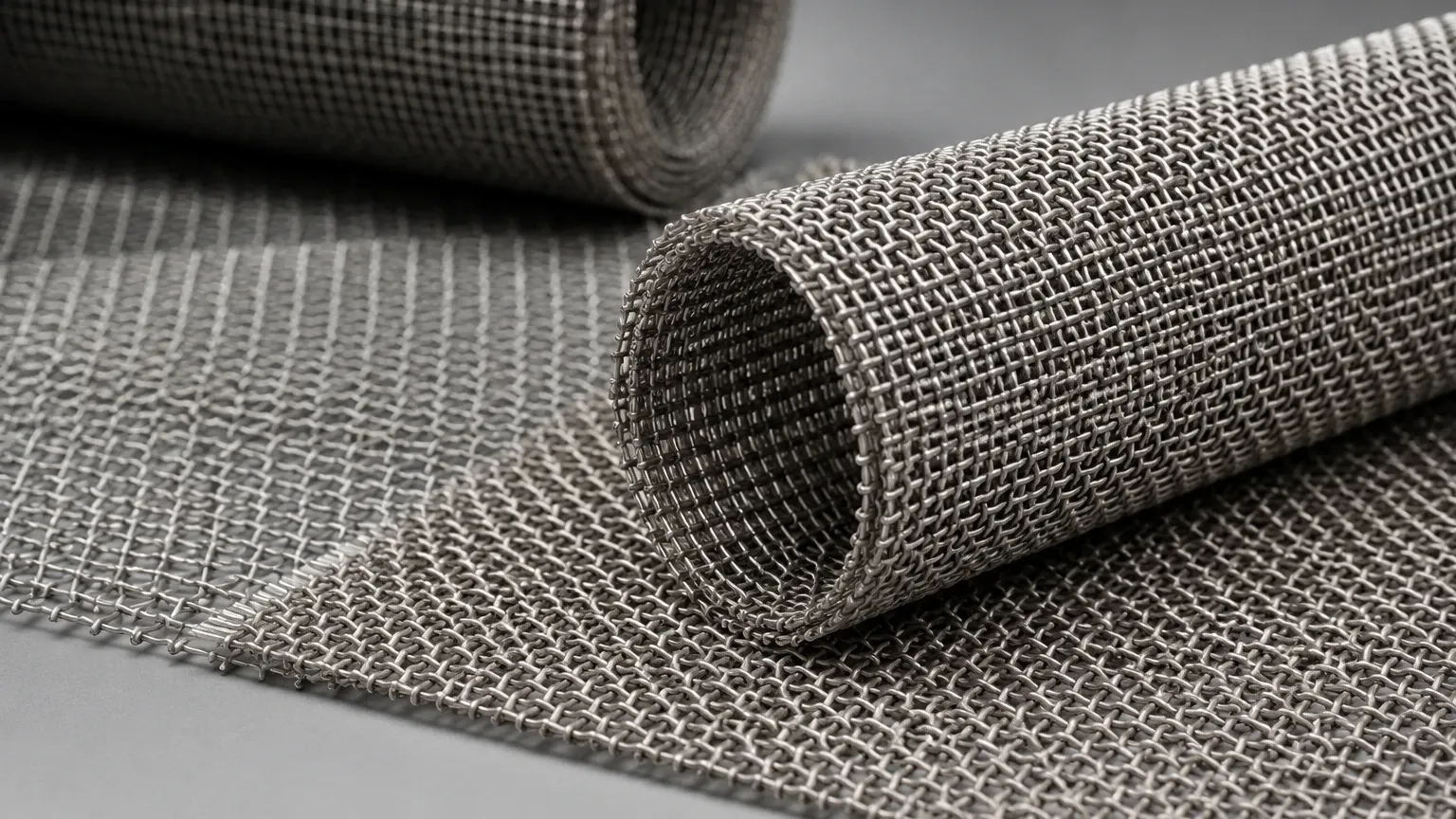
In industrial filtration and material separation, structural integrity and aperture precision are the primary benchmarks for performance. While standard woven wire mesh serves a broad range of fine filtration needs, heavy-duty industrial processes often require a more robust solution. This is where pre crimped woven wire mesh becomes essential. Unlike standard mesh where wires are woven directly from a spool, pre-crimped mesh involves a multi-stage manufacturing process designed to handle larger wire diameters and maintain rigid spacing under significant mechanical stress.
For engineers and procurement professionals, selecting the right Woven Wire Mesh involves understanding the mechanical relationship between wire diameter, crimp style, and the intended application environment. This guide explores the technical nuances of pre-crimped mesh, its manufacturing advantages, and the criteria necessary for optimizing filtration and screening efficiency.
The Manufacturing Process: Why Pre-Crimping Matters
The fundamental difference between standard weave and pre-crimped weave lies in the preparation of the raw material. In standard plain weave, the warp and weft wires are bent over and under each other by the loom during the weaving process. However, as wire diameter increases, the force required to bend the wire exceeds the capabilities of standard looms.
Pre-crimping solves this by passing the wire through precision-engineered crimping wheels before it reaches the loom. These wheels create consistent indentations or "crimps" at specific intervals. When these pre-bent wires are subsequently woven together, the crimps nest into one another, locking the wires into a fixed position. This process allows for the production of mesh with very large wire diameters—often exceeding 6mm—and large apertures that remain dimensionally stable even when subjected to heavy vibration or high-pressure flow.
Essential Crimp Styles and Their Engineering Functions
Not all pre-crimped meshes are created equal. The choice of crimp style directly impacts the mesh’s stability, the smoothness of the surface, and the accuracy of the openings.
1. Plain Crimp
This is the most common style for pre-crimped mesh. Both the warp and weft wires are crimped at every intersection. It provides a high level of stability and is typically used for relatively small openings where the wire diameter is large enough to require pre-crimping but small enough to allow for frequent intersections.
2. Intermediate Crimp
In this configuration, extra crimps are added between the intersections of the warp and weft wires. This is primarily used when the mesh has large openings relative to the wire diameter. The intermediate crimps ensure that the wires stay locked in place, preventing "wire migration" or shifting that would otherwise compromise the accuracy of the aperture.
3. Lock Crimp
Lock crimping features deep, distinct crimps at the points of intersection. The wires are effectively "locked" together, providing maximum rigidity. This style is preferred in applications involving heavy vibration, such as vibrating screens in mining or aggregate processing, where maintaining precise opening sizes is critical for material grading.
4. Flat Top Crimp
Unlike other styles where the knuckles of the wire protrude on both sides, flat top crimping ensures that all crimps are on the underside. This creates a smooth, flush top surface. From an engineering perspective, this reduces friction and wear on the mesh surface, making it ideal for conveyor belts or filtration systems where a scraper or cleaning blade must pass over the mesh.
Material Selection: SS304 vs. SS316L
In industrial filtration, the chemical and thermal environment dictates the material choice. Kaifil specializes in stainless steel solutions because of the material’s inherent durability and resistance to oxidation.
* Stainless Steel 304: The industry standard for general industrial applications. It offers excellent strength and good corrosion resistance for most water treatment and food processing environments.
* Stainless Steel 316L: Containing molybdenum, 316L is the preferred choice for chemical processing, pharmaceutical manufacturing, and marine environments. It provides superior resistance to pitting and crevice corrosion, especially in chloride-rich environments.
Choosing the correct alloy is a critical factor in the total cost of ownership. While 316L carries a higher initial cost, its longevity in corrosive environments significantly reduces the frequency of replacement cycles.
Key Performance Advantages in Industrial Filtration
Using pre crimped woven wire mesh offers several distinct advantages over other types of metal filtration media:
Dimensional Stability
Because the wires are mechanically locked into place, the aperture size remains constant. In high-pressure hydraulic or chemical filtration, standard mesh might experience "opening up" under pressure, allowing oversized particles to pass through. Pre-crimped structures resist this deformation.
High Open Area
Pre-crimped mesh can be manufactured with a high ratio of open area while maintaining structural strength. This is vital for applications requiring high flow rates with minimal pressure drop. Engineers must balance the wire diameter (for strength) against the open area (for throughput) to optimize system performance.
Durability and Impact Resistance
In heavy-duty screening, the mesh is often subjected to the impact of falling materials. The mechanical interlock of a lock-crimp or intermediate-crimp mesh absorbs and distributes these forces more effectively than a simple plain weave, preventing premature fatigue failure.
Engineering Considerations for Selection
When specifying pre-crimped mesh for a project, engineers should evaluate the following technical parameters to ensure the component meets the application's demands:
1. Aperture (Clear Opening): The distance between two adjacent wires. This determines the filtration grade or the size of the material being screened.
2. Wire Diameter: Increasing the wire diameter increases the lifespan and strength of the mesh but reduces the open area. A technical assessment of the expected load vs. the required flow rate is necessary.
3. Mesh Count: For pre-crimped mesh, this is often expressed as the number of openings per linear inch. However, for coarser industrial grades, specifying the clear opening and wire diameter is more accurate.
4. Weight per Square Meter: Essential for calculating the structural load on the filtration housing or the vibrating screen frame.
Common Applications for Pre-Crimped Mesh
Given its strength and precision, pre-crimped Woven Wire Mesh is utilized across diverse sectors:
* Chemical and Petrochemical: Used in catalyst support grids and coarse filtration stages where high temperatures and corrosive fluids are present.
* Food and Beverage: Employed in drying belts, sorting screens, and large-scale juice or syrup filtration where hygiene and durability are paramount.
* Water Treatment: Serving as intake screens or pre-filters to remove large debris before fine filtration stages.
* Mining and Aggregate: The primary choice for vibrating screens used to grade ores, stones, and coal.
* Architectural and Security: Due to its aesthetic appeal and rigidity, it is also used for industrial partitions and protective grilles.
Maintenance and Replacement Cycles
To maximize the service life of industrial filters, a proactive maintenance schedule is required. For pre-crimped mesh, the primary signs of wear include:
* Wire Thinning: Abrasive materials will gradually reduce the wire diameter, eventually leading to breakage.
* Blinding or Pegging: This occurs when particles become trapped in the apertures. Regular cleaning using ultrasonic baths or high-pressure backwashing can mitigate this.
* Tension Loss: In vibrating applications, if the mesh is not properly tensioned, it will flex excessively, leading to rapid fatigue failure at the contact points.
Kaifil recommends regular inspections to ensure that the mesh has not suffered from localized corrosion or mechanical deformation, which could compromise the entire filtration system's integrity.
Procurement Checklist: Confirming Your Requirements
Before placing an order for pre-crimped mesh, procurement teams should confirm the following details with the manufacturer to ensure the product is fit for purpose:
* Exact Alloy Grade: Confirm if SS304, SS316, or a specialty alloy like Monel or Inconel is required.
* Crimp Type: Specify if a flat top is needed for smooth flow or a lock crimp for high vibration.
* Edge Treatment: Will the mesh be supplied as raw cut pieces, or does it require hooked edges for tensioning or framed panels for easy installation?
* Tolerances: Define the acceptable variance in aperture size, especially for precision grading applications.
* Certification: Request material test reports (MTRs) to verify the chemical composition of the stainless steel.
Conclusion
Pre crimped woven wire mesh represents a critical intersection of mechanical engineering and material science. By understanding the relationship between crimp styles, wire diameters, and material properties, industrial operators can select filtration components that offer the best balance of performance and longevity.
As a specialist in custom stainless steel filtration, Kaifil provides the technical expertise necessary to develop high-performance mesh solutions tailored to specific industrial environments. Whether the requirement is for high-strength mining screens or precision chemical filtration grids, choosing the correct pre-crimped configuration is the first step toward optimizing process efficiency and reducing operational downtime.
