


Food Processing Air Filtration
In the food and beverage industry, air quality is a critical parameter that directly influences product safety, shelf life, and regulatory compliance. Unlike standard commercial ventilation, food processing air filtration must address specific biological and physical risks while operating under stringent sanitary conditions. Airborne contaminants—ranging from microscopic mold spores and bacteria to flour dust and chemical vapors—can compromise batch integrity if not properly managed. For engineers and facility managers, selecting the right filtration media and system design is essential to maintaining a sterile environment and meeting Hazard Analysis and Critical Control Points (HACCP) requirements.
Industrial filtration in food plants involves more than just capturing dust; it requires a deep understanding of material science, pressure dynamics, and the ability of filter components to withstand rigorous cleaning protocols. Stainless steel filtration solutions have become the standard for high-performance air management in these environments due to their durability and hygienic properties.
The Role of Air Filtration in Food Safety Compliance
Regulatory frameworks such as the Food Safety Modernization Act (FSMA) and international standards like ISO 22000 place significant emphasis on the environment in which food is produced. Air is classified as a "product contact surface" when it comes into direct contact with food or packaging materials. Consequently, food processing air filtration is a primary defense mechanism against cross-contamination.
In high-care areas, such as those used for meat slicing, dairy filling, or pharmaceutical-grade ingredient mixing, the air must be filtered to remove 99.9% of particles at specific micron levels. Failure to maintain these standards can lead to product recalls, microbial growth, and shortened expiration dates. Beyond the product itself, air filtration protects the facility's machinery from abrasive dust and ensures a safe working environment for employees by managing combustible dust risks, such as those found in grain and spice processing.
Common Contaminants in Food Processing Environments
Identifying the specific contaminants present in a facility is the first step in engineering an effective filtration system. These contaminants are generally categorized into three groups:
Biological Contaminants
Bacteria, yeast, and mold spores are the most significant threats in food production. These microorganisms thrive in the high-humidity environments common in dairy and beverage processing. Filters used in these areas must not only capture these pathogens but also resist becoming a breeding ground for them. This is why non-porous, moisture-resistant materials are preferred over traditional fiber-based media.
Physical Particulates
Many food processes involve dry ingredients that generate significant dust. Flour, sugar, cocoa powder, and spices can create high particulate loads that clog standard filters quickly. In these applications, the filtration system must handle high volume while maintaining a consistent flow rate to prevent pressure imbalances within the facility.
Chemical Vapors and Odors
Cleaning-in-place (CIP) processes and certain cooking methods release chemical vapors and odors into the air. While these may not always pose a direct contamination risk to the food, they can affect product flavor profiles and worker health. Specialized metal filters and carbon-integrated systems are often used to manage these gaseous emissions.
Why Stainless Steel is the Preferred Material for Food-Grade Filters
When evaluating filter media for food processing air filtration, engineers must consider the "Total Cost of Ownership" (TCO) and the ability of the filter to withstand the environment. While synthetic or paper filters are common in general HVAC, they often fail in the demanding conditions of a food plant.
Corrosion Resistance and Hygiene
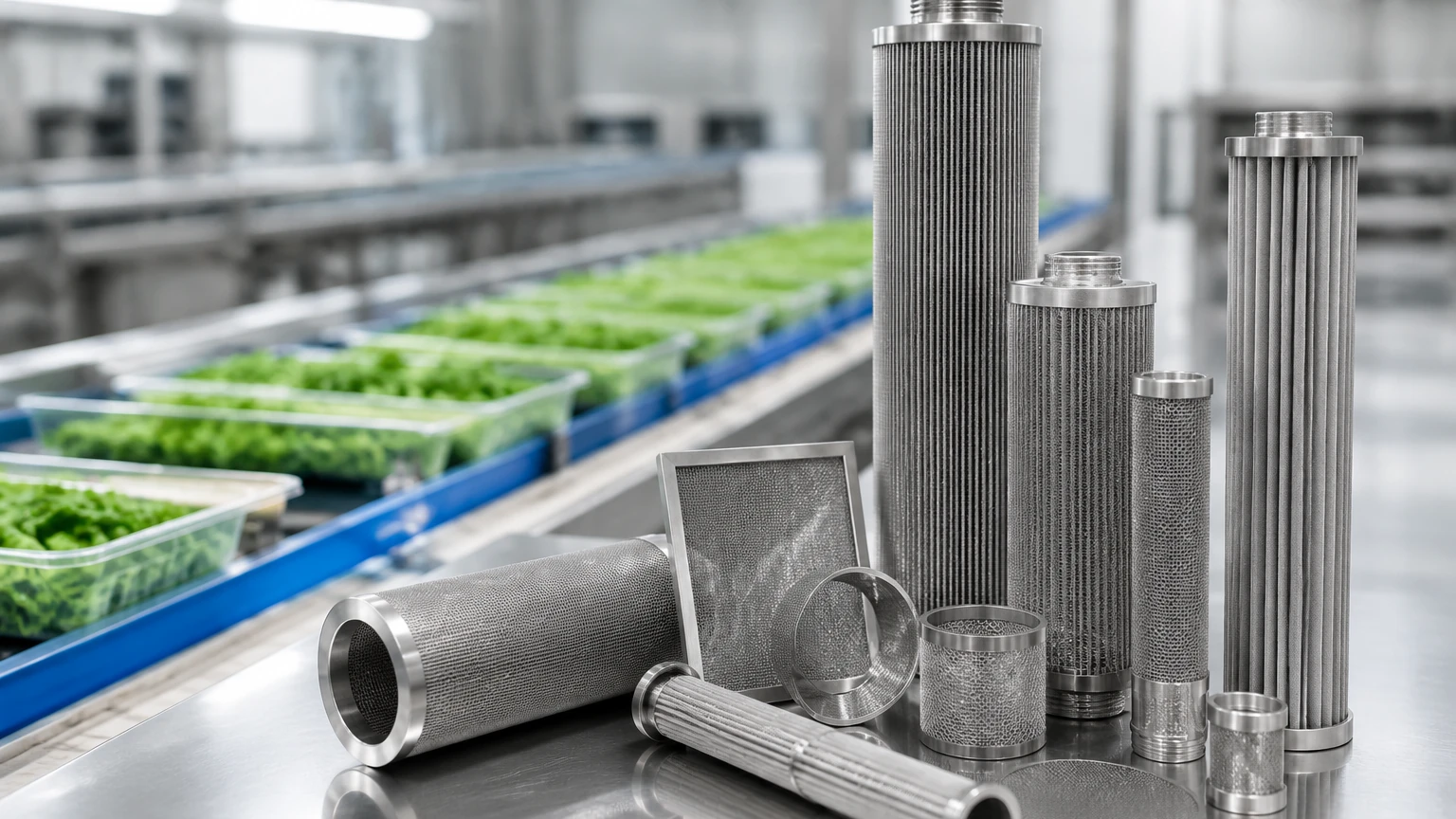
Stainless steel, particularly grades 304 and 316L, is inherently resistant to corrosion. In food plants where equipment is frequently washed down with caustic chemicals or exposed to acidic ingredients, stainless steel mesh filters maintain their structural integrity. They do not shed fibers, ensuring that the filter media itself does not become a contaminant.
Temperature and Pressure Tolerance
Food processing often involves extreme temperatures, from cryogenic freezing to high-heat baking and steam sterilization. Stainless steel filter cartridges can operate in temperatures exceeding 250°C, far beyond the limits of plastic or fabric media. Furthermore, they can handle high differential pressures without collapsing, which is vital for high-velocity air intake systems.
Cleanability and Reusability
One of the most significant advantages of metal filtration components is that they are cleanable. Unlike disposable filters that must be replaced and discarded, stainless steel wire mesh filters can be cleaned using ultrasonic baths, back-flushing, or chemical cleaning. This reduces waste and ensures that the filtration performance can be restored to near-original levels repeatedly.
Technical Specifications and Engineering Considerations
Selecting a filter requires a balance of several technical factors. Engineers must look beyond simple micron ratings to ensure the system operates efficiently.
1. Micron Rating (Absolute vs. Nominal): In food safety, absolute micron ratings are often required to ensure that no particle larger than the specified size passes through the mesh. For air filtration, this might range from 1 micron for fine dust to 10-20 microns for pre-filtration.
2. Pressure Drop (Delta P): Every filter creates resistance to airflow. A high initial pressure drop requires more fan power, increasing energy costs. Stainless steel pleated filters provide a high surface area, which helps keep the initial pressure drop low while extending the time between cleaning cycles.
3. Face Velocity: This is the speed at which air moves through the filter media. If the velocity is too high, particles may be forced through the mesh or the media may vibrate and fatigue. Proper sizing of the filter housing is critical to maintaining optimal face velocity.
4. Structural Integrity: In pneumatic conveying systems—where air is used to move ingredients like grains—the filters are subject to constant physical impact. Precision-welded stainless steel components are necessary to prevent mechanical failure.
Application-Specific Filtration Strategies
Different sectors within the food industry have unique air filtration requirements. A one-size-fits-all approach is rarely effective.
Dairy and Beverage
These facilities deal with high moisture and the risk of airborne listeria or yeast. Filtration systems here often focus on moisture separation and fine microbial capture. Stainless steel cartridges used in air vents for storage tanks prevent contaminated air from being drawn in as the tank is emptied.
Bakeries and Milling
The primary challenge here is high dust loading. Filtration systems must be designed for easy cake release. Sintered mesh or pleated metal filters are often used in baghouses and dust collectors to manage the heavy particulate load while allowing for pulse-jet cleaning.
Meat and Poultry Processing
Sanitation is the highest priority. Air filtration systems must be integrated into the facility's overall wash-down protocol. Filters must be easily removable and capable of withstanding high-pressure steam sterilization to ensure all biological residues are eliminated.
Maintenance, Cleaning, and Longevity
The longevity of a food processing air filtration system depends on a proactive maintenance schedule. Because stainless steel filters are an investment, proper cleaning is essential to protect that investment.
Monitoring the differential pressure across the filter is the most reliable way to determine when cleaning is required. Once the terminal pressure drop is reached, the filter should be removed. For metal mesh, cleaning typically involves a multi-stage process: pre-rinsing to remove loose debris, followed by an ultrasonic cleaning or a chemical soak to break down oils and proteins, and a final rinse with deionized water.
When maintained correctly, a high-quality stainless steel filter can last for years, providing a much lower lifetime cost compared to the frequent purchase and disposal of synthetic alternatives. This durability also ensures that the filtration efficiency remains constant, providing predictable performance for food safety audits.
Customization and Engineering Support
Every food processing facility has a unique layout and specific air quality goals. Standard off-the-shelf filters may not always fit existing housings or meet specialized flow requirements. Customization is often necessary to optimize the filtration process.
Working with a manufacturer that understands the nuances of industrial metal filtration allows for the development of bespoke solutions. This includes custom dimensions, specialized end-cap configurations (such as DOE, 222, or 226 fittings), and the selection of specific weave patterns (such as plain, twill, or dutch weave) to achieve the desired filtration accuracy.
For technical professionals looking to optimize their facility's performance, it is helpful to consult with experts who can provide detailed material certifications and performance data. To explore a wide range of industrial filtration components and customized engineering services, you can visit the Main Page for comprehensive product specifications and application support.
Conclusion
Effective food processing air filtration is a multi-faceted challenge that requires a balance of safety, efficiency, and durability. By moving toward high-quality stainless steel filtration media, food manufacturers can ensure they meet the highest sanitary standards while reducing long-term operational costs. Whether managing fine ingredient dust in a bakery or ensuring sterile air in a dairy bottling line, the choice of filter material and design is a fundamental pillar of modern food safety management. Engineers should prioritize cleanable, robust, and precision-engineered metal solutions to safeguard both their products and their processing environments.
