


Sanitary Standards
In the landscape of industrial manufacturing, particularly within the food, beverage, pharmaceutical, and biotechnology sectors, the term "sanitary" transcends simple cleanliness. It represents a rigorous set of engineering principles and regulatory requirements designed to ensure product safety, prevent contamination, and facilitate effective sterilization. For engineers and procurement professionals, understanding the intricacies of sanitary standards is essential when selecting filtration components that must operate within high-purity environments.
Industrial filtration systems serve as critical checkpoints in production lines. Whether they are removing particulates from a liquid ingredient or ensuring the sterility of a gas stream, the hardware itself—the filter housings, cartridges, and mesh elements—must meet specific criteria to avoid becoming a source of biological or chemical hazards. This article explores the technical foundations of sanitary standards, the regulatory frameworks that govern them, and the engineering considerations necessary for maintaining hygienic integrity in industrial processes.
The Role of Sanitary Standards in Industrial Filtration
Sanitary standards are established to mitigate risks associated with microbial growth, cross-contamination, and material degradation. In a B2B context, compliance with these standards is not merely a legal obligation but a performance requirement. A filter that fails to meet sanitary design principles can harbor bacteria in microscopic crevices, leading to batch spoilage, product recalls, and significant financial losses.
In hygienic applications, the filtration equipment must be "cleanable to a microbiological level." This means the surfaces must be smooth, non-porous, and free of "dead legs"—areas where fluid can stagnate and escape the reach of cleaning agents. By adhering to recognized sanitary standards, manufacturers ensure that their equipment can be reliably sanitized using standardized protocols such as Clean-in-Place (CIP) or Steam-in-Place (SIP).
Key Regulatory Frameworks and Certifications
Several international organizations define the parameters of sanitary design. While specific requirements may vary by region or industry, the core objectives remain consistent: protecting the end consumer and ensuring process repeatability.
3-A Sanitary Standards
Originating in the United States, 3-A Sanitary Standards, Inc. is a non-profit organization dedicated to enhancing product safety in the dairy, food, and beverage industries. 3-A standards focus on the design, manufacture, and cleanability of equipment. For stainless steel filtration components, 3-A compliance often dictates specific radii for internal corners and stringent requirements for surface finishes to ensure no organic matter can be trapped.
EHEDG (European Hygienic Engineering & Design Group)
EHEDG provides a European perspective on hygienic design. Their guidelines are highly technical, focusing on the prevention of microbial contamination through superior engineering. EHEDG certification involves rigorous testing of equipment to verify that it can be cleaned effectively without dismantling. For global manufacturers, aligning with EHEDG guidelines is often a prerequisite for entering European markets.
FDA (U.S. Food and Drug Administration)
While the FDA does not "certify" equipment in the same way as 3-A, it regulates the materials that come into contact with food and drugs. Specifically, Title 21 of the Code of Federal Regulations (CFR) Part 177 outlines the requirements for polymers, elastomers, and coatings. Any gaskets, O-rings, or filter media used in a sanitary housing must be made from FDA-compliant materials to ensure no harmful substances migrate into the product.
ASME BPE (Bioprocessing Equipment)
In the pharmaceutical and biotech sectors, the ASME BPE standard is the gold standard. It covers the design, materials, construction, and inspection of equipment used in the production of biologics. ASME BPE is particularly stringent regarding weld quality and surface roughness, often requiring electropolishing to achieve the necessary levels of purity.
Material Selection and Metallurgical Integrity
The foundation of any sanitary filtration component is the material from which it is constructed. Stainless steel is the industry standard due to its corrosion resistance, durability, and ability to withstand high temperatures. However, not all grades of stainless steel are suitable for sanitary applications.
Grade 316L Stainless Steel
For most sanitary standards, Type 316L stainless steel is the preferred material. The "L" stands for low carbon, which is crucial for components that require welding. Low carbon content prevents carbide precipitation during the welding process, which otherwise would lead to intergranular corrosion (often referred to as "weld decay"). 316L also contains molybdenum, which provides superior resistance to pitting and crevice corrosion in chloride-rich environments, such as those found in food processing or when using certain cleaning chemicals.
Material Traceability
In high-stakes industries, material traceability is a non-negotiable aspect of sanitary standards. Manufacturers must provide Mill Test Reports (MTRs) that document the chemical composition and physical properties of the steel used. This ensures that the component will perform as expected and provides a paper trail for regulatory audits.
Engineering Design Principles for Hygienic Performance
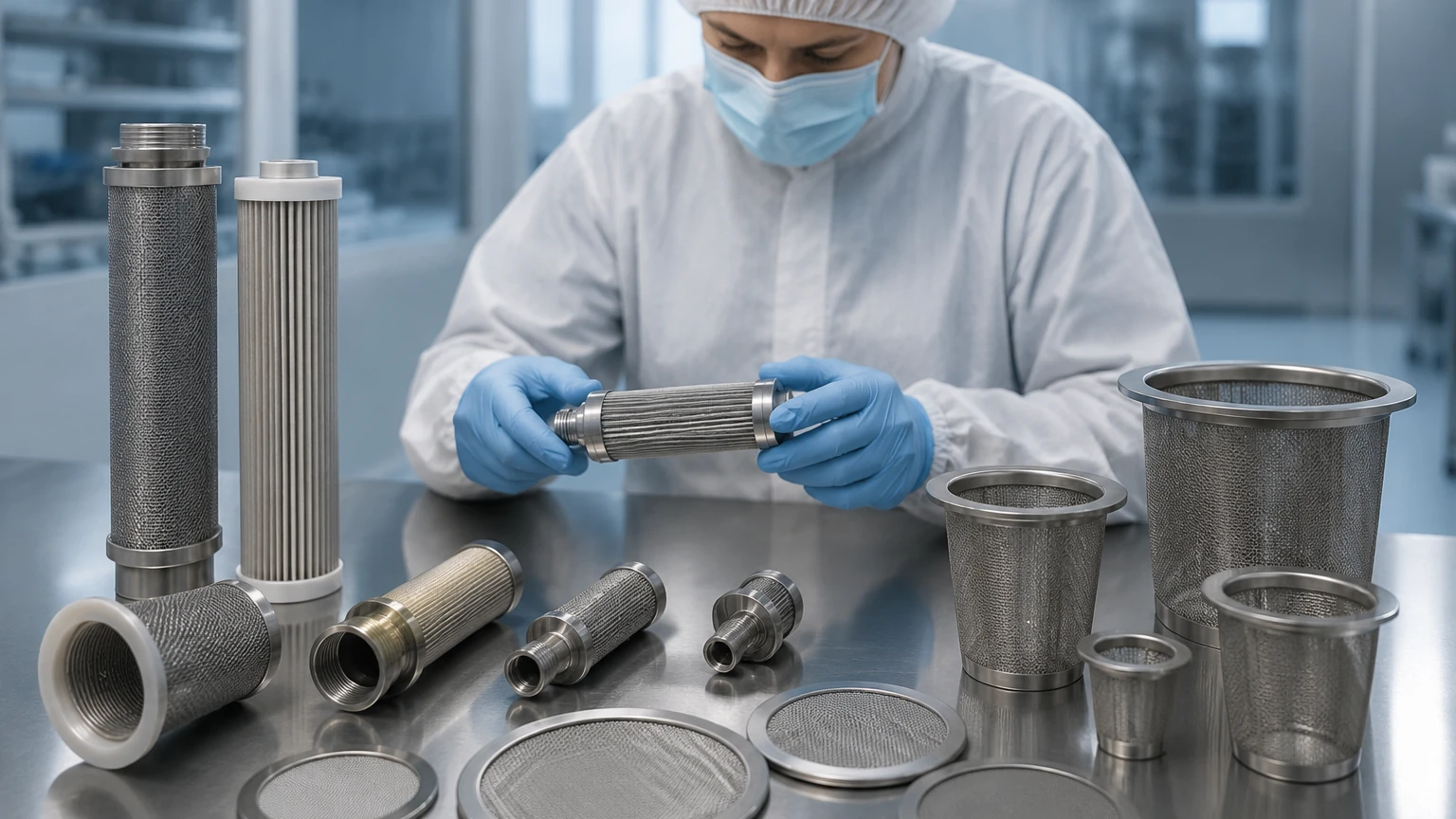
Sanitary engineering is defined by the absence of features that could compromise hygiene. When evaluating stainless steel filter cartridges or housings, engineers look for several key design characteristics:
1. Self-Draining Surfaces: All horizontal surfaces should be sloped to ensure that fluids drain completely. Stagnant fluid is a primary breeding ground for bacteria.
2. Internal Radii: Sharp internal corners are difficult to clean. Sanitary standards typically require a minimum radius (often 3.2 mm or 1/8 inch) for all internal angles to ensure cleaning fluids can reach every surface.
3. No Dead Legs: A dead leg is a pocket or extension in a piping system or housing where fluid does not circulate. Standards like ASME BPE provide specific ratios (e.g., the 2:1 rule) to limit the length of dead legs relative to the pipe diameter.
4. Hygienic Connections: Standard NPT threads are generally prohibited in the product contact zone of sanitary systems because the threads create crevices. Instead, Tri-Clamp (clover) fittings or DIN 11851 unions are used, which utilize a gasket to create a flush, crevice-free seal.
Surface Finish and Treatment Requirements
The smoothness of a contact surface is a critical metric in sanitary standards. Surface roughness is measured in Ra (Roughness Average), typically expressed in micrometers (µm) or micro-inches (µin). A rougher surface has more "peaks and valleys" where proteins and microbes can adhere.
* Mechanical Polishing: Most food-grade applications require a finish of Ra ≤ 0.8 µm (32 µin). This is achieved through mechanical grinding and polishing.
* Electropolishing: For pharmaceutical and high-purity applications, electropolishing is often required. This electrochemical process removes a fine layer of material, smoothing the microscopic peaks and creating a mirror-like finish. Electropolishing also enhances the chromium-to-iron ratio on the surface, significantly improving corrosion resistance.
* Passivation: After fabrication and polishing, stainless steel components must undergo passivation. This involves treatment with a mild oxidant (like nitric or citric acid) to remove free iron from the surface and encourage the formation of a protective passive oxide layer.
Cleaning Protocols: CIP and SIP Compatibility
A component that meets sanitary standards must be capable of withstanding the rigors of modern cleaning protocols.
Clean-in-Place (CIP)
CIP involves circulating hot water, detergents, and acid/alkali solutions through the filtration system without dismantling it. The filter media—whether it is a wedge wire screen or a sintered metal mesh—must be structurally robust enough to handle the flow rates and chemical exposure of a CIP cycle without deforming or degrading.
Steam-in-Place (SIP)
SIP uses saturated steam to sterilize the equipment. This process subjects the filter to high temperatures (typically 121°C to 135°C) and pressure. Sanitary filters must be designed to manage the thermal expansion of different components and ensure that gaskets do not lose their seal during the heating and cooling phases.
Technical Considerations for Procurement and Customization
When sourcing filtration solutions, engineers must balance the requirements of sanitary standards with the specific functional needs of their application. Off-the-shelf components may not always fit the spatial constraints of a facility or the specific flow characteristics of a unique product.
Customization is often necessary to integrate sanitary filtration into existing lines. This may involve custom housing dimensions, specialized inlet/outlet configurations, or unique micron ratings for the filter media. When opting for customized solutions, it is vital to partner with a manufacturer that understands the intersection of custom fabrication and sanitary compliance.
For those seeking to explore specific product configurations or technical support for custom filtration projects, visiting the Main Page provides a comprehensive overview of available technologies and manufacturing capabilities. Understanding the total cost of ownership—which includes the initial purchase price, the ease of maintenance, and the longevity of the filter under repeated sterilization cycles—is key to making an informed decision.
Conclusion
Sanitary standards are the backbone of safety and quality in modern industrial processing. By focusing on material integrity, precision engineering, and validated surface finishes, manufacturers can ensure that their filtration systems contribute to a sterile and efficient production environment. For the B2B buyer, prioritizing compliance with standards like 3-A, EHEDG, and ASME BPE is not just a matter of checking a box; it is an investment in the reliability and reputation of the entire production process.
