


Cip Optimization
In the landscape of industrial processing, Clean-in-Place (CIP) systems represent the standard for maintaining hygiene and operational efficiency without the labor-intensive requirement of dismantling complex equipment. For facilities utilizing high-performance stainless steel filtration systems, cip optimization is not merely a maintenance task; it is a critical engineering strategy that impacts product quality, equipment longevity, and the total cost of ownership.
As a specialized manufacturer of custom stainless steel filtration solutions, Kaifil understands that the interaction between the filter media and the cleaning cycle determines the overall reliability of the production line. This guide examines the technical parameters, engineering considerations, and selection criteria essential for achieving an optimized CIP process in demanding industrial environments.
The Fundamentals of CIP Optimization in Filtration Systems
CIP optimization is the process of fine-tuning the cleaning cycle to achieve the highest level of cleanliness with the minimum expenditure of time, energy, and chemicals. In filtration applications, the challenge is unique because the filter media is designed to trap contaminants, which are then inherently difficult to remove during a cleaning cycle.
To effectively optimize these systems, engineers focus on the four pillars of the Sinner Circle: Time, Action (Mechanical Force), Chemicals, and Temperature (TACT).
1. Mechanical Action and Flow Dynamics
In the context of filtration, mechanical action is primarily achieved through fluid velocity. To ensure that the internal surfaces of a filter housing and the intricate pores of a stainless steel mesh are cleaned, the cleaning fluid must reach a state of turbulent flow. Typically, a Reynolds number (Re) greater than 3,000 is required, though many engineers target Re > 10,000 to ensure sufficient scouring action. For complex filter geometries, such as sintered metal or multi-layered wire mesh, the flow must be high enough to penetrate the depth of the media without causing structural deformation.
2. Chemical Concentration and Compatibility
The selection of cleaning agents depends on the nature of the foulant. In food and beverage applications, caustic solutions (sodium hydroxide) are used to dissolve organic fats and proteins, while acid washes (nitric or phosphoric acid) remove mineral scales. For Main Page components, material compatibility is paramount. While 316L stainless steel offers excellent resistance to most CIP chemicals, improper concentrations or excessive exposure to chlorides can lead to pitting corrosion or stress corrosion cracking.
3. Temperature Management
Increasing the temperature of the CIP solution generally improves the solubility of contaminants and accelerates chemical reactions. However, in filtration systems, thermal expansion must be accounted for. Rapid temperature swings (thermal shock) can stress the welds and seals of a filter cartridge. Optimization involves finding the "sweet spot" where cleaning efficiency is maximized without compromising the mechanical integrity of the filter elements.
Engineering Considerations for Filter Design
For a CIP cycle to be effective, the filter hardware must be designed with cleanability in mind. If the filter element itself contains "dead zones" or areas of low flow, bacteria and residues will accumulate, leading to batch contamination.
Surface Finish and Hygiene
The internal surface roughness of the filter housing and the filter media support structures significantly influences cip optimization. In pharmaceutical and high-purity chemical applications, a surface finish of Ra < 0.8 μ m is standard, often achieved through electropolishing. This smooth finish reduces the ability of microorganisms to adhere to the metal and ensures that the cleaning fluid can reach every square millimeter of the surface.
Elimination of Dead Legs
A "dead leg" is an area in the piping or filter housing where the cleaning fluid cannot circulate effectively. Engineering guidelines typically dictate that the length of a dead leg should not exceed 1.5 to 2 times the pipe diameter. In custom filter housings, Kaifil ensures that inlet and outlet ports are positioned to promote full drainage and eliminate stagnant pockets, which is essential for a successful CIP validation.
Structural Integrity during Backwashing
Many CIP-optimized systems incorporate a backwash or back-pulse phase, where fluid is forced through the filter media in the reverse direction to dislodge cake buildup. The filter element must be engineered to withstand these reverse pressure differentials. Unlike polymer filters, which may collapse or shed fibers under reverse flow, stainless steel wire mesh and sintered cartridges are structurally reinforced to handle repeated backwash cycles, making them the preferred choice for automated CIP systems.
Selecting the Right Filter Media for Enhanced Cleanability
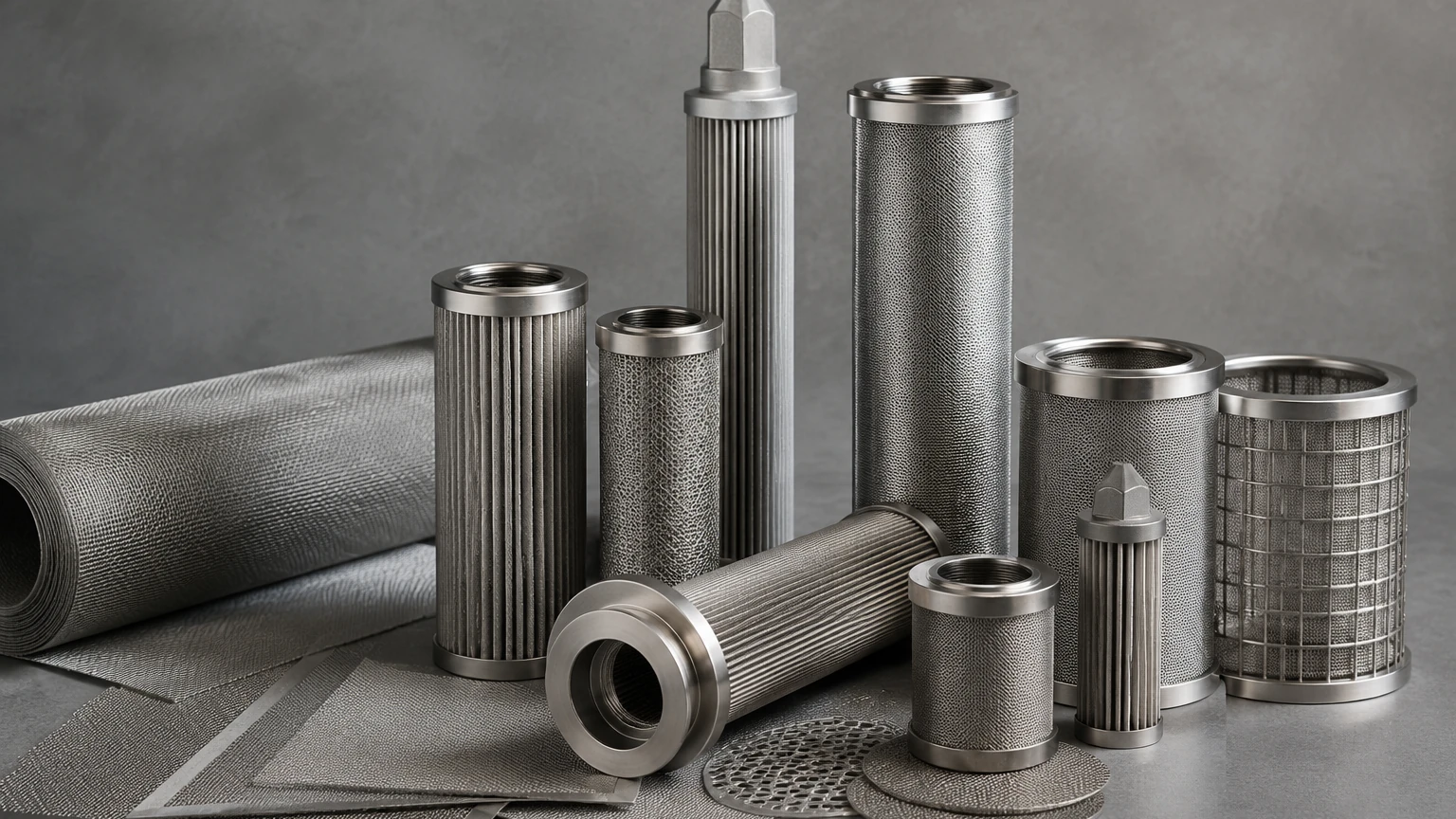
The choice of filter media is perhaps the most significant factor in how easily a system can be cleaned. Different structures offer varying degrees of "cleanability."
* Wedge Wire Screens: These are highly effective for CIP because of their V-shaped profile. The two-point contact ensures that particles do not become wedged in the media, allowing for easy removal during backwashing.
* Stainless Steel Wire Mesh: Available in various weaves (plain, twilled, dutch), wire mesh provides precise filtration. For cip optimization, plain square weaves are often easier to clean than complex dutch weaves, though the latter may be necessary for finer filtration requirements.
* Sintered Metal Felt and Powder: These depth-filtration media provide high dirt-holding capacity. However, because the contaminants are trapped within a complex 3-dimensional matrix, they require more intensive CIP cycles, often involving longer chemical soak times and ultrasonic cleaning in extreme cases.
When selecting media, engineers must balance the required filtration accuracy with the practicalities of the cleaning cycle. Over-specifying filtration fineness can lead to premature blinding and excessively frequent CIP cycles, which reduces overall plant productivity.
Monitoring and Validating CIP Performance
An optimized CIP process must be measurable and repeatable. Without proper monitoring, a facility risks either under-cleaning (leading to contamination) or over-cleaning (wasting water, chemicals, and time).
Differential Pressure (DP) Monitoring
The most direct indicator of filter cleanliness is the differential pressure across the element. By integrating DP sensors into the PLC (Programmable Logic Controller), operators can trigger CIP cycles automatically when a certain pressure threshold is reached. Post-CIP, the DP should return to the "clean" baseline. If the baseline DP begins to creep upward over several cycles, it indicates that the CIP process is not fully removing the foulants, signaling a need for cip optimization adjustments.
Conductivity and pH Sensors
To minimize water waste during the rinse phases, conductivity sensors are used to detect the presence of cleaning chemicals. Once the conductivity of the effluent matches that of the incoming rinse water, the cycle can move to the next phase. This prevents the unnecessary use of thousands of gallons of water that often occurs in timed, non-optimized cycles.
Validation Protocols
In regulated industries like pharmaceuticals, CIP must be validated through swab testing or final rinse water analysis (TOC – Total Organic Carbon). An optimized system ensures that these validation tests are passed consistently on the first attempt, avoiding the need for re-cleaning and the associated downtime.
Common Risks and Mitigation Strategies
Even with a well-designed system, several risks can undermine the effectiveness of CIP.
Filter Blinding and Irreversible Fouling
Certain substances, such as proteins in the dairy industry or polymers in chemical processing, can undergo a phase change when exposed to heat or specific chemicals, becoming "baked on" to the filter media. This is known as irreversible fouling. To mitigate this, the CIP sequence often begins with a cool-water pre-rinse to remove the bulk of the solids before the heated chemical phase begins.
Mechanical Fatigue
Repeated thermal cycling and pressure pulses can lead to mechanical fatigue in the filter media. This is particularly true for pleated stainless steel elements where the stress is concentrated at the roots of the pleats. During the design phase, it is vital to confirm that the filter's fatigue life aligns with the expected frequency of CIP cycles. Kaifil's engineering team works with clients to specify wire diameters and support structures that withstand these operational stresses.
Chemical Carryover
Inadequate rinsing can lead to chemical residues remaining in the filter housing, which can contaminate the next production batch. This risk is highest in systems with complex internal geometries. Optimization involves verifying the flow patterns within the housing to ensure that the rinse water reaches all internal surfaces, including gaskets and O-ring grooves.
The Economic Impact of CIP Optimization
While the initial investment in high-quality stainless steel filtration and automated CIP controls may be higher than manual systems, the long-term economic benefits are substantial.
1. Reduced Downtime: An optimized 30-minute CIP cycle versus a non-optimized 60-minute cycle can add hundreds of hours of production time over a year.
2. Extended Filter Life: Proper cleaning prevents the permanent blinding of expensive stainless steel cartridges, allowing them to be reused for years rather than months.
3. Resource Conservation: By precisely controlling chemical dosing and rinse times, facilities can significantly reduce their water and wastewater treatment costs, contributing to corporate sustainability goals.
4. Batch Consistency: Reliable cleaning ensures that there is no cross-contamination between batches, protecting the brand's reputation and reducing the risk of costly product recalls.
Conclusion
Cip optimization is a multi-disciplinary challenge that sits at the intersection of fluid dynamics, chemistry, and mechanical engineering. For industrial operators, the goal is to create a cleaning regime that is as efficient as the filtration process itself. By selecting the appropriate stainless steel filter media, ensuring hygienic housing design, and rigorously monitoring cycle parameters, manufacturers can achieve a seamless transition between production and cleaning.
As a partner in industrial filtration, Kaifil provides the technical expertise necessary to design and manufacture components that excel in CIP environments. Whether you are dealing with high-viscosity fluids in chemical processing or strict hygienic requirements in food production, our custom solutions are engineered for durability and cleanability. To explore how our stainless steel filtration components can support your cip optimization goals, we invite you to consult our technical resources and Review product options and application support.
