


Compressor Breathing Air Filter
In industrial, medical, and emergency response environments, the quality of compressed air used for respiration is a critical safety factor. A compressor breathing air filter system is designed to remove contaminants from compressed air to ensure it meets stringent international safety standards, such as EN 12021 or CGA Grade D. For engineers and procurement specialists, selecting the right filtration components involves understanding the complex interaction between mechanical filtration, chemical adsorption, and the structural integrity of the filter housing and media.
Industrial compressors, whether reciprocating, screw, or centrifugal, inherently introduce contaminants into the air stream. These include oil aerosols, water vapor, atmospheric dust, and gaseous pollutants like carbon monoxide (CO) and carbon dioxide (CO2). A robust compressor breathing air filter assembly must address each of these hazards systematically to prevent respiratory distress or long-term health issues for the end-user.
The Fundamental Role of Filtration in Breathing Air Systems
Breathing air systems are typically multi-stage configurations. Unlike standard industrial pneumatic filtration, which focuses on protecting downstream equipment, a compressor breathing air filter focuses on human physiology. The primary objective is to deliver air that is odorless, tasteless, and free of toxic concentrations of pollutants.
High-pressure compressors used in SCUBA, firefighting (SCBA), and industrial sandblasting operate at pressures ranging from 200 to 450 bar. At these pressures, even trace amounts of oil or moisture can become hazardous. Oil can cause lipoid pneumonia, while moisture can lead to internal corrosion of storage cylinders or freezing of regulator valves. Therefore, the filtration train must be engineered to withstand high differential pressures while maintaining high capture efficiency.
Technical Specifications and Material Selection
The choice of filter media is the most significant factor in determining the performance of a compressor breathing air filter. In professional applications, stainless steel components are often preferred for their durability and resistance to high-pressure environments.
Stainless Steel Wire Mesh and Sintered Metal
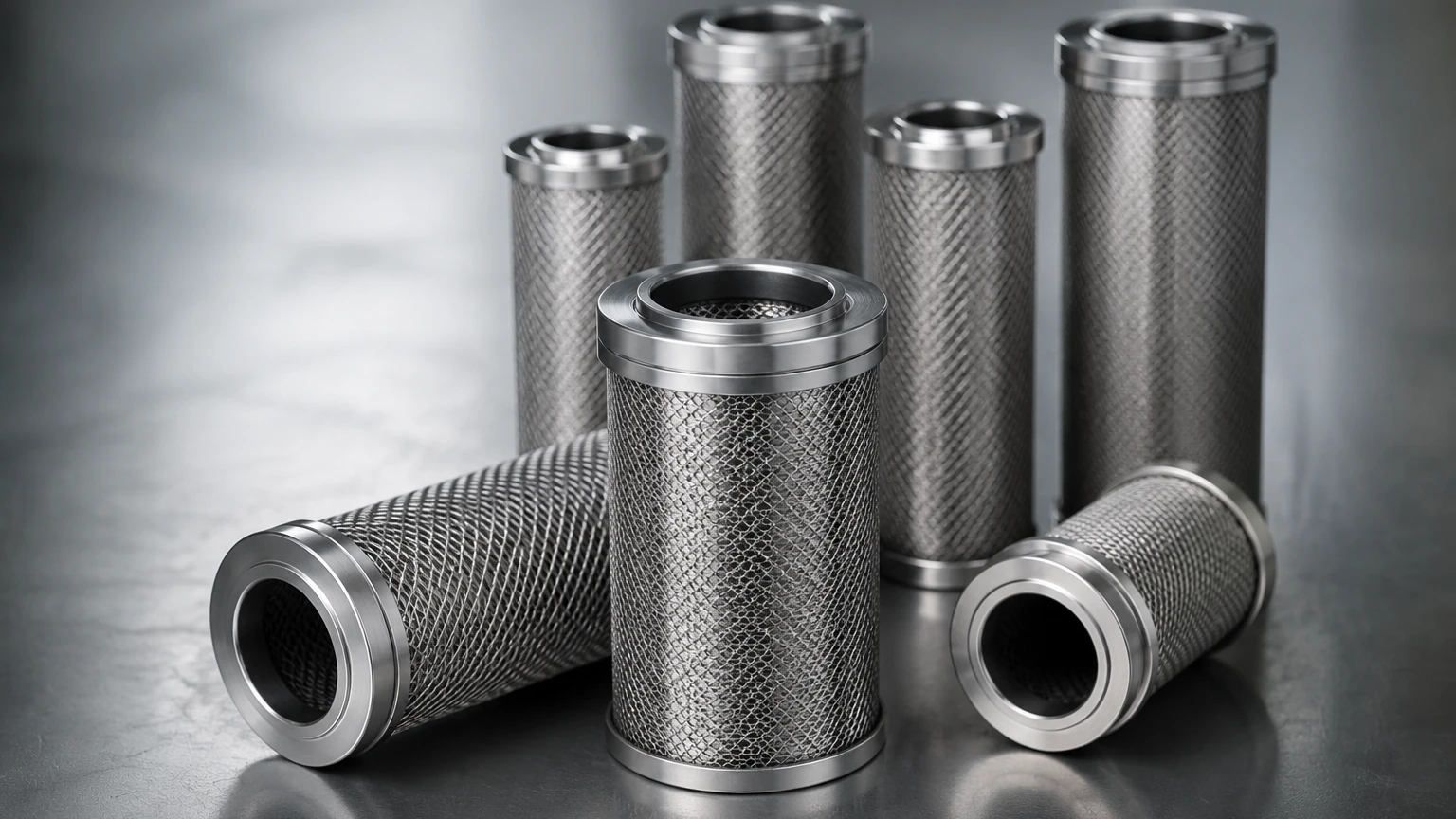
For the initial stages of filtration, stainless steel wire mesh or sintered metal filters are frequently employed. These components serve as high-efficiency moisture separators and pre-filters. Because breathing air compressors generate significant heat, the filter media must remain stable at elevated temperatures without off-gassing or degrading.
Stainless steel filters offer several advantages in this context:
1. Corrosion Resistance: Essential for handling the condensate (water and oil mix) removed during the first stages of compression.
2. Structural Integrity: Sintered metal filters can withstand high pressure drops without the risk of media migration, ensuring that the filter itself does not become a source of contamination.
3. Cleanability: Unlike disposable polymer-based filters, stainless steel mesh can often be ultrasonically cleaned, providing a longer service life in heavy-duty industrial settings.
For engineers looking to integrate these components into larger systems, reviewing the technical capabilities on the Kaifil Main Page can provide insights into custom fabrication options for specific micron ratings.
Multi-Stage Filtration Process
A comprehensive compressor breathing air filter system typically consists of four distinct stages, each targeting a specific class of contaminant.
1. Water and Oil Aerosol Removal (Coalescing)
The first stage utilizes coalescing filters to remove liquid water and oil aerosols. As the air passes through a borosilicate micro-glass or stainless steel mesh matrix, small droplets collide and merge into larger drops, which then drain away. This stage is vital for protecting the subsequent adsorption stages, as liquid water or oil can "blind" activated carbon or molecular sieves, rendering them ineffective.
2. Vapor Adsorption (Activated Carbon)
Once aerosols are removed, the air still contains oil vapors and odors. Activated carbon filters are used to adsorb these gaseous hydrocarbons. The effectiveness of this stage is highly dependent on the contact time between the air and the carbon bed, requiring precise engineering of the filter housing volume relative to the flow rate.
3. Catalytic Conversion (Hopcalite)
Carbon monoxide is a particularly dangerous contaminant because it is odorless and colorless. In many breathing air systems, a catalyst such as Hopcalite is used to convert CO into CO2 at room temperature. This stage requires the air to be extremely dry, as moisture poisons the catalyst. Consequently, a desiccant stage (molecular sieve) usually precedes the CO catalyst.
4. Particulate Filtration
The final stage is a high-efficiency particulate filter (often 0.01 to 1 micron) that ensures no desiccant dust or carbon fines reach the user’s mask or lungs. This stage often utilizes precision-engineered metal components to ensure the final air stream is clinically clean.
Engineering Considerations for System Design
When specifying a compressor breathing air filter for a new installation or an OEM project, engineers must evaluate several performance metrics beyond simple micron ratings.
Pressure Drop (Delta P)
Every filter stage introduces a restriction to the flow. A high initial pressure drop reduces the efficiency of the compressor and increases energy costs. Engineers should select filters with a high surface area-to-volume ratio to minimize Delta P while maintaining filtration efficiency. Stainless steel pleated filters are often used here to maximize surface area within a compact footprint.
Flow Rate and Velocity
The velocity of the air passing through the filter media affects the "dwell time" required for chemical adsorption. If the flow rate exceeds the filter's design capacity, contaminants may bypass the media. It is essential to size the compressor breathing air filter based on the peak flow demand, not just the average output of the compressor.
Housing Compatibility and Safety
The filter housing must be rated for the maximum working pressure of the system. In high-pressure breathing air applications, housings are typically constructed from high-tensile aluminum or stainless steel. Material traceability and compliance with pressure vessel codes (such as ASME or PED) are non-negotiable for safety-critical applications.
Maintenance and Replacement Cycles
The reliability of a compressor breathing air filter is entirely dependent on a rigorous maintenance schedule. Unlike standard industrial filters where a change is indicated by a pressure drop, breathing air filters must often be changed based on operating hours or the detection of contaminants.
* Desiccant and Carbon Cartridges: These have a finite capacity and must be replaced before they reach saturation. Many modern systems include electronic sensors that monitor moisture and CO levels in real-time, providing an automated alert for filter replacement.
* Reusable Metal Elements: Stainless steel pre-filters should be inspected for physical damage or permanent clogging. Regular cleaning according to the manufacturer’s specifications ensures that the initial stages of the filtration train do not become a bottleneck.
Failure to maintain the filtration system can lead to "breakthrough," where contaminants pass through saturated media and enter the breathing air supply, posing immediate risks to life and health.
Customization and OEM Solutions
For manufacturers of breathing air compressors, off-the-shelf filtration solutions may not always meet specific spatial or performance requirements. Custom-designed filtration components allow for the optimization of the filtration train to fit within specialized enclosures or to meet unique environmental challenges (such as high-humidity marine environments).
Kaifil specializes in the production of custom stainless steel filtration solutions that can be tailored to the exacting needs of breathing air applications. By adjusting the weave pattern of the wire mesh or the density of sintered components, it is possible to achieve a precise balance between filtration accuracy and flow resistance. Engineers can explore these customization options by visiting the Main Page to understand the manufacturing tolerances and material grades available.
Conclusion
The compressor breathing air filter is the most critical component in any respiratory air supply system. Its role in removing oil, water, and toxic gases cannot be overstated. By selecting high-quality materials—specifically durable stainless steel for pre-filtration and structural support—and adhering to a multi-stage filtration strategy, engineers can ensure the delivery of safe, breathable air.
When purchasing or designing these systems, it is vital to confirm the filtration efficiency, pressure ratings, and compliance with international safety standards. Working with an experienced manufacturer who understands the technical nuances of metal filtration ensures that the final product will perform reliably in the most demanding industrial and emergency environments.
