


Mash Filtration
In the industrial production of beverages, particularly in brewing and grain-based extract processing, mash filtration represents a critical juncture between enzymatic conversion and liquid recovery. This process, which involves separating the liquid extract (wort) from the solid grain husks and residual materials (spent grains), dictates the efficiency, clarity, and overall quality of the final product. For engineers and procurement teams, selecting the appropriate filtration media and hardware is not merely a matter of mechanical separation but a complex calculation of flow dynamics, material durability, and chemical compatibility.
At its core, mash filtration relies on the principle of depth filtration, where the grain bed itself often acts as the primary filter medium, supported by a precision-engineered stainless steel screen or mesh. As industrial requirements shift toward higher yields and faster cycle times, the role of high-performance stainless steel components becomes increasingly paramount. Understanding the technical nuances of these systems is essential for optimizing production lines and ensuring long-term operational reliability.
The Engineering Principles of Mash Filtration
The physics of mash filtration is governed largely by Darcy’s Law, which describes the flow of a fluid through a porous medium. In this context, the "porous medium" is the bed of spent grains resting atop a false bottom or within a filter press. The rate of filtration is influenced by the viscosity of the liquid, the thickness of the grain bed, the pressure differential applied across the bed, and the permeability of the filter media.
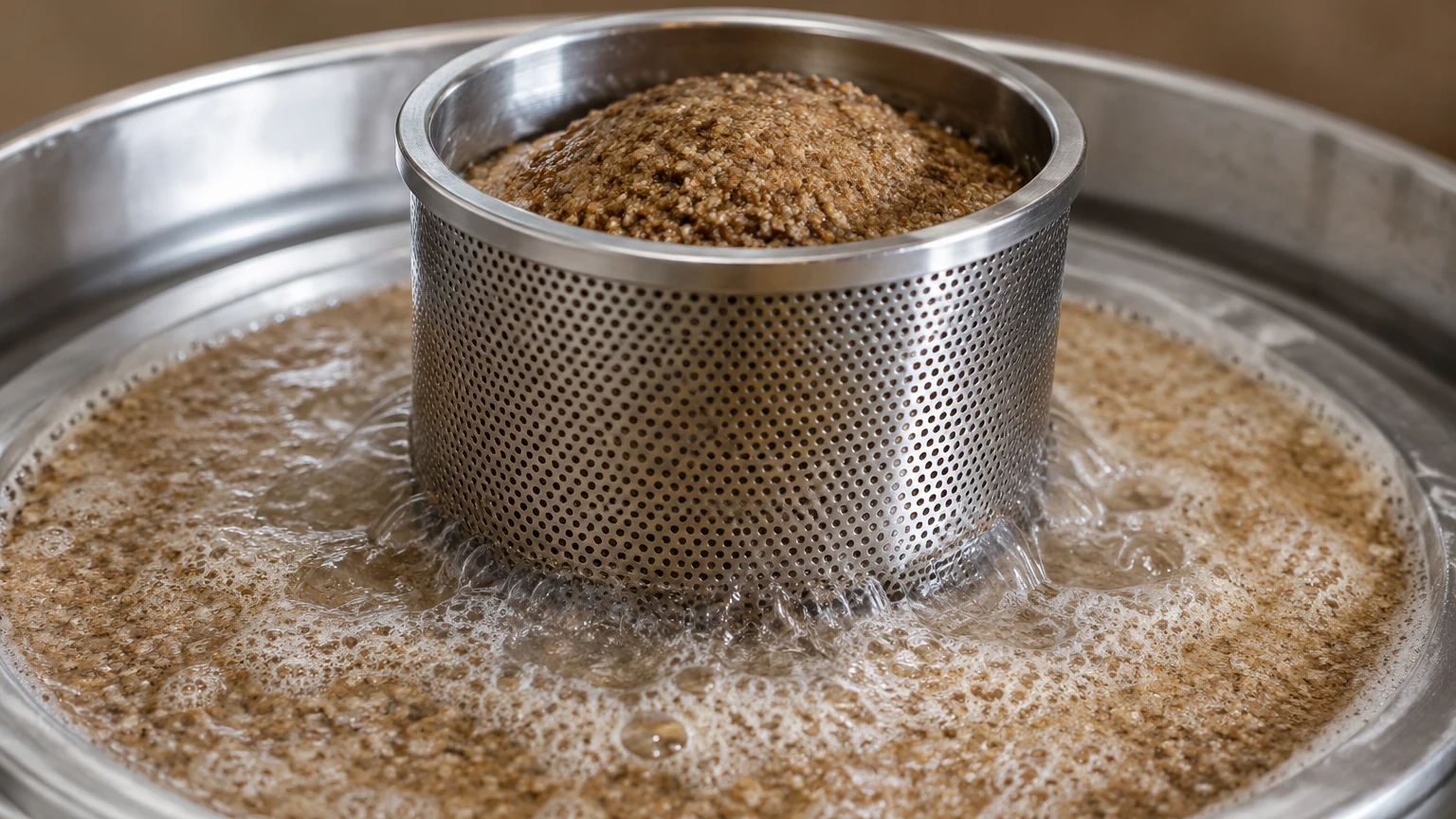
In a traditional lauter tun, the process begins with "vorlauf," or recirculation, where the initial turbid wort is pumped back over the top of the grain bed. This allows the fine particles to settle within the grain matrix, establishing a natural filter cake. The precision of the underlying stainless steel screen is vital during this phase; if the openings are too large, the bed may not stabilize correctly, leading to high turbidity. If they are too small, the screen may blind (clog) prematurely, drastically reducing flow rates.
Modern industrial systems often utilize mash filter presses, which operate under higher pressures than gravity-fed or vacuum-assisted lauter tuns. These systems require robust stainless steel support structures and specialized mesh to withstand the mechanical stresses of the pressing cycle. Regardless of the specific method, the objective remains the same: maximizing the recovery of fermentable sugars while minimizing the extraction of undesirable polyphenols and tannins from the grain husks.
Material Selection: The Case for Stainless Steel
When evaluating components for mash filtration, material selection is a primary engineering consideration. Stainless steel, specifically grades 304 and 316L, is the industry standard for several technical reasons:
1. Corrosion Resistance: The filtration environment is often acidic (pH 5.2–5.6) and involves high temperatures (up to 80°C/176°F). Stainless steel provides the necessary resistance to oxidation and chemical degradation under these conditions.
2. Hygienic Properties: In food and beverage applications, the ability to sanitize equipment is non-negotiable. Stainless steel surfaces can be polished to specific Ra (Roughness Average) values, preventing bacterial attachment and facilitating effective Cleaning-in-Place (CIP) cycles.
3. Mechanical Strength: Mash beds can be heavy, and pressure differentials can be significant. Stainless steel wire mesh and perforated plates offer the structural integrity required to prevent warping or failure under load.
4. Thermal Stability: Frequent temperature fluctuations between mashing, sparging, and cleaning can cause thermal expansion. Stainless steel’s predictable thermal properties ensure that filter tolerances remain consistent throughout the production day.
For most standard applications, Type 304 stainless steel offers sufficient protection. However, in environments with high chloride concentrations or where aggressive cleaning agents are used, Type 316L is preferred due to its added molybdenum content, which enhances resistance to pitting and crevice corrosion.
Comparing Lauter Tun Screens and Mash Filter Press Systems
Industrial facilities generally choose between two primary technologies for mash filtration, each requiring different types of stainless steel filtration components.
Lauter Tun False Bottoms
The lauter tun utilizes a large-diameter vessel with a false bottom consisting of milled or wedge-wire screens. These screens are designed with narrow slots—typically ranging from 0.7mm to 1.2mm—that allow liquid to pass while supporting the weight of the grain bed. The geometry of the slot is critical; wedge-wire is often preferred because its V-shaped profile is "self-cleaning," meaning particles that pass through the narrowest point of the slot are unlikely to become lodged further down.
Mash Filter Presses
A mash filter press uses a series of plates and frames covered with filter cloths or fine metal meshes. Unlike the lauter tun, which relies on gravity and a thick grain bed, the filter press uses thin beds and high pressure. This results in much faster filtration cycles and higher extract efficiency. The stainless steel components in these systems, such as the internal manifolds and support meshes, must be engineered for high-pressure durability and precise fitment to prevent bypass.
For facilities looking to upgrade or maintain these systems, consulting the Main Page of a specialist manufacturer can provide insights into the latest developments in custom mesh configurations and precision-cut screens that bridge the gap between these two technologies.
Key Performance Metrics for Industrial Filtration
To evaluate the success of a mash filtration setup, engineers focus on several quantifiable metrics:
* Wort Clarity (Turbidity): Measured in EBC or ASBC units, clarity indicates how well the filter media and grain bed are retaining fine particulates. Low turbidity is essential for subsequent processing steps, such as boiling and fermentation, where excess solids can lead to off-flavors or fouled heat exchangers.
* Extract Yield: This is the percentage of available sugars recovered from the grain. High-performance filtration allows for efficient "sparging" (rinsing the grain), ensuring that the maximum amount of extract is moved into the kettle.
* Cycle Time: In a high-volume B2B environment, throughput is king. The filtration system must be able to handle the required volume within a specific window to keep the rest of the plant synchronized.
* Differential Pressure (ΔP): Monitoring the pressure drop across the filter media helps operators identify when the grain bed has become too compacted or when the stainless steel screens require deep cleaning.
Customization and OEM Solutions in Mash Filtration
No two industrial processing plants are identical. Factors such as grain bill composition (e.g., the use of rye or wheat, which lack husks), water chemistry, and desired throughput necessitate customized filtration solutions. OEM manufacturers like Kaifil specialize in producing bespoke stainless steel filter cartridges and wire mesh components tailored to these specific variables.
Customization often involves adjusting the weave pattern of the wire mesh. For example, a plain square weave might be sufficient for coarse separation, while a Dutch weave or twilled weave provides the finer filtration and higher mechanical strength needed for specialized extracts. Furthermore, the integration of precision metal filter components into existing hardware requires exact tolerances to ensure a leak-proof seal and uniform flow distribution.
When specifying custom components, engineers should confirm the following with their supplier:
* Micron Rating: The effective pore size required for the specific solids being filtered.
* Open Area Percentage: The ratio of the area of the openings to the total area of the screen, which directly impacts flow rate and pressure drop.
* Reinforcement Requirements: Whether the mesh needs a perforated metal backing or internal support frames to withstand operational pressures.
Maintenance and Longevity of Stainless Steel Components
While stainless steel is exceptionally durable, the longevity of mash filtration components depends on proper maintenance and operational protocols. The most common threat to filtration efficiency is "blinding," where proteins, lipids, and fine grain particles become trapped within the mesh pores.
Cleaning-in-Place (CIP) Protocols
Effective CIP cycles typically involve a combination of caustic washes (to dissolve organic proteins and fats) and acid washes (to remove mineral scale or "beerstone"). The stainless steel components must be able to withstand these chemicals at elevated temperatures without losing their surface finish. It is important to avoid using steel wool or carbon steel brushes for manual cleaning, as this can embed iron particles into the stainless steel, leading to localized rusting.
Mechanical Inspection
Regular inspection of false bottoms and filter screens is necessary to identify signs of mechanical fatigue, such as cracked welds or deformed mesh. In high-capacity plants, even a small gap or bypass can significantly degrade wort clarity and downstream product quality. Replacing worn components with precision-engineered OEM parts ensures that the system returns to its original design specifications.
Total Cost of Ownership (TCO) Considerations
For purchasing teams, the initial cost of a stainless steel filter component is only one part of the TCO equation. A cheaper, lower-quality screen may lead to higher costs in the form of:
* Reduced Yield: Inefficient sparging due to poor flow distribution.
* Increased Downtime: Frequent blinding requiring manual intervention.
* Downstream Issues: High turbidity causing premature fouling of centrifuges or final membranes.
Investing in high-quality, custom-manufactured filtration solutions from a dedicated provider ensures that the equipment can handle the rigors of continuous industrial use. By focusing on precision engineering and material integrity, facilities can achieve a more stable process, higher product quality, and a lower overall cost per hectoliter produced.
In conclusion, mash filtration is a sophisticated mechanical process that requires a deep understanding of both fluid dynamics and material science. Whether through the use of traditional lauter tun screens or advanced filter press components, the goal remains a clear, high-quality extract achieved through efficient and repeatable separation. For those seeking to optimize their filtration stages, reviewing technical specifications and application support on the Main Page is a recommended step toward achieving superior industrial performance.
