


Hirsh Funnel
In the field of industrial and laboratory filtration, the hirsh funnel represents a specialized tool designed for the efficient separation of solids from liquids, particularly when dealing with small volumes of material. While often associated with laboratory settings, the principles of the hirsh funnel are frequently integrated into larger industrial processes where precision, high-value product recovery, and vacuum-assisted filtration are required. For engineers and procurement specialists, understanding the technical nuances of this equipment is essential for optimizing filtration workflows and ensuring material compatibility.
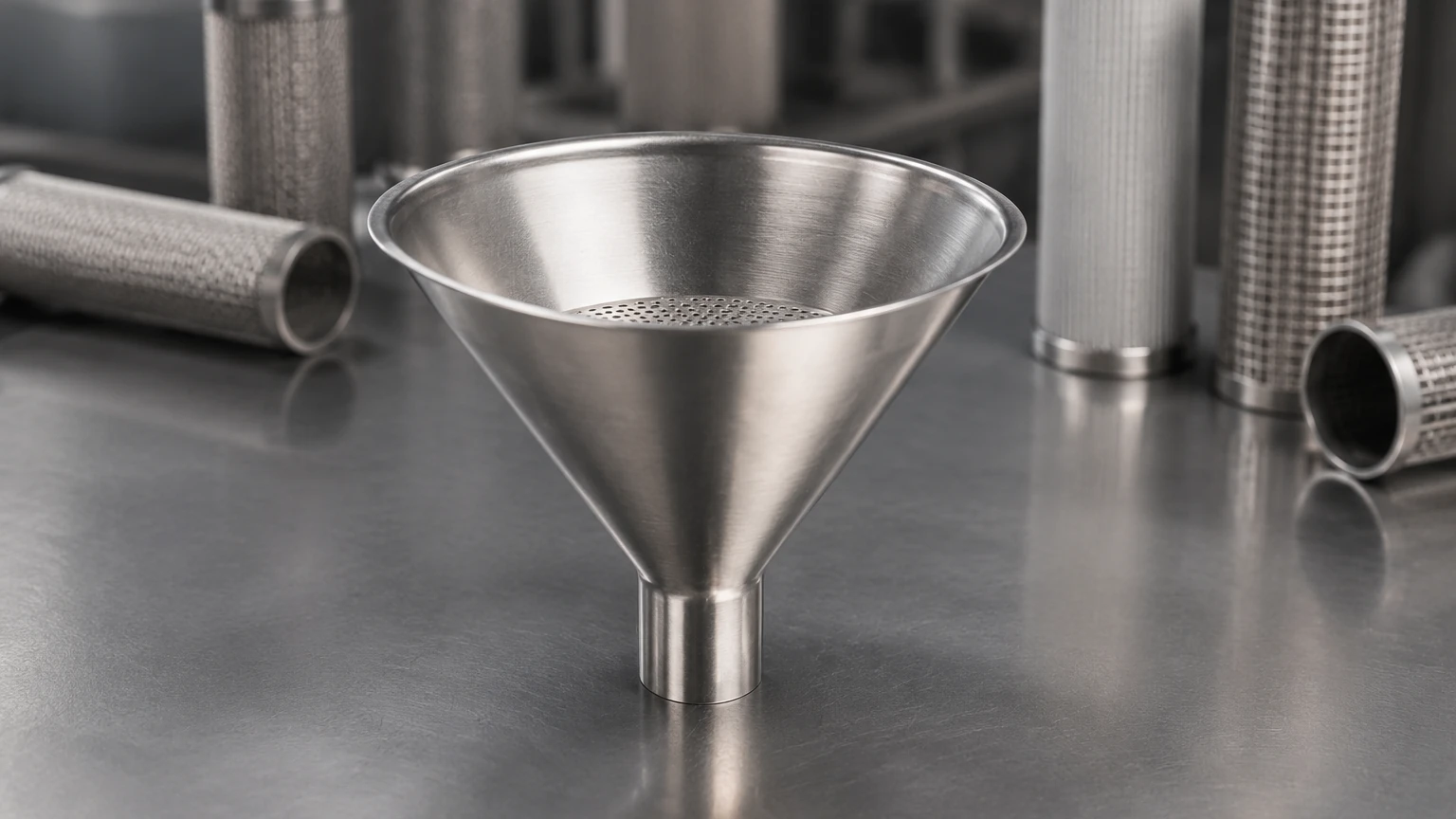
At its core, the hirsh funnel is a variation of the more common Büchner funnel, but it features a distinct conical shape and a smaller perforated plate. This design is not merely aesthetic; it is engineered to minimize the surface area of the filter media, thereby concentrating the collected precipitate and reducing the loss of valuable solids. In industrial applications, such as pharmaceutical manufacturing or fine chemical processing, these design characteristics are critical for maintaining high yield rates.
Technical Design and Geometry of the Hirsh Funnel
The most defining characteristic of the hirsh funnel is its geometry. Unlike the cylindrical walls of a standard Büchner funnel, a hirsh funnel features outward-sloping or conical walls. These walls lead down to a relatively small, flat, perforated base where the filter media (such as filter paper or a custom stainless steel mesh) is placed.
From an engineering perspective, this conical design serves several functions:
1. Concentration of Solids: By narrowing the filtration area, the solid material (the cake) is concentrated into a smaller, thicker layer. This is particularly advantageous when the goal is to recover a small amount of precipitate from a larger volume of solvent.
2. Reduced Retention: The sloped sides facilitate the easy removal of the filter cake. In B2B manufacturing environments, where throughput and ease of cleaning are paramount, reducing the amount of material stuck to the sidewalls is a significant operational advantage.
3. Vacuum Integrity: The design is optimized for use with vacuum flasks. The narrow stem of the funnel is typically fitted with a rubber bung or a specialized gasket to create an airtight seal, allowing for rapid filtration under reduced pressure.
In custom industrial versions, the perforated plate may be replaced with a sintered metal disc or a multi-layer wire mesh, providing greater durability and more precise micron ratings than traditional porcelain or glass versions.
Hirsh Funnel vs. Büchner Funnel: Engineering Trade-offs
When selecting filtration equipment, engineers must decide between a hirsh funnel and a Büchner funnel based on the scale and nature of the task. The choice typically hinges on the volume of the precipitate rather than the volume of the liquid.
* Scale of Operation: Büchner funnels are designed for larger batches where the filter cake is expected to be spread across a wide surface area. In contrast, the hirsh funnel is the preferred choice for micro-scale or semi-micro-scale operations, typically handling solid masses ranging from a few milligrams to approximately 10 grams.
* Filter Media Support: Because the perforated plate in a hirsh funnel is smaller, the mechanical stress on the filter media is concentrated. This requires the use of high-quality support structures, especially when high vacuum pressures are applied. For industrial-grade applications, stainless steel support plates are often preferred over ceramic to prevent cracking or deformation.
* Recovery Efficiency: In high-value applications, such as the production of active pharmaceutical ingredients (APIs), the hirsh funnel’s ability to concentrate the sample makes it easier to wash the precipitate with minimal solvent, reducing the risk of dissolving the product back into the filtrate.
Material Selection for Industrial Filtration: The Shift to Stainless Steel
While traditional hirsh funnels are made of porcelain or borosilicate glass, industrial B2B applications often demand more robust materials. Stainless steel, specifically grades 304 and 316L, has become the standard for custom filtration components that utilize the hirsh design principle.
Advantages of Stainless Steel in Filtration
Stainless steel offers several critical advantages over traditional materials in a production environment:
* Chemical Compatibility: 316L stainless steel provides superior resistance to corrosion, especially when dealing with acidic or alkaline solutions common in chemical processing. This ensures that the filtration equipment does not contaminate the product.
* Thermal Stability: Industrial processes often involve hot filtration. Stainless steel can withstand extreme temperature fluctuations without the risk of thermal shock, which is a common failure point for glass and ceramic funnels.
* Durability and Longevity: In a high-use industrial setting, equipment is subject to physical impact and mechanical stress. Stainless steel components are virtually unbreakable, reducing the total cost of ownership by eliminating the need for frequent replacements.
* Cleanability: For industries following GMP (Good Manufacturing Practice) standards, such as food and beverage or pharmaceuticals, the smooth, non-porous surface of polished stainless steel is essential for effective cleaning and sterilization (CIP/SIP).
For those seeking professional manufacturing of these components, you can Review product options and application support on our Main Page to see how custom metal solutions can replace or enhance traditional filtration setups.
Optimizing Filtration Efficiency and Particle Retention
The performance of a hirsh funnel is heavily dependent on the choice of filter media. In an industrial context, the "media" is the specific material that performs the separation. While paper is common in labs, industrial engineers often specify metal-based media for better performance.
Sintered Wire Mesh and Precision Filtration
Sintered wire mesh is often used in custom hirsh-style filtration assemblies. It consists of multiple layers of stainless steel wire cloth that are bonded together through a heat-treatment process (sintering). This creates a porous material with precise filtration ratings, ranging from 1 micron to several hundred microns.
Key performance factors include:
* Permeability: The design must allow for high flow rates while maintaining the required particle retention. Engineers must balance the thickness of the mesh with the desired throughput.
* Mechanical Strength: Unlike filter paper, which can tear under high vacuum, sintered mesh is self-supporting and can withstand significant differential pressure.
* Backwashing Capability: Metal filter media can often be cleaned by reversing the flow (backwashing), which extends the life of the filter and reduces waste.
Vacuum Systems and Pressure Management in Small-Scale Filtration
The hirsh funnel is almost exclusively used as a vacuum filtration tool. The vacuum creates a pressure differential that pulls the liquid through the filter media, leaving the solid behind. However, managing this pressure is critical to the success of the operation.
Engineering Considerations for Vacuum Filtration
1. Differential Pressure (ΔP): If the vacuum is too strong, it can compress the filter cake, leading to "blinding" or clogging of the filter media. This reduces the flow rate and can even stall the filtration process. Engineers often implement vacuum regulators to maintain an optimal ΔP.
2. Sealing Mechanisms: The interface between the hirsh funnel and the receiving vessel must be perfectly sealed. In B2B industrial setups, this often involves custom-machined flanges or high-performance elastomers (like Viton or EPDM) that can withstand both the vacuum and the chemical nature of the solvents.
3. Filtrate Clarity: The initial stage of vacuum filtration may pull some fine particles through the media before a "pre-coat" or cake is formed. In precision applications, the first portion of the filtrate may need to be recycled back through the funnel to ensure total clarity.
Custom OEM Solutions and Engineering Considerations
Many industrial processes require filtration equipment that does not fit the standard dimensions of laboratory-grade hirsh funnels. This is where OEM (Original Equipment Manufacturer) capabilities become vital. Customization allows engineers to integrate the hirsh design into automated systems or specialized reaction vessels.
Customization Options
* Variable Conical Angles: Depending on the rheology of the slurry, the angle of the funnel walls can be adjusted to optimize the flow and cake formation.
* Integrated Heating/Cooling Jackets: For temperature-sensitive materials, a custom-fabricated hirsh funnel can include a jacket for circulating steam or coolant, ensuring the product remains at the required temperature during filtration.
* Advanced Connection Types: Instead of simple stems, industrial funnels can be designed with Tri-Clamp, NPT, or flanged connections to integrate seamlessly into existing piping systems.
By working with a specialist manufacturer like Kaifil, companies can develop bespoke filtration components that meet the exact requirements of their demanding industrial environments, from material selection to filtration accuracy.
Procurement Guide: Confirming Specifications for Industrial Applications
Before purchasing or commissioning a hirsh funnel or a related filtration component, technical professionals should confirm several key data points to ensure the equipment is fit for purpose.
1. Chemical Compatibility Matrix
Verify that every part of the assembly—the body, the perforated plate, and the seals—is compatible with the solvents and solutes being processed. For instance, while 304 stainless steel is sufficient for many applications, 316L is necessary for high-chloride environments to prevent pitting corrosion.
2. Micron Rating and Particle Size Distribution
The nominal and absolute micron ratings of the filter media must align with the particle size distribution of the solids. Selecting a mesh that is too fine will lead to premature clogging, while a mesh that is too coarse will result in poor filtrate quality.
3. Operating Temperature and Pressure
Document the maximum and minimum operating temperatures, as well as the expected vacuum levels. This information is crucial for selecting the correct wall thickness and gasket materials to prevent mechanical failure.
4. Total Cost of Ownership (TCO)
While a porcelain hirsh funnel has a lower initial cost, the TCO of a custom stainless steel solution is often lower in an industrial setting. Factor in the costs of breakage, cleaning time, replacement frequency, and the value of the product being recovered.
5. Compliance and Certification
In the pharmaceutical and food industries, ensure the equipment meets relevant standards such as FDA, 3A, or EU food contact regulations. Manufacturers should provide material mill certificates and surface finish documentation upon request.
Conclusion
The hirsh funnel, though simple in concept, is a sophisticated tool when applied to precision industrial filtration. Its unique geometry provides a clear advantage in the recovery of small-batch, high-value solids. By transitioning from laboratory-grade materials to engineered stainless steel solutions and custom metal filter media, B2B organizations can achieve higher yields, better durability, and improved process consistency.
For more information on high-performance filtration components and custom OEM solutions, visit the Main Page at https://www.kaifil.com/ to explore our full range of industrial filtration capabilities.
