


Steam Filters
In industrial environments, steam is a primary medium for heat transfer, sterilization, and power generation. However, the quality of steam is rarely consistent. As steam travels through piping systems, it inevitably picks up contaminants such as pipe scale, rust, metal shavings, and chemical residues from boiler feed water. For industries where steam comes into direct contact with products—such as food and beverage, pharmaceuticals, and chemical processing—the presence of these particulates is not merely an efficiency issue but a critical safety and quality concern. High-quality steam filters are essential components designed to remove these impurities, protecting both the final product and downstream equipment.
Selecting the correct filtration solution requires an understanding of steam grades, material science, and the mechanical stresses inherent in high-temperature vapor systems. As a professional manufacturer specializing in custom stainless steel filtration, Kaifil provides the engineering expertise necessary to navigate these technical requirements. For more information on our capabilities, visit our Main Page.
The Role of Steam Filters in Industrial Systems
Steam filters serve two primary functions: protecting downstream hardware and ensuring the purity of the steam used in processes. Without effective filtration, sensitive components such as pressure-reducing valves (PRVs), flow meters, and control valves are susceptible to erosion and clogging. Particulates acting as high-velocity projectiles can scour valve seats and clog small orifices, leading to frequent maintenance shutdowns and system instability.
Beyond equipment protection, the grade of steam required dictates the level of filtration needed. Industrial steam, often used for jacketed heating, may only require coarse filtration to prevent large scale from damaging pumps. In contrast, "culinary steam" or "pure steam" used in direct injection or sterilization requires high-efficiency filtration to meet stringent regulatory standards. By implementing robust stainless steel filtration, facilities can ensure that their steam supply remains a reliable utility rather than a source of contamination.
Classifying Steam Quality: Culinary vs. Process Steam
Understanding the distinction between different steam qualities is the first step in filter selection. Engineers typically categorize steam into three main grades:
1. Plant Steam (Industrial Steam)
This is the basic grade produced by the boiler. It contains the highest level of contaminants, including corrosion products from the piping and chemicals used for boiler water treatment. Filters for plant steam are generally used to protect heavy machinery and are rated for larger micron sizes.
2. Culinary Steam
Used in the food and beverage industry where steam contacts the product (e.g., blanching or direct injection heating), culinary steam must meet 3-A Sanitary Standards or equivalent local regulations. To achieve this, the steam must be filtered to remove 95% of all particles larger than 2 microns. This requires high-precision stainless steel filter elements capable of maintaining integrity under high pressure.
3. Pure or Clean Steam
Common in the pharmaceutical and biotech sectors, pure steam is generated from deionized or distilled water in specialized clean steam generators. While the steam itself starts pure, the distribution system can still introduce particulates. Filtration in these systems often involves high-efficiency sintered metal elements to ensure the highest level of sterility and purity.
Material Engineering and Durability
Steam environments are uniquely challenging for filtration media. They involve high temperatures, rapid thermal expansion, and the potential for chemical corrosion. Consequently, stainless steel is the industry standard for steam filter construction.
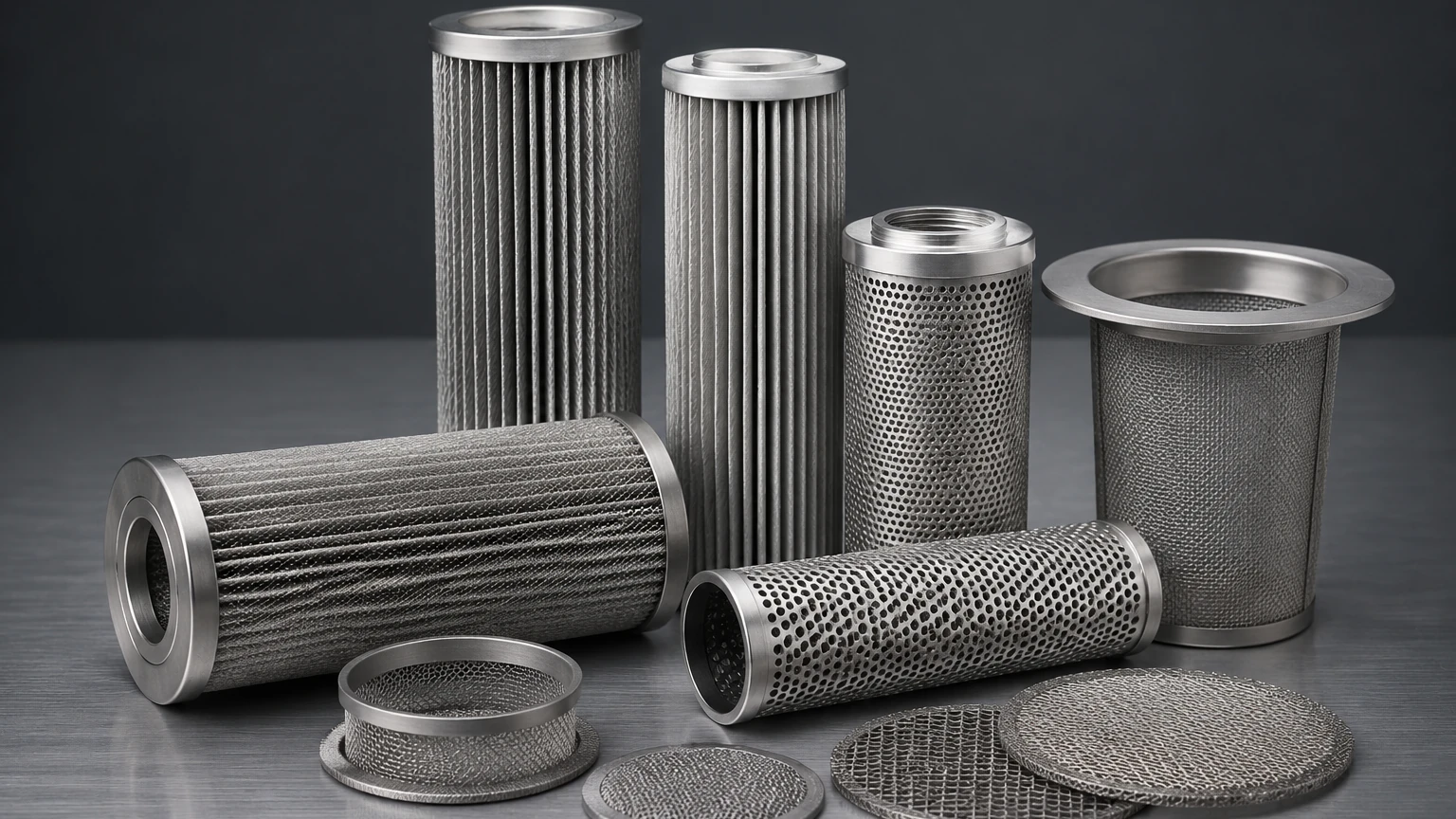
At Kaifil, we focus on 304 and 316L stainless steel for our filter components. 316L, in particular, offers superior resistance to corrosion and intergranular decay, making it ideal for the acidic or caustic environments sometimes found in boiler systems. Unlike disposable polymer-based filters, stainless steel elements can withstand the thermal shock and high differential pressures typical of steam lines. Furthermore, the durability of metal mesh and sintered structures allows for repeated cleaning and regeneration, significantly lowering the total cost of ownership compared to single-use alternatives.
Comparing Filter Media: Sintered vs. Pleated Stainless Steel
When specifying steam filters, engineers must choose between different media structures based on the required flow rate and filtration efficiency.
Sintered Metal Fiber and Powder
Sintered filters are created by fusing stainless steel fibers or powders under high heat and pressure without melting them. This creates a porous, rigid structure with a fixed pore size. Sintered media are excellent for high-precision applications (such as culinary steam) because they offer exceptional mechanical strength and can be manufactured to very fine micron ratings. They are highly resistant to "unloading," where captured particles are pushed through the media due to pressure surges.
Pleated Wire Mesh
For applications requiring high flow rates and low initial pressure drops, pleated wire mesh filters are often preferred. By pleating the stainless steel mesh, the surface area is significantly increased within the same footprint. This design is ideal for removing larger particulates in plant steam applications where high volume is a priority. While they may not reach the sub-micron levels of sintered media, they are highly effective for general equipment protection.
Key Performance Metrics for Selection
To ensure a steam filter performs as expected, several technical parameters must be confirmed during the design phase:
* Micron Rating: This defines the size of particles the filter will capture. For culinary steam, a 2-micron absolute rating is standard. For general process protection, 25 to 50 microns may suffice.
* Flow Capacity and Velocity: Steam velocity should generally be kept between 25 to 40 meters per second to prevent erosion and excessive noise. The filter housing and element must be sized to handle the peak mass flow rate without exceeding the maximum allowable pressure drop.
* Operating Pressure and Temperature: Steam temperature is directly related to pressure. Filters must be rated for the maximum saturated steam temperature of the system, often exceeding 200°C in industrial settings.
* Differential Pressure (ΔP): This is the difference in pressure between the inlet and outlet. A high initial ΔP indicates an undersized filter, while a rapidly increasing ΔP during operation indicates the filter is reaching its dirt-holding capacity.
Maintenance, Cleaning, and Regeneration Protocols
One of the primary advantages of stainless steel steam filters is their ability to be cleaned. Over time, the accumulation of particulates will increase the differential pressure across the element. If left unaddressed, this can lead to reduced steam flow and potential element collapse.
Cleaning methods include:
* Backwashing: Reversing the flow of clean fluid or gas through the filter to dislodge surface contaminants.
* Ultrasonic Cleaning: Using high-frequency sound waves in a cleaning solvent to remove deeply embedded particles from sintered media.
* Chemical Cleaning: Using specific acids or alkalis to dissolve scale and chemical deposits, followed by a thorough rinse.
Regular monitoring of differential pressure is the most effective way to determine the cleaning cycle. By maintaining a strict cleaning schedule, the service life of a stainless steel filter element can extend to several years, providing a sustainable and cost-effective solution for industrial plants.
Critical Risks and Common Failure Modes
Even the best-engineered filters can fail if the system environment is not properly managed. Engineers should be aware of the following risks:
Water Hammer
Water hammer occurs when slugs of condensate are carried at high velocity through the steam line. The kinetic energy of the water hitting a filter element can deform the mesh or crack sintered structures. Proper trapping and condensate management upstream of the filter are essential to mitigate this risk.
Thermal Shock
Rapidly introducing high-temperature steam into a cold filter housing can cause uneven expansion, leading to seal failure or structural stress. Slow warm-up procedures and the use of high-quality gaskets (such as EPDM or PTFE, depending on temperature) are necessary to maintain system integrity.
Bypass and Seal Integrity
If the filter element is not seated correctly within the housing, steam will take the path of least resistance, bypassing the filtration media entirely. This often occurs due to worn O-rings or improper installation. Regular inspection of seals during maintenance is vital for ensuring consistent steam quality.
Technical Checklist for Engineers and Procurement
Before finalizing a purchase for industrial steam filtration, technical teams should confirm the following details with their supplier:
1. Application Grade: Is the steam for general heat, culinary use, or pharmaceutical sterilization?
2. Flow Requirements: What is the maximum mass flow rate (kg/hr or lbs/hr) and the minimum operating pressure?
3. Material Compatibility: Are the housing and element materials compatible with the boiler chemicals and cleaning agents used in the facility?
4. Regulatory Compliance: Does the filter meet 3-A, FDA, or PED (Pressure Equipment Directive) requirements for the specific industry?
5. Customization Needs: Does the installation require specific connection types (e.g., NPT, Flanged, Tri-clamp) or a non-standard housing size to fit existing footprints?
Conclusion
Steam filters are indispensable for maintaining the efficiency and safety of modern industrial processes. By removing particulates and ensuring steam purity, these components prevent costly equipment damage and protect the integrity of the final product. Investing in high-quality stainless steel filtration solutions—tailored to the specific demands of the application—offers the best balance of performance, durability, and long-term value.
At Kaifil, we leverage our manufacturing expertise to deliver precision-engineered filtration components that stand up to the rigors of steam service. Whether you require standard elements or a fully customized OEM solution, our team is ready to support your technical requirements. Explore our full range of industrial filtration products by visiting our Main Page.
