


Self Cleaning Water Filters Industrial
In modern industrial processing, the efficiency of liquid filtration systems directly impacts operational uptime, equipment longevity, and product quality. Manual filtration systems, while effective for low-solids applications or intermittent batch processes, often become a bottleneck in high-volume, continuous production environments. This is where self cleaning water filters industrial systems become essential engineering components. By automating the removal of debris and particulates from the filter media, these systems ensure a constant flow rate and consistent pressure, minimizing human intervention and preventing costly process interruptions.
For engineers and facility managers, selecting the right industrial self-cleaning filter requires a deep understanding of fluid dynamics, material compatibility, and the specific mechanical principles that drive the cleaning cycle. As a specialized manufacturer of stainless steel filtration solutions, Kaifil provides the technical expertise necessary to navigate these complexities, ensuring that the chosen filtration hardware meets the rigorous demands of industrial environments.
Understanding the Role of Self-Cleaning Filters in Industrial Systems
The primary objective of an industrial self-cleaning filter is to maintain a specified level of filtration without stopping the flow of the process fluid. In industries such as chemical processing, power generation, and large-scale water treatment, even a few minutes of downtime for manual filter cleaning can result in significant financial losses.
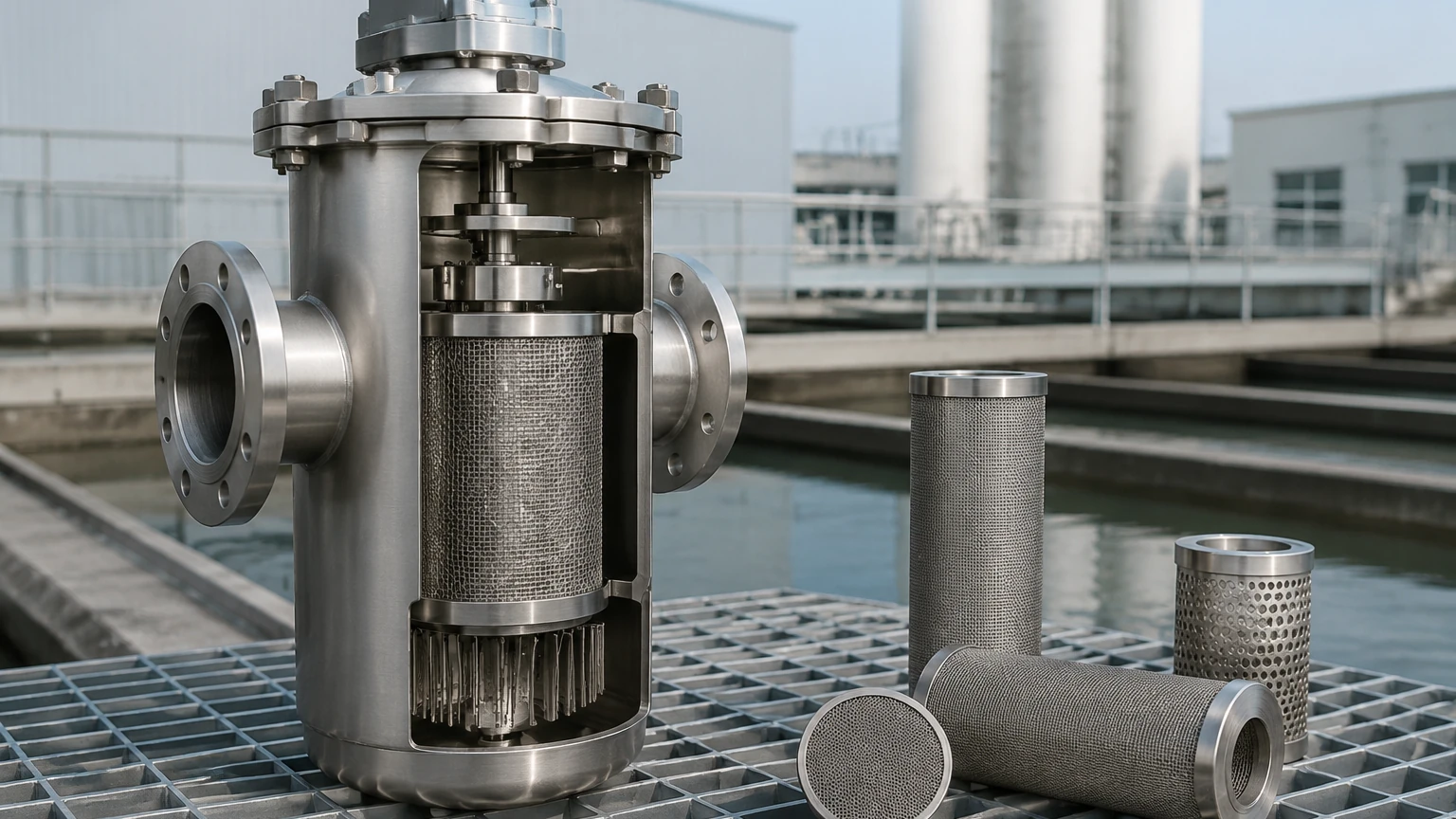
Self-cleaning systems operate based on a pressure differential (ΔP) or a timed interval. When the accumulated solids on the filter element—often a stainless steel wire mesh or wedge wire screen—reach a certain thickness, the resistance to flow increases. This causes the upstream pressure to rise and the downstream pressure to drop. Once a pre-set differential pressure is reached, the cleaning mechanism is triggered. This automated response ensures that the system remains within its optimal operating parameters without the need for manual monitoring.
Key Mechanisms: How Industrial Self-Cleaning Filters Operate
There are several mechanical approaches to self-cleaning, each suited to different types of contaminants and flow requirements. Understanding these mechanisms is critical during the specification phase.
1. Backwashing (Reverse Flow)
Backwashing is one of the most common methods for cleaning industrial filters. In this setup, a portion of the filtered fluid (or an external clean fluid source) is diverted and forced through the filter media in the reverse direction. This reverse flow dislodges the particles trapped on the surface of the mesh and flushes them out through a dedicated drain or blow-down valve. This method is highly effective for removing non-deformable particles and is widely used in water treatment and cooling tower applications.
2. Mechanical Scraping
For fluids containing sticky, fibrous, or high-viscosity contaminants, mechanical scraping is often the preferred solution. These filters utilize a brush or a metal blade that moves across the surface of the filter element. As the scraper moves, it physically removes the build-up and pushes it toward a collection chamber at the bottom of the filter housing. This mechanical action is particularly effective in food and beverage processing, where proteins or fats might otherwise adhere to the filter mesh.
3. Suction Scanning
Suction scanning combines the principles of backwashing with localized high-velocity cleaning. A scanning nozzle moves in a spiral or linear path across the interior surface of the filter screen. The nozzle is connected to a waste line that is open to atmospheric pressure. The resulting pressure drop creates a high-velocity suction effect at the nozzle tip, which pulls the debris off the screen. This method uses significantly less wash water than traditional backwashing, making it an efficient choice for large-scale industrial water filtration.
Engineering and Material Considerations for Durability
The durability of self cleaning water filters industrial units depends heavily on the materials used in their construction. Because these filters are often exposed to corrosive fluids, high temperatures, and abrasive particles, material selection is a primary engineering concern.
Stainless Steel Grades
Stainless steel is the industry standard for self-cleaning filter housings and elements due to its mechanical strength and corrosion resistance.
- 304 Stainless Steel: Suitable for general industrial water applications with low chloride content.
- 316L Stainless Steel: Contains molybdenum, providing superior resistance to pitting and crevice corrosion, making it ideal for chemical processing and marine environments.
- Duplex and Super Duplex: Used in highly aggressive environments, such as desalination or concentrated chemical streams, where high mechanical strength and extreme corrosion resistance are required.
Filter Media Structure
The structure of the filter element itself—whether it is a sintered wire mesh, a perforated plate, or a wedge wire screen—determines the filtration accuracy and the ease of cleaning. Sintered mesh provides excellent precision and depth filtration, while wedge wire is favored for its "V-shaped" profile, which reduces the risk of particle plugging and facilitates easier mechanical scraping.
Selection Criteria for Technical Purchasing Teams
When evaluating self cleaning water filters industrial options, purchasing teams and engineers must look beyond the initial price tag. The following technical parameters are essential for a successful implementation:
1. Micron Rating and Efficiency: Define the smallest particle size that must be removed. It is important to distinguish between nominal and absolute micron ratings to ensure the filter meets the required purity standards.
2. Flow Rate and Pressure Drop: The filter must be sized to handle the maximum system flow rate without exceeding the allowable clean pressure drop. Oversizing a filter can lead to inefficient cleaning cycles, while undersizing will cause frequent clogging.
3. Nature of Solids: Are the solids hard, soft, fibrous, or gelatinous? This determines whether a backwash or a scraper-based system is more appropriate.
4. Operating Pressure and Temperature: Ensure the filter housing and seals are rated for the maximum possible pressure and temperature excursions within the system.
For more detailed technical specifications and to explore various filtration configurations, engineers can visit the Main Page of the Kaifil website to review product options and application support.
Total Cost of Ownership (TCO) and Maintenance Cycles
While the initial investment in an automated self-cleaning filter is higher than a manual basket strainer, the Total Cost of Ownership (TCO) is typically much lower over the life of the equipment. The primary cost-saving factors include:
* Reduced Labor Costs: Automation eliminates the need for personnel to manually open, clean, and reassemble filters.
* Minimized Fluid Loss: Modern self-cleaning mechanisms, particularly suction scanners, are designed to use a minimal amount of process fluid for the cleaning cycle.
* Extended Media Life: Controlled, automated cleaning prevents the filter media from being subjected to the mechanical stress of manual scrubbing or the high-pressure surges often associated with neglected, clogged filters.
* Continuous Production: By maintaining a constant flow, these filters prevent the upstream and downstream equipment (such as pumps and heat exchangers) from operating under sub-optimal conditions, which reduces overall system wear.
Maintenance cycles for self-cleaning filters are generally focused on the inspection of moving parts, such as motor drives, seals, and scraper blades. Establishing a preventative maintenance schedule based on the manufacturer’s recommendations is vital for ensuring long-term reliability.
Application-Specific Customization in Industrial Filtration
No two industrial processes are identical, and off-the-shelf filtration solutions often fall short of meeting specific operational requirements. Customization is a hallmark of high-performance industrial filtration.
In the pharmaceutical industry, filters must often meet stringent sanitary standards, requiring high-polish finishes and specialized gasket materials. In hydraulic systems, the focus shifts to high-pressure ratings and the ability to capture fine metallic wear particles. For food and beverage applications, the filter must be designed for Clean-in-Place (CIP) compatibility to ensure that no biological growth occurs within the filter housing.
Kaifil specializes in these customized designs, working closely with global customers to develop stainless steel filter cartridges and wire mesh components tailored to specific chemical compatibilities and filtration accuracies. This OEM capability allows engineers to integrate filtration units seamlessly into existing skids or new plant designs.
Technical Checklist Before Specifying a Filtration Solution
Before moving forward with the procurement of self cleaning water filters industrial, technical teams should confirm the following data points:
* Fluid Viscosity: Does the viscosity change with temperature? Higher viscosity fluids may require larger filter surfaces or specialized scraping mechanisms.
* Solids Loading: What is the concentration of solids in the fluid (ppm or mg/L)? High solids loading may require a pre-filtration stage to prevent the self-cleaning filter from cycling too frequently.
* Disposal Requirements: How will the waste stream (backwash fluid or scraped solids) be handled? Some processes require the recovery of the solids, while others treat them as waste.
* Space Constraints: Industrial facilities often have limited footprints. Compact, vertical designs are frequently required for retrofit projects.
By addressing these factors early in the design phase, engineers can ensure that the selected filtration system provides reliable, long-term service with minimal operational overhead. Choosing a partner with a deep understanding of stainless steel manufacturing and industrial application challenges is the most effective way to optimize filtration performance.
