


Filtro Coalecente
In industrial process engineering, the separation of liquid aerosols and fine droplets from gas or liquid streams is a critical requirement for protecting downstream equipment and ensuring product purity. The filtro coalecente, or coalescing filter, serves as a specialized component designed to perform this task through a multi-stage physical process. Unlike standard particulate filters that simply trap solid debris, a coalescing filter facilitates the merging of sub-micron liquid particles into larger droplets that can be easily drained away by gravity.
For engineers and procurement professionals, understanding the technical nuances of the filtro coalecente is essential when designing systems for compressed air, petrochemical processing, or hydraulic power. Kaifil, as a manufacturer of precision stainless steel filtration components, provides the engineering support and high-performance materials necessary to implement effective coalescing solutions across diverse industrial sectors.
The Engineering Principles of Coalescence
The operation of a filtro coalecente is governed by the laws of fluid dynamics and aerosol physics. The primary goal is to take a dispersed phase (liquid droplets) and separate it from a continuous phase (gas or another liquid). This process typically occurs within a specialized filter media, often composed of borosilicate microfibers or layered stainless steel wire mesh, depending on the chemical compatibility and temperature requirements of the application.
There are three main mechanisms that drive the performance of a coalescing filter:
1. Direct Interception: This occurs when a droplet, following a streamline, comes within one-half of its diameter of a filter fiber and attaches to it. This is most effective for larger particles.
2. Inertial Impaction: As the fluid stream navigates the tortuous path of the filter media, heavier droplets cannot change direction as quickly as the gas or carrier fluid. Their inertia causes them to strike the fibers and adhere.
3. Brownian Diffusion: Extremely small sub-micron particles move in an erratic, zig-zag pattern due to molecular collisions. This movement increases the probability that they will contact a fiber and be captured.
Once captured, these tiny droplets travel along the fibers to the intersections where they merge with other droplets. As the mass of the liquid increases, the resulting larger drops move toward the outer surface of the filter element (in out-to-in flow configurations) or the inner surface (in in-to-out configurations), eventually falling into a collection sump.
Technical Specifications and Material Selection
When specifying a filtro coalecente, material selection is the most significant factor affecting longevity and efficiency. Industrial environments often involve corrosive gases, high pressures, and extreme temperatures that can degrade standard synthetic filter media.
Stainless Steel vs. Synthetic Media
While fiberglass is common for standard compressed air applications, stainless steel wire mesh and sintered metal components are preferred in heavy-duty industrial settings. Stainless steel 304 and 316L offer superior resistance to chemical attack and thermal stress. For applications involving aggressive chemicals or high-pressure steam, a stainless steel-based filtro coalecente ensures that the structural integrity of the filter element remains intact, preventing media migration and downstream contamination.
Efficiency Ratings
Coalescing filters are typically rated by their ability to remove aerosols of a specific size, often down to 0.01 microns. In B2B procurement, it is vital to distinguish between the "nominal" rating and the "absolute" rating. For high-purity gas filtration, an absolute rating is required to ensure that a guaranteed percentage of contaminants are removed under specified flow conditions.
Key Applications for Filtro Coalecente in Industry
The versatility of coalescing technology allows it to be used in various configurations. Understanding where these filters are placed within a process flow is key to optimizing performance.
Compressed Air Systems
In compressed air networks, oil and water aerosols are common byproducts of the compression process. If left untreated, these aerosols can damage pneumatic tools, foul sensitive instruments, and contaminate end products in food and beverage or pharmaceutical manufacturing. A high-efficiency filtro coalecente is typically installed after the air dryer to ensure the air is technically oil-free.
Natural Gas Processing
In the oil and gas sector, coalescers are used to remove liquid hydrocarbons and water from natural gas streams. This prevents liquid slugging in pipelines and protects expensive compressor components from erosion and corrosion. Given the high pressures involved, these filters often utilize reinforced stainless steel housings and internal supports.
Liquid-Liquid Separation
Beyond gas-liquid separation, the filtro coalecente is also employed in liquid-liquid applications, such as removing water from diesel fuel or separating oil from industrial wastewater. In these cases, the difference in surface tension between the two liquids is exploited to facilitate the coalescing process.
Performance Evaluation and Pressure Drop
From an engineering perspective, the performance of a filtration system is not just measured by its efficiency, but also by its impact on system energy consumption. The "differential pressure" (ΔP) is the most critical metric to monitor.
1. Initial Pressure Drop: This is the resistance to flow when the filter is clean and dry. A well-designed filtro coalecente should have a low initial ΔP to minimize energy loss from the pump or compressor.
2. Saturated Pressure Drop: As the filter begins to capture liquid, the media becomes saturated. Unlike particulate filters where the pressure drop continues to rise indefinitely as solids accumulate, a coalescing filter reaches a steady state where the rate of liquid capture equals the rate of drainage. This is known as the saturated pressure drop.
3. Terminal Pressure Drop: This is the point at which the filter element must be replaced. While the liquid drainage reaches a steady state, any solid particulates captured by the filter will eventually plug the media, leading to a rise in pressure that signals the end of the element's service life.
Engineers should look for filter designs that offer a high surface area to volume ratio, as this reduces the velocity of the fluid through the media, enhancing the time available for the coalescing mechanisms to work effectively.
Customization and OEM Solutions
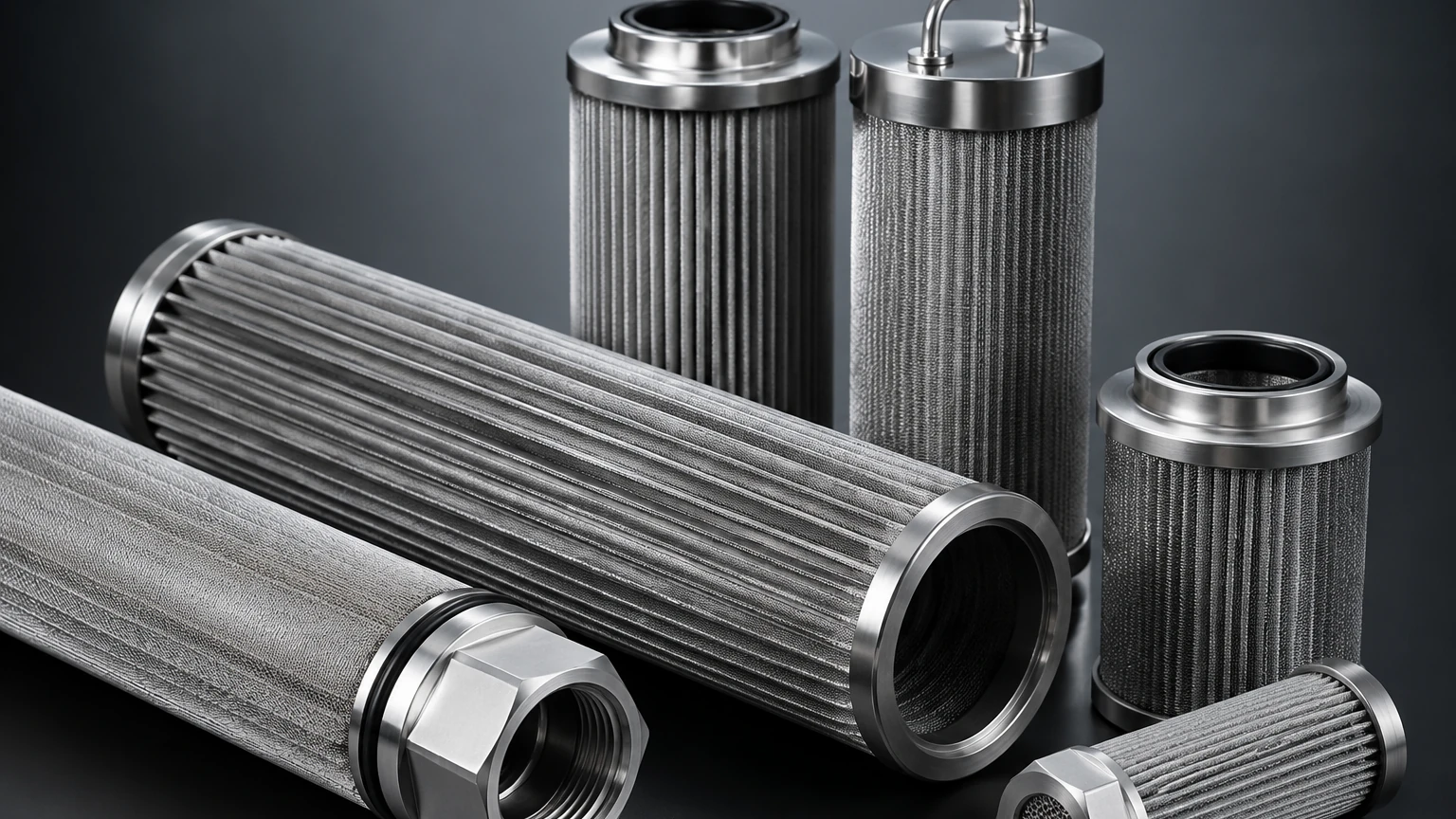
Many industrial applications require a filtro coalecente that deviates from standard off-the-shelf specifications. Factors such as unique flow rates, non-standard connection types (NPT, Flanged, or Saniclamp), and specific space constraints necessitate customized engineering.
Kaifil specializes in providing these tailored solutions. By leveraging advanced manufacturing techniques for stainless steel wire mesh and precision filter cartridges, Kaifil can develop filtration components that meet the exact requirements of an OEM project. Whether the need is for a specific micron rating or a housing capable of withstanding extreme chemical environments, custom design ensures that the filtration system is perfectly balanced for both performance and cost-effectiveness. For a comprehensive overview of available technologies and engineering capabilities, technical teams can refer to the Main Page of our site.
Maintenance and Operational Best Practices
To ensure the long-term reliability of a filtro coalecente, a proactive maintenance schedule is required. Engineers should consider the following during the system design phase:
* Pre-filtration: Coalescing filters are highly effective at removing liquids but can be quickly blinded by heavy solid particulate loads. Installing a standard particulate pre-filter upstream can significantly extend the service life of the more expensive coalescing element.
* Drainage Management: The liquid collected by the coalescer must be removed from the housing. Automatic float drains or electronic timed drains are recommended to prevent the sump from overfilling, which could lead to "re-entrainment" (where the collected liquid is picked up by the gas stream again).
* Monitoring: Installing differential pressure gauges across the filter housing allows operators to track the health of the filter in real-time, preventing unexpected downtime due to clogged elements.
Conclusion
The filtro coalecente is a sophisticated tool in the industrial filtration arsenal, providing essential protection for sensitive equipment and maintaining the quality of process fluids. By focusing on the physical mechanisms of coalescence, selecting high-grade materials like stainless steel, and considering the total cost of ownership through pressure drop management, engineers can implement highly efficient separation systems.
As industrial processes become more demanding, the role of precision-manufactured filtration components grows. Partnering with a manufacturer like Kaifil ensures access to the technical expertise and high-quality stainless steel components required to solve complex filtration challenges. For more detailed product specifications and application support, visit our Main Page.
