


Reboiler Duty
In industrial distillation and chemical processing, reboiler duty is a critical parameter that determines the efficiency and throughput of a separation column. Defined as the total heat energy required to vaporize a specific portion of the liquid at the bottom of the column, reboiler duty directly impacts the energy consumption and operational costs of a facility. However, maintaining the design reboiler duty is often challenged by the presence of particulates and contaminants within the process fluid. For engineers and plant managers, understanding the intersection of thermal dynamics and fluid purity is essential for optimizing system performance.
As a manufacturer specializing in custom stainless steel filtration solutions, Kaifil provides the technical components necessary to protect heat exchange surfaces and ensure that reboiler duty remains within specified engineering limits. By implementing precision filtration, industrial operators can mitigate fouling, reduce energy waste, and extend the service life of critical thermal equipment.
The Fundamentals of Reboiler Duty in Industrial Distillation
Reboiler duty, often denoted as *Q*, represents the rate of heat transfer required to sustain the boiling process at the base of a distillation tower. This heat is typically supplied by steam, hot oil, or electrical elements. The calculation of reboiler duty involves several variables, including the mass flow rate of the liquid, the latent heat of vaporization of the components, and the sensible heat required to reach the boiling point.
In a steady-state distillation process, the reboiler must provide enough energy to generate the vapor traffic necessary for separation. If the heat transfer efficiency declines, the system may fail to meet its production targets, or the energy input must be significantly increased to compensate for the loss. This is where the "overall heat transfer coefficient" (U) becomes vital. The relationship is generally expressed by the formula:
Q = U × A × ΔTlm
Where:
- Q is the reboiler duty.
- U is the overall heat transfer coefficient.
- A is the heat transfer surface area.
- ΔTlm is the log mean temperature difference between the heating medium and the process fluid.
When contaminants enter the system, they accumulate on the heat transfer surfaces (the "A" in the equation), creating a layer of thermal resistance. This phenomenon, known as fouling, reduces the value of "U," forcing the system to increase the temperature of the heating medium or accept a lower reboiler duty, both of which are detrimental to process economics.
How Particulate Contamination Increases Reboiler Duty Requirements
Particulate contamination is one of the primary drivers of fouling in reboiler systems. Whether the process involves petrochemicals, food and beverage production, or pharmaceutical synthesis, solids can enter the stream through raw materials, pipe scale, or chemical byproducts.
The Mechanism of Thermal Resistance
As solids settle on the tubes or plates of a reboiler, they form a stagnant boundary layer. Unlike the metal surfaces of the heat exchanger, these deposits have very low thermal conductivity. Even a thin layer of scale or particulate buildup can act as an insulator. To maintain the required reboiler duty, the control system must increase the steam pressure or the temperature of the thermal fluid. This not only increases energy costs but also puts additional thermal stress on the equipment.
Impact on Pressure Drop
Beyond thermal resistance, particulates increase the pressure drop (ΔP) across the reboiler. In thermosyphon reboilers, which rely on natural circulation driven by density differences, an increased pressure drop can stall the circulation entirely. This leads to localized overheating, accelerated coking (in hydrocarbon applications), and eventual system failure. Effective filtration at the inlet or within the recirculation loop is the most effective way to prevent these issues.
Filtration Strategies to Mitigate Heat Exchanger Fouling
To maintain optimal reboiler duty, engineers must implement a robust filtration strategy that targets the specific contaminants present in the process. Stainless steel filtration components are preferred in these applications due to their ability to withstand high temperatures and aggressive chemical environments.
Wire Mesh Filters
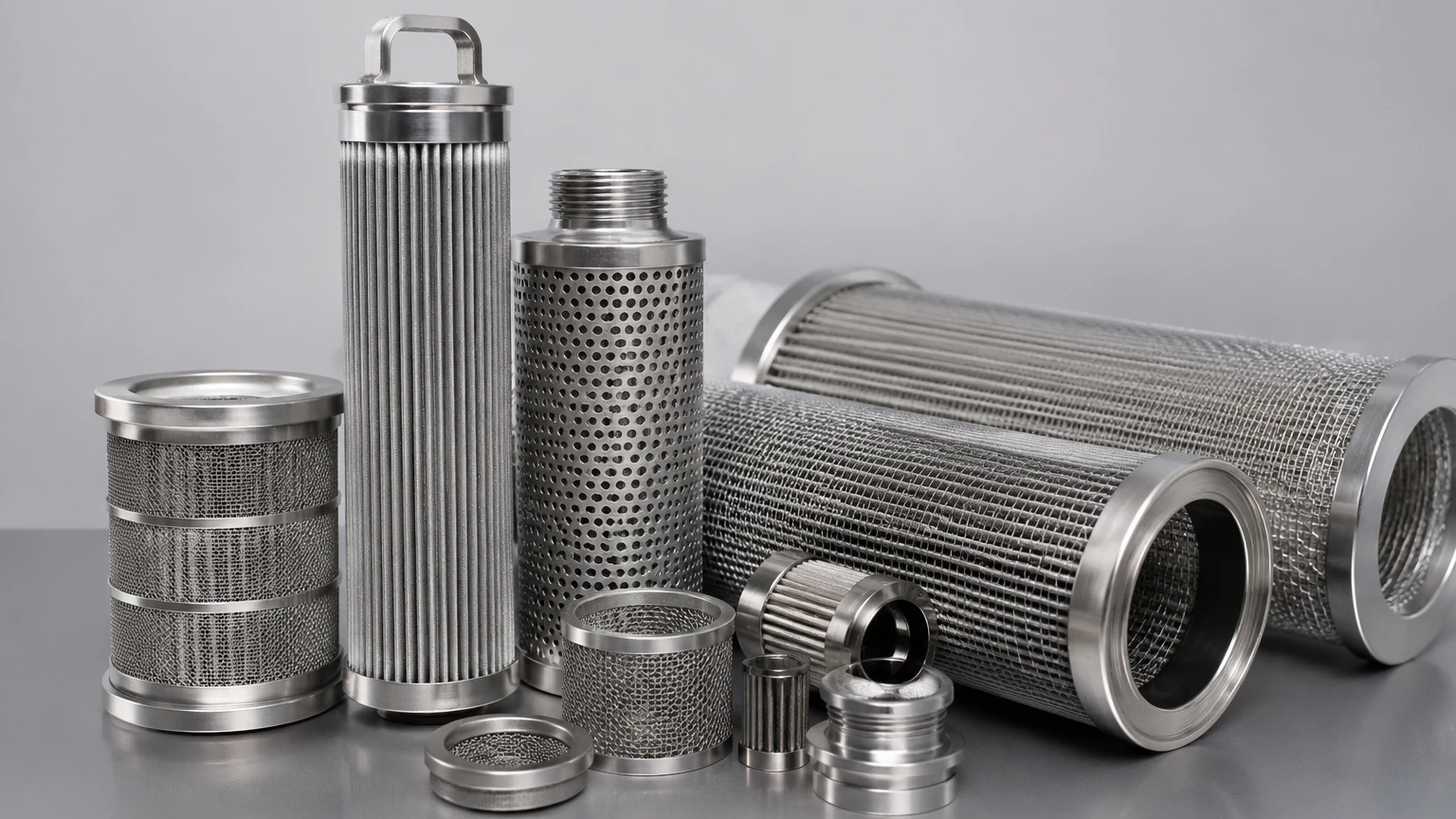
For many industrial applications, stainless steel wire mesh filters provide an ideal balance of flow capacity and filtration accuracy. These filters are used to capture relatively large particles, such as pipe scale and metal fragments, before they reach the reboiler. Kaifil designs custom wire mesh solutions that can be integrated into existing piping, providing a low-maintenance barrier against coarse contaminants.
Sintered Metal Cartridges
In processes where fine particulates or catalysts must be removed, sintered metal filter cartridges offer superior performance. Sintering creates a porous structure that is mechanically strong and capable of depth filtration. These components are particularly useful in high-pressure hydraulic and chemical loops where the reboiler duty must be protected from sub-micron or low-micron contaminants that could otherwise bake onto the heat exchanger surfaces.
Inline Filtration Systems
Strategically placing filters in the feed stream or the bottoms recirculation line ensures that the fluid entering the reboiler is consistently clean. This proactive approach allows the heat exchanger to operate at its design "clean" coefficient for much longer periods, reducing the frequency of mechanical cleaning and chemical descaling.
Technical Specifications for Stainless Steel Filter Components
When selecting filtration hardware to protect reboiler duty, engineers must evaluate several technical specifications to ensure compatibility with the operating environment. At the Main Page, technical professionals can review various product options and application support to match these specifications to their specific needs.
Material Compatibility
Stainless steel grades such as 304 and 316L are the industry standard for most filtration tasks. 316L, with its addition of molybdenum, offers enhanced resistance to pitting and crevice corrosion, making it suitable for pharmaceutical and chemical applications involving chlorides or acidic compounds. For extreme environments, specialized alloys may be required to maintain structural integrity at the high temperatures found in reboiler circuits.
Micron Rating and Efficiency
The micron rating must be chosen based on the size distribution of the contaminants and the clearances within the heat exchanger. In plate-and-frame reboilers, which have narrow flow channels, finer filtration is required compared to shell-and-tube designs. It is important to balance filtration efficiency with the allowable pressure drop across the filter to avoid restricting the flow to the reboiler.
Structural Integrity and Temperature Resistance
Reboilers often operate at elevated temperatures and pressures. Filtration components must be designed to withstand these conditions without deforming or bypassing. Welded stainless steel constructions are generally superior to bonded or polymer-based filters, as they do not degrade or outgas under thermal stress.
Evaluating the Total Cost of Ownership in Filtration Systems
While the initial cost of high-quality stainless steel filters is higher than disposable alternatives, the total cost of ownership (TCO) is significantly lower when considering the impact on reboiler duty and plant uptime.
1. Energy Savings: By keeping heat transfer surfaces clean, filtration allows the reboiler to operate at maximum efficiency. A 10% improvement in heat transfer efficiency can result in thousands of dollars in annual energy savings for a single distillation column.
2. Reduced Maintenance: Cleaning a fouled reboiler is a labor-intensive process that often requires a complete system shutdown. Stainless steel filters, particularly those designed for backwashing or easy cleaning, reduce the frequency of these interventions.
3. Extended Equipment Life: Fouling often leads to localized hot spots and corrosion under deposits. By preventing these deposits, filtration protects the capital investment of the reboiler itself.
4. Product Quality: In industries like food, beverage, and pharmaceuticals, maintaining a consistent reboiler duty is essential for precise separation and product purity. Inconsistent heating can lead to off-spec products and increased waste.
Custom Engineering for Specialized Reboiler Applications
No two industrial processes are identical, and standard filtration products may not always meet the specific demands of a unique reboiler configuration. Customization is often necessary to address specific flow rates, space constraints, or unique contaminant profiles.
Kaifil specializes in the OEM manufacture of precision metal filter components. This includes the development of custom-sized cartridges, specialized mesh weaves for specific fluid viscosities, and reinforced structures for high-pressure applications. By working closely with engineering teams, Kaifil ensures that the filtration solution is perfectly integrated into the process, providing maximum protection for the reboiler duty without introducing unnecessary flow resistance.
For example, in a thermosyphon reboiler application, the filter must have an extremely low clean pressure drop to avoid disrupting the natural circulation. A custom-engineered, high-area pleated wire mesh element can provide the necessary filtration surface to keep the ΔP within the tight margins required for such systems.
Conclusion: Optimizing Reboiler Performance Through Precision Filtration
Reboiler duty is more than just a theoretical calculation; it is a vital indicator of a plant's operational health and economic efficiency. When fouling and contamination are left unmanaged, the resulting decline in heat transfer performance leads to higher costs, increased maintenance, and potential equipment failure.
Implementing high-performance stainless steel filtration is a proven engineering solution to these challenges. By removing the particulates that cause fouling, these components ensure that the reboiler can operate at its intended duty for extended periods. For engineers looking to optimize their filtration strategy, selecting a partner with deep technical expertise in metal filtration is essential.
To explore the full range of custom stainless steel filtration solutions and to consult with engineering experts on your specific application, visit the Main Page for detailed product information and technical support. Through precise material selection and customized design, it is possible to achieve reliable, durable, and cost-effective filtration that supports the long-term efficiency of your industrial thermal processes.
