


Coarse Screen
In the hierarchy of industrial filtration, the coarse screen serves as the critical first line of defense. Designed to capture large particulates, debris, and suspended solids before they can reach sensitive downstream equipment, these components are essential for maintaining the operational integrity of pumps, valves, and fine filtration stages. For engineers and procurement professionals, selecting the right coarse screen involves a complex evaluation of material science, fluid dynamics, and mechanical durability.
As a specialized manufacturer of stainless steel filtration solutions, Kaifil provides precision-engineered components that address the rigorous demands of industrial environments. Understanding the technical nuances of coarse screen design is fundamental to optimizing system performance and minimizing long-term maintenance costs.
The Role of Coarse Screens in Industrial Filtration
Coarse screens are primarily defined by their ability to remove large-scale contaminants, typically ranging from several millimeters down to approximately 100 microns. Unlike fine filters or membranes that target microscopic particles, the coarse screen is designed for high-volume throughput and mechanical resilience.
In most industrial processes, the coarse screen acts as a "pre-filter." By removing the bulk of the solid load early in the process, these screens prevent the premature clogging of expensive secondary filters. This staged approach is vital in sectors such as water treatment, chemical processing, and food production, where the raw fluid often contains unpredictable debris like scale, plastic fragments, or organic matter.
Beyond simple particle removal, the coarse screen protects the mechanical components of the system. Large solids can cause catastrophic failure in centrifugal pumps or obstruct the narrow orifices of spray nozzles. By implementing a robust coarse screening solution, facilities can significantly extend the Mean Time Between Failures (MTBF) for their entire fluid handling infrastructure.
Material Selection and Engineering Standards
For industrial applications, the choice of material is non-negotiable. While plastic or carbon steel screens may suffice for light-duty domestic use, industrial environments require the corrosion resistance and thermal stability of stainless steel.
Stainless Steel Grades
Most industrial coarse screens are manufactured from Grade 304 or Grade 316L stainless steel.
- Grade 304: Offers excellent strength and general corrosion resistance, suitable for most food and beverage or general industrial water applications.
- Grade 316L: Contains molybdenum, providing superior resistance to chlorides and pitting. This is the standard for marine environments, pharmaceutical manufacturing, and aggressive chemical processing.
Structural Integrity and Weave Types
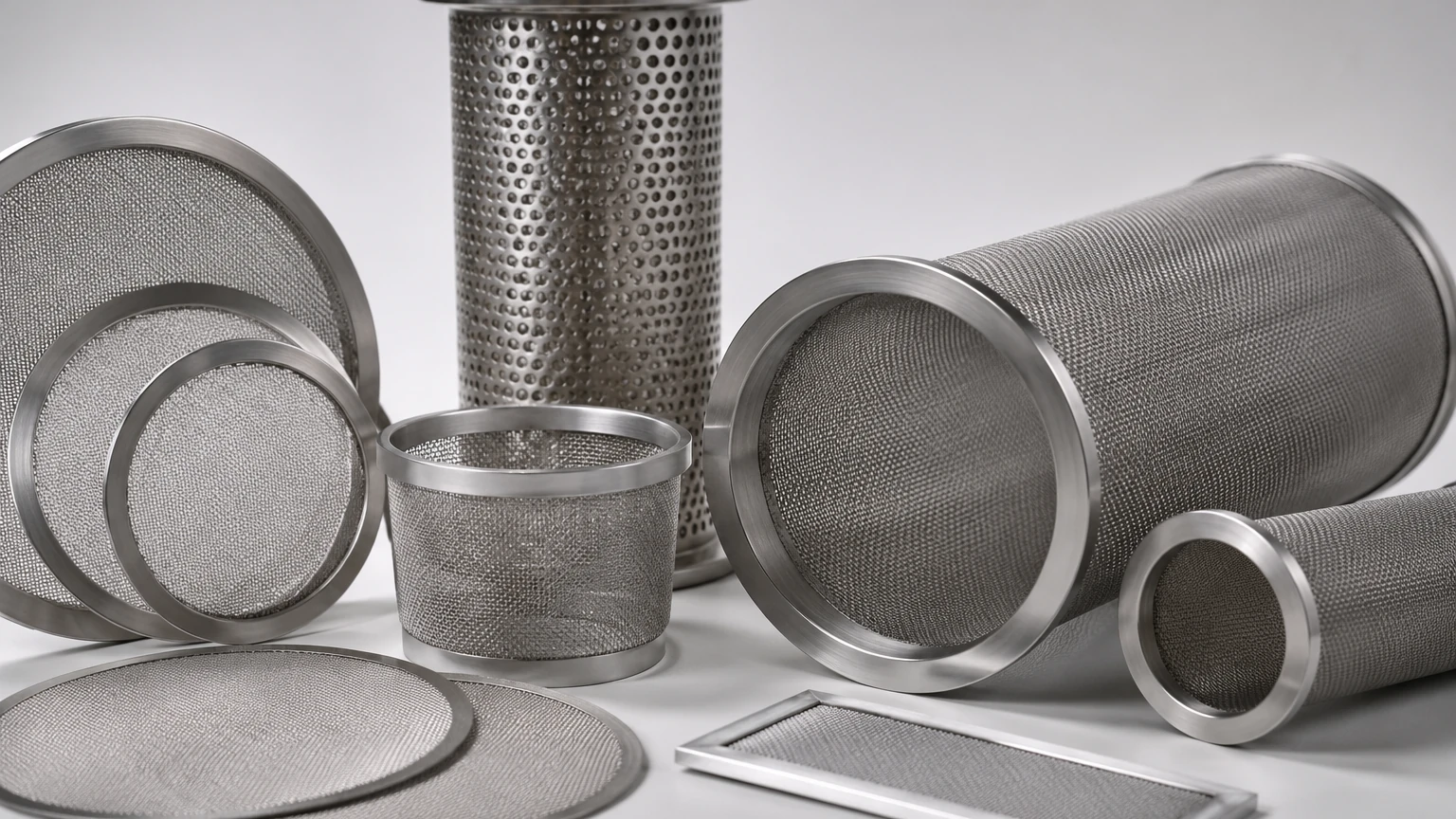
The physical structure of a coarse screen can vary based on the required filtration accuracy and the pressure of the system. Common configurations include:
- Perforated Metal: Ideal for extremely heavy-duty applications where the screen must withstand high differential pressures without deforming.
- Woven Wire Mesh: Provides a higher percentage of open area, allowing for greater flow rates while maintaining precise aperture sizes.
- Wedge Wire: Features a V-shaped profile that is particularly effective at preventing "blinding" (clogging), as the opening widens inwardly, allowing particles to pass through easily once they clear the surface.
Key Performance Metrics: Flow Rate and Pressure Drop
When specifying a coarse screen, engineers must balance filtration efficiency with hydraulic performance. Two of the most critical metrics are the effective open area and the resulting pressure drop ($ΔP$).
Effective Open Area
The open area is the ratio of the total area of the openings to the total area of the screen. A higher open area results in a lower initial pressure drop and a higher flow capacity. However, increasing the open area often requires thinner wire diameters or larger apertures, which can compromise the mechanical strength of the screen. Engineering a coarse screen involves finding the "sweet spot" where the screen is robust enough to handle the fluid's velocity but open enough to prevent excessive energy loss in the pumping system.
Pressure Drop Considerations
As solids accumulate on the surface of the coarse screen, the available open area decreases, leading to an increase in differential pressure. If the $ΔP$ becomes too high, it can lead to several issues:
1. Screen Deformation: The mechanical force of the fluid can crush or tear the mesh.
2. Cavitation: High pressure drops across the screen can cause the fluid to vaporize, damaging downstream pumps.
3. Bypass: In some systems, high pressure may force contaminants through the screen or around the seals.
Monitoring the pressure drop is the primary method for determining when a coarse screen requires cleaning or replacement.
Customization and Design Considerations for OEM Integration
Standard off-the-shelf screens rarely meet the specific needs of complex industrial machinery. Customization is often required to ensure the coarse screen fits perfectly within existing housings and meets the unique flow characteristics of the application.
Dimensional Accuracy
In OEM applications, the coarse screen must adhere to strict tolerances. Even a millimeter of misalignment can result in fluid bypass, rendering the filtration process ineffective. Custom manufacturing allows for precise flange designs, support baskets, and reinforcement rings that ensure a secure, leak-proof fit.
Reinforcement and Support
For screens subjected to high-velocity flows or heavy solids loading, internal or external reinforcement is necessary. This may involve backing a fine woven mesh with a heavy-duty perforated plate or adding structural ribs to a cylindrical filter cartridge. These design enhancements allow the screen to maintain its shape under stress, ensuring consistent filtration performance over its entire service life.
Surface Treatments
Depending on the application, additional surface treatments may be applied. Electropolishing is common in the pharmaceutical and food industries to create a microscopically smooth surface that resists bacterial growth and is easier to clean. Passive coatings can also be applied to further enhance chemical resistance in highly acidic or alkaline environments.
Maintenance, Cleaning, and Longevity
The total cost of ownership (TCO) for a coarse screen is heavily influenced by its maintenance requirements. A well-designed screen should be easy to clean and durable enough to withstand repeated maintenance cycles.
Cleaning Methods
- Manual Cleaning: Suitable for batch processes where the system can be shut down. The screen is removed and washed with high-pressure water or chemical solvents.
- Backwashing: In automated systems, the flow is momentarily reversed to flush accumulated solids off the screen surface. This is highly effective for wedge wire and certain types of perforated screens.
- Ultrasonic Cleaning: For screens with complex geometries or stubborn contaminants, ultrasonic baths can remove particles lodged deep within the mesh pores.
Replacement Cycles
While stainless steel coarse screens are designed for long-term use, they are eventually subject to wear and tear. Factors such as abrasive particles in the fluid, chemical erosion, and mechanical fatigue from pressure fluctuations will eventually necessitate replacement. Engineers should establish a routine inspection schedule to check for signs of wire thinning, broken welds, or permanent deformation.
Industry-Specific Applications of Coarse Screens
The versatility of the coarse screen makes it indispensable across a wide range of sectors:
- Water Treatment: Used at the intake of municipal water plants to remove leaves, twigs, and large debris from raw river or lake water.
- Chemical Processing: Protects heat exchangers and reactors from scale and catalyst fines that could foul surfaces and reduce thermal efficiency.
- Food and Beverage: Removes pulp, seeds, or skins during the initial processing of juices and purees, ensuring the fluid is ready for finer clarification stages.
- Hydraulic Systems: Acts as a suction strainer to protect hydraulic pumps from large metal shavings or environmental contaminants that may have entered the reservoir.
- Pulp and Paper: Essential for the recovery of fibers and the removal of knots and shives from the pulp slurry.
Engineering Consultation and Procurement
Selecting a coarse screen is more than a simple purchase; it is a technical decision that impacts the efficiency and safety of an entire industrial process. Engineers must confirm the chemical compatibility of the fluid, the maximum expected flow rates, the nature of the solids being removed, and the physical constraints of the installation site.
Working with a manufacturer that understands these variables is essential. At Kaifil, we combine advanced manufacturing capabilities with deep engineering expertise to deliver customized filtration solutions that meet the most demanding specifications. Whether you require a single custom component or a large-scale OEM production run, our focus remains on quality, durability, and precise filtration performance.
For more information on our full range of stainless steel filtration products and to discuss your specific application requirements, please visit our Main Page. By choosing a partner dedicated to technical excellence, you ensure that your filtration system provides reliable service and optimal protection for your industrial assets.
