


Coolant Coalescer
In modern precision machining and metalworking environments, the management of metalworking fluids (MWF) is a critical factor in determining both operational efficiency and product quality. A coolant coalescer serves as a specialized filtration and separation system designed to remove tramp oils—unwanted hydraulic oils, way oils, and greases—from water-based machine tool coolants. As industrial processes demand tighter tolerances and higher throughput, the role of high-performance filtration components, such as those manufactured by Kaifil, becomes essential in maintaining the integrity of these fluid systems.
The presence of tramp oil in a coolant system is more than a cosmetic issue; it is a technical challenge that affects the chemical stability of the coolant, the health of the workforce, and the longevity of the machine tools. By utilizing the principles of coalescence, manufacturers can significantly extend the life of their coolants and improve the overall sustainability of their production lines.
The Technical Principles of Coolant Coalescence
Coalescence is a physical process where small droplets of a liquid, such as oil, merge to form larger droplets. In the context of a coolant coalescer, this process is used to separate non-emulsified or "tramp" oils from the water-based coolant. Because oil is less dense than water, larger droplets rise to the surface more quickly than smaller ones, following the principles defined by Stokes' Law.
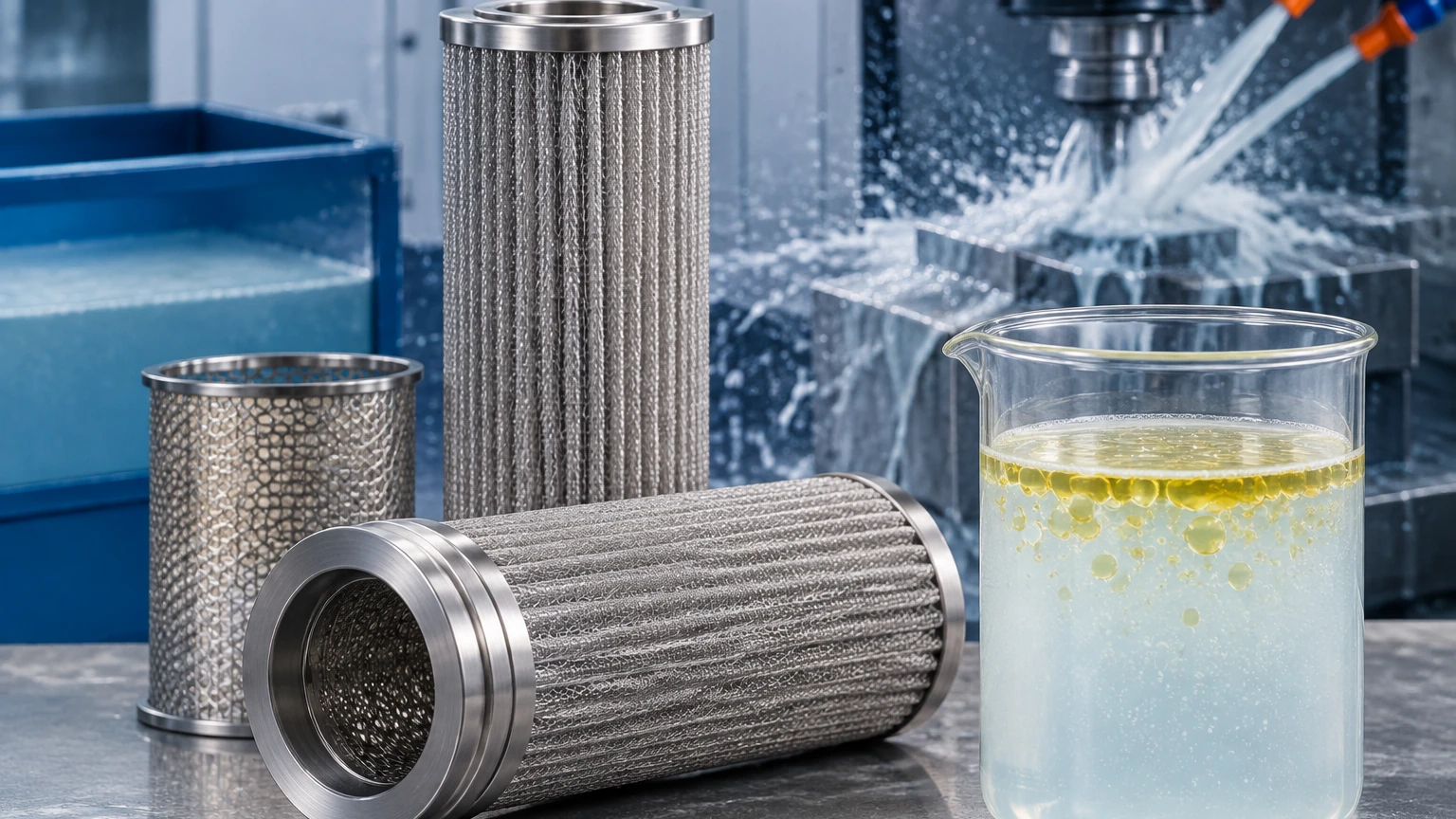
Stokes' Law states that the rising velocity of an oil droplet is proportional to the square of its diameter. Therefore, doubling the size of an oil droplet increases its rise rate fourfold. A coolant coalescer facilitates this by providing a high-surface-area medium—often constructed from specialized stainless steel wire mesh or structured packing—where tiny oil droplets can collide and adhere. As these droplets accumulate on the media, they merge into larger globules until they possess enough buoyancy to break away and float to the surface of the separation chamber, where they can be skimmed off.
For engineers, the efficiency of this process depends heavily on the design of the coalescing media. Precision-engineered stainless steel components from manufacturers like Kaifil ensure that the media provides the optimal balance of surface area and flow-through capacity, preventing premature clogging while maximizing oil capture.
Why Tramp Oil Removal is Essential for Industrial Operations
Maintaining a clean coolant supply is vital for several reasons that directly impact the bottom line of a manufacturing facility. When tramp oil is allowed to saturate a coolant sump, it creates a layer on the surface that seals off the coolant from the atmosphere. This creates an anaerobic environment—one devoid of oxygen—which is the ideal breeding ground for sulfate-reducing bacteria.
Bacterial Growth and Odor Control
The most immediate sign of bacterial infestation is the "Monday morning odor," a foul smell caused by the production of hydrogen sulfide gas. Beyond the unpleasant working environment, these bacteria consume the essential additives in the coolant, such as corrosion inhibitors and emulsifiers, leading to a rapid degradation of the fluid's performance.
Tool Life and Surface Finish
Clean coolant provides superior lubrication and heat dissipation at the cutting zone. Tramp oil, however, has poor thermal conductivity and can carry fine metallic chips (fines) back into the work area. This leads to increased friction, higher tool wear, and a degraded surface finish on the workpiece. By implementing an effective coolant coalescer, engineers can ensure that the fluid reaching the tool tip is free of contaminants that cause abrasive wear.
Health and Safety Considerations
Oil-mist inhalation and skin contact with contaminated coolants are leading causes of industrial dermatitis and respiratory issues among machine operators. Removing tramp oils reduces the formation of oil mists and keeps the bacterial count within safe limits, contributing to a safer and more compliant workplace.
Component Selection: The Role of Stainless Steel Filtration
The heart of any coolant coalescer is the separation media and the pre-filtration stage. While some systems use plastic or disposable media, industrial-grade coalescers often rely on stainless steel components for their durability and chemical resistance.
Kaifil specializes in custom stainless steel filtration solutions that are integral to these systems. When selecting components for a coalescing system, engineers should consider the following:
1. Material Compatibility: Coolants can vary in pH and chemical composition. Stainless steel (Grade 304 or 316) offers excellent resistance to corrosion, ensuring that the filtration media does not degrade over time, even when exposed to aggressive synthetic coolants.
2. Filtration Accuracy: Before the coolant enters the coalescing chamber, it often passes through a stainless steel filter cartridge or wire mesh screen to remove large solids. This protects the coalescing media from "blinding" or plugging with metal chips and swarf.
3. Cleanability: Unlike disposable media, stainless steel mesh filters can be cleaned and reused. This is a significant factor in reducing the total cost of ownership (TCO) and minimizing the environmental impact of the filtration process.
4. Structural Integrity: In high-flow industrial applications, the filtration components must withstand pressure differentials without deforming. Precision-welded stainless steel cartridges provide the necessary rigidity for long-term service.
For more information on specialized filtration components, technical buyers can visit the Main Page to explore custom manufacturing options.
Engineering Considerations for System Integration
Integrating a coolant coalescer into an existing machining center or a centralized coolant system requires careful planning. It is not a "one size fits all" solution; the system must be sized according to the volume of the sump and the rate of oil ingress.
Flow Rate and Retention Time
The effectiveness of a coalescer is largely determined by the retention time—the amount of time the fluid spends inside the separation chamber. If the flow rate is too high, the oil droplets will not have sufficient time to collide and coalesce. Engineers typically design these systems to handle the entire volume of the sump several times per day, ensuring a continuous cleaning cycle without disrupting the machining process.
Sump Access and Suction
The method of extracting the coolant from the sump is equally important. Floating skimmers or "tuff-skims" are often used to pull fluid from the surface where the oil concentration is highest. This fluid is then pumped into the coalescer. The placement of the return line should be strategic to promote circulation within the sump, preventing stagnant pockets where oil and bacteria can accumulate.
Customization for OEM Applications
Many manufacturers of machine tools or centralized filtration systems require custom-designed coalescing components to fit within specific footprints. Kaifil’s ability to provide OEM solutions—from material selection to specific filtration accuracy—allows for the development of compact, high-efficiency coalescers tailored to specific industrial environments.
Maintenance and Long-Term Performance
While a coolant coalescer is designed to reduce maintenance, the system itself requires periodic attention to remain effective. The primary maintenance task is the cleaning of the coalescing media and the pre-filter screens.
In systems utilizing stainless steel wire mesh, maintenance is simplified. These components can often be cleaned using backwashing, ultrasonic cleaning, or chemical baths, depending on the nature of the contaminants. Regular inspection of the pumps and the oil discharge weir is also necessary to ensure that the separated oil is being removed from the system efficiently.
By monitoring the "split"—the clear line between the oil and the coolant in the separation chamber—operators can visually confirm that the coalescer is functioning correctly. If the coolant remains cloudy or oil continues to build up in the machine sump, it may indicate that the media is fouled or that the flow rate needs adjustment.
Total Cost of Ownership and ROI
Investing in a high-quality coolant coalescer equipped with durable stainless steel components offers a rapid return on investment (ROI). The cost savings are realized through several channels:
* Reduced Coolant Purchases: Extending the life of the coolant from six months to two years or more significantly reduces the volume of concentrate that must be purchased.
* Lower Disposal Costs: Hazardous waste disposal fees for spent coolant are a major expense. Reducing the frequency of sump clean-outs directly lowers these costs.
* Increased Productivity: Fewer sump clean-outs mean less machine downtime. Additionally, improved tool life reduces the frequency of tool changes and adjustments.
* Sustainability: Minimizing waste and extending the life of industrial fluids aligns with corporate sustainability goals and environmental regulations.
Conclusion
A coolant coalescer is an indispensable tool for any facility looking to optimize its metalworking processes. By understanding the technical requirements of oil separation and selecting high-quality, durable filtration components, engineers can ensure their systems operate at peak efficiency. Whether you are designing a new filtration system or upgrading an existing one, focusing on precision-engineered solutions like those provided by Kaifil ensures long-term reliability and performance.
For technical professionals seeking to source or customize stainless steel filter cartridges, wire mesh filters, or precision metal components for filtration applications, further details and application support are available on the Main Page.
