


Commercial Beer Filtration System
In the commercial brewing industry, the transition from fermentation to packaging requires a precise and reliable filtration process. A commercial beer filtration system is not merely a means of achieving visual clarity; it is a critical engineering requirement for ensuring biological stability, consistent flavor profiles, and extended shelf life. For high-volume production, the selection of filtration components—ranging from stainless steel wire mesh to precision-engineered cartridges—determines the efficiency of the entire facility.
From a manufacturing perspective, a filtration system must balance the removal of unwanted particulates, such as yeast cells, proteins, and hop resins, with the preservation of the beer’s essential sensory characteristics. This article examines the technical architecture of these systems, the engineering considerations for material selection, and the operational parameters that define successful industrial beer filtration.
The Role of Filtration in Commercial Brewing
Filtration in a commercial setting serves multiple functions that vary depending on the style of beer and the intended distribution method. While some craft products remain unfiltered, the vast majority of commercial beers require a systematic approach to particle removal.
Achieving Biological Stability
Biological stability is paramount for beers intended for wide distribution. Residual yeast and spoilage bacteria (such as Lactobacillus or Pediococcus) can lead to secondary fermentation or off-flavors after the beer has been packaged. A robust commercial beer filtration system often includes a sterile filtration stage—typically using 0.45-micron or 0.65-micron membranes—to mechanically remove these microorganisms without the need for pasteurization, which can negatively impact the flavor profile.
Haze Reduction and Colloidal Stability
Visual clarity is a primary consumer expectation for many beer styles, particularly lagers and pilsners. Haze is generally caused by the interaction of proteins and polyphenols. By employing depth filtration or fine surface filtration, brewers can remove the precursors to chill haze, ensuring the product remains clear even at low temperatures. Engineering the system to handle these specific colloidal particles requires a deep understanding of particle size distribution and the flow characteristics of the liquid.
Key Components of a Commercial Beer Filtration System
An effective filtration line is rarely a single-stage process. Instead, it is a sequence of components designed to protect the most sensitive (and often most expensive) final filters while achieving specific separation goals at each step.
1. Primary Filtration (Roughing)
Primary filtration is the first stage after fermentation or maturation. Its goal is to remove the bulk of the yeast and large particulates. In many commercial setups, this involves stainless steel wire mesh filters or centrifugal separators. Stainless steel wire mesh is particularly valued for its durability and ability to be cleaned and reused, providing a cost-effective alternative to disposable depth filters for high-solids loading.
2. Secondary Filtration (Polishing)
Once the bulk solids are removed, the beer undergoes polishing. This stage utilizes finer media, often in the form of stainless steel filter cartridges or multi-layered depth filters. The objective here is to achieve the desired level of brilliance. For engineers, the challenge is selecting a micron rating that removes haze-forming particles without stripping away the proteins responsible for head retention and mouthfeel.
3. Final/Sterile Filtration
The final stage occurs immediately before carbonation and packaging. This is typically a membrane-based process designed to ensure the beer is free of spoilage organisms. The housings for these filters must be designed to sanitary standards, often utilizing 316L stainless steel to withstand rigorous Clean-in-Place (CIP) cycles and steam sterilization.
For technical specifications on the various filter media used in these stages, engineers can refer to the Main Page of the manufacturer’s technical resource library.
Engineering Considerations for Filter Selection
When designing or upgrading a commercial beer filtration system, several engineering parameters must be evaluated to ensure the system meets production targets while minimizing operational costs.
Flow Rate and Flux
Flux, or the flow rate per unit of filter area, is a critical metric. High flux rates can lead to premature blinding of the filter media and increased shear stress on the beer, which may affect foam stability. Engineers must calculate the total surface area required based on the brewery's peak production volume and the specific turbidity of the incoming beer. Stainless steel cartridges offer a high surface-area-to-volume ratio, which is ideal for maintaining consistent flow in space-constrained environments.
Differential Pressure (Delta P)
The pressure drop across the filter media increases as particulates accumulate. Monitoring the differential pressure is essential for determining when a filter requires cleaning or replacement. A well-engineered system will include pressure transducers and automated bypass valves to prevent structural failure of the filter media under high-pressure conditions. Stainless steel filters are particularly robust in this regard, capable of withstanding significantly higher differential pressures than polymeric alternatives before risking bypass or deformation.
Material Compatibility and Sanitary Design
In food and beverage applications, the materials of construction are non-negotiable. 304 and 316L stainless steel are the industry standards due to their corrosion resistance and ability to be polished to a high degree of smoothness (low Ra value). This prevents microbial niches from forming. Furthermore, all gaskets and seals must be FDA-compliant and resistant to the caustic and acidic chemicals used in brewery CIP processes.
Comparing Filter Media: Stainless Steel vs. Polymeric Options
One of the most significant decisions for a brewery engineer is the choice between reusable and disposable filter media. Both have their place in a commercial beer filtration system, but their long-term economic and operational impacts differ.
Stainless Steel Wire Mesh and Sintered Filters
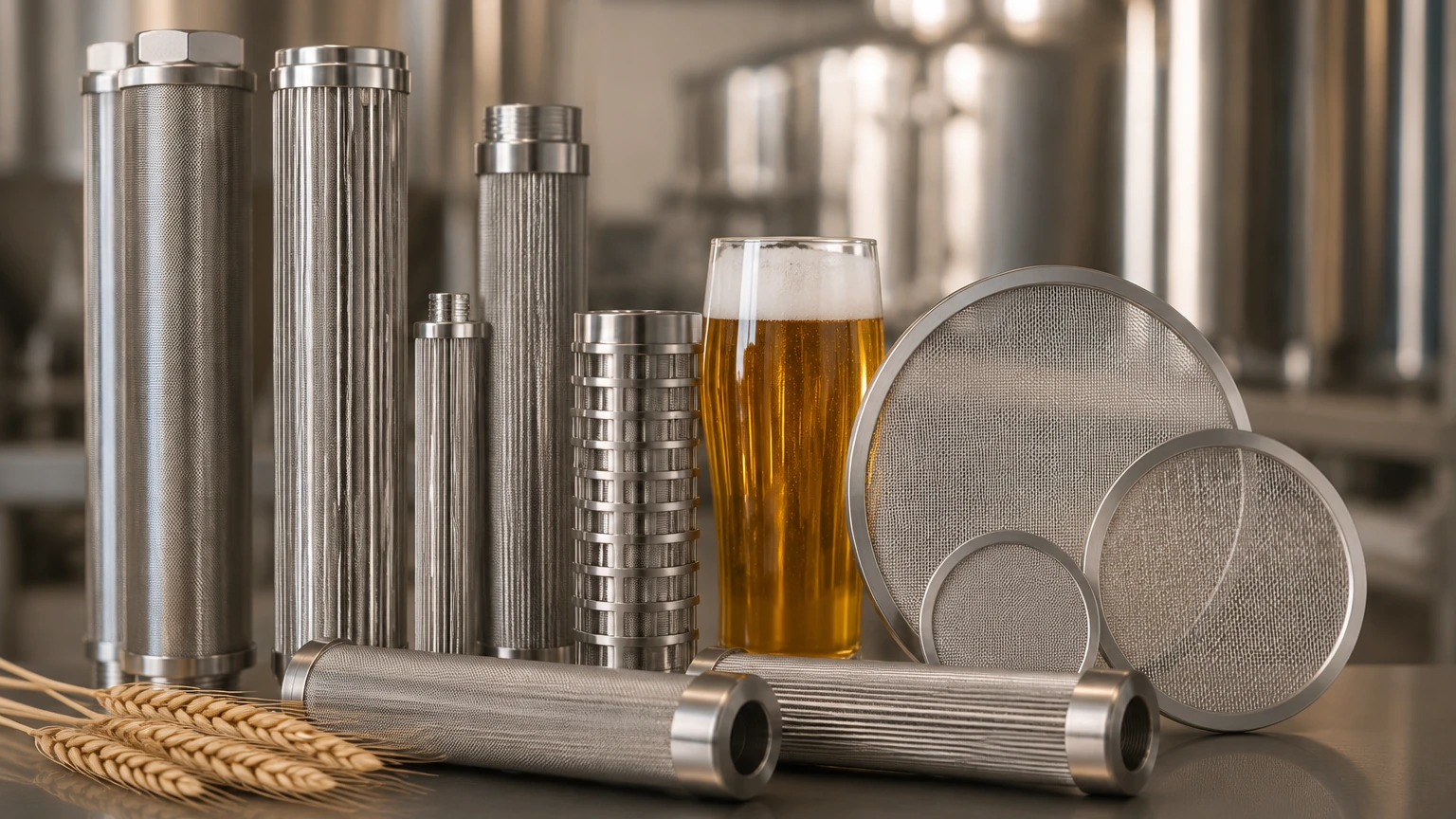
Stainless steel filters are characterized by their extreme durability and thermal resistance. They can be backwashed, ultrasonically cleaned, or chemically regenerated, which significantly reduces the total cost of ownership over time. In primary and secondary filtration stages, these components provide a reliable barrier that does not shed fibers or chemicals into the product. They are also ideal for high-temperature applications, such as hot wort filtration or steam filtration for sterilization.
Polymeric Membrane and Depth Filters
Polymeric filters, such as those made from polyethersulfone (PES) or polypropylene, are often used for final sterile filtration due to their precise pore size distribution. While effective, they are consumable items with a finite lifespan. In a high-volume commercial environment, the cost of replacing these cartridges can be substantial. Therefore, many engineers use high-quality stainless steel pre-filters to extend the life of these more sensitive final membranes.
Maintenance and Operational Efficiency
The longevity and performance of a commercial beer filtration system depend heavily on the maintenance protocols established by the technical team. Proper cleaning and storage are essential to prevent the buildup of organic soils and mineral scales.
Clean-in-Place (CIP) Protocols
CIP involves circulating cleaning agents through the filtration system without disassembly. For stainless steel components, this typically involves a caustic wash to remove organic matter, followed by an acid rinse to neutralize the caustic and remove mineral deposits (beer stone). The ability of stainless steel filter cartridges to withstand high-temperature caustic solutions is a major advantage in maintaining a sterile environment.
Integrity Testing
For sterile filtration stages, integrity testing is a mandatory quality control step. This ensures that the filter membrane has not been damaged during installation or use. Techniques such as the bubble point test or pressure hold test are used to verify that the filter will provide the required microbial retention. If a filter fails an integrity test, the entire batch may need to be re-filtered, highlighting the importance of using high-quality, durable filter housings and supports.
Customizing Filtration Solutions for Specific Brewing Requirements
No two breweries are identical, and a "one-size-fits-all" approach to filtration often leads to inefficiencies. Customization is frequently required to address specific challenges such as high hop loads in IPAs, the high viscosity of stouts, or the extreme clarity requirements of light lagers.
OEM and Customized Filter Components
Manufacturers specializing in stainless steel filtration can provide customized wire mesh configurations, bespoke cartridge lengths, and specialized housing designs to fit existing infrastructure. For example, a brewery may require a custom-sized wedge wire screen for a mash tun or a specific micron-rated sintered metal filter for carbonation stone protection. By working with a manufacturer that understands the nuances of industrial filtration, engineers can optimize their systems for maximum yield and minimum waste.
Total Cost of Ownership (TCO)
When evaluating a commercial beer filtration system, it is vital to look beyond the initial purchase price. The TCO includes the cost of replacement media, labor for maintenance, water and chemical usage for cleaning, and the potential cost of product loss due to filtration failures. Investing in high-quality stainless steel components often results in a lower TCO due to their multi-year service life and reduced risk of catastrophic failure.
Conclusion
In the competitive landscape of commercial brewing, the filtration system is a cornerstone of quality assurance. By understanding the technical demands of each filtration stage—from the robust requirements of primary solids removal to the delicate precision of sterile filtration—engineers can design systems that protect the integrity of the beer while maximizing production efficiency. The use of durable, high-performance materials like stainless steel ensures that the filtration process remains a reliable and cost-effective part of the brewing cycle. For more information on custom filtration components and engineering support, professionals are encouraged to explore the Main Page of the Kaifil website to review technical capabilities and product specifications.
