


Pipeline Strainer Market
In the landscape of industrial fluid handling, the pipeline strainer market represents a critical segment focused on the protection of downstream equipment and the maintenance of process purity. Pipeline strainers are essential mechanical components designed to remove solids from flowing liquids or gases through a perforated or wire mesh straining element. For engineers and procurement specialists, understanding the nuances of this market is vital for ensuring system longevity, reducing maintenance overhead, and optimizing the total cost of ownership (TCO) in complex industrial environments.
As industrial processes become more sophisticated, the demand for high-precision filtration solutions has grown. Manufacturers like Kaifil specialize in providing custom stainless steel filtration components that meet these rigorous demands. Whether for chemical processing, water treatment, or food and beverage production, navigating the Main Page of a leading manufacturer reveals the technical depth required to select the right strainer for a specific application.
Understanding the Dynamics of the Pipeline Strainer Market
The pipeline strainer market is currently driven by several converging factors. Global industrialization, particularly in emerging economies, has increased the demand for infrastructure that requires robust fluid handling systems. Simultaneously, stricter environmental regulations and quality standards in the pharmaceutical and food sectors have necessitated more efficient and reliable filtration technologies.
One of the most significant shifts in the market is the transition from standard cast-iron components to high-grade stainless steel and alloy materials. Stainless steel strainers offer superior corrosion resistance, which is a non-negotiable requirement in chemical and offshore applications. Furthermore, the market is seeing an increased focus on "smart" filtration—incorporating differential pressure sensors and automated blow-down valves to reduce manual intervention and prevent system failures.
From a manufacturing perspective, the trend is moving toward customization. Off-the-shelf solutions often fail to meet the specific flow rates, pressure drops, or space constraints of modern plant designs. This has led to a rise in OEM partnerships where manufacturers work directly with engineering firms to develop bespoke filtration components that integrate seamlessly into proprietary systems.
Technical Engineering Considerations for Pipeline Strainers
When evaluating options within the pipeline strainer market, engineers must look beyond simple pipe size. The performance of a strainer is dictated by several interlocking technical variables that affect both the efficiency of the filtration and the health of the overall system.
Pressure Drop (Delta P)
Pressure drop is perhaps the most critical engineering consideration. Every strainer introduces a degree of resistance to the flow. If the pressure drop is too high, it can lead to cavitation in pumps, reduced flow rates, and increased energy consumption. Engineers must calculate the clean pressure drop and establish a maximum allowable pressure drop before the element requires cleaning. High-quality wire mesh and optimized internal geometries are essential for maintaining a low Delta P.
Filtration Efficiency and Micron Ratings
The choice of mesh size or perforation diameter depends on the size of the contaminants that need to be removed. It is important to distinguish between nominal and absolute filtration ratings. A nominal rating refers to the ability of the strainer to retain a majority of particles of a specific size, whereas an absolute rating indicates the size of the largest particle that can pass through the mesh. In the pipeline strainer market, stainless steel wire mesh is often preferred for its ability to provide precise micron ratings while maintaining structural integrity under high pressure.
Material Compatibility and Metallurgy
Selecting the correct material is vital for preventing premature failure. While 304 stainless steel is suitable for many general-purpose applications, 316L stainless steel is often required for its enhanced resistance to pitting and crevice corrosion, especially in chloride-rich environments or acidic chemical processes. For highly aggressive media, specialized alloys may be necessary.
Key Evaluation Criteria for Selecting Industrial Strainers
Navigating the pipeline strainer market requires a structured approach to evaluation. Purchasing teams should focus on the following criteria to ensure they are acquiring a component that fits the operational reality of their facility.
1. Strainer Type (Y vs. Basket):
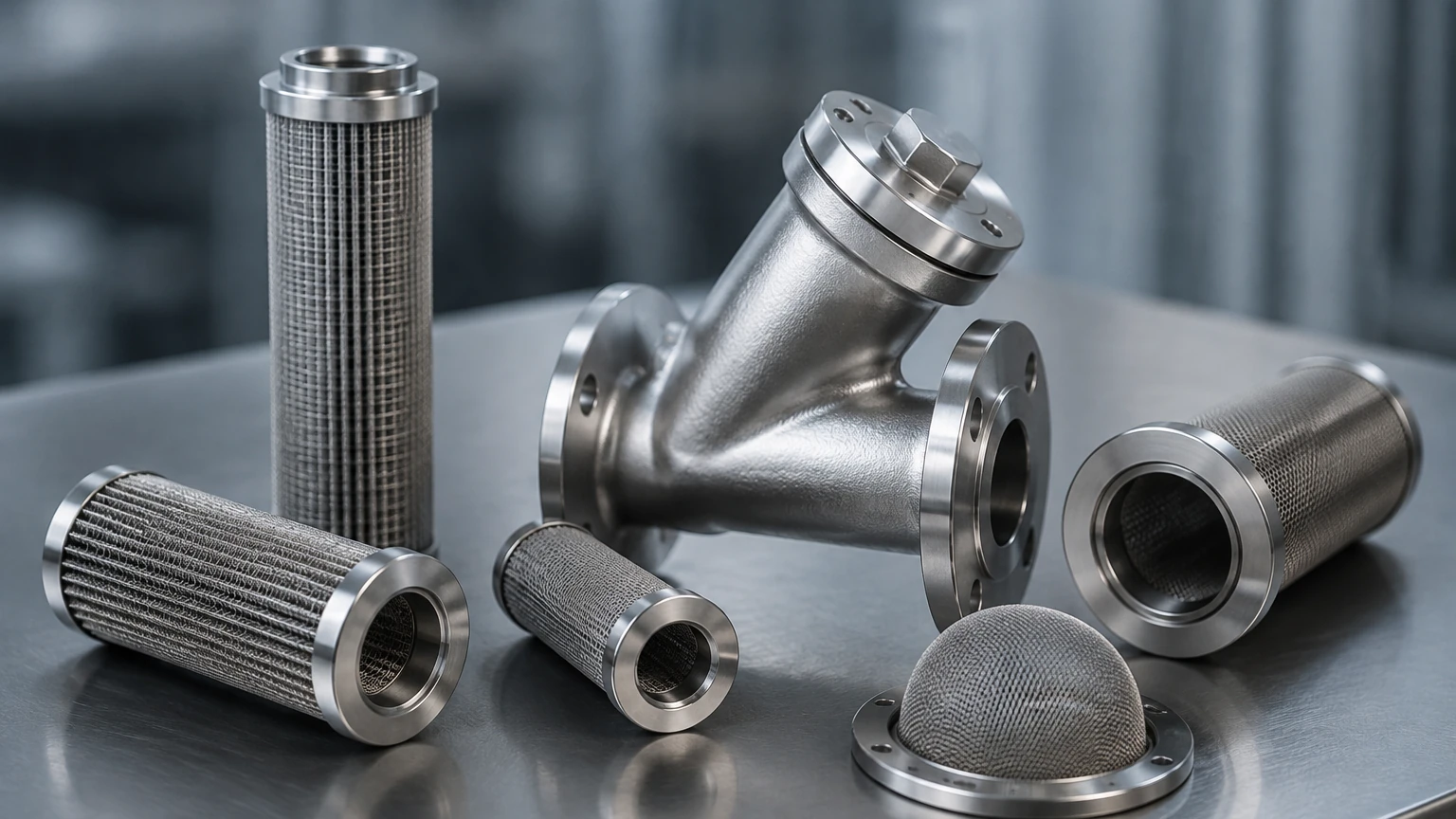
* Y-Strainers: These are typically used for gases or in high-pressure liquid lines where the amount of debris is relatively low. Their compact design allows for installation in both horizontal and vertical pipelines.
* Basket Strainers: These are designed for liquid applications where high flow rates and a larger dirt-holding capacity are required. They are easier to service and are often used in horizontal lines where the "basket" can be lifted out for cleaning without spilling the process fluid.
2. Connection Standards:
The market offers various connection types, including flanged (ANSI, DIN, JIS), threaded (NPT, BSP), and socket-weld. Ensuring compatibility with existing piping standards is a fundamental step in the procurement process.
3. Ease of Maintenance:
In many industrial settings, downtime is the single largest cost. Strainers with quick-opening covers or bolted covers that allow for rapid access to the filter element are highly valued. The availability of replacement elements and the ease of cleaning the existing mesh are also major factors.
4. Customization and OEM Capabilities:
Standard strainers may not always meet the unique requirements of a project. Evaluating a manufacturer’s ability to provide custom dimensions, specialized coatings, or reinforced mesh elements is crucial for complex engineering projects.
Industrial Applications Driving Market Demand
The diversity of the pipeline strainer market is best illustrated by the various sectors it serves. Each industry brings a unique set of challenges that dictate the design and material of the filtration components.
* Chemical and Petrochemical: This sector requires strainers that can withstand volatile fluids, high temperatures, and corrosive environments. Stainless steel filtration solutions are the standard here to ensure safety and prevent environmental leaks.
* Food and Beverage: In this industry, hygiene is the primary concern. Strainers must be designed with smooth internal surfaces (often electropolished) to prevent bacterial growth and must be easily disassembled for Clean-in-Place (CIP) or manual cleaning.
* Water Treatment: From municipal plants to industrial cooling towers, water treatment requires large-scale straining to protect pumps and membranes from sand, scale, and organic debris. The market for large-diameter basket strainers is particularly strong in this segment.
* Oil and Gas: Upstream and downstream operations utilize strainers to protect expensive metering equipment and valves from the abrasive solids often found in crude oil and natural gas streams.
Managing Total Cost of Ownership (TCO) in Filtration Systems
In the B2B procurement cycle, the initial purchase price of a pipeline strainer is only a fraction of its total cost. A strategic approach to the pipeline strainer market involves analyzing the TCO over the equipment's expected lifespan.
High-quality stainless steel strainers may have a higher upfront cost than carbon steel or plastic alternatives, but they often yield significant savings through:
* Reduced Replacement Frequency: Durable materials resist wear and corrosion, extending the service life of the component.
* Energy Savings: Precision-engineered strainers with optimized flow paths minimize pressure drop, which reduces the load on pumps and lowers electricity costs.
* Lower Maintenance Labor: Features like easy-access covers and self-cleaning capabilities reduce the man-hours required for upkeep.
* Protection of Downstream Assets: The primary role of a strainer is to protect more expensive equipment. A failure in a cheap strainer can lead to catastrophic damage to a high-pressure pump or a precision flow meter, resulting in costs that far outweigh the savings on the initial strainer purchase.
Future Trends and Customization in the Pipeline Strainer Market
Looking forward, the pipeline strainer market is expected to lean more heavily into advanced manufacturing techniques. Additive manufacturing (3D printing) is beginning to play a role in creating complex internal geometries that were previously impossible to cast or machine, further optimizing flow and filtration efficiency.
Additionally, the rise of "Sustainability-as-a-Service" means that companies are looking for filtration solutions that contribute to zero-waste goals. This includes the use of permanent, washable stainless steel elements instead of disposable cartridges, a trend that aligns perfectly with the manufacturing strengths of specialist firms like Kaifil.
Customization remains the cornerstone of the high-end market. As engineers push the boundaries of temperature and pressure in modern industrial plants, the need for bespoke metal filtration components will only increase. Manufacturers who can provide detailed engineering support, material certifications, and rapid prototyping will continue to lead the pipeline strainer market.
Conclusion
Selecting the right partner in the pipeline strainer market is a decision that impacts the efficiency, safety, and profitability of an entire industrial operation. By focusing on technical specifications—such as pressure drop, material compatibility, and ease of maintenance—engineers can ensure they are implementing a solution that meets the specific demands of their process.
As a professional manufacturer specializing in custom stainless steel filtration, Kaifil provides the expertise and manufacturing capability required to navigate these complexities. For those seeking reliable, high-performance filtration components tailored to their unique industrial needs, reviewing the options and technical resources available on the Main Page is the recommended next step in the procurement and engineering process.
