


Filston
In the complex landscape of industrial filtration, the term Filston is often associated with high-performance filtration components designed to meet the rigorous demands of hydraulic systems, chemical processing, and precision fluid management. For engineers and procurement professionals, selecting the right filtration media involves more than just matching a part number; it requires a deep understanding of material science, flow dynamics, and the specific environmental stressors of the application.
As industrial processes become more automated and tolerances tighter, the reliance on high-quality stainless steel filtration solutions has grown. Whether you are maintaining existing systems or designing new equipment, evaluating Filston-compatible components or specialized metal filters requires a technical approach to ensure system longevity and process purity. This guide examines the engineering considerations, material specifications, and selection criteria essential for high-performance industrial filtration.
Understanding Filston in Industrial Filtration Systems
Filston components typically serve as critical barriers against particulate contamination in liquid and gas streams. In B2B environments, these filters are valued for their ability to maintain structural integrity under high differential pressures and extreme temperatures. Unlike disposable polymer filters, stainless steel filtration elements are engineered for durability and, in many cases, cleanability.
When evaluating filtration solutions, technical teams must distinguish between nominal and absolute filtration ratings. A nominal rating refers to the ability of the filter to retain a majority of particulates of a certain size, whereas an absolute rating indicates the diameter of the largest spherical particle that can pass through the filter under specified test conditions. For critical applications involving sensitive hydraulic valves or pharmaceutical precursors, absolute-rated stainless steel mesh is often the industry standard.
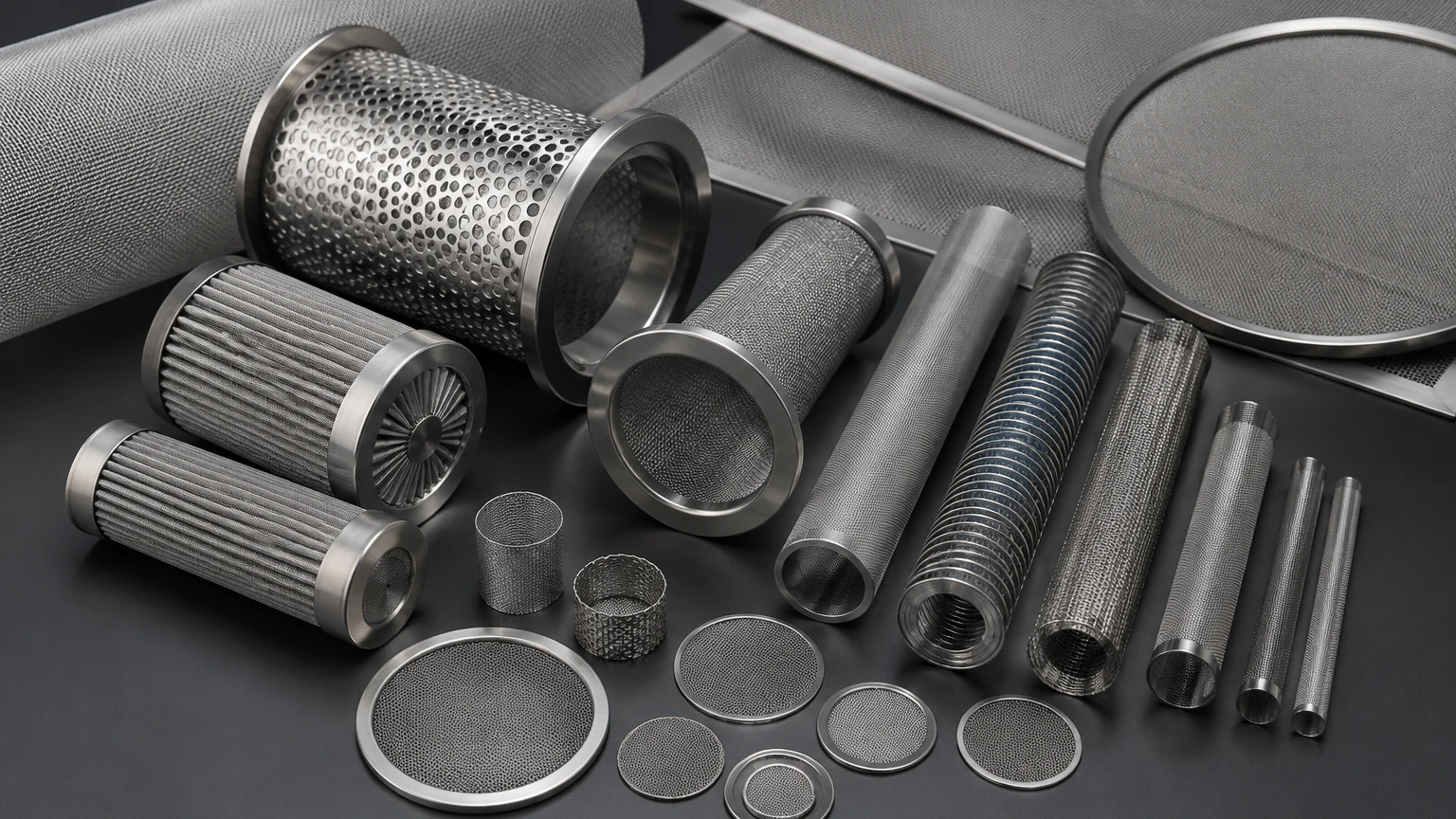
Kaifil specializes in manufacturing these types of high-precision components, ensuring that every wire mesh filter and cartridge meets the exacting standards required by global industrial sectors. For a comprehensive overview of our manufacturing capabilities and standard product lines, you may visit our Main Page.
Engineering Considerations for Stainless Steel Filter Selection
The selection of a filtration element begins with the chemical and thermal profile of the medium being filtered. Stainless steel is the material of choice for most industrial applications due to its inherent resistance to corrosion and oxidation. However, the specific grade of steel is a critical variable.
Material Grades and Chemical Compatibility
1. AISI 304: Suitable for general industrial use where moderate corrosion resistance is required. It is commonly used in food and beverage applications where high-acid environments are not present.
2. AISI 316/316L: The "L" denotes low carbon, which provides superior resistance to intergranular corrosion after welding. 316L is the standard for pharmaceutical, marine, and highly corrosive chemical processing due to the addition of molybdenum.
3. Specialty Alloys: In environments involving high concentrations of chlorides or extreme heat, alloys like Monel or Inconel may be integrated into the filter design to prevent pitting and stress corrosion cracking.
Structural Integrity and Pleating
To maximize the surface area within a fixed housing volume, many stainless steel filters utilize a pleated design. Pleating increases the effective filtration area, which lowers the face velocity of the fluid and reduces the pressure drop across the element. This is particularly important in high-viscosity applications where a high initial pressure drop could trigger bypass valves prematurely.
Evaluating Performance: Filtration Efficiency and Durability
Performance in industrial filtration is measured by the balance between dirt-holding capacity (DHC) and flow resistance. A filter that provides high efficiency but clogs too quickly leads to increased downtime and maintenance costs. Conversely, a filter with low resistance but poor efficiency risks downstream damage to expensive machinery.
Micron Ratings and Mesh Weaves
The geometry of the wire mesh weave determines the filtration characteristics. Common weaves include:
* Plain Weave: A simple over-under pattern used for coarse filtration and support layers.
* Dutch Weave: This weave uses heavier diameters for the warp wires and finer wires for the shute, resulting in a dense, firm filter cloth with high strength and fine filtration capabilities.
* Twill Weave: Allows for a heavier wire thickness in a given mesh count, providing increased durability for high-pressure applications.
Engineers must confirm that the chosen weave can withstand the mechanical stresses of backpulsing or ultrasonic cleaning if the filter is intended for reuse. The ability to clean and reinstall a stainless steel element is a primary factor in reducing the total cost of ownership compared to single-use synthetic filters.
Customization and OEM Solutions for Specialized Applications
Many industrial systems require filtration components that do not fit standard off-the-shelf specifications. This is where OEM (Original Equipment Manufacturer) capabilities become essential. Customization can involve unique end-cap configurations, specialized reinforcement cores, or non-standard dimensions to fit legacy Filston housings or proprietary equipment.
At Kaifil, the engineering process involves collaborating with clients to define the precise parameters of the application. This includes:
* Flow Rate Requirements: Ensuring the filter can handle the peak flow without excessive turbulence.
* Pressure Differential (ΔP): Designing the element to withstand both the operating ΔP and potential surge pressures.
* Housing Integration: Precision machining of connectors (e.g., NPT, BSP, or custom flange mounts) to ensure a leak-proof seal.
By focusing on customized filtration solutions, manufacturers can optimize the performance of their machinery, often exceeding the specifications of original replacement parts. For further technical details on custom configurations, please refer to the resources available on our Main Page.
Common Risks and Maintenance Strategies in High-Pressure Environments
Operating industrial filters in high-pressure environments introduces specific risks that must be mitigated through proper design and maintenance protocols. One of the most common failure modes is element collapse, which occurs when the differential pressure exceeds the structural strength of the filter core.
Risk Mitigation
* Support Tubes: High-pressure cartridges should feature a heavy-duty inner support core, often perforated or made of spiral-welded stainless steel, to prevent deformation.
* Bypass Valves: Systems should be equipped with bypass valves that trigger at a set pressure to protect the system integrity, though this allows unfiltered fluid to pass, which may be unacceptable in high-purity processes.
* Monitoring: Implementing differential pressure gauges is the most effective way to track the loading of the filter and schedule maintenance before a failure occurs.
Cleaning and Regeneration
One of the significant advantages of stainless steel filters is their ability to be regenerated. Common cleaning methods include:
* Ultrasonic Cleaning: High-frequency sound waves create cavitation bubbles that dislodge fine particulates trapped deep within the mesh.
* Chemical Cleaning: Using compatible solvents or acids to dissolve organic or inorganic scaling.
* Backwashing: Reversing the flow of fluid to flush out contaminants. This is often integrated into automated systems for continuous operation.
Total Cost of Ownership and Procurement Best Practices
When procuring Filston or similar filtration components, looking beyond the initial purchase price is vital for long-term profitability. The total cost of ownership (TCO) includes the purchase price, installation labor, energy costs associated with pressure drop, and disposal or cleaning costs.
Procurement Checklist for Engineers
Before finalizing a purchase or contract, technical teams should confirm the following with their supplier:
1. Material Certification: Request Mill Test Reports (MTRs) to verify the grade of stainless steel.
2. Filtration Validation: Ensure the micron rating has been tested according to industry standards (e.g., ISO 16889 for multi-pass testing).
3. Compatibility: Verify that the seals and gaskets (Viton, EPDM, PTFE) are compatible with the process fluid and temperature.
4. Lead Times and Scalability: For OEM projects, ensure the manufacturer can scale production from prototyping to full-scale supply without compromising quality.
High-quality stainless steel filters represent a significant investment in the reliability of industrial infrastructure. By selecting components that offer superior mechanical strength and precise filtration accuracy, facilities can reduce unplanned downtime and protect sensitive downstream equipment from the catastrophic effects of contamination.
Conclusion
Navigating the requirements for Filston-compatible filtration or custom stainless steel elements requires a balance of technical knowledge and practical application experience. From selecting the appropriate 316L mesh for a pharmaceutical line to engineering a high-pressure hydraulic filter for heavy machinery, the details of construction and material integrity cannot be overlooked.
Kaifil remains committed to providing the engineering support and manufacturing precision necessary to solve the most challenging industrial filtration problems. By focusing on durability, cleanability, and exact filtration ratings, we help our global partners achieve optimal process efficiency. To explore our full range of wire mesh filters, cartridges, and custom metal components, we invite you to visit our Main Page and consult with our technical team for your next project.
