


Waste Filtration
Industrial waste filtration is a critical process required to manage byproduct streams, protect downstream equipment, and ensure compliance with environmental regulations. In sectors ranging from chemical processing to food and beverage production, the efficiency of a filtration system directly impacts operational costs and the sustainability of the manufacturing lifecycle. For engineers and procurement specialists, selecting the appropriate filtration technology involves a deep understanding of fluid dynamics, material science, and the specific characteristics of the waste being processed.
At its core, waste filtration is the mechanical or physical separation of solids from liquids or gases. In industrial contexts, this often involves high-volume streams containing abrasive particles, corrosive chemicals, or high-temperature fluids. To maintain system integrity, the filtration components must be engineered to withstand these demanding conditions without compromising filtration accuracy.
Understanding the Fundamentals of Industrial Waste Filtration
The primary objective of waste filtration is to remove contaminants from a process stream so the fluid can either be reused, safely discharged, or moved to the next stage of treatment. Unlike primary product filtration, where the goal is to refine a final good, waste filtration often deals with unpredictable particle loads and varying chemical compositions.
There are two main mechanisms used in industrial waste separation: surface filtration and depth filtration. Surface filtration, typically achieved through stainless steel wire mesh or perforated metal, captures particles on the upstream side of the filter medium. This is ideal for waste streams with a high concentration of large particles, as the filter cake that forms can often be cleaned through backwashing or mechanical scraping. Depth filtration, on the other hand, uses a thicker medium to trap particles throughout the structure. While effective for fine contaminants, depth filters are often disposable, which may increase the total cost of ownership in high-volume waste applications.
For most industrial applications, stainless steel filtration solutions are preferred due to their durability and cleanability. By utilizing precision-engineered metal components, facilities can achieve consistent results even when dealing with the most challenging waste profiles.
Material Selection for Corrosive and High-Temperature Waste Streams
One of the most significant engineering challenges in waste filtration is material compatibility. Industrial waste often contains aggressive solvents, acids, or alkalis that can rapidly degrade standard polymer-based filters. Furthermore, many waste streams are generated at elevated temperatures, which can compromise the structural integrity of plastic housings and media.
Stainless steel, particularly grades 304 and 316L, serves as the industry standard for robust waste filtration. The high chromium and nickel content in these alloys provides a passive layer that resists oxidation and chemical attack. In applications involving saline environments or highly acidic waste, 316L is often the preferred choice due to its added molybdenum content, which enhances resistance to pitting and crevice corrosion.
Beyond chemical resistance, metal filters offer superior thermal stability. In processes such as petrochemical refining or metal smelting, waste streams may exceed temperatures of 200°C. Stainless steel filter cartridges and wire mesh components maintain their mechanical properties and filtration rating at these extremes, ensuring that the filtration process remains reliable without the risk of media migration or thermal deformation.
Engineering Considerations for Filter Design and Micron Rating
When specifying a filter for waste management, engineers must balance the required filtration accuracy (micron rating) with the flow requirements of the system. Selecting a micron rating that is too fine for the application will lead to rapid pressure buildup and frequent maintenance intervals. Conversely, a rating that is too coarse will allow contaminants to pass through, potentially damaging downstream pumps or violating discharge permits.
Absolute vs. Nominal Ratings
In the context of waste filtration, it is vital to distinguish between nominal and absolute ratings. A nominal rating indicates the ability of the filter to retain a majority of particles of a certain size, but it does not guarantee 100% efficiency. An absolute rating, typically achieved through high-precision wire mesh weaving, ensures that no particle larger than the specified micron size can pass through the medium. For critical waste streams where even small amounts of bypass can cause system failure, absolute-rated stainless steel cartridges are the necessary choice.
Mesh Weave Patterns
The geometry of the filter medium also plays a role in performance. Common weave patterns include:
- Plain Weave: Provides a straight-through flow path and is easy to clean.
- Twill Weave: Allows for a heavier wire diameter, increasing the physical strength of the mesh for high-pressure waste applications.
- Dutch Weave: Offers a dense, multi-layered structure that provides high filtration accuracy and excellent mechanical strength, making it suitable for high-pressure filtration and dehydration of waste sludge.
Operational Challenges: Managing Pressure Drop and Clogging
The performance of a waste filtration system is often measured by its differential pressure (ΔP)—the difference in pressure between the inlet and the outlet of the filter. As the filter captures waste particles, the effective flow area decreases, causing the differential pressure to rise.
Managing this pressure drop is essential for maintaining energy efficiency. High ΔP requires pumps to work harder, increasing electricity consumption and putting mechanical stress on the entire system. To mitigate this, engineers must design systems with adequate surface area. Pleated stainless steel filter cartridges are frequently used in waste filtration because the pleating process significantly increases the available filtration surface area within a compact footprint, allowing for higher flow rates and longer service intervals.
Clogging, or "blinding," is another common risk, especially when dealing with fibrous or gelatinous waste. In these instances, the selection of the filter's surface finish and the use of specialized coatings or ultrasonic cleaning protocols can help extend the life of the filter component. For automated systems, backpulsing—where a burst of fluid or air is sent in the reverse direction—is a highly effective method for clearing the filter surface without halting production.
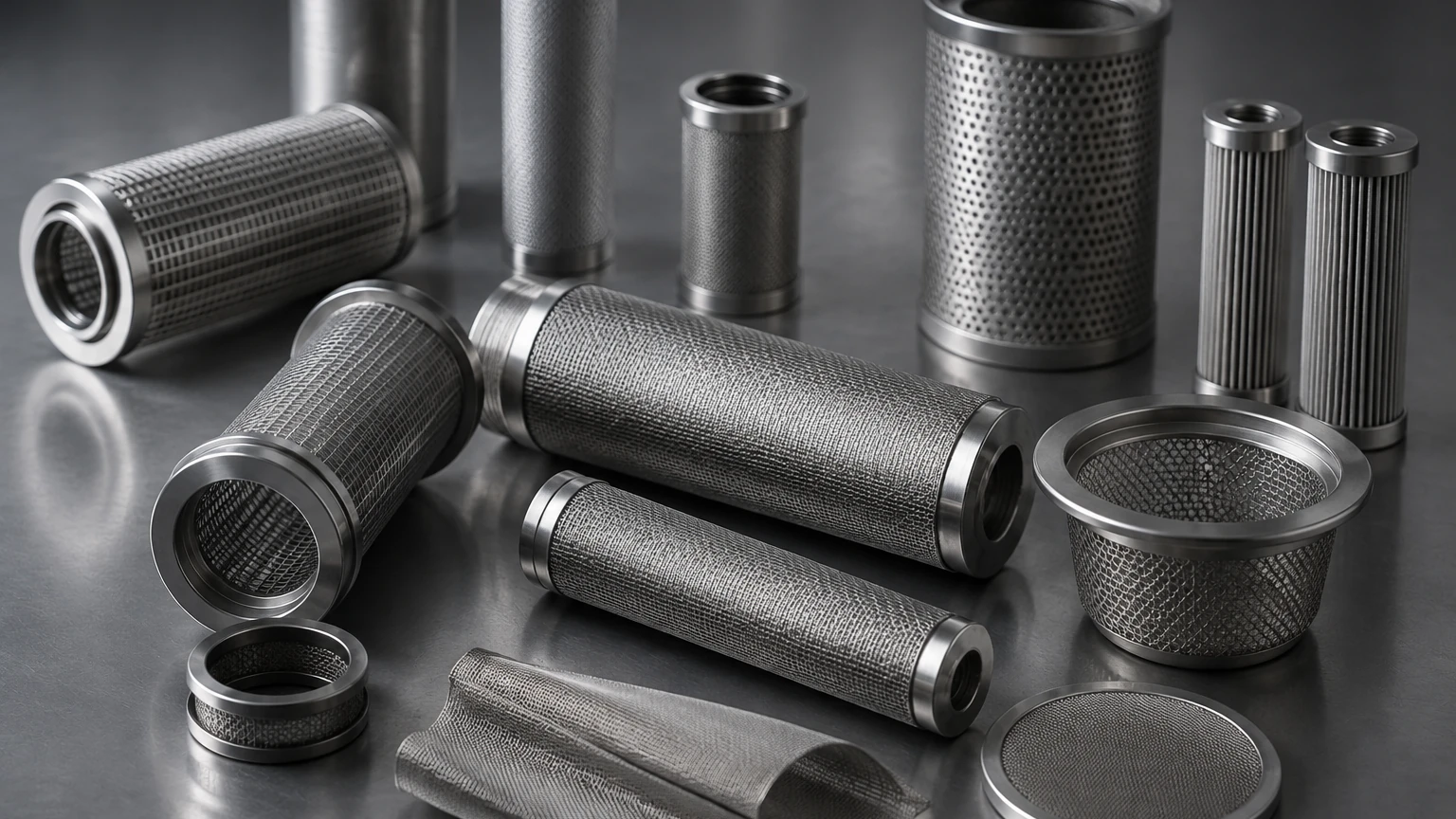
Customization and OEM Solutions for Specific Waste Profiles
No two industrial waste streams are identical. A filtration solution that works for a textile plant may be entirely unsuitable for a pharmaceutical facility. This is why customization is a cornerstone of effective waste filtration engineering. Custom-designed filter components allow for the optimization of size, shape, and connection types to fit existing infrastructure seamlessly.
OEM (Original Equipment Manufacturer) capabilities are particularly valuable for companies developing proprietary waste treatment machinery. By collaborating with a manufacturer that understands the nuances of metal fabrication and filtration science, companies can develop bespoke filter elements that meet exact specifications for pore size, structural reinforcement, and flow characteristics. Whether it is a custom-sized wire mesh basket for a gravity-fed drain or a high-pressure sintered metal cartridge for a hydraulic waste circuit, tailored solutions ensure the highest level of performance.
For those looking to explore specialized filtration components for their specific industrial needs, visiting the Main Page provides a comprehensive overview of the technical capabilities and product ranges available for custom engineering projects.
Evaluating Total Cost of Ownership in Filtration Systems
While the initial purchase price is a factor in procurement, the Total Cost of Ownership (TCO) is a more accurate metric for evaluating waste filtration systems. TCO includes the initial cost, maintenance labor, replacement part frequency, disposal costs of spent filters, and the energy costs associated with pressure drop.
Stainless steel filters often have a higher upfront cost than disposable plastic or paper filters. However, their ability to be cleaned and reused hundreds of times makes them significantly more cost-effective over the long term. In many industrial waste applications, the cost of disposing of contaminated filter cartridges can be substantial, especially if the waste is classified as hazardous. By switching to cleanable metal filters, facilities can drastically reduce their solid waste output and lower their environmental footprint.
Furthermore, the durability of stainless steel reduces the risk of unplanned downtime. A filter failure in a waste stream can lead to immediate system shutdowns or environmental fines. Investing in high-quality, precision-manufactured metal components provides the reliability needed to keep industrial processes running smoothly 24/7.
The Role of Filtration in Resource Recovery
Modern waste filtration is increasingly focused on resource recovery rather than just disposal. In many industries, the "waste" captured by the filter contains valuable materials that can be reclaimed and fed back into the production process. For example, in metalworking, fine metal shavings (swarf) can be filtered from coolants, cleaned, and sold as scrap or remelted. In the food industry, fats and proteins can be recovered from wastewater and processed into animal feed or biofuels.
Effective resource recovery requires precise filtration to ensure that the reclaimed material meets the necessary purity standards. Stainless steel wire mesh filters are ideal for these applications because they do not shed fibers or leach chemicals into the recovered material, ensuring that the secondary product remains uncontaminated.
Conclusion: Selecting the Right Partner for Waste Filtration
Successfully implementing a waste filtration strategy requires more than just buying a filter; it requires a partnership with a manufacturer that understands the technical demands of industrial environments. From material selection and micron rating to the design of custom OEM components, every detail matters in achieving efficient and reliable separation.
When evaluating a filtration provider, engineers should confirm the manufacturer's ability to provide detailed technical specifications, material certifications, and support for custom designs. By focusing on quality and durability, industrial facilities can optimize their waste management processes, protect their equipment, and achieve long-term operational excellence. For more information on high-performance filtration components and industrial solutions, please refer to the Main Page to see how advanced manufacturing can support your specific application requirements.
