


Mesh Water Filter
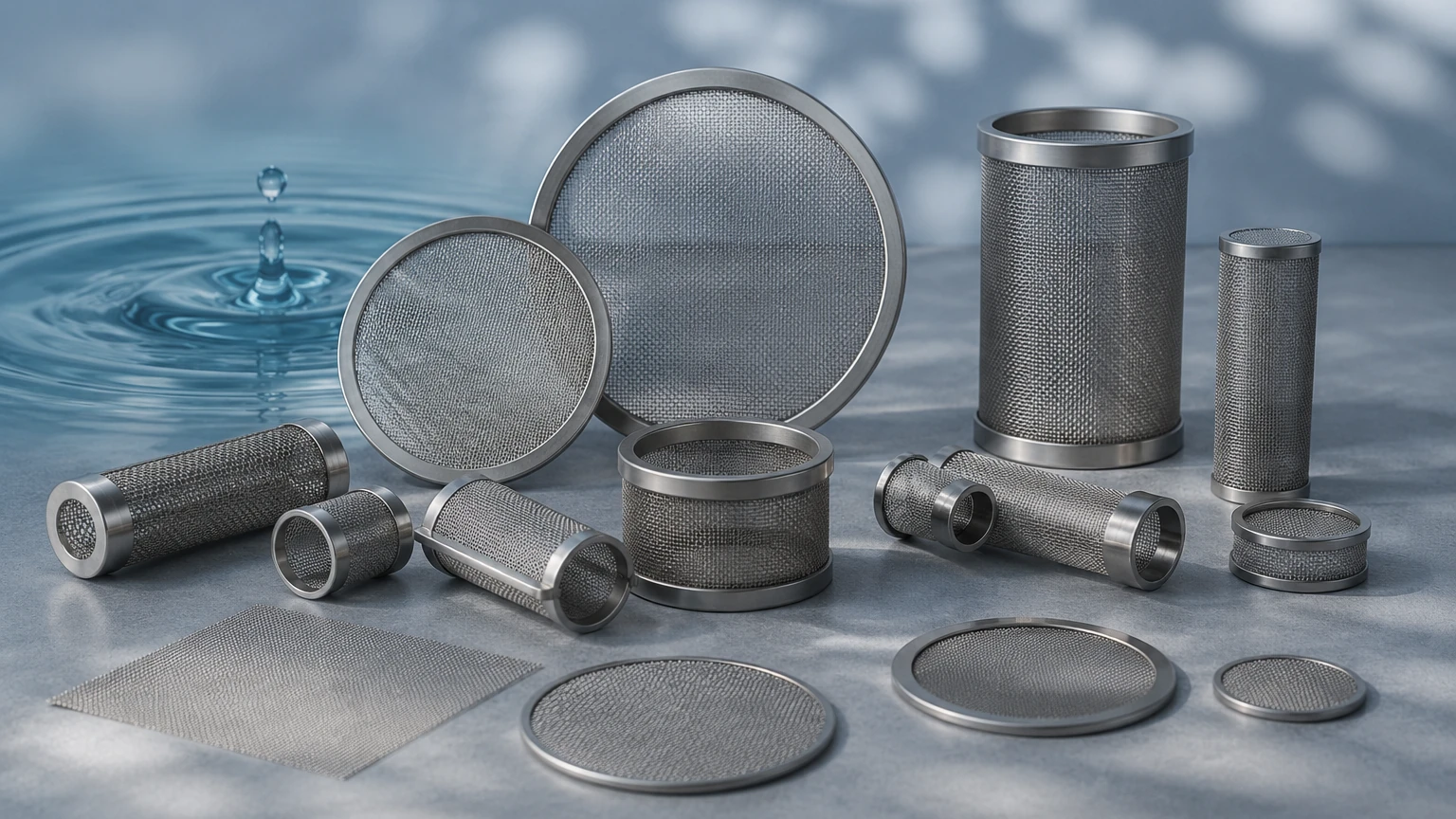
In industrial water treatment and process fluid management, the mesh water filter serves as a critical primary or secondary barrier against particulate contamination. Unlike depth filtration media that trap particles within a thick matrix, mesh filters operate primarily through surface filtration, utilizing a precision-engineered screen to intercept solids based on size. For engineers and procurement teams, selecting the appropriate mesh water filter involves a detailed analysis of material science, fluid dynamics, and mechanical durability to ensure system longevity and process integrity.
Industrial filtration requirements vary significantly across sectors such as chemical processing, food and beverage production, and hydraulic systems. A standard mesh water filter must be evaluated not just by its micron rating, but by its ability to withstand operational pressures, chemical exposure, and rigorous cleaning cycles. As a specialized manufacturer, Kaifil provides high-performance stainless steel filtration components designed to meet these demanding technical specifications.
Technical Fundamentals of Mesh Filtration
The performance of a mesh water filter is defined by its geometric properties. The two most critical factors are the mesh count and the wire diameter, which together determine the aperture size (the clear opening between wires). In industrial contexts, this is often translated into a micron rating, representing the smallest particle size the mesh is designed to retain.
Weave Types and Their Impact
The method by which the wires are interlaced significantly affects the filter’s flow characteristics and mechanical strength:
* Plain Weave: The most common structure where each warp wire crosses over and under each shute wire. This provides a high open area and low pressure drop, making it ideal for high-flow water applications where particle loading is relatively low.
* Twilled Weave: Each wire passes over two and under two wires. This allows for the use of heavier wires in a given mesh count, increasing the physical strength of the filter at the cost of a slightly higher pressure drop.
* Dutch Weave: This utilizes a heavier warp wire and a finer shute wire, woven closely together to create a dense filter medium. Dutch weave is preferred for precision filtration in high-pressure environments, such as hydraulic water systems, because it offers superior mechanical stability and fine filtration levels.
Sintered Mesh Technology
For applications requiring extreme durability, a single layer of mesh may be insufficient. Sintered mesh involves bonding multiple layers of stainless steel wire mesh together using heat and pressure in a vacuum furnace. This process creates a porous metal laminate where the layers are diffusion-bonded at every contact point. The result is a mesh water filter that maintains precise pore sizes even under high differential pressure and backwashing cycles, effectively eliminating the risk of wire migration or pore deformation.
Material Selection for Industrial Water Environments
Material compatibility is the cornerstone of filter longevity. While synthetic meshes exist, industrial-grade filtration almost exclusively utilizes stainless steel due to its mechanical properties and resistance to environmental degradation.
Stainless Steel 304 vs. 316L
* Grade 304: This is the standard industrial grade, offering excellent corrosion resistance for most freshwater and general industrial water applications. It is cost-effective and provides the necessary tensile strength for standard filtration tasks.
* Grade 316L: Containing molybdenum, 316L offers enhanced resistance to chlorides and pitting corrosion. This is the preferred material for mesh water filters used in marine environments, chemical processing plants, or any application involving high-salinity water or aggressive cleaning chemicals. The "L" designation (low carbon) ensures better weldability and resistance to intergranular corrosion in the heat-affected zones of the filter structure.
Beyond these, specialized alloys like 904L or Duplex stainless steel may be employed for highly acidic or high-temperature water streams where standard grades would fail prematurely. Ensuring the material matches the fluid chemistry is vital to preventing galvanic corrosion and maintaining the structural integrity of the filter element.
Engineering Considerations: Flow Rate and Pressure Drop
When integrating a mesh water filter into a system, engineers must calculate the clean pressure drop ($ΔP$). This is the resistance to flow caused by the filter medium itself. A filter with an excessively high $ΔP$ will reduce pump efficiency and increase energy consumption.
The Relationship Between Open Area and Velocity
The percentage of open area in a mesh water filter determines the effective filtration area. A higher open area allows for higher flow rates with lower resistance. However, as the micron rating becomes finer, the wire diameter often occupies a larger percentage of the total surface area, reducing the open area. Engineers must balance the need for fine filtration with the requirement for high throughput. If the velocity through the mesh exceeds design limits, it can lead to "particle breakthrough," where flexible or high-velocity particles are forced through the apertures, compromising downstream equipment.
Dirt-Holding Capacity
Because mesh is a surface-loading medium, its dirt-holding capacity is inherently lower than that of depth filters. Once the surface is covered with a layer of contaminants (the "filter cake"), the pressure drop will rise exponentially. In industrial water systems, this necessitates a robust strategy for cleaning or replacement. Understanding the particle size distribution (PSD) of the influent water is essential; if the water contains a high volume of particles just slightly larger than the mesh aperture, the filter will clog rapidly, a phenomenon known as "blinding."
Customization and OEM Integration
Standard off-the-shelf filters rarely meet the exact needs of complex industrial machinery. Customization allows for the optimization of the mesh water filter to fit specific housing dimensions, flow patterns, and connection types. For comprehensive information on custom capabilities and technical support, engineers are encouraged to visit the Main Page to review product options and application support.
Structural Reinforcement
In high-pressure water systems, the mesh element often requires support to prevent collapse. This is achieved by incorporating perforated metal cores or external cages. The mesh is wrapped around or tucked inside these rigid structures, which handle the mechanical load while the mesh performs the filtration. Custom OEM designs can integrate these support structures directly into the filter cartridge, ensuring a seamless fit within the existing system architecture.
End-Cap and Connection Options
The method of sealing the filter within its housing is a common failure point. Custom mesh water filters can be manufactured with various end-cap configurations, including:
* DOE (Double Open End): Utilizes gaskets on both ends for a compression seal.
* SOE (Single Open End): Often features O-ring seals (such as 222 or 226 configurations) with a bayonet or fin end for secure positioning.
* Threaded Connections: NPT or BSP threads for direct installation into piping manifolds.
Maintenance, Cleaning, and Total Cost of Ownership
One of the primary advantages of a stainless steel mesh water filter over disposable media is its cleanability. In many industrial processes, the ability to regenerate the filter medium significantly reduces the total cost of ownership (TCO) by eliminating the recurring expense of replacement cartridges and reducing waste disposal volumes.
Cleaning Methodologies
* Backwashing: Reversing the flow of water through the mesh to dislodge accumulated particles. This is often automated in continuous-flow systems.
* Ultrasonic Cleaning: Using high-frequency sound waves in a cleaning solvent to remove fine particulates lodged deep within the mesh pores. This is particularly effective for sintered mesh filters.
* Chemical Cleaning: Utilizing acids or alkaline solutions to dissolve organic or mineral scaling. The chemical resistance of stainless steel allows for aggressive cleaning protocols that would destroy synthetic filters.
Determining Replacement Cycles
While mesh filters are durable, they are not infinite. Mechanical fatigue from pressure pulsations or abrasion from high-velocity solids can eventually lead to wire breakage. Regular inspection of the mesh integrity is necessary. A well-designed maintenance program monitors the differential pressure trends; if the "clean" $ΔP$ after cleaning begins to rise over time, it indicates that the mesh is becoming permanently fouled or blinded, signaling that a replacement is required.
Applications Across Key Industries
The versatility of the mesh water filter makes it indispensable in various sectors:
Food and Beverage
In this industry, filtration components must adhere to strict sanitary standards. Stainless steel mesh is non-leaching and can withstand the high temperatures required for Clean-in-Place (CIP) and Steam-in-Place (SIP) sterilization. Common applications include filtering wash water, ingredient water, and protecting spray nozzles in bottling lines from particulate blockage.
Chemical and Petrochemical
Chemical processes often involve corrosive fluids or high-temperature water streams used for cooling or heating. The chemical compatibility of 316L stainless steel mesh ensures that the filter does not react with the process fluid, maintaining both the purity of the chemical and the structural safety of the filtration system.
Water Treatment and Desalination
In desalination plants, mesh filters are used as pre-filtration stages to protect sensitive Reverse Osmosis (RO) membranes. By removing larger silt and organic debris, the mesh water filter extends the life of the more expensive downstream membranes and reduces the frequency of membrane cleaning.
Conclusion
Selecting a mesh water filter is a technical decision that impacts the efficiency, safety, and operational costs of an industrial system. By focusing on material grade, weave structure, and mechanical reinforcement, engineers can implement filtration solutions that provide consistent performance under the most strenuous conditions. As a dedicated manufacturer, Kaifil offers the engineering expertise and manufacturing precision necessary to produce custom stainless steel filtration components that align with specific industrial requirements. For those seeking to optimize their filtration processes, detailed technical specifications and support are available on the Main Page, providing a foundation for informed selection and long-term system reliability.
