


Gas Condensation
In industrial filtration and fluid handling, the phenomenon of gas condensation represents both a significant engineering challenge and a critical process step. For engineers and technical procurement teams, understanding how a gas transitions into a liquid phase is essential for maintaining system integrity, protecting downstream equipment, and ensuring the efficiency of filtration media. When vapor cools below its dew point or undergoes specific pressure changes, the resulting liquid droplets can significantly alter the performance of wire mesh filters and stainless steel cartridges.
Managing gas condensation requires a deep understanding of thermodynamics, material science, and mechanical design. In environments ranging from chemical processing plants to high-pressure hydraulic systems, the presence of unwanted condensate can lead to corrosion, increased differential pressure, and even system failure. Conversely, in applications where condensation is intentional—such as in solvent recovery or moisture removal—the filtration system must be engineered to facilitate the separation of liquid and gas phases effectively.
The Physics of Gas Condensation in Industrial Processes
Gas condensation occurs when the temperature of a gas is reduced to its dew point or when the pressure is increased to the point where the gas can no longer remain in a vapor state. In industrial piping and filtration housings, this is frequently triggered by environmental temperature fluctuations, the Joule-Thomson effect during pressure drops, or heat loss through uninsulated components.
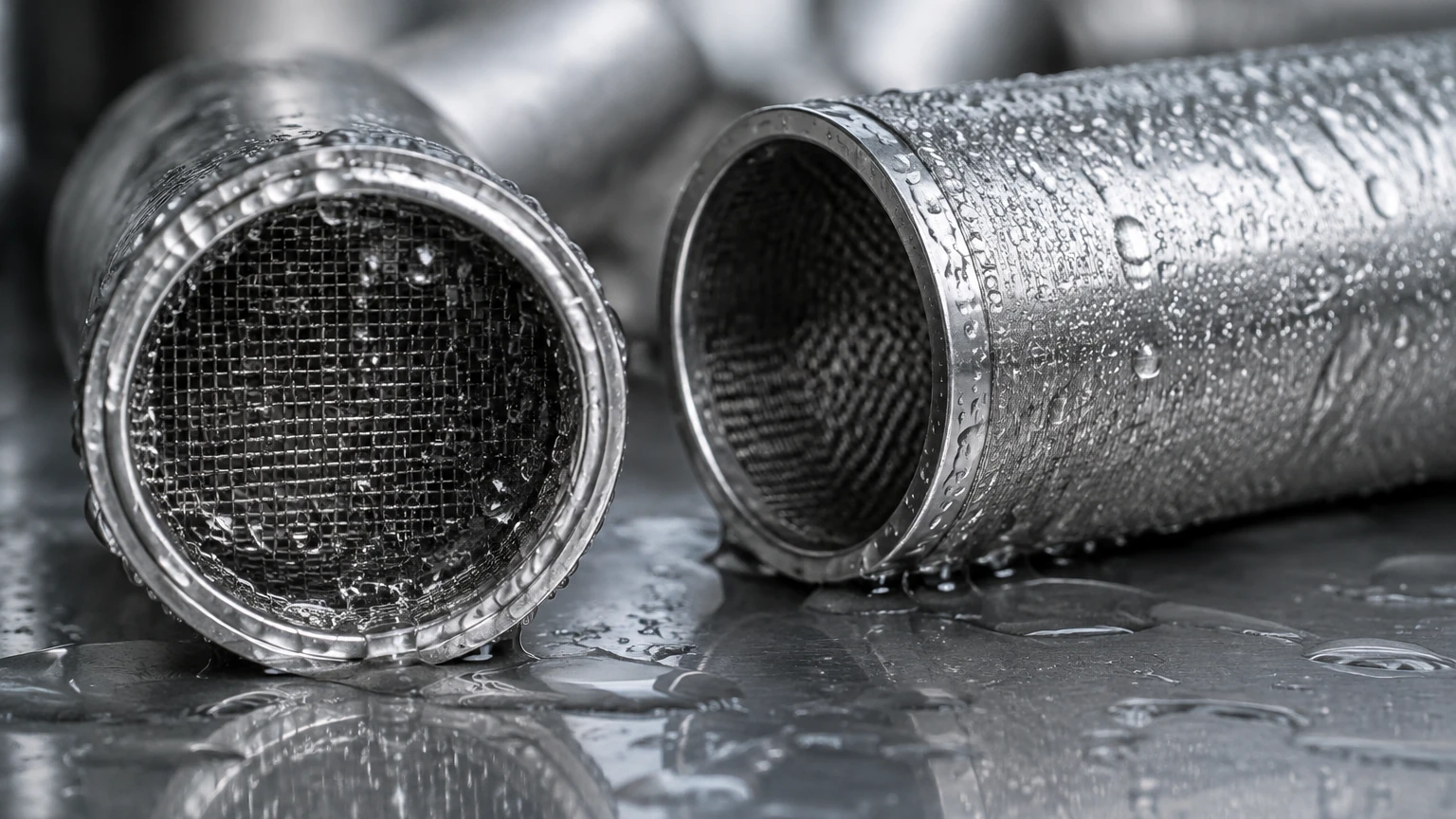
From a technical perspective, the transition involves the release of latent heat. As the gas molecules lose kinetic energy, they begin to cluster together, forming micro-droplets. In a filtration context, these droplets often form on the surface of the filter media or within the pore structure of the mesh. If the filtration system is not designed to handle this liquid load, the droplets can bridge the gaps between the wires or fibers, leading to a phenomenon known as "blinding." This significantly increases the resistance to flow, requiring higher energy input to maintain the same throughput.
Engineers must also account for the chemical composition of the gas. In many industrial applications, the gas stream is not a pure substance but a mixture of various vapors. Different components will reach their condensation points at different temperatures and pressures, leading to a complex multi-phase flow that requires robust filtration solutions, such as those found on the Main Page of specialized manufacturers.
Challenges Posed by Condensate in Filtration Systems
When gas condensation occurs unexpectedly within a filtration assembly, it introduces several operational risks that can compromise the entire process. These challenges are particularly acute in precision industries like pharmaceutical manufacturing and food processing, where purity is paramount.
1. Increased Differential Pressure
Liquid droplets have a much higher viscosity and density than the gas they originate from. When these droplets accumulate on a fine wire mesh or a sintered metal filter, they occupy the void space intended for gas flow. This reduction in effective filtration area causes a sharp rise in differential pressure (ΔP). If the pressure exceeds the structural limits of the filter element, it can lead to deformation or media migration.
2. Corrosion and Material Degradation
Condensation often concentrates impurities found in the gas stream. For example, in flue gas filtration or chemical vapor processing, the condensate may become acidic or caustic. If the filter media is not made from high-grade materials like 316L stainless steel, this liquid phase can trigger localized pitting or stress corrosion cracking. This is why material selection is the most critical factor when designing systems prone to gas condensation.
3. Microbial Growth
In the food, beverage, and pharmaceutical sectors, the presence of liquid water resulting from condensation can create a breeding ground for bacteria and mold. Standard polymer filters may trap moisture and provide a substrate for growth. Stainless steel filtration components are preferred in these scenarios because they can be easily sterilized via Steam-in-Place (SIP) or Clean-in-Place (CIP) protocols, ensuring that any condensate does not lead to biological contamination.
Material Selection: Why Stainless Steel is Essential
For applications where gas condensation is a constant factor, stainless steel is the industry standard for filtration media. Unlike synthetic fibers or paper-based filters, stainless steel offers a unique combination of mechanical strength, thermal stability, and chemical resistance.
304 vs. 316L Stainless Steel
While Grade 304 stainless steel is suitable for general-purpose applications with low moisture, Grade 316L is the preferred choice for environments where condensation is frequent. The addition of molybdenum in 316L provides superior resistance to chlorides and acidic condensates. In high-temperature gas streams, such as those found in petrochemical refining, these alloys maintain their structural integrity far beyond the melting points of polymer-based alternatives.
Sintered Metal Mesh
Sintered wire mesh filters are particularly effective in managing gas condensation. Through the sintering process, multiple layers of woven wire mesh are bonded together to create a rigid, porous structure. This design allows for precise control over pore size and distribution. When condensation occurs, the robust nature of the sintered mesh prevents the media from collapsing under the weight of the liquid, and the uniform pores facilitate more predictable drainage patterns.
Coalescing vs. Particulate Filtration in Condensing Environments
In many B2B industrial settings, the goal is not just to filter out solid particles but to remove the liquid droplets formed by gas condensation. This requires a specialized type of filtration known as coalescing.
Coalescing filters are designed to encourage small droplets to merge into larger ones as they pass through the filter media. Once the droplets reach a certain size, gravity overcomes the force of the gas flow, and the liquid drains to the bottom of the filter housing where it can be removed via a drain valve.
When selecting a filter for this purpose, engineers must consider:
* Surface Tension: The interaction between the liquid condensate and the metal surface of the filter. Specialized coatings or specific mesh weaves can be used to promote or repel liquid attachment.
* Gas Velocity: If the gas velocity is too high, it can re-entrain the liquid droplets, carrying them downstream. Proper sizing of the filter element is crucial to maintain a velocity that allows for effective coalescence.
* Micron Rating: While a finer micron rating captures smaller droplets, it also increases the risk of clogging if solid particulates are also present in the gas stream.
Engineering Specifications for High-Performance Filters
When specifying a filter for a system where gas condensation is expected, several technical parameters must be confirmed to ensure long-term reliability. Engineers should not rely on generic off-the-shelf solutions but rather look for customized components that match their specific operating conditions.
Filtration Accuracy and Efficiency
The micron rating must be balanced against the expected volume of condensate. In systems with high liquid loading, a multi-stage filtration approach is often used: a coarse pre-filter to capture large droplets and a fine sintered element for final polishing. This prevents the fine filter from becoming prematurely overwhelmed by the liquid phase.
Structural Integrity
The filter must be able to withstand the maximum possible differential pressure that could occur if the element becomes fully saturated with liquid. This is especially important in vacuum systems or high-pressure gas lines where sudden phase changes can cause rapid pressure spikes.
Connection and Sealing
Condensation can often leak through inferior seals or gaskets. For high-temperature or chemically aggressive gas streams, metal-to-metal seals or specialized PTFE gaskets are required to ensure that the condensate remains contained within the filtration system.
Maintenance and Longevity of Metal Filter Elements
One of the primary advantages of using stainless steel filtration solutions in the presence of gas condensation is their cleanability. Unlike disposable filters that must be replaced once they become saturated or fouled, stainless steel cartridges can be cleaned and reused multiple times.
Cleaning Methods
* Ultrasonic Cleaning: Uses high-frequency sound waves to dislodge particles and dried condensate residues from deep within the mesh structure.
* Backwashing: Reversing the flow of fluid through the filter to push out contaminants.
* Chemical Cleaning: Using specific solvents or acids to dissolve mineral deposits or organic residues left behind by the condensed gas.
Monitoring Performance
To optimize the replacement cycle, industrial operators should monitor the differential pressure across the filter. A steady increase in ΔP usually indicates particulate buildup, while a sudden jump may indicate an unexpected surge in gas condensation. By tracking these metrics, maintenance teams can schedule cleanings before the system reaches a critical failure point, thereby reducing the total cost of ownership.
Conclusion: Selecting the Right Partner for Filtration Solutions
Managing gas condensation requires more than just a standard filter; it requires a solution engineered for the specific thermal and chemical realities of the application. Whether the goal is to protect a high-speed turbine from moisture or to recover valuable solvents from a process stream, the choice of filtration media is the determining factor in system success.
By focusing on high-quality stainless steel materials and precision manufacturing, companies can ensure their systems remain operational even in the most demanding condensing environments. For engineers seeking custom filtration components designed to withstand these conditions, reviewing product options and application support on the Main Page provides a comprehensive overview of available stainless steel solutions. Investing in durable, high-performance filtration technology not only protects equipment but also optimizes process efficiency and reduces long-term operational costs.
