


Pp Cartridge Filter Housing
In industrial fluid processing, the integrity of the filtration system is as dependent on the vessel as it is on the filter media itself. A pp cartridge filter housing serves as the critical pressure vessel that holds the filter element in place, ensuring that all fluid passes through the media without bypass. Polypropylene (PP) is a widely utilized material for these housings due to its exceptional chemical resistance, lightweight nature, and cost-effectiveness in low-to-medium pressure applications. For engineers and procurement teams, selecting the right housing requires a deep understanding of material science, fluid dynamics, and mechanical constraints.
While many high-pressure or high-temperature industrial environments demand the robustness of stainless steel components, the pp cartridge filter housing remains a staple in water treatment, chemical processing, and microelectronics. Understanding the technical boundaries of this equipment is essential for maintaining system uptime and ensuring the purity of the final product.
Technical Properties of Polypropylene in Filtration
Polypropylene is a thermoplastic polymer known for its high degree of chemical inertness. In the context of a pp cartridge filter housing, this material provides a reliable barrier against a wide range of corrosive agents, including many organic solvents, acids, and alkalis. Unlike metallic housings, PP is immune to galvanic corrosion and pitting caused by high chloride concentrations, making it a preferred choice for seawater desalination pre-filtration and brine handling.
From an engineering perspective, the mechanical properties of PP must be carefully balanced against the operating environment. Polypropylene typically has a lower tensile strength than metals, which dictates the wall thickness and reinforcement strategies used in housing design. Most industrial-grade PP housings are manufactured using injection molding or reinforced with glass fibers to enhance structural rigidity.
Thermal stability is another critical factor. While PP can withstand temperatures up to approximately 60°C (140°F) in most pressurized configurations, its strength diminishes as temperatures rise. Engineers must consult pressure-temperature derating curves to ensure the housing remains safe under peak operating conditions. For applications exceeding these thermal limits, transitioning to stainless steel filtration solutions, such as those featured on the Main Page, is often necessary to ensure safety and longevity.
Structural Design and Component Integration
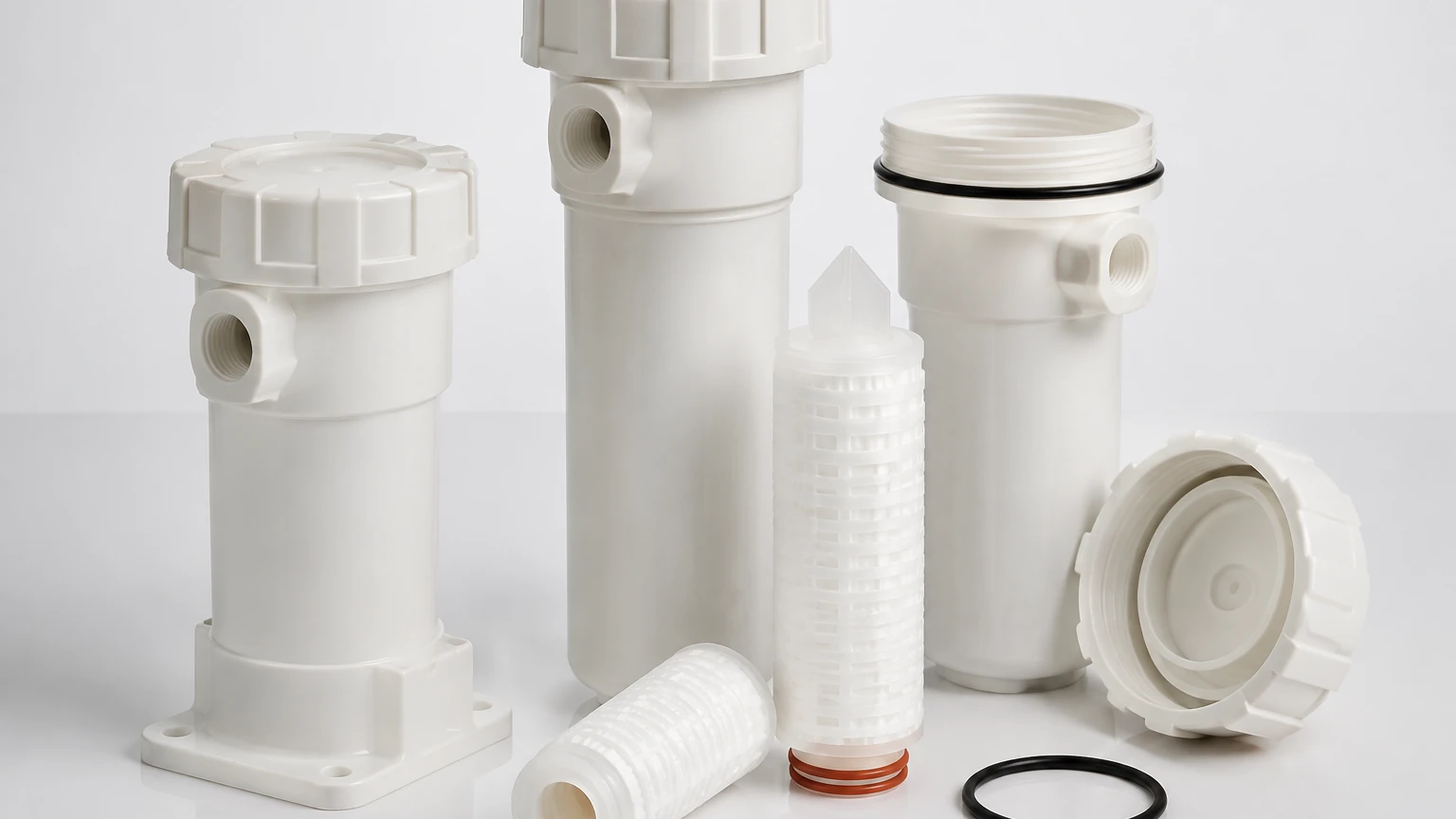
A standard pp cartridge filter housing consists of three primary components: the head (or cap), the sump (or bowl), and the internal sealing mechanism. The design of these components determines the ease of maintenance and the reliability of the seal.
The Housing Head
The head is the stationary part of the housing, usually containing the inlet and outlet ports. In industrial settings, these ports are typically threaded (NPT or BSP) or flanged. High-quality PP housings often feature reinforced mounting bosses, allowing the unit to be secured to a bracket or skid without stressing the piping connections. Some designs also include a pressure relief button or a vent plug to bleed air from the system during startup.
The Sump and Closure
The sump is the cylindrical body that houses the filter cartridge. In a pp cartridge filter housing, the sump is often connected to the head via an ACME thread or a buttress thread, which provides high load-bearing capacity. A critical component here is the O-ring seal, typically made of EPDM, Viton (FKM), or Buna-N. The choice of O-ring material must be compatible with the process fluid to prevent swelling or degradation, which could lead to leaks.
Internal Sealing Options
The housing must accommodate specific cartridge end-cap configurations. Common standards include:
* Double Open End (DOE): The housing uses a spring or a compression nut to seal both ends of the cartridge.
* Code 7 (226 O-rings/Bayonet): Provides a high-security locking mechanism, often preferred in critical applications to prevent cartridge bypass.
* Code 3 (222 O-rings): A plug-in style seal that relies on dual O-rings for a tight fit.
Evaluating Flow Dynamics and Pressure Drop
When specifying a pp cartridge filter housing, the flow rate and the resulting pressure drop ($ΔP$) are primary performance indicators. The total pressure drop of a filtration system is the sum of the housing pressure drop and the clean cartridge pressure drop.
Industrial housings are designed with specific flow paths to minimize turbulence. However, because PP is molded, the internal geometries can sometimes be more restrictive than fabricated metal housings. Engineers should look for "high-flow" designs that feature larger internal ports and streamlined transitions.
It is a common mistake to size a housing based solely on the pipe size. Instead, the sizing should be based on the maximum allowable pressure drop at the required flow rate. For example, if a process requires 50 GPM, a single 10-inch pp cartridge filter housing may cause excessive velocity and pressure loss, necessitating a 20-inch "Big Blue" style housing or a multi-round configuration. High differential pressure can not only damage the filter cartridge but also lead to structural failure of the PP sump if it exceeds the manufacturer's fatigue limits.
Chemical Compatibility and Application Boundaries
The primary advantage of the pp cartridge filter housing is its versatility across different chemical profiles. In the semiconductor industry, ultrapure water (UPW) systems utilize PP housings to avoid metal ion leaching, which can contaminate silicon wafers. Similarly, in the food and beverage sector, FDA-compliant polypropylene ensures that no unwanted flavors or chemicals are introduced into the product stream.
However, there are specific chemicals that are incompatible with polypropylene. Strong oxidizing agents, such as concentrated nitric acid or certain chlorinated hydrocarbons, can cause the polymer chains to break down, leading to embrittlement and eventual cracking.
In applications involving high-pressure hydraulic fluids or high-temperature steam sterilization, a plastic housing is generally unsuitable. In these instances, custom-engineered stainless steel filter cartridges and housings are the industry standard. These metal components provide the mechanical integrity required for high-viscosity fluids and extreme thermal cycles, ensuring that the filtration system does not become a point of failure in the production line.
Installation and Maintenance Protocols
Proper installation is vital for the longevity of a pp cartridge filter housing. Because polypropylene is softer than metal, over-tightening threaded connections can lead to stress cracking or stripped threads. The use of PTFE tape or specialized thread sealants is recommended, but torque should be applied according to the manufacturer's specifications.
Maintenance routines should include:
1. Depressurization: Always bleed the internal pressure before attempting to unscrew the sump.
2. O-Ring Inspection: Every time a cartridge is changed, the O-ring should be inspected for nicks, compression set, or chemical swelling. Lubricating the O-ring with a compatible silicone grease ensures a proper seal and makes future removal easier.
3. Sump Cleaning: Over time, sediment can accumulate at the bottom of the sump. Periodic cleaning prevents bacterial growth and ensures that the cartridge sits squarely on the internal seat.
4. Visual Inspection for Fatigue: In systems with frequent pressure pulsations (water hammer), PP housings can develop micro-cracks. Regular visual inspections under a bright light can help identify these issues before a catastrophic failure occurs.
Total Cost of Ownership and Selection Criteria
While the initial purchase price of a pp cartridge filter housing is lower than that of a stainless steel equivalent, the total cost of ownership (TCO) involves more than just the sticker price. Factors such as replacement frequency, the cost of downtime, and the risk of leakage must be considered.
For temporary setups, pilot plants, or non-critical water lines, PP housings offer excellent value. However, for continuous industrial processes where a housing failure could result in significant environmental cleanup or lost production time, the durability of metal filtration components often justifies the higher upfront investment.
When selecting a housing, engineers should confirm the following data points with their supplier:
* Maximum Operating Pressure and Temperature: Ensure a safety margin of at least 25% above the peak process conditions.
* Cartridge Compatibility: Confirm the housing supports the specific length (9.75", 10", 20", 30", 40") and end-cap style of the intended filter.
* Regulatory Compliance: Check for NSF/ANSI 42 or 61 certification if the housing is used for potable water, or FDA CFR 21 compliance for food contact.
* Port Configuration: Determine if NPT, BSP, or socket-weld connections are most appropriate for the existing piping manifold.
By carefully matching the pp cartridge filter housing to the specific demands of the application, facilities can achieve efficient, reliable, and cost-effective filtration. For those requiring more specialized or heavy-duty filtration components, exploring the range of custom stainless steel solutions available on the Main Page provides a path toward optimized industrial performance and long-term system stability.
