


Bar Screens Water Treatment
In the hierarchy of industrial and municipal wastewater processing, the initial stage of physical separation is perhaps the most critical for protecting downstream infrastructure. Bar screens water treatment serves as the primary mechanical filtration process, designed to remove large solids, debris, and inorganic materials from influent streams before they can damage pumps, clog pipes, or interfere with sensitive biological treatment processes. For engineers and facility managers, selecting the appropriate screening technology is a balance of hydraulic efficiency, material durability, and operational cost.
While bar screens are often categorized as "coarse" filtration, their design requires precise engineering to ensure they do not become a bottleneck in the system. The efficiency of this stage directly impacts the longevity of secondary filtration components, such as the precision stainless steel filter cartridges and wire mesh systems found on the Kaifil Main Page. By understanding the technical nuances of bar screen design, procurement teams can significantly reduce the total cost of ownership for the entire water treatment plant.
The Role of Bar Screens in Industrial and Municipal Water Treatment
The fundamental purpose of bar screens water treatment is the protection of the plant’s "heart"—the pumps and fine filtration units. In industrial settings, such as food processing or chemical manufacturing, influent may contain anything from plastic packaging and wood debris to large organic solids. If these materials reach high-speed centrifugal pumps, they cause cavitation, impeller damage, and frequent seal failures.
In municipal applications, the challenge is even more varied. The rise of "non-dispersible" solids has increased the load on primary screening systems. A well-designed bar screen acts as a sacrificial barrier, capturing these materials at the headworks. This process, known as preliminary treatment, ensures that the subsequent stages—such as grit removal, primary sedimentation, and secondary biological treatment—operate under steady-state conditions. Without effective bar screening, the accumulation of rags and debris in aeration tanks can lead to "ragging," a condition that requires expensive manual intervention and leads to significant downtime.
Classification of Bar Screens: Coarse vs. Fine Filtration
Bar screens are generally classified based on the clear opening between the bars, which dictates the size of the particles they can effectively capture. Choosing between coarse and fine screens depends on the specific requirements of the downstream equipment.
Coarse Screens
Coarse screens typically have openings ranging from 6 mm (0.25 inches) to 150 mm (6 inches). These are usually the first line of defense. In many large-scale facilities, a coarse screen with 50 mm openings is used to protect the intake, followed by a secondary coarse screen with 15-20 mm openings. The primary goal here is the removal of large objects like logs, rocks, and large plastic containers.
Fine Screens
Fine screens feature openings of less than 6 mm. These are increasingly common in modern plants that utilize Membrane Bioreactors (MBR) or sophisticated secondary filtration. Fine screens often utilize specialized geometries, such as wedge wire or perforated plates, to maximize the capture of hair, fibers, and small plastic fragments. Because fine screens create a higher resistance to flow, they require more frequent cleaning and more robust mechanical rake systems.
Engineering Design Parameters for Effective Screening
Designing a bar screens water treatment system involves complex hydraulic calculations. Engineers must evaluate several key variables to prevent flooding and ensure efficient solids capture.
Approach Velocity and Through-Bar Velocity
The approach velocity (the speed of the water in the channel before it hits the screen) must be high enough to prevent the settling of grit and heavy solids, typically around 0.3 to 0.6 meters per second (m/s). However, the velocity *through* the bars must be controlled. If the through-bar velocity exceeds 1.2 m/s, solids may be forced through the openings by the sheer force of the water, a phenomenon known as "breakthrough." Conversely, if the velocity is too low, the screen will not effectively "scour," leading to excessive accumulation.
Head Loss Calculations
Head loss is the difference in water level between the upstream and downstream sides of the screen. It is a critical indicator of screen performance. Engineers often use Kirschmer’s formula to estimate head loss, which considers the bar shape, the angle of the screen to the flow, and the clear opening width. Rectangular bars offer the highest resistance, while teardrop-shaped or circular bars reduce turbulence and minimize head loss. High head loss can lead to upstream flooding, making automated cleaning cycles essential.
Open Area Ratio
The open area ratio is the percentage of the total channel area that is not obstructed by the bars. A higher open area ratio reduces head loss and allows for higher flow rates. For fine screens, maintaining a high open area while achieving small particle capture requires high-strength materials that allow for thinner bar profiles without sacrificing structural integrity.
Mechanical vs. Manual Screen Cleaning Technologies
The method used to remove captured solids from the bars is a primary factor in operational expenditure (OPEX). While manual screens are cheaper to install, they are labor-intensive and prone to overflow if not monitored constantly.
Manual Bar Screens
These are typically set at an angle of 30 to 45 degrees to the horizontal to facilitate hand-raking. They are suitable for small plants or as a bypass channel for larger facilities. However, in modern industrial B2B environments, manual screens are rarely the primary choice due to safety concerns and the high cost of manual labor.
Mechanical Bar Screens
Automated systems are the standard for professional water treatment. Common types include:
* Climber Screens: Use a rack-and-pinion mechanism to move a rake up and down the bars. They are robust and can handle heavy debris but require significant vertical clearance.
* Catenary Screens: Utilize a continuous chain loop. These are excellent for deep channels and are less likely to jam because the chain is not fixed to a rigid track.
* Reciprocating Rakes: Also known as "grabber" screens, these use a single rake that moves to the bottom, grabs debris, and lifts it to a discharge point. They are highly effective for large, heavy objects.
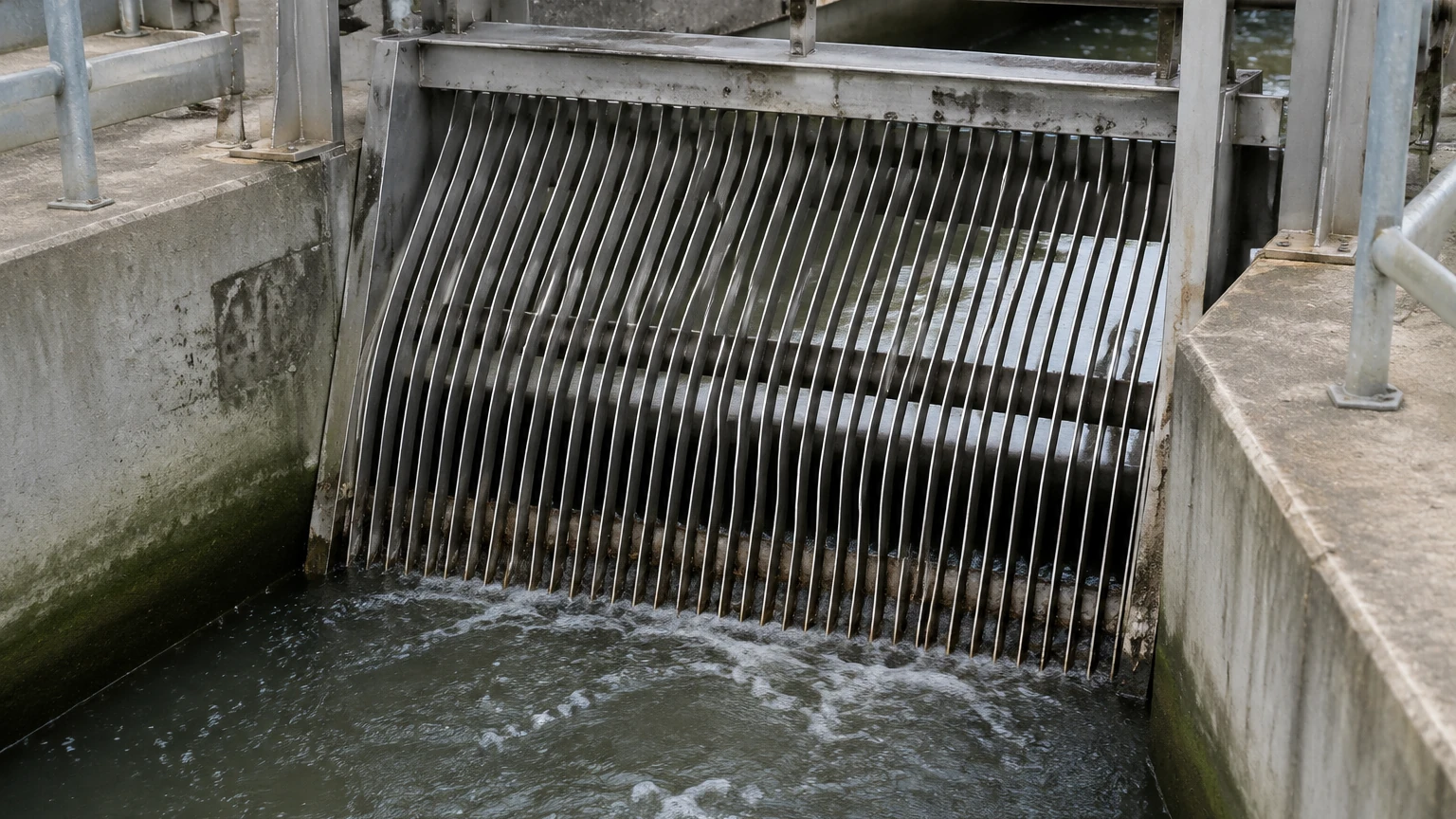
Material Selection and Corrosion Resistance in Harsh Environments
In the context of bar screens water treatment, material selection is not just a matter of strength; it is a matter of chemical compatibility. The influent in many industrial plants is highly corrosive, containing chlorides, sulfides, and varying pH levels.
Stainless Steel Grades
Most high-quality bar screens are manufactured from stainless steel. Grade 304 is the standard for general municipal applications. However, for industrial chemical processing or coastal facilities, Grade 316 or 316L (low carbon) is required to prevent pitting and crevice corrosion. The molybdenum content in 316 stainless steel provides superior resistance to chlorides, which are common in many industrial cleaning processes and wastewater streams.
Surface Treatments
Beyond the base metal, surface treatments like passivation or electropolishing can further enhance corrosion resistance. For components that face high friction, such as rake guides and bushings, specialized alloys or reinforced polymers are used to prevent galling and extend the maintenance interval.
Optimizing Downstream Performance: The Synergy Between Bar Screens and Fine Filtration
A common mistake in water treatment design is viewing the bar screen as an isolated component. In reality, it is the first stage of a multi-stage filtration strategy. The efficiency of the bar screens water treatment directly dictates the performance of the secondary and tertiary stages.
For instance, if a bar screen fails to capture fibrous materials, these fibers can wrap around the delicate mesh of a stainless steel filter cartridge or clog the pores of a precision wire mesh filter. This leads to increased backwash frequency, higher energy consumption, and premature replacement of expensive filter media.
By ensuring that the primary screen is optimized for the specific debris profile of the influent, engineers can protect the high-performance filtration solutions offered by manufacturers like Kaifil. For those looking to optimize their entire filtration train, from coarse intake to precision output, reviewing the technical specifications on the Main Page can provide insights into how custom stainless steel components can be integrated to achieve maximum system reliability.
Maintenance and Operational Challenges
Even the most advanced bar screen system requires a rigorous maintenance schedule to prevent catastrophic failure. The most common issues include:
1. Grit Accumulation: In the "dead zones" upstream of the screen, grit can settle and eventually bury the bottom of the bars, preventing the rake from reaching the full depth.
2. Chain and Sprocket Wear: In mechanical screens, the underwater components are subject to constant abrasion. Regular lubrication (where applicable) and tension adjustments are necessary.
3. Bypass Leakage: If the seals between the screen frame and the channel walls are not maintained, significant amounts of debris can bypass the screen entirely, defeating the purpose of the installation.
To mitigate these risks, many engineers are moving toward "smart" screening systems. These use differential pressure sensors to trigger cleaning cycles only when needed, reducing mechanical wear and energy consumption compared to timer-based systems.
Conclusion: Strategic Procurement for Long-Term Efficiency
Bar screens water treatment is a foundational process that requires a deep understanding of hydraulics, material science, and mechanical engineering. For B2B buyers and engineers, the focus should remain on selecting a system that offers the right balance of filtration fineness and hydraulic throughput.
Investing in high-quality stainless steel construction and automated cleaning mechanisms may involve a higher initial capital expenditure, but the reduction in downstream maintenance and the protection of critical equipment like pumps and fine filters provide a clear return on investment. As industrial processes become more complex and environmental regulations more stringent, the role of the humble bar screen as the first line of defense remains more vital than ever.
