


Industrial Baghouse
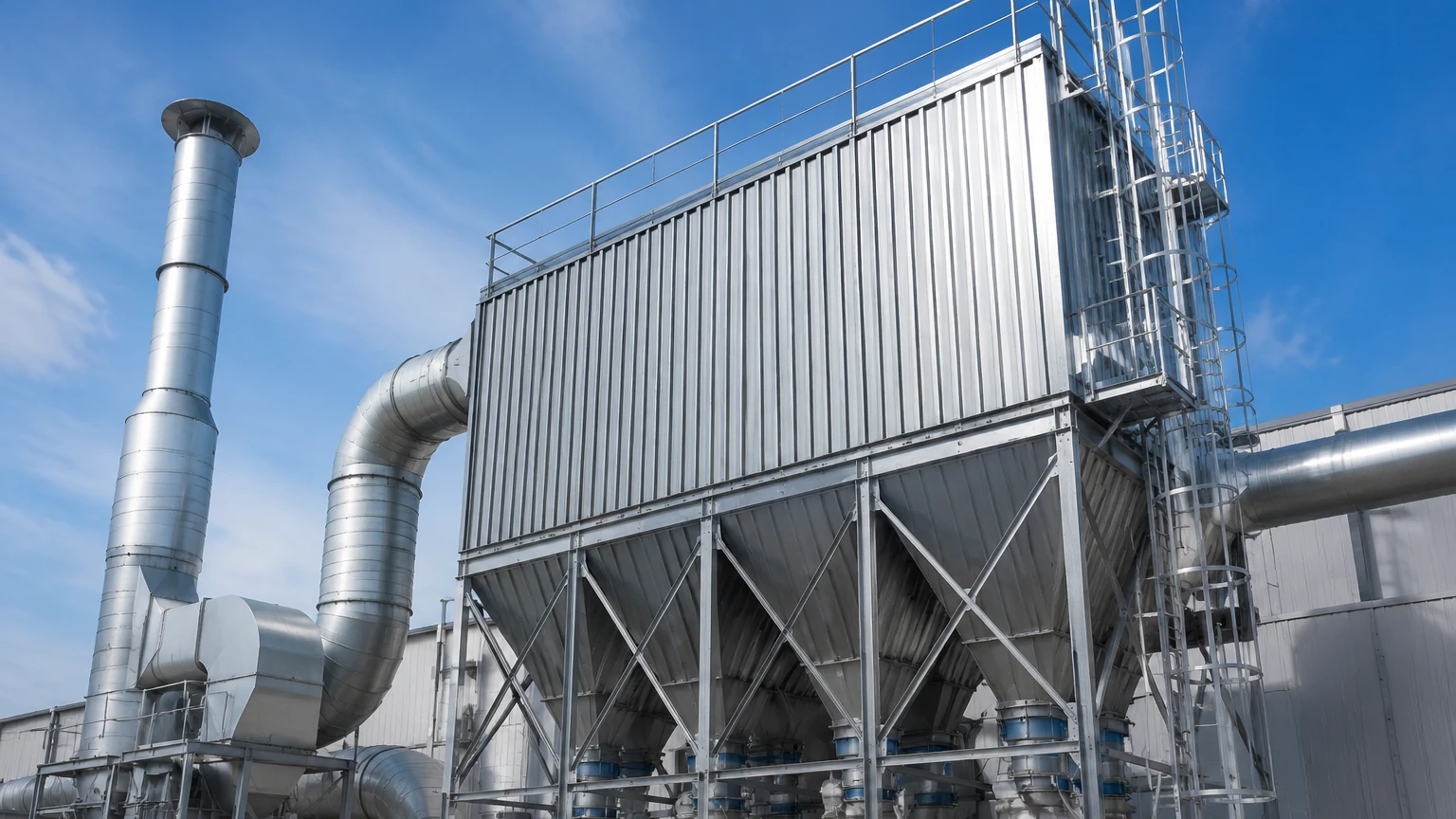
In the landscape of industrial air pollution control and particulate recovery, the industrial baghouse remains one of the most versatile and efficient technologies available. Often referred to as a fabric filter or dust collector, a baghouse is designed to remove suspended particulate matter from gas streams through a series of fabric or metal filter elements. For engineers and facility managers, selecting the right baghouse configuration and internal components is critical to ensuring compliance with environmental regulations, protecting downstream equipment, and optimizing the total cost of ownership.
As industrial processes become more complex—involving higher temperatures, corrosive gases, and finer particulates—the demand for precision-engineered filtration components has increased. Manufacturers like Kaifil provide the essential stainless steel support structures and specialized filter media required to maintain the structural integrity and filtration efficiency of these systems in demanding environments.
Fundamentals of Industrial Baghouse Systems
An industrial baghouse operates on the principle of pressure differential. A dust-laden gas stream is drawn into the housing, where it passes through a series of filter bags or cartridges. The particulate matter is captured on the surface or within the depth of the filter media, while the cleaned gas exits the system.
The efficiency of a baghouse is largely determined by the filter media's ability to develop a "dust cake." This layer of accumulated particles actually performs the bulk of the filtration, allowing the system to achieve efficiencies often exceeding 99.9%. However, managing this dust cake—ensuring it is thick enough for filtration but thin enough to prevent excessive pressure drop—is the primary engineering challenge.
Cleaning Mechanisms
Baghouses are generally categorized by the method used to clean the filter media. The three most common types are:
1. Pulse-Jet Baghouses: These are the most prevalent in modern industrial applications. They use high-pressure compressed air to deliver a "pulse" down the length of the filter bag. This sudden expansion flexes the fabric and dislodges the dust cake. Pulse-jet systems are favored for their ability to be cleaned while the system remains online, offering continuous operation.
2. Shaker Baghouses: These systems use a mechanical shaking motion to vibrate the dust off the bags. They typically require the compartment being cleaned to be offline (no airflow) during the cleaning cycle, which may necessitate a multi-compartment design for continuous processes.
3. Reverse-Air Baghouses: In these units, a fan provides a low-pressure flow of air in the opposite direction of the filtration flow. This causes the bags to collapse slightly, cracking the dust cake so it falls into the hopper. Like shaker systems, these often require offline cleaning.
Core Components and Engineering Specifications
To maintain the performance of an industrial baghouse, several internal components must work in unison. The structural integrity of these components is vital, especially in high-vibration or high-temperature settings.
Filter Cages
In pulse-jet systems, the filter bags are supported by internal frames known as filter cages. These cages prevent the bags from collapsing during the filtration cycle. The quality of the cage is paramount; any burrs, corrosion, or structural failures can lead to premature bag wear or "blinding."
Engineers must specify the number of vertical wires (typically 10, 12, or 20) and the spacing of the horizontal rings based on the bag material and the cleaning pressure. For corrosive or high-temperature applications, stainless steel (304 or 316L) is the preferred material for cages to prevent rust-induced bag degradation. You can Review product options and application support to understand how customized metal components enhance these systems.
The Venturi
Located at the top of the filter cage in pulse-jet systems, the venturi is designed to accelerate the compressed air pulse and induce additional air into the bag. This ensures that the cleaning energy reaches the bottom of the bag effectively. Precision-machined or cast venturis are essential for maximizing cleaning efficiency and reducing compressed air consumption.
Tubesheets
The tubesheet is the structural plate that separates the clean-air plenum from the dirty-air housing. It contains the holes where the filter bags and cages are suspended. A perfectly flat, accurately laser-cut tubesheet is necessary to ensure a proper seal. Even minor bypass leakage at the tubesheet can result in significant emission spikes.
Material Selection for High-Performance Environments
Material selection is perhaps the most critical decision in baghouse engineering. While the housing is typically carbon steel, the internal components and filter media must be compatible with the chemical and thermal profile of the gas stream.
Fabric Media vs. Metal Filters
Most industrial baghouses utilize needle-felt or woven fabrics such as Polyester, Aramid (Nomex), or PTFE. However, in extreme environments where temperatures exceed 500°F (260°C) or where the gas stream is highly abrasive or chemically aggressive, traditional fabrics may fail.
In these instances, stainless steel wire mesh filters or sintered metal fiber media are utilized. These components offer:
* High Temperature Resistance: Capable of operating in environments exceeding 1000°F.
* Chemical Inertia: Resistance to oxidation and acid/alkali attack that would destroy synthetic polymers.
* Cleanability: Metal media can often be cleaned more aggressively or even ultrasonically for reuse, extending the service life significantly compared to disposable bags.
Stainless Steel Alloys in Filtration
For the support cages and precision components, the choice of alloy is dictated by the environment:
* Type 304 Stainless Steel: Suitable for general industrial use where moisture or mild chemicals are present.
* Type 316L Stainless Steel: Preferred for pharmaceutical, food and beverage, and chemical processing due to its superior resistance to pitting and chloride-induced corrosion.
* Specialty Alloys (e.g., 310S or Inconel): Used for extreme high-temperature incineration or smelting applications.
Optimizing Filtration Efficiency and Air-to-Cloth Ratios
Engineers evaluate baghouse performance primarily through the Air-to-Cloth (A/C) ratio, also known as the filtration velocity. This is the ratio of the gas flow rate (CFM) to the total active filter area (sq. ft.).
Understanding the A/C Ratio
A low A/C ratio (e.g., 2:1) generally results in lower pressure drop, higher efficiency, and longer bag life. A high A/C ratio (e.g., 6:1 or higher) allows for a smaller, less expensive baghouse but increases the risk of "interstitial velocity" issues. If the velocity of the gas moving between the bags is too high, it can prevent the dust from falling into the hopper during cleaning, causing it to be immediately re-entrained onto the bags. This leads to a permanent state of high pressure drop and frequent cleaning cycles.
Particle Capture Mechanisms
Industrial baghouses do not act like a simple sieve. They rely on four physical mechanisms to capture particles:
1. Inertial Impaction: Larger particles strike the filter fibers directly due to their momentum.
2. Interception: Medium-sized particles follow the gas streamlines and come into contact with the fibers.
3. Diffusion (Brownian Motion): Very fine particles (sub-micron) move erratically and eventually collide with the fibers.
4. Electrostatic Attraction: Charges on the dust or the media pull particles toward the fibers.
Maintenance, Replacement, and Total Cost of Ownership
The total cost of ownership (TCO) for an industrial baghouse is dominated by energy consumption (fan power) and maintenance (bag replacement and labor).
Monitoring Differential Pressure
The most important metric for baghouse health is the differential pressure ($ΔP$) across the tubesheet. A steady $ΔP$ indicates a stable dust cake and effective cleaning. A sudden drop in $ΔP$ may indicate a torn bag or a leak in the tubesheet, while a steady increase (blinding) suggests that the cleaning system is failing or the dust is becoming moist/sticky.
Troubleshooting Common Issues
* Moisture and Dew Point: If the gas stream temperature drops below the dew point, moisture can condense inside the baghouse. This turns the dust into a "mud" that cannot be pulsed off, leading to catastrophic blinding. Insulation and trace heating are often required.
* Hopper Bridging: If dust is not evacuated from the hoppers promptly, it can back up into the bag area, damaging the bags and cages. Level sensors and vibrators are common engineering solutions.
* Compressed Air Quality: For pulse-jet systems, the compressed air must be dry and oil-free. Moisture in the pulse air can lead to localized blinding and corrosion of the stainless steel cages.
Customized Solutions for Demanding Applications
Every industrial process has unique requirements that standard off-the-shelf baghouse components may not meet. Customization is often necessary for applications involving high-purity requirements, such as in the pharmaceutical or food industries, where the filtration components must meet strict sanitary standards.
Kaifil specializes in the manufacture of custom stainless steel filtration solutions, providing the precision metal components that ensure industrial baghouses operate at peak efficiency. Whether it is a custom-designed wire mesh filter for a high-temperature kiln or high-tolerance filter cages for a chemical reactor, the focus is on durability and precise performance.
When specifying components for a new or existing system, engineers should confirm:
* Micron Rating Requirements: Does the media provide the necessary capture efficiency for the specific particle size distribution?
* Flow Dynamics: Is the internal geometry of the cages and venturis optimized for the specific gas velocity?
* Material Traceability: For regulated industries, can the manufacturer provide material certifications for the stainless steel used?
By focusing on high-quality materials and engineering precision, facilities can significantly reduce downtime and ensure that their industrial baghouse remains a reliable asset in their environmental control strategy. For more technical details on custom metal filtration components, visiting the Main Page provides a comprehensive overview of available engineering capabilities and product specifications.
