


Drum Filter for Aquaculture
In the rapidly evolving landscape of Recirculating Aquaculture Systems (RAS) and high-intensity fish farming, the efficiency of solid-liquid separation is the primary determinant of water quality and biological health. The drum filter for aquaculture has emerged as the industry standard for mechanical filtration, providing a continuous, self-cleaning solution to remove suspended solids, uneaten feed, and organic waste before they can decompose and compromise the aquatic environment. For engineers and facility managers, understanding the technical nuances of drum filter design, material selection, and operational parameters is essential for optimizing system performance and ensuring long-term reliability.
The Role of Mechanical Filtration in Modern Aquaculture
Mechanical filtration serves as the first line of defense in any water treatment loop. In aquaculture, the primary goal is the removal of Total Suspended Solids (TSS). If left in the system, these solids contribute to the rise of ammonia and nitrite levels, increase the Biological Oxygen Demand (BOD), and provide a breeding ground for pathogenic bacteria.
Unlike traditional sand filters or settling basins, a drum filter for aquaculture offers a compact footprint and the ability to handle high flow rates with minimal head loss. The core advantage lies in its automated cleaning cycle. As solids accumulate on the filter screen, the system detects a change in water level or pressure and initiates a backwash cycle, flushing the waste into a discharge trough without interrupting the main flow. This continuous operation is critical for maintaining stable water parameters in high-density stocking environments.
Engineering Principles of Drum Filter Operation
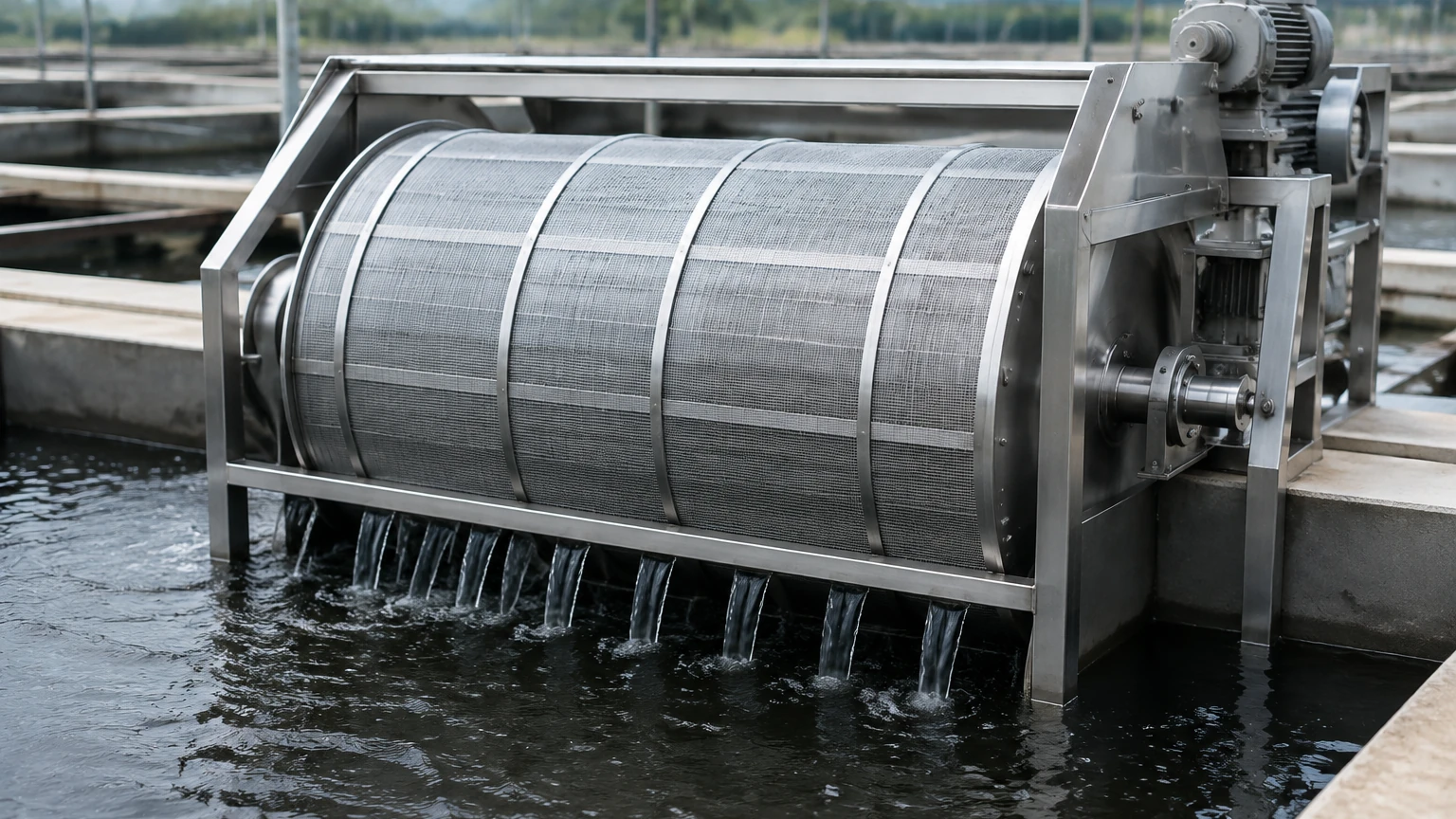
The fundamental operation of a drum filter is based on the principle of surface filtration. The system consists of a horizontal rotating drum covered with a fine stainless steel or polyester mesh. Water enters the interior of the drum (internal feed) or is applied to the exterior (external feed), though the internal feed design is most common in aquaculture due to its efficiency in trapping solids within the drum structure.
As water passes through the mesh, particles larger than the pore size are captured on the inner surface. Over time, these particles form a "filter cake," which actually improves filtration efficiency but increases resistance to flow. This resistance causes the water level inside the drum to rise. Once a predetermined level is reached, a sensor triggers the drum to rotate and activates high-pressure spray nozzles. These nozzles blast water from the outside of the drum inward, knocking the trapped solids into a central collection tray for disposal.
For technical professionals, the selection between gravity-fed and pump-fed configurations is a critical decision. Gravity-fed systems are generally preferred for their energy efficiency, as they utilize the natural head height of the system to drive water through the filter. Pump-fed systems, while easier to retrofit into existing layouts, require careful management to ensure that the pump's shearing action does not break down large organic particles into smaller, harder-to-filter micro-solids.
Material Selection: Why Stainless Steel is Essential
The environment within an aquaculture facility is notoriously harsh. Constant exposure to water, varying pH levels, and potentially saline conditions (in marine aquaculture) necessitates materials that offer superior corrosion resistance and structural integrity. While plastic components are used in some entry-level models, professional-grade drum filters rely heavily on stainless steel for the drum frame, housing, and, most importantly, the filter mesh.
Kaifil specializes in the manufacture of high-precision stainless steel filtration components that are designed to withstand these demanding conditions. Using Grade 304 or 316L stainless steel ensures that the filter mesh maintains its aperture precision over millions of rotation cycles. 316L, in particular, is the material of choice for saltwater applications due to its molybdenum content, which provides enhanced resistance to pitting and crevice corrosion.
Beyond corrosion resistance, stainless steel mesh offers a higher "open area" percentage compared to synthetic alternatives. This means that for a given micron rating, a stainless steel screen allows more water to pass through, reducing the frequency of backwash cycles and lowering the overall energy consumption of the system. To explore the full range of material options and technical specifications for industrial-grade filtration, you can visit our Main Page.
Critical Performance Metrics and Micron Ratings
When specifying a drum filter for aquaculture, the most critical technical parameter is the micron rating of the filter mesh. In most RAS applications, mesh sizes range from 20 to 100 microns.
1. 20-40 Microns: Used in systems requiring exceptionally high water clarity or where fine particulate matter (such as certain types of algae or metabolic waste) is a concern. However, finer mesh leads to more frequent backwashing and higher water consumption.
2. 60-80 Microns: The industry standard for most finfish and shrimp aquaculture. This range provides an optimal balance between effective solids removal and operational efficiency.
3. 100+ Microns: Typically reserved for primary screening or systems with very high solids loading where the goal is to remove only the largest debris before further treatment.
Engineers must also calculate the "Hydraulic Loading Rate," which is the volume of water the filter can process per unit of screen area. This calculation must account for the peak solids loading, not just the average flow. If a system is undersized, the drum will rotate almost constantly, leading to premature wear of the drive motor, bearings, and spray nozzles.
Maintenance and Longevity: Optimizing the Lifecycle
A drum filter for aquaculture is a mechanical system with moving parts, and its longevity depends on a proactive maintenance strategy. The most common failure points in industrial drum filters include:
* Screen Blinding: Over time, bio-films or mineral scales (such as calcium carbonate) can build up on the mesh, which high-pressure backwashing alone cannot remove. Periodic chemical cleaning or the use of specialized anti-fouling coatings may be necessary.
* Seal Integrity: The seals between the rotating drum and the stationary housing must be maintained to prevent "bypassing," where unfiltered water leaks into the clean water outlet.
* Drive System Wear: The chain or gear drive mechanism requires regular lubrication and tension adjustment. Many modern designs utilize direct-drive motors to eliminate the maintenance requirements of chains and belts.
By selecting components that utilize precision-engineered metal filter elements, operators can significantly extend the interval between screen replacements. Stainless steel mesh is far less prone to tearing or stretching than polyester mesh, ensuring that the filtration accuracy remains consistent throughout the component's life.
Integration and Automation Considerations
Modern aquaculture demands high levels of automation. A sophisticated drum filter for aquaculture should be integrated into the facility’s central Control and Data Acquisition (SCADA) system. Key automation features include:
* Variable Frequency Drives (VFDs): These allow the drum's rotation speed to adjust based on the solids load, reducing mechanical wear during periods of low feeding.
* Smart Backwash Logic: Systems that can detect if a backwash cycle was successful or if the screen remains clogged, triggering an alarm or a high-intensity cleaning mode.
* Water Consumption Monitoring: Tracking the amount of water used for backwashing is essential for calculating the overall water exchange rate of the facility.
For engineers designing a new facility, the footprint of the drum filter must be considered alongside the hydraulic profile. Ensuring there is sufficient space for maintenance access—specifically for removing the drum or replacing mesh panels—is a frequently overlooked aspect of system design.
Customization for Specialized Industrial Applications
While the drum filter for aquaculture is a specific application, the underlying technology of rotating screen filtration is used across various industrial sectors. Kaifil provides customized filtration solutions that cater to unique engineering requirements. Whether the application involves high-temperature process water in chemical manufacturing or the need for food-grade certified components in beverage production, the principles of precision mesh engineering remain the same.
Customization options often include specific drum diameters, specialized mesh weaves (such as Dutch weave for higher strength), and reinforced support structures for high-pressure environments. By working with a manufacturer that understands the intersection of material science and fluid dynamics, purchasing teams can procure filtration components that are tailored to their specific operational constraints rather than settling for "off-the-shelf" solutions that may underperform.
Conclusion: Making an Informed Investment
Investing in a high-quality drum filter for aquaculture is a decision that impacts the biological safety and economic viability of a fish farming operation. By focusing on robust materials like 316L stainless steel, selecting the appropriate micron rating for the specific species and stocking density, and ensuring the system is designed for ease of maintenance, facilities can achieve superior water quality with lower operational costs.
For technical teams and purchasing managers, the priority should be on reliability and precision. A well-engineered drum filter does more than just clean water; it provides the stability necessary for aquatic life to thrive. For more information on custom stainless steel filtration solutions and to review our full range of industrial components, please visit our Main Page.
