


Chemical Storage Tank Colors
In industrial chemical processing, the selection of a storage vessel involves far more than volume and material compatibility. For engineers and facility managers, the physical appearance—specifically chemical storage tank colors—serves as a critical functional specification. While it may appear to be an aesthetic choice, the color of a tank directly influences the chemical stability of the stored media, the longevity of the vessel, and the safety of the surrounding environment.
Understanding the technical implications of tank coloration is essential when designing a system that integrates with high-performance components, such as those found on the Main Page of a filtration solutions provider. This article examines the engineering considerations behind color selection, the impact of environmental factors on stored chemicals, and how these choices affect downstream processes like filtration.
The Functional Role of Chemical Storage Tank Colors
The primary reason for specifying a particular color for a chemical storage tank is to manage environmental interactions. In outdoor installations, tanks are subjected to solar radiation, which presents two main challenges: Ultraviolet (UV) degradation and thermal gain.
UV Protection and Material Integrity
For polyethylene and other polymer-based tanks, UV radiation can cause photo-oxidation, leading to brittleness, cracking, and eventual structural failure. To combat this, manufacturers incorporate UV stabilizers. Black and green tanks are frequently used because they contain higher concentrations of carbon black or specific pigments that block UV rays more effectively than translucent or "natural" tanks. By preventing UV penetration, these colors protect both the structural integrity of the tank and the chemical composition of light-sensitive reagents stored within.
Thermal Management and Temperature Control
Color significantly affects the solar absorptance of a vessel. White or light-gray tanks are typically specified for chemicals that are temperature-sensitive. A white surface reflects a higher percentage of the solar spectrum, keeping the internal temperature of the chemical lower than it would be in a dark-colored tank. This is crucial for chemicals with high vapor pressures or those prone to thermal decomposition. Conversely, in colder climates, a black tank might be used to intentionally absorb heat to prevent the stored liquid from freezing or becoming too viscous for pumping and filtration.
Industry Standards and Color Coding Systems
While there is no single global mandate for chemical storage tank colors, several industry standards and best practices guide selection to enhance safety and operational efficiency. Many facilities adopt the ANSI/ASME A13.1 standards for piping identification and apply similar logic to their storage vessels.
* Yellow: Often used for flammable or oxidizing fluids. The high visibility of yellow serves as a warning for hazardous materials.
* Blue: Frequently designated for water treatment chemicals or potable water storage.
* Green: Commonly used for non-hazardous materials or specific agricultural chemicals.
* White/Natural: Often used for indoor applications where UV protection is not required, allowing operators to monitor liquid levels through the translucent walls of the tank.
* Black: The standard for outdoor water storage and chemicals requiring maximum UV protection.
By adhering to a consistent color-coding system, facilities reduce the risk of cross-contamination and accidental mixing during refilling or maintenance operations. This organizational clarity is vital when managing complex systems where precise filtration is required to maintain product purity.
Material Considerations: Plastic vs. Stainless Steel
The application of color differs significantly between plastic (HDPE/XLPE) tanks and metal (stainless steel) tanks. In plastic tanks, the pigment is usually compounded into the resin, meaning the color is consistent throughout the material wall. This ensures that the UV protection does not degrade even if the surface is scratched.
For stainless steel tanks, which are a staple in high-pressure and high-purity environments, color is typically applied via external coatings or paints. While stainless steel inherently provides excellent UV protection and durability, engineers may still specify a white or reflective coating to manage heat gain. In many pharmaceutical and food-grade applications, the natural finish of the stainless steel is preferred for its ease of cleaning and sterilization. In these cases, the filtration components, such as those manufactured by Kaifil, must be equally robust to handle the high-standard requirements of the process.
Impact of Storage Conditions on Filtration Requirements
The choice of chemical storage tank colors has a cascading effect on downstream filtration systems. If a tank color is poorly matched to the environment, it can lead to several issues that increase the load on filtration components:
1. Algal Growth: In translucent or "natural" tanks stored outdoors, light penetration can facilitate the growth of algae and other microorganisms. This biological load can quickly blind filter cartridges and wire mesh filters, leading to frequent maintenance cycles and increased total cost of ownership.
2. Precipitation and Crystallization: If a tank color allows for excessive heat loss or gain, certain chemicals may reach their saturation point, causing solutes to precipitate. These solids must then be removed by precision filtration to prevent damage to pumps and nozzles.
3. Chemical Degradation: UV-induced degradation can create sub-products or particulates within the chemical. For example, some polymers may begin to shed micro-particles if the tank material itself starts to break down due to UV exposure. High-quality stainless steel filters are often required to capture these contaminants before the chemical reaches the point of use.
Ensuring that the storage environment is optimized through correct tank color selection helps maintain the efficiency of the entire filtration circuit.
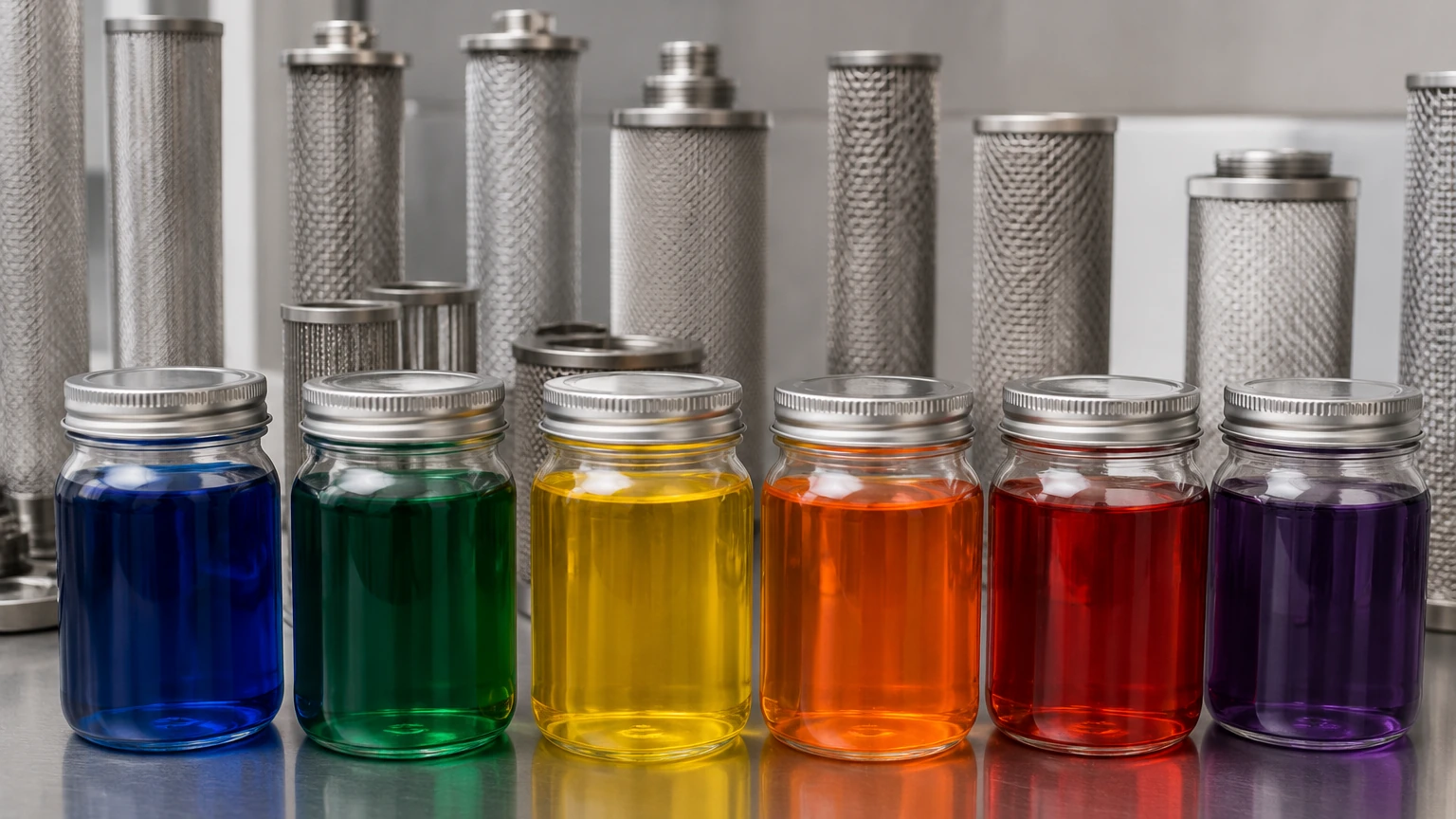
Selection Criteria for Engineering Teams
When specifying chemical storage tank colors, engineering and purchasing teams should evaluate the following criteria to ensure long-term performance:
Environmental Exposure
Will the tank be located indoors or outdoors? If outdoors, what is the average solar intensity? Black or dark green is generally preferred for outdoor plastic tanks to maximize lifespan, whereas white is better for temperature regulation.
Chemical Sensitivity
Is the stored media light-sensitive? Chemicals like sodium hypochlorite (bleach) degrade rapidly when exposed to UV light. In such cases, an opaque tank (black or dark grey) is mandatory, regardless of the thermal implications.
Level Monitoring Requirements
Does the process require visual level checks? Natural (translucent) tanks allow for easy monitoring without the need for electronic sensors. However, if the chemical is light-sensitive or stored outdoors, engineers must weigh the convenience of visual checks against the risk of chemical degradation or tank failure. Often, an opaque tank with an external sight glass or ultrasonic level sensor is the safer engineering choice.
Regulatory and Safety Compliance
Does the facility have an existing color-coding protocol? Consistency with local safety regulations and internal site standards is paramount to prevent operator error during chemical offloading and processing.
Maintenance, Inspection, and Total Cost of Ownership
The color of a tank also influences inspection protocols. On a white or light-colored tank, cracks, leaks, or chemical staining are often easier to identify during routine walk-throughs. On black tanks, surface degradation like "alligatoring" (a sign of UV damage) may be harder to spot until it becomes severe.
From a total cost of ownership (TCO) perspective, selecting the correct color can extend the service life of a polyethylene tank from 5 years to over 15 years. By protecting the chemical integrity and reducing the particulate load caused by degradation or biological growth, the correct tank color also extends the life of downstream filtration elements. This synergy between storage and filtration ensures that the system operates at peak efficiency with minimal unplanned downtime.
For engineers designing these systems, it is important to consult with both tank manufacturers and filtration experts. While the tank holds the medium, the internal components—such as stainless steel filter cartridges and precision mesh—ensure that the medium meets the required purity standards for the application. For more information on high-performance filtration components that support these industrial processes, engineers can Review product options and application support to find solutions tailored to their specific chemical handling needs.
Conclusion
Chemical storage tank colors are a vital engineering specification that impacts UV resistance, thermal stability, and safety. By selecting the appropriate color based on the chemical properties and environmental conditions, facilities can protect their infrastructure and ensure the consistency of their chemical processes. When combined with robust filtration strategies, proper tank selection forms the foundation of a reliable and cost-effective industrial fluid management system.
