


Reticulated Foam for Puppets
In the world of professional puppet construction and industrial design, material selection is dictated by the mechanical requirements of the application. Reticulated foam, frequently referred to as "filter foam" or "speaker foam," has become the industry standard for high-end puppet building, particularly for Muppet-style characters. Beyond the creative arts, this material is a sophisticated engineering product used extensively in industrial filtration, acoustics, and fluid management.
Understanding the technical properties of reticulated foam for puppets requires an analysis of its cellular structure, durability, and the manufacturing processes that differentiate it from standard upholstery foams. For engineers and designers transitioning between artistic applications and industrial filtration, the parallels in material performance—such as breathability, void volume, and structural integrity—are significant.
The Engineering Behind Reticulated Structures
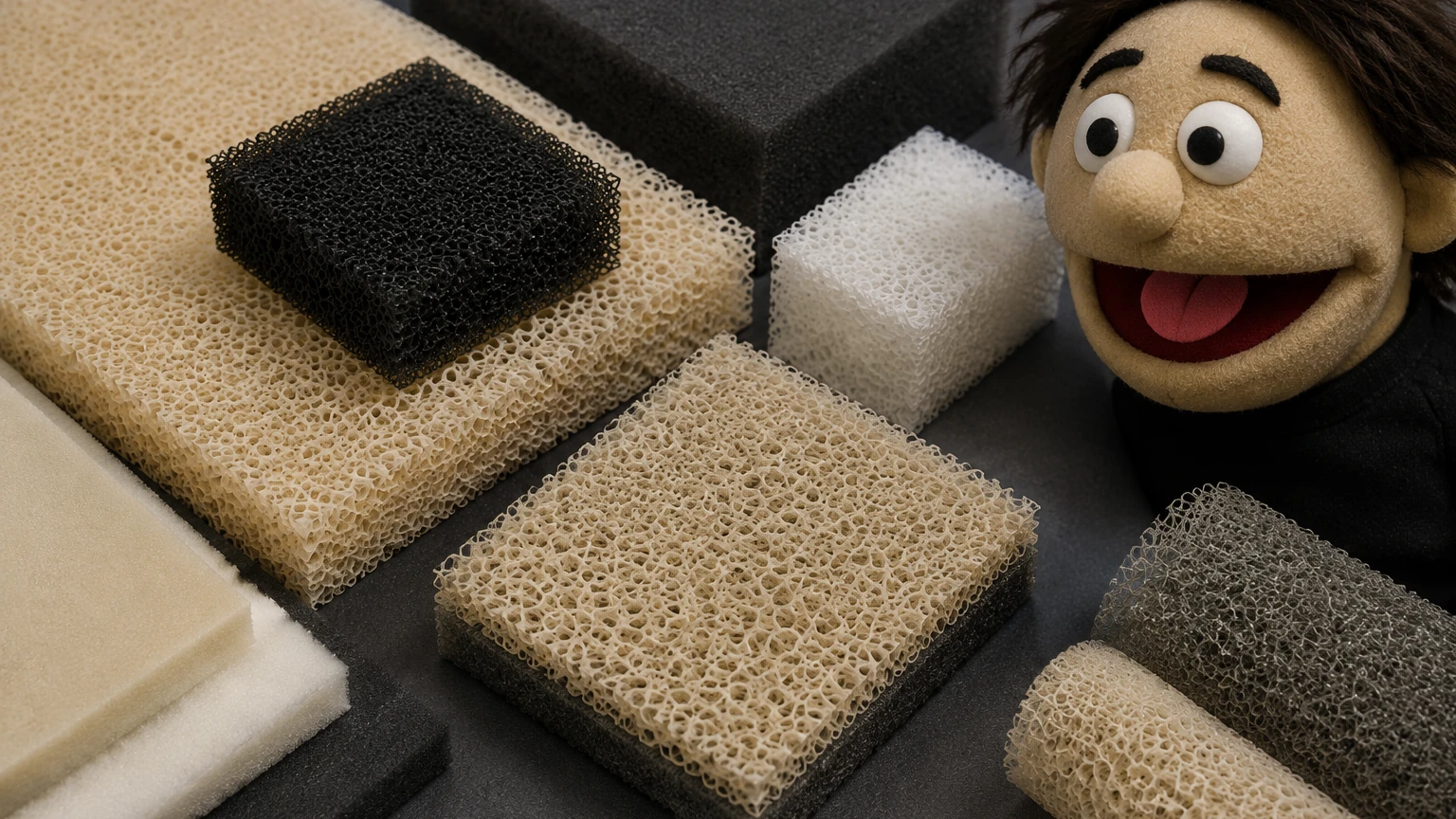
Reticulated foam is a porous, low-density, solid foam characterized by an "open-cell" structure. Unlike standard polyurethane foams, which contain intact cell membranes (or "windows") that trap air, reticulated foam undergoes a specific manufacturing process called reticulation to remove these membranes.
There are two primary methods used to achieve this open-cell architecture:
1. Chemical Reticulation: The foam is submerged in a caustic solution that dissolves the thinner cell membranes while leaving the thicker structural struts intact. This method allows for precise control over the resulting pore size.
2. Thermal Reticulation (Zapping): The foam is placed in a vacuum pressure vessel filled with a combustible gas mixture. Upon ignition, a controlled flash flame travels through the foam, instantly melting and collapsing the cell membranes into the struts. This process creates a highly uniform and completely open structure.
For puppet builders, this means a material that is exceptionally lightweight and breathable. For industrial applications, this structure provides a high surface area with minimal resistance to fluid or airflow. This same principle of maximizing open area while maintaining structural support is what drives the design of industrial filtration components, such as those found on the Main Page of high-performance metal filter manufacturers.
Technical Specifications: PPI and Airflow Dynamics
When sourcing reticulated foam for puppets, the most critical specification is the Pores Per Inch (PPI). This metric defines the coarseness or fineness of the foam and directly impacts its mechanical behavior.
* 10 to 20 PPI: This is the most common range for puppet internal structures. The large pores provide maximum breathability, which is essential for the comfort of the puppeteer and the longevity of the foam. It is also the easiest to glue and shape.
* 30 to 40 PPI: Often used for specialized textures or smaller puppet components. In filtration, this range is typically used for pre-filtration of large particulates.
* 60 to 100 PPI: Very fine foam that feels almost like fabric. While less common for structural puppet shells, it is used in acoustic applications and fine mechanical filtration.
In an industrial context, PPI is a proxy for filtration efficiency and pressure drop. A higher PPI increases the surface area for trapping contaminants but also increases the resistance to flow. Engineers must balance these factors, much like a puppet designer must balance the stiffness of the foam (structural support) with its weight and ease of movement.
Why Reticulated Foam is the Standard for Professional Puppetry
The preference for reticulated foam for puppets over standard foams like poly-foam or EVA foam stems from several unique physical properties:
Breathability and Heat Dissipation
Professional puppets are often operated in high-heat environments, such as under studio lights or inside mascot-style suits. Because reticulated foam has no cell membranes, air flows freely through the material. This prevents the buildup of heat and moisture, which can lead to the growth of mold or the degradation of the foam’s chemical bonds.
Elasticity and Memory
Reticulated polyurethane foam possesses excellent "memory." It can be compressed or flexed repeatedly during a performance and will return to its original shape without significant fatigue. This is vital for "mouth-action" puppets where the foam must withstand thousands of compression cycles without losing its structural tension.
Ease of Fabrication
The open-cell structure allows adhesives, such as contact cement, to penetrate deep into the material, creating a bond that is often stronger than the foam itself. Furthermore, reticulated foam can be easily dyed using fabric dyes, as the open pores allow the pigment to saturate the entire thickness of the material uniformly.
Industrial Filtration Parallels: From Foam to Stainless Steel
While reticulated foam is an excellent material for lightweight, low-stress applications like puppetry, industrial environments often demand higher levels of durability. In sectors such as chemical processing, pharmaceuticals, and hydraulic systems, the "open-cell" concept is translated into metal media.
Stainless steel wire mesh and sintered metal filters provide the same benefits as reticulated foam—high porosity and controlled pore size—but with the added advantages of temperature resistance and chemical inertness. For instance, where a puppet maker might use 20 PPI foam to allow air to pass, a chemical engineer might use a multi-layer stainless steel mesh to filter corrosive liquids at high pressures.
Key comparisons include:
* Void Volume: Both reticulated foam and high-quality wire mesh aim for high void volumes (often exceeding 90%) to minimize pressure drop.
* Pore Uniformity: Just as a puppet designer needs consistent foam density for a smooth exterior finish, industrial filtration requires precise pore size distribution to ensure reliable particle retention.
* Cleanability: Reticulated foam can be washed, but it eventually degrades. Stainless steel filters, conversely, are designed for ultrasonic cleaning and backwashing, offering a much longer service life in demanding OEM applications.
Material Selection: Polyurethane vs. Industrial Metals
Choosing between a polymer-based reticulated foam and a metal-based filtration component depends entirely on the operating environment. For puppet construction, polyurethane is favored for its low cost and flexibility. However, engineers must consider the following when evaluating porous media for industrial use:
1. Temperature Limits: Polyurethane reticulated foam typically fails at temperatures above 250°F (121°C). Stainless steel components can operate in excess of 800°F (426°C).
2. Chemical Compatibility: Foam is susceptible to degradation by certain solvents and UV light. Stainless steel (304 or 316L) offers superior resistance to a wide range of industrial chemicals and environmental factors.
3. Mechanical Strength: While foam is ideal for movement, metal mesh is required for applications involving high differential pressures where the media must not collapse or migrate.
For those seeking reliable filtration components that go beyond the capabilities of foam, exploring customized stainless steel solutions is the next logical step. You can Review product options and application support to understand how these industrial materials are engineered for precision.
Maintenance, Durability, and Environmental Factors
One of the primary concerns with reticulated foam for puppets is "dry rot." Over time, exposure to oxygen, UV light, and humidity causes the polyurethane polymer chains to break down, leading to a brittle, crumbling material. In professional puppetry, this lifecycle is managed by keeping puppets in climate-controlled environments and avoiding direct sunlight.
In the industrial sector, the lifecycle of porous media is managed through material science. By selecting 316L stainless steel or specialized alloys, manufacturers like Kaifil ensure that the filtration components do not suffer from the oxidative degradation seen in polymer foams. This transition from temporary, flexible materials to permanent, rigid filtration solutions is a hallmark of industrial engineering.
Key Evaluation Criteria for Procurement
Before purchasing reticulated foam or its industrial metal equivalents, technical professionals should confirm the following:
* Specific Gravity/Density: Determines the weight-to-volume ratio.
* Tensile Strength: Essential for determining how much stretching the material can withstand during fabrication or high-flow filtration.
* Elongation at Break: Indicates the flexibility limits of the material.
* Compression Set: Measures the material's ability to return to its original thickness after prolonged compression.
Conclusion
Reticulated foam for puppets represents a unique intersection of artistic requirements and material engineering. Its open-cell structure provides the breathability and flexibility needed for lifelike movement and performer comfort. However, the same principles of reticulation and porosity are fundamental to the industrial filtration industry.
Whether you are designing a complex puppet mechanism or an industrial filtration system, understanding the science of porous media is essential. While foam serves the creative industry effectively, demanding industrial applications require the durability and precision of stainless steel filtration solutions. For engineers and purchasing teams looking to optimize their filtration performance with high-quality metal components, visiting the Main Page of a specialized manufacturer provides the technical resources necessary to make an informed decision.
