


Stainless Water Filter Housing
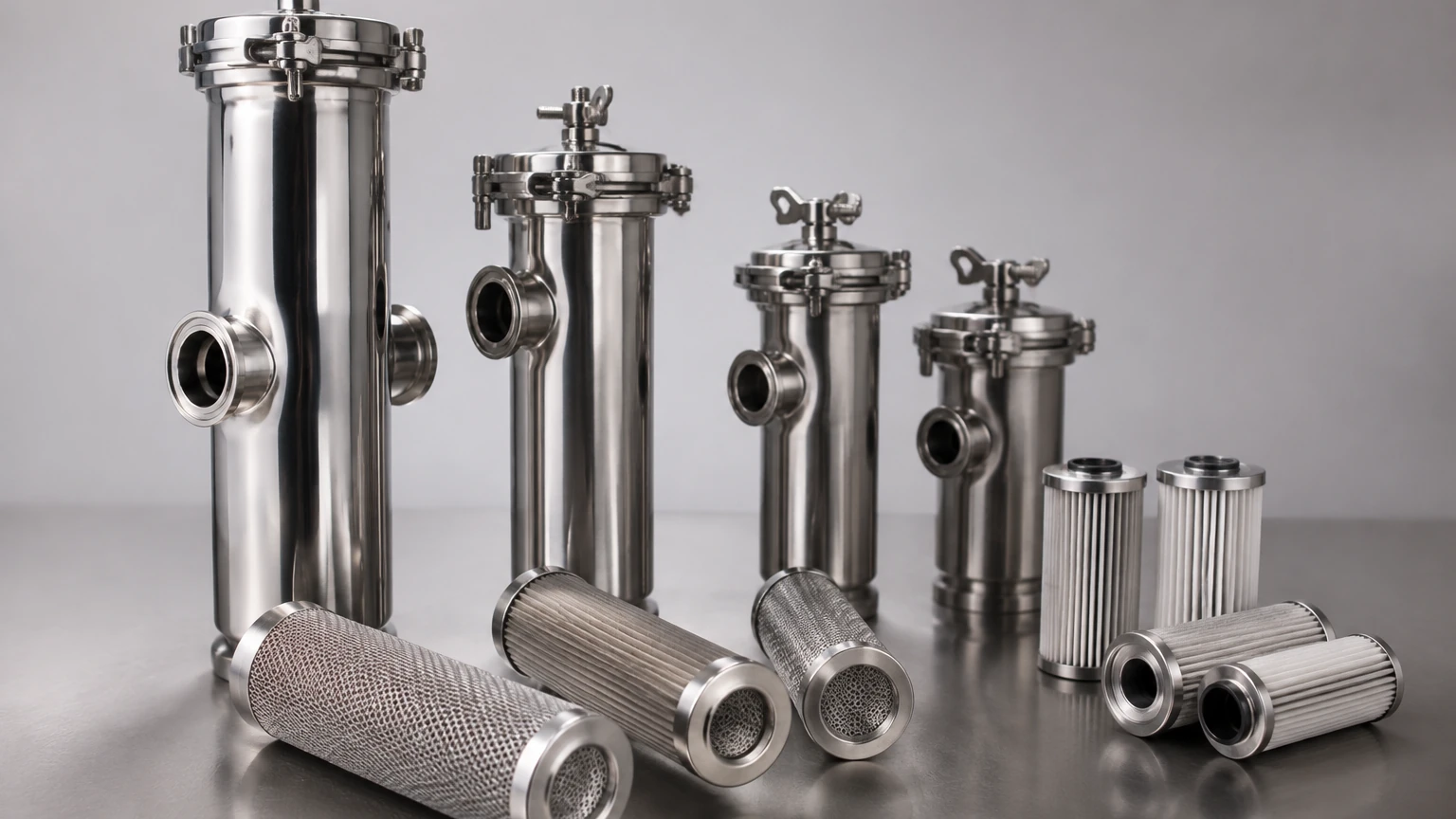
In industrial filtration systems, the stainless water filter housing serves as the critical pressure vessel that contains and protects the filter element. While the filter media itself performs the separation of contaminants, the housing is responsible for maintaining system integrity, managing fluid flow, and ensuring that the filtration process remains leak-free under varying pressures and temperatures. For engineers and procurement specialists, selecting the appropriate housing is as vital as choosing the filter cartridge, as the housing's material, design, and construction directly impact the longevity and safety of the entire processing line.
Industrial applications—ranging from chemical processing and pharmaceuticals to food and beverage production—require robust solutions that can withstand corrosive environments and high-pressure cycles. A high-quality stainless water filter housing provides the necessary durability and hygiene standards that plastic or lower-grade metal alternatives cannot match. Understanding the technical specifications and engineering nuances of these components is essential for optimizing filtration performance and minimizing total cost of ownership.
Material Science: Selecting the Right Grade of Stainless Steel
The primary advantage of using a stainless water filter housing is its inherent resistance to corrosion and chemical attack. However, "stainless steel" is a broad category, and the specific alloy chosen must align with the chemical composition of the fluid being filtered.
AISI 304 Stainless Steel
Grade 304 is the most common stainless steel used in industrial filtration. It offers excellent corrosion resistance to a wide range of atmospheric environments and many corrosive media. It is frequently used in general water treatment, pre-filtration for reverse osmosis (RO) systems, and cooling water circuits. While cost-effective, 304 stainless steel is susceptible to pitting and crevice corrosion in high-chloride environments, such as seawater or concentrated brine solutions.
AISI 316L Stainless Steel
For more demanding applications, 316L stainless steel is the industry standard. The addition of molybdenum (typically 2-3%) significantly enhances its resistance to chlorides and acidic solutions. The "L" designation stands for low carbon, which minimizes carbide precipitation during welding, thereby maintaining the alloy's corrosion resistance in the heat-affected zones of the housing’s seams. This grade is preferred in pharmaceutical manufacturing, chemical processing, and food production where aggressive cleaning agents or high-salinity fluids are present.
Surface Finish and Treatment
Beyond the alloy itself, the internal and external surface finish of the housing plays a role in performance. In sanitary applications, housings are often electropolished to achieve a smooth, mirror-like finish (often measured in Ra or Roughness Average). This process removes microscopic peaks and valleys where bacteria or contaminants could lodge, facilitating more effective Clean-in-Place (CIP) procedures. For standard industrial use, bead-blasting or mechanical polishing is often sufficient to provide a professional appearance and basic cleanliness.
Engineering Design and Pressure Vessel Integrity
A stainless water filter housing must be engineered to handle the specific hydraulic loads of the system. This involves more than just selecting a pipe size; it requires a deep understanding of pressure ratings, closure mechanisms, and internal support structures.
Pressure Ratings and Standards
Standard industrial housings are typically rated for working pressures of 100 PSI (7 bar) to 150 PSI (10 bar), though high-pressure variants can exceed 300 PSI. Engineers must ensure the housing meets relevant codes, such as ASME Section VIII, which governs the design and fabrication of pressure vessels. Adherence to these standards ensures that the housing can withstand not only the steady-state operating pressure but also the transient pressure surges common in industrial pumping systems.
Closure Mechanisms
The method used to seal the housing lid is a critical factor in ease of maintenance and safety. Common closure types include:
* V-Clamp Closures: These are lightweight and allow for quick access to the filter element. They are ideal for low to medium pressure applications where frequent filter changes are required.
* Swing Bolt Closures: These provide a more robust and secure seal for high-pressure or high-temperature applications. The bolts are permanently attached to the housing body, preventing the loss of hardware during maintenance.
* Threaded Caps: Often found on smaller, single-cartridge housings, these provide a compact and simple sealing method for low-flow applications.
Port Configurations
The orientation of the inlet and outlet ports (e.g., NPT, BSP, or Flanged) must match the existing piping layout. Common configurations include "In-line" (inlet and outlet on opposite sides) or "T-style" (inlet and outlet on the same horizontal plane with the housing body hanging below). Proper port sizing is essential to prevent excessive fluid velocity at the entry point, which can cause turbulence and uneven loading of the filter media.
Integration with Industrial Filter Cartridges and Elements
The primary function of the housing is to provide a secure seat for the filter element. A stainless water filter housing must be compatible with the specific end-cap configurations of the cartridges it is intended to hold. As a manufacturer specializing in custom filtration solutions, Kaifil ensures that housings are designed to accommodate various industry-standard interfaces.
Sealing Interfaces
To prevent fluid bypass—where unfiltered water leaks around the edge of the filter—the housing must provide a positive seal. Common interfaces include:
* Double Open End (DOE): The cartridge is compressed between the top and bottom of the housing, using gaskets to create a seal.
* Code 7 (226 O-ring/Fin): Features two O-rings and a locking tab for high-security sealing, common in critical pharmaceutical and food applications.
* Code 3 (222 O-ring/Flat): Uses two O-rings to ensure a leak-proof fit without the locking tabs.
Multi-Round vs. Single-Round Housings
For low flow rates, a single-round housing (containing one cartridge) is sufficient. However, for large-scale industrial processes, multi-round housings are used. These vessels can hold anywhere from 3 to over 100 cartridges in a single chamber. This design allows for high flow capacities while maintaining a relatively small footprint. When selecting a multi-round housing, engineers must consider the internal flow distribution to ensure that every cartridge is utilized evenly, preventing premature clogging of the elements closest to the inlet.
For more information on compatible filter elements and customized designs, you can visit the Main Page to review product options and application support.
Performance Metrics: Flow Rates and Pressure Drop Considerations
When specifying a stainless water filter housing, the relationship between flow rate and differential pressure (Delta P) is a primary engineering consideration. The "clean pressure drop" of the housing itself—without the filter element installed—must be accounted for in the total system head calculations.
Calculating Flow Capacity
The flow capacity of a housing is determined by the internal diameter of the vessel and the size of the inlet/outlet ports. If a housing is undersized for the required flow rate, the fluid velocity will increase, leading to a higher initial pressure drop and potential erosion of the internal surfaces. Conversely, an oversized housing may be unnecessarily expensive and occupy too much space. Most manufacturers provide flow curves that help engineers select the right size based on the viscosity of the fluid and the desired flow rate.
Managing Differential Pressure
As the filter element captures contaminants, the differential pressure across the housing will increase. It is standard practice to install pressure gauges on both the inlet and outlet ports of the housing. By monitoring the Delta P, operators can determine the optimal time for a filter change-out. Waiting too long can lead to "breakthrough," where contaminants are forced through the media, or even structural failure of the filter element itself. A well-designed stainless housing will often include a vent port on the top to release trapped air and a drain port on the bottom to facilitate easy liquid removal before maintenance.
Operational Maintenance and Sealing Technology
The reliability of a stainless water filter housing depends heavily on the integrity of its seals. While the stainless steel body is designed to last for decades, the elastomeric O-rings and gaskets are wear items that require regular inspection and replacement.
O-Ring Material Selection
The choice of O-ring material is dictated by the temperature and chemical nature of the process water. Common materials include:
* EPDM: Excellent for water and steam applications; resistant to many acids and alkalis.
* Viton (FKM): Preferred for high-temperature applications and systems involving oils or chemicals.
* Silicone: Commonly used in food and beverage applications due to its high purity and flexibility.
* PTFE Encapsulated: Provides the chemical resistance of Teflon with the elasticity of an elastomer core, ideal for the most aggressive chemical environments.
Maintenance Protocols
Regular maintenance of the housing involves checking for signs of corrosion (particularly in weld zones), ensuring the closure bolts are torqued correctly, and verifying that the internal support plates or springs are still providing adequate tension on the filter elements. Because stainless steel is prone to galling—a form of wear caused by adhesion between sliding surfaces—it is recommended to use an anti-seize lubricant on the threads of swing bolts and heavy-duty closures.
Customization for Specialized Industrial Applications
While standard off-the-shelf housings meet many needs, many industrial processes require customized solutions to address specific spatial constraints or unique fluid dynamics. Customization options for a stainless water filter housing often include:
* Jacketed Housings: For processes where temperature control is critical, a heating or cooling jacket can be welded to the exterior of the housing to maintain the fluid at a specific viscosity or temperature.
* Custom Leg Supports: Depending on the installation site, housings can be equipped with adjustable legs, wall-mounting brackets, or skid-mounted frames.
* Advanced Instrumentation: Integration of automated differential pressure sensors, flow meters, and sampling ports directly into the housing body.
* Duplex Systems: Two housings connected by a series of valves, allowing one side to be serviced while the other remains in operation, ensuring 24/7 continuous filtration.
Kaifil specializes in these types of tailored engineering projects, providing OEM services that align with the specific technical requirements of global industrial clients. By working closely with engineering teams, manufacturers can produce filtration components that are not only durable but also perfectly integrated into the broader production environment.
Conclusion: Making an Informed Selection
Choosing the right stainless water filter housing is a balance of material science, mechanical engineering, and operational practicality. By focusing on the specific grade of stainless steel, the pressure requirements of the system, and the compatibility with filter elements, engineers can ensure a reliable and efficient filtration process.
Before finalizing a purchase, it is recommended to confirm the chemical compatibility of all wetted parts, verify the required flow rates against manufacturer data, and establish a clear maintenance schedule. A high-quality housing, such as those produced by specialized manufacturers like Kaifil, represents a long-term investment in the purity and safety of industrial water systems. For those seeking to optimize their filtration infrastructure, exploring the full range of customized stainless steel solutions is the first step toward achieving superior performance and operational reliability.
