


Micro Mesh for Filtration
In industrial liquid and gas separation, the term "micro mesh" refers to precision-engineered wire cloth characterized by extremely fine apertures, often ranging from 5 microns to 100 microns. Unlike standard industrial screens used for coarse scalping or sizing, micro mesh for filtration is designed for high-accuracy particle retention in demanding environments. For engineers and procurement specialists, selecting the correct micro mesh involves a complex evaluation of material science, weave geometry, and mechanical durability to ensure the filtration system meets specific process requirements without premature failure.
As a specialized manufacturer, Kaifil provides these high-performance components to industries where even microscopic contaminants can compromise product quality or equipment integrity. Understanding the technical nuances of micro mesh is essential for optimizing filtration efficiency and total cost of ownership.
Technical Specifications of Micro Mesh
The performance of micro mesh for filtration is defined by three primary physical parameters: mesh count, wire diameter, and aperture size. These factors collectively determine the filtration rating and the structural behavior of the filter medium.
Mesh Count and Aperture Size
Mesh count refers to the number of wires per linear inch. In micro-fine applications, this count can exceed 500 or even 635 wires per inch. However, the aperture size—the clear distance between two adjacent wires—is the most critical metric for filtration. For micro mesh, these openings are often measured in microns (μm). It is important to distinguish between "nominal" and "absolute" filtration ratings. A nominal rating indicates the mesh can retain a high percentage of particles of a certain size, while an absolute rating, often achieved through specialized Dutch weaves, ensures that no particle larger than the specified micron size can pass through the mesh under controlled conditions.
Wire Diameter and Open Area
The diameter of the wire used in the weave dictates the mechanical strength and the percentage of open area. A higher open area results in lower initial pressure drop and higher flow rates, which are desirable for energy efficiency. However, in micro mesh for filtration, thinner wires are more susceptible to mechanical damage and abrasion. Engineering a filter requires a balance between maximizing the open area for flow and maintaining enough wire mass to withstand the differential pressures encountered during the filtration cycle.
Material Selection for Industrial Environments
Micro mesh is most commonly manufactured from stainless steel due to its excellent mechanical properties and resistance to environmental degradation. The choice of alloy is a primary factor in the longevity of the filter element.
* AISI 304/304L: The standard grade for general industrial use. It offers good corrosion resistance and is suitable for most water treatment and food-grade applications where high acidity or chloride levels are not present.
* AISI 316/316L: Containing molybdenum, this grade provides superior resistance to chloride-induced pitting and crevice corrosion. It is the preferred choice for pharmaceutical, chemical processing, and marine environments. The "L" (low carbon) variant is essential when the mesh must be welded into a cartridge or housing to prevent carbide precipitation and subsequent intergranular corrosion.
* Specialty Alloys: For extreme conditions involving high temperatures or highly aggressive chemicals, micro mesh can be produced from Monel, Inconel, or Hastelloy. These materials maintain their structural integrity and filtration accuracy in environments where stainless steel would rapidly degrade.
Weave Patterns and Their Functional Impact
The method by which the wires are interlaced significantly affects the performance of micro mesh for filtration. Different weaves offer varying levels of strength, flow capacity, and filtration precision.
Plain Weave and Twill Weave
In a plain weave, each shute wire passes alternately over and under each warp wire. This is the most common weave for coarser micro mesh. When the mesh count becomes very high, a twill weave is often employed. In a twill weave, each shute wire passes over and under two warp wires, allowing for a heavier wire diameter to be used for a given mesh count. This increases the durability of the mesh without significantly reducing the aperture size.
Dutch Weave (Plain and Twill)
Dutch weaves are the industry standard for high-precision micro mesh for filtration. Unlike plain or twill weaves where the warp and shute wires are of similar diameter, Dutch weaves use a combination of heavy warp wires and fine, closely packed shute wires. This creates a "tortuous path" for the fluid, resulting in a very dense, strong mesh with precise micron ratings. Twilled Dutch weaves provide the finest filtration levels, often reaching down to 5 or 10 microns, and are capable of withstanding high differential pressures that would deform standard weaves.
Engineering Considerations: Pressure Drop and Flow Rate
One of the most common challenges when implementing micro mesh for filtration is managing the pressure drop (ΔP). As the aperture size decreases, the resistance to fluid flow increases. Engineers must calculate the clean pressure drop to ensure the pump system can handle the load and to establish a baseline for filter cleaning or replacement.
Several factors influence the pressure drop across a micro mesh:
1. Fluid Viscosity: Higher viscosity fluids require larger surface areas or coarser mesh to maintain acceptable flow rates.
2. Face Velocity: The speed at which the fluid approaches the mesh surface. Reducing face velocity by increasing the total filtration area (e.g., through pleating) is an effective way to lower pressure drop.
3. Contaminant Loading: As particles accumulate on the surface of the micro mesh, the effective open area decreases, leading to a rapid rise in pressure drop. This is known as the "dirt-holding capacity."
To optimize these variables, many industrial systems utilize pleated Main Page components, which significantly increase the available surface area within a compact footprint, thereby extending the time between cleaning cycles.
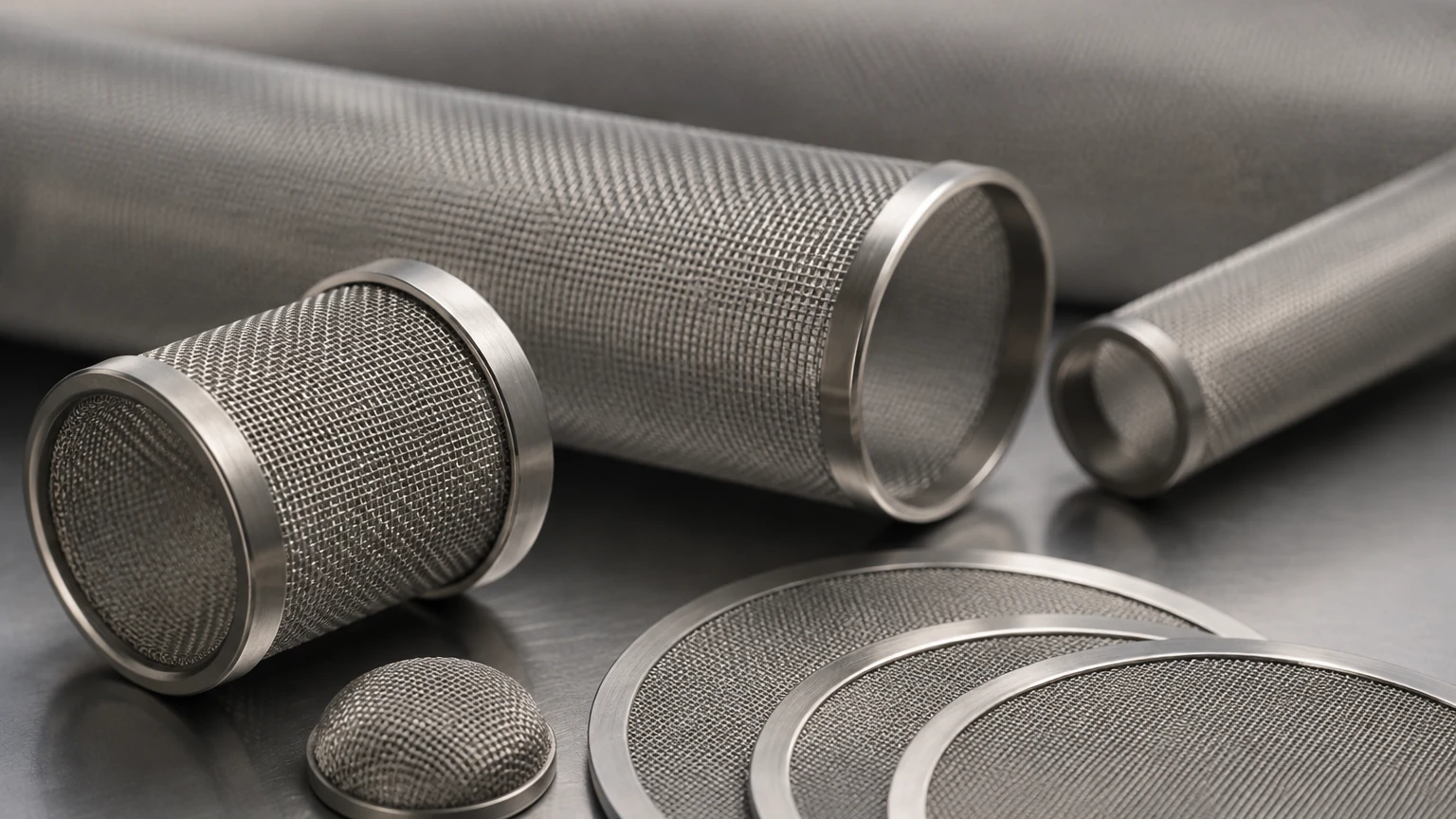
Customization and Structural Reinforcement
Because micro mesh is composed of very fine wires, it can be fragile. In many industrial applications, the mesh is not used as a standalone layer. Instead, it is integrated into a multi-layer structure to provide the necessary mechanical support.
Sintered Micro Mesh
Sintering is a process where multiple layers of wire mesh—including the micro mesh filtration layer, support layers, and drainage layers—are bonded together using heat and pressure without the use of binders. This creates a monolithic structure that is extremely rigid and maintains its pore size even under high-pressure pulses or backwashing. Sintered micro mesh for filtration is ideal for high-pressure hydraulic systems and polymer filtration.
Support Cores and Outer Guards
In cartridge designs, the micro mesh is often wrapped around a perforated metal core and protected by an outer guard. This prevents the mesh from collapsing or bursting under the stress of the fluid flow. For custom OEM solutions, the choice of support structure is as critical as the choice of the mesh itself, as it ensures the filter can be cleaned and reused multiple times.
Applications of Micro Mesh in Industry
Micro mesh for filtration is utilized across a broad spectrum of sectors where precision is non-negotiable:
* Chemical and Petrochemical: Protecting sensitive downstream equipment from fine particulates and catalysts. The corrosion resistance of stainless steel micro mesh is vital here.
* Food and Beverage: Used in the filtration of syrups, beverages, and oils to ensure clarity and remove microscopic impurities while adhering to FDA safety standards.
* Pharmaceuticals: Critical for the filtration of active pharmaceutical ingredients (APIs) and sterile air. The ability to withstand CIP (Clean-in-Place) and SIP (Steam-in-Place) processes is a key requirement.
* Aerospace and Hydraulics: Fine micro mesh ensures that hydraulic fluids remain free of particles that could cause valve sticking or component wear in high-precision flight control systems.
Maintenance and Cleaning Protocols
To maintain the efficiency of micro mesh for filtration, a regular maintenance schedule is required. Unlike disposable polymer filters, stainless steel micro mesh can often be cleaned and returned to service, providing significant long-term cost savings.
1. Backwashing: Reversing the flow of the fluid to dislodge particles trapped on the surface of the mesh. This is most effective for surface-loading weaves like plain or twill Dutch weaves.
2. Ultrasonic Cleaning: Using high-frequency sound waves in a cleaning solvent to remove deeply embedded particles. This is highly effective for sintered or multi-layer micro mesh structures.
3. Chemical Cleaning: Using acids or alkalis to dissolve organic or mineral scale. The material compatibility of the mesh (e.g., 316L) must be verified against the cleaning agent.
Conclusion: Selecting the Right Partner
Choosing the appropriate micro mesh for filtration requires more than just picking a micron rating from a catalog. It necessitates a deep understanding of the fluid dynamics, chemical environment, and mechanical stresses of the application. Engineers should confirm the material certifications, weave consistency, and structural integrity of the filter components before integration.
Kaifil specializes in the design and manufacture of custom stainless steel filtration solutions, providing the technical expertise needed to develop high-performance micro mesh components. By focusing on precision manufacturing and durable materials, we help industrial operators achieve reliable, long-term filtration performance in their most demanding processes.
