


Porous Polyethylene
In the landscape of industrial filtration and fluid handling, porous polyethylene (PE) represents a significant category of sintered thermoplastic media. Engineered to provide controlled porosity, this material is utilized across diverse sectors—from medical diagnostics to heavy industrial venting. Understanding the technical specifications, manufacturing nuances, and operational boundaries of porous polyethylene is essential for engineers and procurement teams tasked with selecting the most efficient media for their specific application environments.
While porous plastics offer unique advantages in terms of weight and cost-effectiveness for certain low-temperature applications, they must be evaluated against high-performance alternatives like stainless steel when mechanical durability and thermal resistance are paramount. This guide provides a technical overview of porous polyethylene, its engineering properties, and the critical factors that influence its selection in industrial systems.
Material Composition and Manufacturing Processes
Porous polyethylene is primarily produced through a process known as sintering. Unlike traditional plastic molding, which melts the resin into a solid form, sintering involves heating polymer granules—typically High-Density Polyethylene (HDPE) or Ultra-High Molecular Weight Polyethylene (UHMWPE)—to a temperature just below their melting point. Under controlled pressure, the surfaces of these granules fuse together at their contact points, creating a rigid, self-supporting structure with a complex network of interconnected voids.
The resulting material is characterized by an omni-directional pore structure, often referred to as a "tortuous path." The technical properties of the final product are dictated by the size and shape of the original polymer beads. Smaller beads result in finer pores and higher filtration efficiency, while larger beads create a more open structure with lower pressure drop.
HDPE vs. UHMWPE
Engineers must distinguish between the two primary types of polyethylene used in porous applications:
1. High-Density Polyethylene (HDPE): Offers good chemical resistance and is generally more cost-effective. It is suitable for standard industrial venting and filtration where extreme wear resistance is not required.
2. Ultra-High Molecular Weight Polyethylene (UHMWPE): Provides superior abrasion resistance, higher impact strength, and better performance in aggressive chemical environments. It is often the preferred choice for fluidizing plates and heavy-duty industrial filters.
Filtration Mechanics and Pore Structure
The performance of porous polyethylene is defined by its filtration efficiency, which is a function of its pore size distribution and the thickness of the media. Unlike surface filtration media (such as thin membranes or fine wire mesh), porous PE acts as a depth filtration medium.
Depth Filtration Principles
As fluid or gas passes through the tortuous path of the sintered PE, particles are trapped not only on the surface but throughout the entire thickness of the material. This mechanism allows for a higher dirt-holding capacity compared to simple surface filters. However, this also means that once the internal pores are saturated with contaminants, the material is often difficult to clean and may require replacement.
Pore Size and Porosity
Industrial porous PE typically offers pore sizes ranging from 5 micrometers to 200 micrometers. The void volume, or porosity, usually falls between 30% and 50%. A high void volume is desirable to minimize the differential pressure ($ΔP$) across the filter, which reduces energy consumption in pneumatic and hydraulic systems. Engineers must balance the requirement for fine filtration (small pores) with the need for high flow rates (high porosity and larger pores).
Industrial Applications and Engineering Use Cases
Because of its versatility and the ability to be molded into complex shapes—including tubes, discs, sheets, and custom geometries—porous polyethylene is found in several critical industrial roles.
1. Venting and Pressure Equalization
In automotive and electronics packaging, porous PE serves as a breathable barrier. It allows gases to pass through to equalize pressure while preventing the entry of dust, water, and other contaminants. Its naturally hydrophobic (water-repellent) nature makes it particularly effective for protecting sensitive components in outdoor environments.
2. Wicking and Reservoirs
In the diagnostic and medical fields, the capillary action of porous PE is harnessed for wicking fluids. By treating the material to be hydrophilic (water-attracting), manufacturers can create precise fluid delivery systems for point-of-care testing devices.
3. Fluidization
In bulk powder handling, UHMWPE porous plates are used as fluidizing media. By passing compressed air through the porous floor of a silo or hopper, the powder above becomes "fluidized," allowing it to flow easily and preventing bridging or "rat-holing" during discharge.
4. Pneumatic Silencing
Porous PE is widely used in pneumatic mufflers to reduce noise from exhausting air. The interconnected pore structure breaks up the air stream, diffusing the energy and lowering decibel levels without creating excessive backpressure that could stall the machinery.
Performance Limitations and Operational Risks
While porous polyethylene is an excellent solution for many applications, it has distinct physical and chemical boundaries that engineers must respect to avoid system failure.
Thermal Sensitivity
The most significant limitation of polyethylene is its low thermal ceiling. Most porous PE components have a maximum continuous operating temperature of approximately 80°C (176°F). Beyond this point, the polymer begins to soften, leading to pore collapse and a dramatic increase in pressure drop. For high-temperature steam applications or hot gas filtration, thermoplastic media is generally unsuitable.
Mechanical Creep and Pressure Limits
Under sustained mechanical load or high differential pressure, polyethylene is subject to "creep"—a slow deformation of the material. In filtration systems where high pressure spikes are common, a porous PE element may deform or burst. This necessitates the use of internal or external supports, or a transition to metallic media.
Chemical Compatibility
Polyethylene is highly resistant to many acids and bases, making it useful in chemical processing. However, it is susceptible to attack by strong oxidizing agents and certain aromatic or chlorinated hydrocarbons. Exposure to these chemicals can cause the polymer to swell or lose structural integrity, leading to bypass or media migration into the process stream.
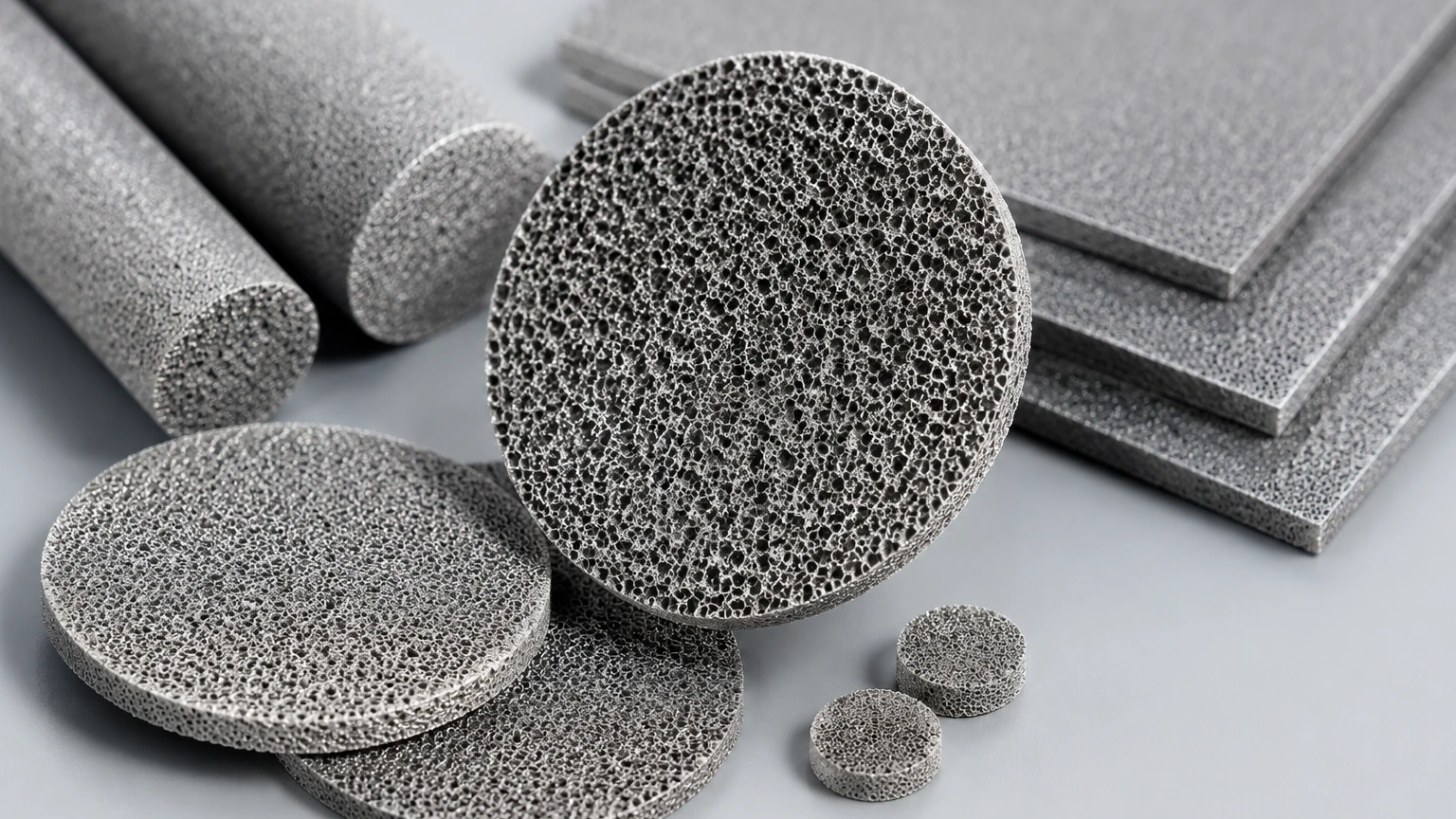
Comparative Analysis: Porous Polyethylene vs. Stainless Steel Media
For many industrial applications, the choice between porous plastic and stainless steel is a critical decision point. While porous PE is lightweight and often disposable, stainless steel filtration solutions—such as those found on the Main Page—offer performance characteristics that plastics cannot match.
| Feature | Porous Polyethylene | Stainless Steel (304/316L) |
| :— | :— | :— |
| Temperature Range | Low (Up to 80°C) | High (Up to 500°C+) |
| Mechanical Strength | Moderate; prone to creep | High; resistant to high ΔP |
| Cleanability | Limited; often disposable | Excellent; ultrasonic/backwash |
| Filtration Type | Depth | Surface and Depth |
| Chemical Resistance | Good (Acids/Bases) | Excellent (Solvents/High Temp Acids) |
| Customization | Molded shapes | Welded and machined precision |
In demanding environments such as pharmaceutical manufacturing or high-pressure hydraulic systems, the durability of stainless steel ensures a lower total cost of ownership over time. Stainless steel filters can be cleaned and reused multiple times, whereas porous PE filters are typically replaced once the pressure drop reaches a terminal level. For engineers seeking reliable, long-term filtration performance, reviewing product options and application support on the Main Page is a recommended step in the design process.
Engineering Selection Criteria and Procurement Checklist
When specifying porous polyethylene for a project, engineers should confirm the following technical parameters to ensure the media is fit for purpose:
1. Target Particle Size: Determine the minimum particle size that must be retained. Remember that porous PE is often rated nominally, meaning it will catch a percentage of particles at its rated micron size, but not 100%.
2. Flow Rate and Pressure Drop: Calculate the maximum allowable $ΔP$ across the filter at the required flow rate. This will dictate the necessary surface area and porosity of the element.
3. Chemical Exposure: List all chemicals in the process stream, including cleaning agents. Verify compatibility with HDPE or UHMWPE using chemical resistance charts.
4. Operating Temperature: Confirm both the continuous and peak temperatures of the application. If the temperature exceeds 80°C, consider alternative materials like sintered stainless steel.
5. Mechanical Requirements: Will the filter be subjected to vibration, impact, or high-pressure pulses? If so, the structural rigidity of the housing and the media itself must be verified.
6. Regulatory Compliance: For food, beverage, or pharmaceutical applications, ensure the resin used is FDA-compliant or meets relevant USP Class VI standards for biocompatibility.
Conclusion: Optimizing Filtration Systems
Porous polyethylene is a highly adaptable material that solves complex fluid handling challenges through its unique sintered structure. Its ability to provide depth filtration, venting, and wicking in a cost-effective, molded format makes it a staple in modern engineering. However, its limitations regarding temperature and mechanical strength mean it is not a universal solution.
By understanding the fundamental properties of porous PE and comparing them with robust alternatives like stainless steel, technical professionals can make informed decisions that optimize system longevity and performance. Whether the goal is to protect sensitive electronics from moisture or to ensure the purity of a chemical process, selecting the right porous media is the cornerstone of efficient industrial design. For those requiring the highest levels of precision and durability in filtration, consulting with specialized manufacturers and exploring technical resources on the Main Page will provide the necessary engineering support to achieve optimal results.
