


Well Screen Pipe
In industrial fluid extraction, water management, and chemical processing, the well screen pipe serves as the critical interface between the geological formation or process medium and the intake system. Its primary function is twofold: to provide structural support for the borehole or vessel and to act as a high-efficiency filter that allows fluids to pass while retaining solids, such as sand, gravel, or catalysts. For engineers and procurement professionals, selecting the appropriate well screen pipe is not merely a matter of dimensions; it requires a deep understanding of hydraulic efficiency, structural integrity, and material science.
As a specialized manufacturer of stainless steel filtration solutions, Kaifil provides precision-engineered components designed for demanding industrial environments. Understanding the technical nuances of these components is essential for optimizing system performance and extending the service life of the infrastructure. For comprehensive technical specifications and to explore our full range of filtration products, you can visit our Main Page.
Engineering Fundamentals of Well Screen Pipe Design
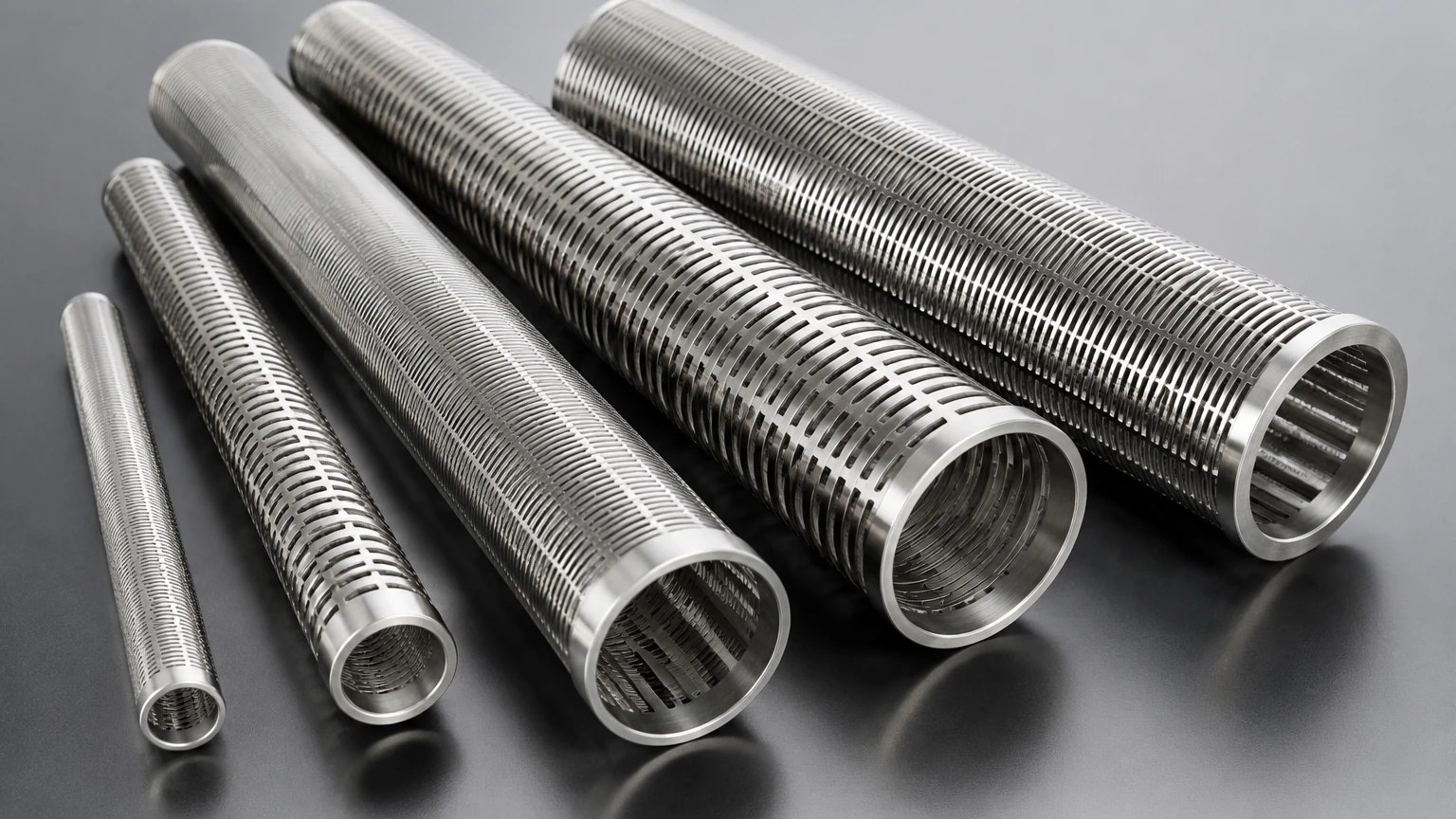
The efficiency of a well screen pipe is largely determined by its mechanical construction. While several types of screens exist, the wedge wire (or V-wire) design is widely considered the industry standard for high-performance industrial applications. This design utilizes a continuous profile wire wrapped around internal support rods, creating a series of precise slots.
The V-Wire Advantage
The "V" shaped profile of the wire is oriented so that the narrowest part of the opening faces outward. This geometry creates a self-cleaning effect; any particle that passes through the outer opening is unlikely to become lodged further in the slot because the opening widens inward. This significantly reduces the risk of blinding and ensures consistent flow rates over time compared to perforated pipes or mesh-wrapped alternatives.
Structural Reinforcement
Industrial well screen pipes must withstand significant external pressures, particularly in deep-well applications or high-pressure processing vessels. The internal support rods provide the necessary longitudinal strength. The frequency and diameter of these rods are calculated based on the anticipated collapse pressure of the environment. In deep-well extraction, the hydrostatic pressure and the weight of the overlying formation necessitate a robust internal skeleton to prevent deformation.
Key Performance Evaluation Criteria
When evaluating a well screen pipe for a specific project, engineers must focus on quantitative metrics that define its hydraulic and structural performance. These criteria ensure that the screen will not only survive the installation but will also operate at peak efficiency.
Open Area and Flow Velocity
The "open area" refers to the percentage of the screen surface that is open to fluid flow. A higher open area results in lower entrance velocity. This is critical because high entrance velocities increase friction loss (pressure drop) and can accelerate the migration of fine particles into the screen, leading to sand pumping or premature clogging. Ideally, the entrance velocity should be kept below 0.03 meters per second (0.1 feet per second) to maintain laminar flow and protect the integrity of the surrounding filter pack.
Slot Size Precision
The slot size must be matched to the grain size distribution of the surrounding aquifer or the specific particles being filtered. If the slots are too large, the system will pump solids, leading to equipment wear and potential collapse. If they are too small, the flow will be restricted, and the pressure drop will increase. Precision manufacturing is required to maintain tolerances within microns, ensuring that the filtration performance is uniform across the entire length of the pipe.
Collapse and Tensile Strength
In deep vertical wells, the pipe must support its own weight during installation (tensile strength) and resist the external pressure of the formation (collapse strength). Engineers use specific formulas to calculate the required wall thickness and wire gauge. Using a well screen pipe with insufficient collapse strength can lead to catastrophic failure, requiring expensive borehole remediation or complete abandonment of the site.
Material Selection for Demanding Industrial Environments
The longevity of a well screen pipe is directly tied to its resistance to corrosion and chemical attack. In industrial B2B contexts, where fluids may be acidic, alkaline, or high in chlorides, material selection is the most critical factor in determining the total cost of ownership.
Stainless Steel Grades
Stainless steel is the preferred material for industrial filtration due to its superior mechanical properties and corrosion resistance.
* Grade 304: Suitable for most freshwater applications and mildly corrosive environments. It offers a balance of strength and cost-effectiveness.
* Grade 316L: Contains molybdenum, which provides enhanced resistance to pitting and crevice corrosion, particularly in environments with high chloride concentrations or acidic conditions. The "L" denotes low carbon content, which improves weldability and prevents intergranular corrosion in the heat-affected zones of the welds.
* Duplex Stainless Steels: For extreme environments, such as seawater intake or highly aggressive chemical processing, duplex alloys offer even higher strength and superior resistance to stress corrosion cracking.
Comparison with Non-Metallic Options
While PVC or composite screens are used in shallow, low-pressure residential wells, they lack the structural integrity and temperature resistance required for industrial processes. Stainless steel well screen pipes can operate at much higher temperatures and are not subject to the brittleness or UV degradation that can affect plastics over time.
Customization and Engineering Considerations
No two industrial filtration projects are identical. Customization is often required to meet the specific hydraulic and mechanical needs of a facility. When sourcing a well screen pipe, several variables can be adjusted to optimize performance.
Slot Width Customization
Slot widths can be customized from as small as 0.05mm up to several millimeters. This allows the screen to be perfectly tuned to the specific sand or gravel pack used in the well. By performing a sieve analysis of the formation material, engineers can determine the optimal slot size that allows for the development of a natural filter zone around the pipe.
End Fittings and Connection Methods
The method of connecting pipe segments is vital for ensuring a leak-proof and structurally sound string. Common options include:
* Threaded Connections: NPT or specialized flush-joint threads for easy assembly in the field.
* Weld Rings: Beveled edges for high-strength butt welding, often used in permanent installations where maximum structural integrity is required.
* Flanged Ends: Used primarily in industrial piping systems and processing vessels for easy removal and maintenance.
Diameter and Length
Standard diameters range from 2 inches to over 30 inches, with lengths tailored to the thickness of the production zone. For horizontal wells or lateral extraction, specialized flexible or reinforced designs may be necessary to navigate the borehole geometry.
Identifying and Mitigating Common Operational Risks
Even a well-designed well screen pipe can face challenges during its operational life. Understanding these risks allows for better proactive management and maintenance planning.
Incrustation and Biofouling
Incrustation occurs when minerals, such as calcium carbonate or iron, precipitate out of the water and deposit on the screen surface, reducing the open area. Biofouling involves the growth of iron-reducing bacteria or other microorganisms that create a slime layer. Both issues lead to increased drawdown and reduced yield. Selecting a high-quality stainless steel screen allows for more aggressive chemical cleaning and mechanical rehabilitation (such as high-pressure jetting) compared to lower-grade materials.
Sand Pumping and Erosion
If the slot size is incorrectly specified or if the screen is damaged during installation, sand and silt can enter the system. This not only contaminates the fluid but also causes rapid erosion of pumps, valves, and downstream filtration components. Continuous monitoring of fluid turbidity is essential to detect early signs of screen failure.
Galvanic Corrosion
When a stainless steel well screen pipe is connected to carbon steel casing, galvanic corrosion can occur if a proper dielectric insulator is not used. This can lead to localized failure at the connection points. Engineering specifications must account for the entire well string to ensure electrochemical compatibility between different metals.
Total Cost of Ownership and Procurement Strategy
When purchasing industrial filtration components, the initial purchase price is only one component of the total cost of ownership (TCO). A lower-quality well screen pipe may save money upfront but can lead to significantly higher costs due to:
1. Increased Energy Consumption: Narrower slots or lower open areas increase the head loss, requiring more pump power to move the same volume of fluid.
2. Frequent Maintenance: Screens prone to clogging require more frequent shutdowns for cleaning and rehabilitation.
3. Shortened Service Life: Corrosion or structural failure necessitates expensive well workovers or the drilling of replacement wells.
By investing in precision-manufactured stainless steel screens, industrial operators can ensure higher efficiency, lower energy costs, and a service life that often spans decades. At Kaifil, we focus on providing durable, high-performance filtration solutions that meet the rigorous demands of the chemical, pharmaceutical, and water treatment sectors.
Conclusion
The well screen pipe is a fundamental component of any fluid extraction or filtration system. Its design, material composition, and manufacturing precision directly impact the efficiency and longevity of the entire operation. For engineers, the priority should be on selecting a screen that offers the optimal balance of open area, structural strength, and corrosion resistance.
Before proceeding with a procurement decision, it is essential to confirm the chemical composition of the fluid, the physical characteristics of the solids to be filtered, and the mechanical loads the pipe will encounter. By addressing these factors during the design phase, technical teams can implement a filtration solution that delivers reliable performance and a favorable return on investment. For more information on custom stainless steel filtration components and engineering support, explore the resources available on our Main Page.
