


Nanofiber Cartridge Filter
In the landscape of industrial filtration, the demand for higher efficiency, lower energy consumption, and longer service life has led to significant material science innovations. Among these, the development of the nanofiber cartridge filter represents a critical advancement for air and gas filtration applications. By utilizing fibers with diameters in the sub-micron range, these filters offer performance characteristics that traditional cellulose or synthetic media cannot match. For engineers and procurement professionals, understanding the technical nuances of nanofiber technology is essential for optimizing filtration systems in sectors ranging from gas turbine power generation to pharmaceutical manufacturing.
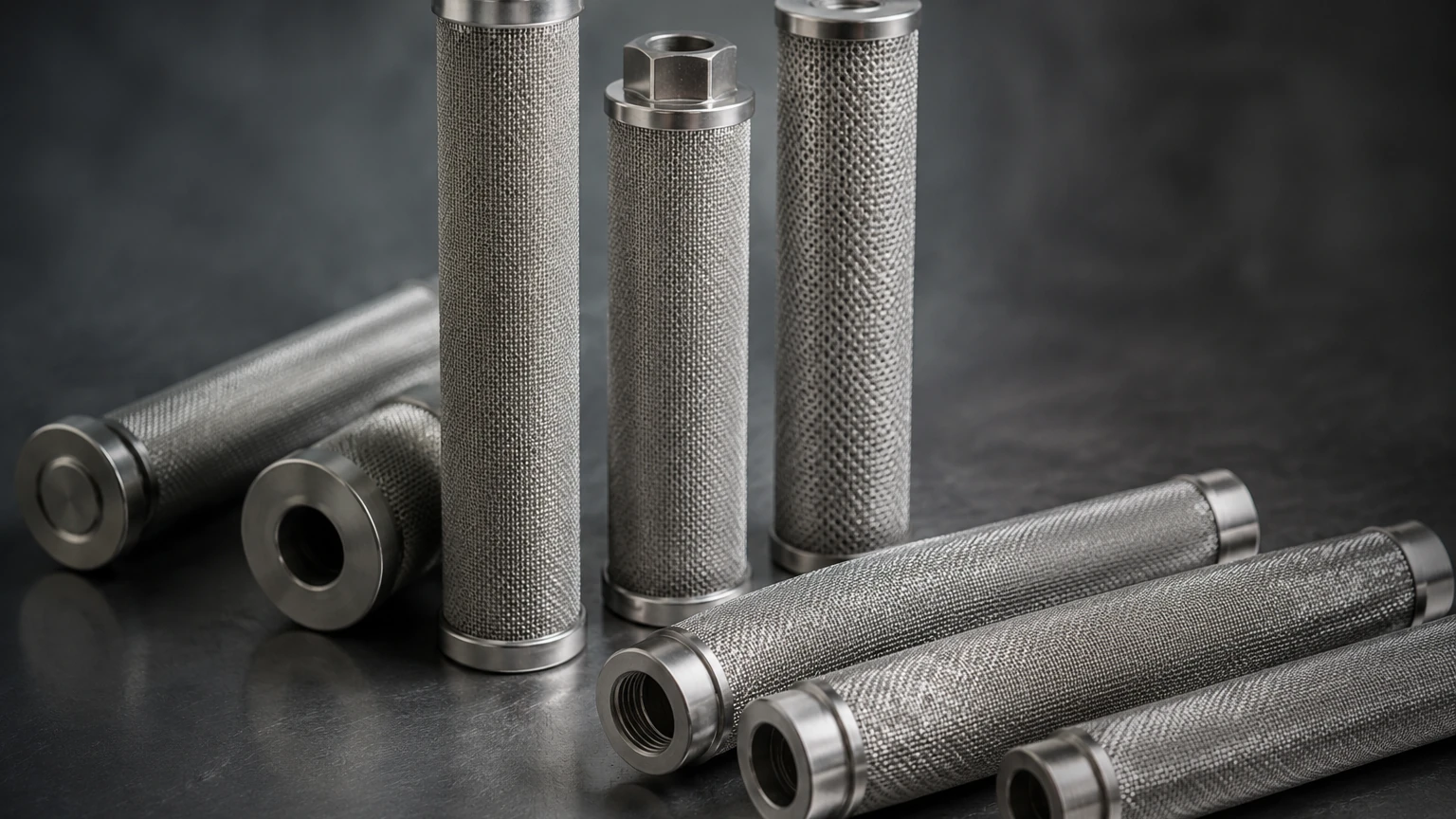
At Kaifil, our expertise in stainless steel filtration components provides the structural foundation required for high-performance media. While the nanofiber layer provides the filtration efficiency, the integrity of the cartridge—often supported by precision-engineered metal cores and end caps—ensures the assembly can withstand the rigors of industrial environments. This guide explores the engineering principles, selection criteria, and operational benefits of nanofiber cartridge filters.
The Science Behind Nanofiber Filtration
Nanofibers are generally defined as fibers with a diameter of less than one micrometer, typically ranging from 50 to 500 nanometers. In the context of a nanofiber cartridge filter, these fibers are applied as a thin layer—often referred to as a "web"—onto a sturdier substrate material, such as polyester or a cellulose blend. The most common method for producing these fibers is electrospinning, a process that uses electrical forces to draw charged threads of polymer solutions into extremely fine filaments.
Surface Loading vs. Depth Loading
Traditional filtration media, such as standard cellulose, rely on "depth loading." In this mechanism, particles are trapped throughout the thickness of the filter media. While effective, depth loading leads to a rapid increase in pressure drop as the internal pores become clogged. Once particles are embedded deep within the media, they are nearly impossible to remove through pulse-cleaning cycles.
In contrast, a nanofiber cartridge filter operates primarily through "surface loading." The extremely fine openings in the nanofiber web are smaller than most dust particles, causing the contaminant to collect on the very surface of the filter. This creates a thin, porous "dust cake" that acts as an additional filtration layer without significantly obstructing airflow. Because the particles do not penetrate the substrate, they are easily shed during pulse cleaning, leading to more consistent performance and a longer filter lifespan.
Key Performance Advantages
The adoption of nanofiber technology is driven by several measurable performance metrics that directly impact the total cost of ownership (TCO) of industrial filtration systems.
1. Superior Filtration Efficiency
Nanofiber filters are capable of achieving high MERV (Minimum Efficiency Reporting Value) ratings, often reaching MERV 15 or 16. They are particularly effective at capturing sub-micron particles (0.3 to 1.0 microns), which are often the most difficult to intercept. This level of efficiency is critical for protecting downstream equipment, such as gas turbine blades, from erosion and fouling, or for ensuring compliance with environmental emission standards.
2. Lower Operating Pressure Drop
One of the most significant advantages of nanofiber media is the reduction in pressure drop. Because the filtration occurs on the surface, the internal structure of the substrate remains open. This allows air to flow through the filter with less resistance compared to a depth-loading filter that has become saturated with dust. Lower pressure drop translates directly into reduced energy consumption for the fans and blowers driving the system.
3. Enhanced Pulse-Cleaning Capability
For systems utilizing reverse-pulse cleaning, nanofiber cartridge filters offer superior recovery. When a blast of compressed air is sent through the cartridge, the surface-loaded dust cake is easily dislodged. This efficient cleaning cycle maintains a lower average pressure drop over the life of the filter and reduces the frequency of cleaning pulses required, which in turn saves compressed air and reduces mechanical stress on the filter media.
Engineering Considerations and Material Selection
Selecting the right nanofiber cartridge filter requires a detailed analysis of the operating environment. Engineers must look beyond simple efficiency ratings to ensure the filter can survive the specific conditions of the application.
Substrate Selection
The nanofiber web is fragile and requires a robust substrate for mechanical support. Common substrates include:
- Cellulose/Synthetic Blends: Economical and suitable for general industrial dust collection where moisture is minimal.
- Spunbond Polyester: Offers high mechanical strength and better resistance to moisture and chemicals. It is the preferred choice for heavy-duty applications or environments with high humidity.
- Flame Retardant Media: Essential for applications involving sparks or combustible dust, such as metal grinding or welding fumes.
Chemical and Thermal Compatibility
While the substrate provides strength, the polymer used for the nanofibers (often nylon or polyimide) must be compatible with the process gas. Standard nanofibers may degrade if exposed to high temperatures (typically above 180°F/82°C) or specific chemical vapors. For high-temperature applications, specialized synthetic substrates and high-temp nanofibers must be specified to prevent the web from melting or losing its structural integrity.
Structural Integrity: The Role of Metal Components
A high-performance nanofiber cartridge filter is only as reliable as its housing and internal support structure. In many demanding industrial settings, the mechanical stresses of high airflow and frequent pulse cleaning can cause inferior cartridges to collapse or leak.
This is where the integration of precision metal components becomes vital. As a manufacturer specializing in custom stainless steel filtration solutions, Kaifil emphasizes the importance of the following structural elements:
- Inner and Outer Cores: Galvanized or stainless steel expanded metal cores provide the necessary crush resistance to withstand high differential pressures.
- End Caps: Precision-stamped metal end caps, often made from 304 or 316 stainless steel, ensure a leak-proof seal with the filter housing. These caps must be securely bonded to the media using high-grade adhesives or potting compounds.
- Gaskets: High-quality EPDM or silicone gaskets are required to maintain a positive seal over the entire service life of the filter.
For more information on the structural components and customization options available for industrial filtration, you can visit our Main Page.
Common Industrial Applications
Nanofiber cartridge filters are utilized across a broad spectrum of industries where air purity and system efficiency are paramount.
Gas Turbine Air Intake
Gas turbines consume massive volumes of air. Even small concentrations of sub-micron dust can lead to compressor fouling and cooling hole blockage, reducing turbine efficiency and increasing maintenance costs. Nanofiber filters provide the high-efficiency surface loading necessary to protect these multi-million dollar assets in environments ranging from coastal regions to dusty deserts.
Industrial Dust Collection
In manufacturing processes such as laser cutting, plasma cutting, and thermal spraying, the resulting fumes consist of extremely fine, sub-micron particles. Traditional media clogs almost instantly in these applications. Nanofiber filters allow these systems to operate with stable pressure drops and long filter life, ensuring a clean working environment and regulatory compliance.
Pharmaceutical and Food Processing
Where product purity is non-negotiable, nanofiber filters serve as effective pre-filters or primary filters for capturing fine powders and preventing cross-contamination. Their ability to be manufactured with food-grade materials and stainless steel supports makes them ideal for these sensitive environments.
Evaluating Total Cost of Ownership (TCO)
When specifying a nanofiber cartridge filter, the initial purchase price is often higher than that of standard cellulose filters. However, a technical evaluation of the TCO usually favors nanofiber technology for several reasons:
1. Reduced Energy Costs: Lower average pressure drop means the system fan works less, leading to significant kilowatt-hour savings over the year.
2. Extended Filter Life: Because the media cleans more effectively, the time between filter change-outs is often doubled or tripled compared to standard media.
3. Lower Maintenance Labor: Fewer filter changes result in reduced downtime and lower labor costs.
4. Compressed Air Savings: Efficient surface loading requires fewer cleaning pulses, reducing the demand on the facility's compressed air system.
Technical Confirmation Before Purchase
Before finalizing a specification for a nanofiber cartridge filter, engineers should confirm the following data points with their manufacturer:
- Face Velocity: Ensure the airflow velocity through the media is within the recommended range for the specific nanofiber web to prevent particle bleed-through.
- Burst Strength: Confirm the media and the internal stainless steel support core can handle the maximum expected pressure differential.
- Efficiency Certification: Request MERV or ISO 16890 test reports to verify the efficiency claims for the specific particle sizes of concern in your process.
- Customization Requirements: Determine if non-standard dimensions, specialized end-cap configurations, or high-grade stainless steel materials are required for corrosive environments.
By focusing on these technical details, purchasing teams can move beyond commodity-based buying and invest in filtration solutions that provide long-term operational stability.
Conclusion
The nanofiber cartridge filter is a sophisticated tool in the industrial filtration arsenal. By leveraging the principles of surface loading and sub-micron fiber technology, these filters provide a path toward higher efficiency and lower operational costs. When paired with robust structural components—such as the precision-manufactured stainless steel supports provided by Kaifil—these filters deliver reliable performance in even the most challenging industrial conditions.
For technical professionals looking to optimize their filtration systems or explore customized OEM filtration components, reviewing the available engineering options is the first step toward achieving superior process results. To explore our full range of capabilities and technical resources, please visit our Main Page.
