


Lenticular Filtration
In the landscape of industrial liquid processing, achieving high-clarity results while maintaining operational efficiency is a constant challenge for engineers. Lenticular filtration has emerged as a preferred solution for many high-value applications, particularly in the pharmaceutical, food and beverage, and chemical industries. This depth filtration technology utilizes stacked, lens-shaped modules housed within a closed stainless steel vessel, offering a significant upgrade over traditional plate-and-frame filter presses. For technical professionals and purchasing teams, understanding the mechanics, engineering advantages, and selection criteria of lenticular systems is essential for optimizing process yields and ensuring product consistency.
As a manufacturer specializing in custom stainless steel filtration solutions, Kaifil provides the precision components and housings necessary to support these demanding processes. By visiting our Main Page, engineers can explore the technical foundations of industrial filtration and how specialized metal components integrate with various filtration technologies to enhance durability and performance.
The Mechanics of Lenticular Filtration
Lenticular filtration is a form of depth filtration. Unlike surface filtration, where particles are trapped on the top layer of a membrane, depth filtration captures contaminants within the tortuous path of the filter media's internal structure. A lenticular module consists of multiple individual filter cells stacked vertically and bound together. Each cell is composed of two layers of filter media separated by a drainage spacer, with the edges sealed to prevent bypass.
Fluid enters the housing and surrounds the modules. Under pressure, the liquid is forced through the media into the internal drainage core. Because the media is thick—often composed of cellulose, diatomaceous earth (DE), or perlite—it provides a high dirt-holding capacity. This structure allows for the removal of both rigid particles and deformable contaminants, such as yeasts, proteins, or lipids, which might otherwise blind a thin membrane filter prematurely.
The Role of Zeta Potential
One of the more technical aspects of lenticular filtration is the utilization of zeta potential. Many filter media used in lenticular modules are treated to carry a positive electrokinetic charge. Since many small contaminants, such as bacteria, endotoxins, and colloidal haze, are negatively charged, they are attracted to and held by the filter media through adsorption. This allows a lenticular filter to remove particles significantly smaller than its nominal pore size rating, providing a level of polish that is difficult to achieve with mechanical straining alone.
Engineering Advantages Over Traditional Systems
For decades, the plate-and-frame filter press was the standard for depth filtration. However, lenticular filtration offers several distinct engineering advantages that address common pain points in industrial environments.
1. Enclosed System Design
Traditional filter presses are open to the atmosphere, which leads to "edge leakage"—the loss of product through the sides of the plates. In contrast, lenticular modules are contained within a sealed stainless steel pressure vessel. This design eliminates product loss, prevents environmental contamination, and protects operators from exposure to hazardous or volatile fluids. For industries like pharmaceutical manufacturing or high-end spirits production, the enclosed nature of the system ensures a higher level of hygiene and safety.
2. Reduced Footprint and Scalability
The vertical stacking of lenticular modules allows for a much larger filtration surface area within a compact footprint compared to horizontal plate systems. Systems can be easily scaled by adding more modules to a single housing or by using multi-stack housings. This modularity is ideal for facilities where floor space is at a premium or where production volumes fluctuate.
3. Ease of Setup and Maintenance
Changing out a plate-and-frame press is a labor-intensive process that requires handling dozens of individual sheets. Lenticular modules are pre-assembled and can be replaced in a fraction of the time. This reduction in downtime translates directly to lower labor costs and increased equipment uptime. Furthermore, the stainless steel housings are designed for easy cleaning, often compatible with Clean-in-Place (CIP) and Steam-in-Place (SIP) protocols.
Key Evaluation Criteria for Filter Selection
When selecting a lenticular filtration system, engineers must evaluate several parameters to ensure the solution meets the specific requirements of the application. Failure to account for these variables can lead to premature filter blinding, off-specification product, or excessive operational costs.
Filtration Throughput and Vmax
The total volume of liquid that can pass through a filter before it reaches a terminal pressure drop is known as the throughput. Engineers often perform Vmax testing—a small-scale trial to determine the maximum capacity of the media. This data is critical for sizing the full-scale system and estimating the number of modules required per batch. Factors affecting throughput include the concentration of solids, the viscosity of the fluid, and the presence of colloidal materials.
Differential Pressure ($ΔP$)
Monitoring the pressure difference between the inlet and outlet of the filter housing is the primary method for determining when a filter is spent. Most lenticular modules have a recommended terminal differential pressure (typically around 2.0 to 2.5 bar). Operating beyond this limit can cause "breakthrough," where trapped contaminants are forced through the media, or even structural failure of the module itself.
Chemical and Thermal Compatibility
The materials used in the lenticular module—including the media, the core, and the gaskets—must be compatible with the process fluid. For example, in chemical processing, aggressive solvents may require specialized resins or edge seals. Similarly, if the process involves high temperatures or sterilization cycles, the module must be rated to withstand those thermal stresses without losing structural integrity.
Common Risks and Mitigation Strategies
While lenticular filtration is highly effective, there are risks associated with improper operation or system design. Addressing these risks during the engineering phase is vital.
* Bypass and Improper Sealing: If the modules are not properly compressed within the housing, fluid can bypass the filter media entirely. Utilizing high-quality stainless steel housings with precision-engineered center posts and compression nuts is essential to ensure a tight seal.
* Air Entrapment: Air trapped inside the housing can reduce the effective filtration area and cause pressure surges. Proper venting of the housing during the priming phase is a mandatory operational step.
* Flow Rate Fluctuations: Sudden changes in flow rate can dislodge particles previously trapped within the depth of the media. Using variable frequency drives (VFDs) on pumps to maintain a steady, controlled flow is a best practice for consistent filtration quality.
Integration with Stainless Steel Components
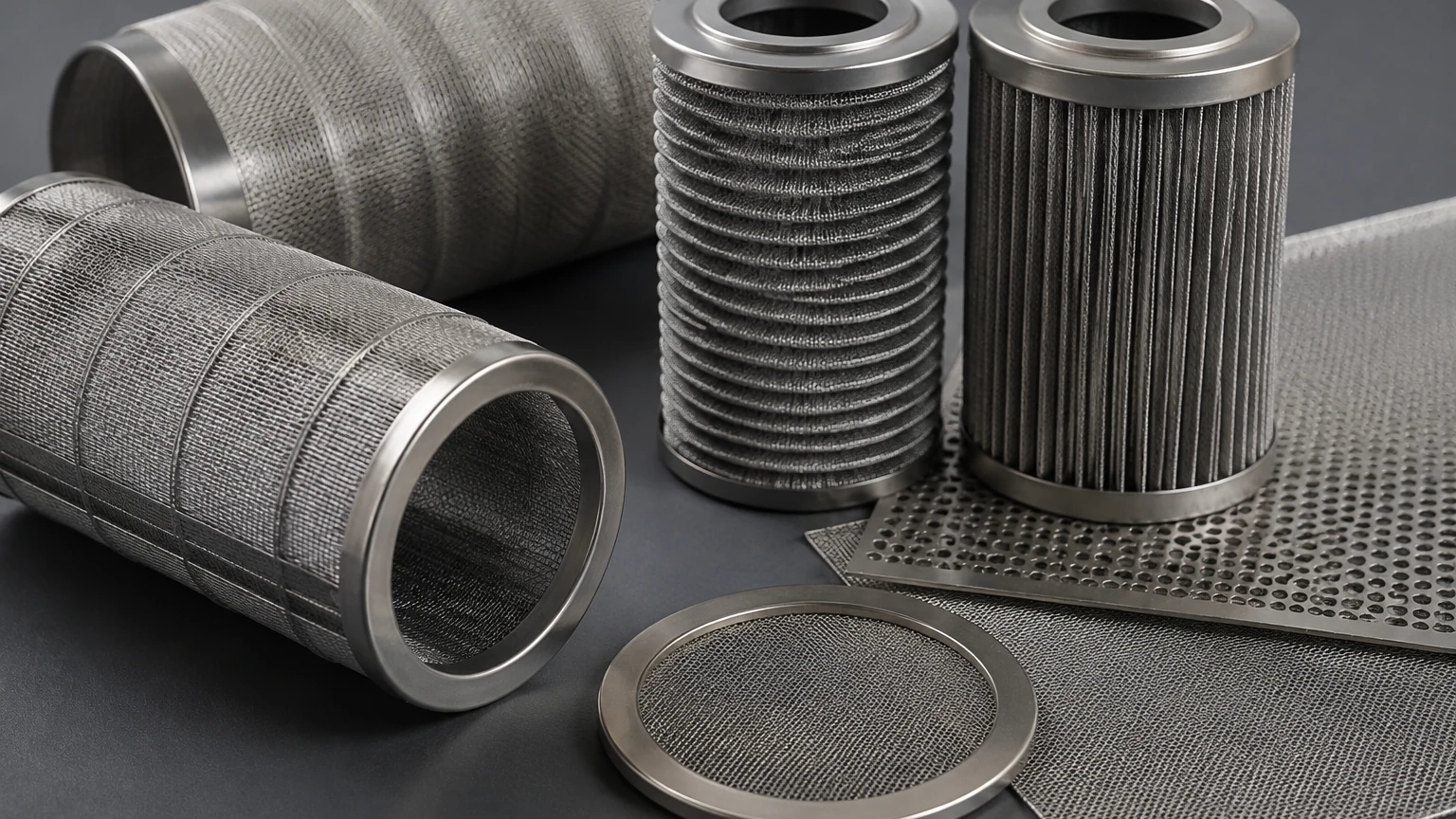
The performance of a lenticular filtration system is heavily dependent on the quality of the hardware that supports it. While the filter media performs the separation, the stainless steel housing and internal components provide the structural framework and fluid management.
Kaifil’s expertise in manufacturing precision metal filter components and custom stainless steel solutions ensures that the housing can withstand the rigors of industrial use. From ensuring the internal surface finish meets sanitary standards (Ra < 0.8 µm) to providing custom inlet/outlet configurations for seamless integration into existing piping, the hardware must be as robust as the media is efficient. For more information on our manufacturing capabilities, please refer to our Main Page.
Information to Confirm Before Purchasing
Before moving forward with a lenticular filtration investment, purchasing teams and engineers should confirm the following details with their suppliers:
1. Media Grade and Retention Rating: Is the media nominal or absolute? Does it provide the necessary zeta potential for the targeted contaminants?
2. Housing Certification: Does the stainless steel housing meet relevant pressure vessel codes (e.g., ASME, PED) and sanitary standards (e.g., 3A, FDA)?
3. Sterilization Requirements: Can the system handle SIP at 121°C or 134°C? What is the maximum number of sterilization cycles the modules can withstand?
4. Total Cost of Ownership (TCO): Beyond the initial housing cost, what is the ongoing cost of replacement modules per hectoliter or gallon of finished product?
5. Customization Options: Can the housing be modified to include pressure gauges, sampling valves, or sight glasses at specific points to facilitate better process monitoring?
Conclusion
Lenticular filtration represents a sophisticated balance of high-performance depth filtration and operational convenience. By moving away from open systems and embracing the modular, enclosed design of lenticular stacks, industrial facilities can achieve superior clarity, protect their products from contamination, and streamline their maintenance routines.
Success in implementing this technology requires more than just selecting the right media; it demands a holistic approach to system design, including the selection of high-quality stainless steel housings and a deep understanding of the fluid dynamics at play. As a partner in industrial filtration, Kaifil remains committed to providing the technical expertise and custom manufacturing required to help engineers solve their most complex separation challenges. Whether you are refining chemicals or polishing beverages, the right filtration strategy is the foundation of a high-quality end product.
