


Fully Automatic Filter Press
In the landscape of industrial liquid-solid separation, the fully automatic filter press represents a significant evolution from traditional manual and semi-automatic systems. As industries strive for higher throughput, reduced labor costs, and more consistent output quality, the integration of automation into filtration processes has become a necessity rather than a luxury. For engineers and procurement teams in sectors such as chemical processing, pharmaceutical manufacturing, and large-scale wastewater treatment, understanding the technical nuances of these systems is critical for optimizing operational efficiency.
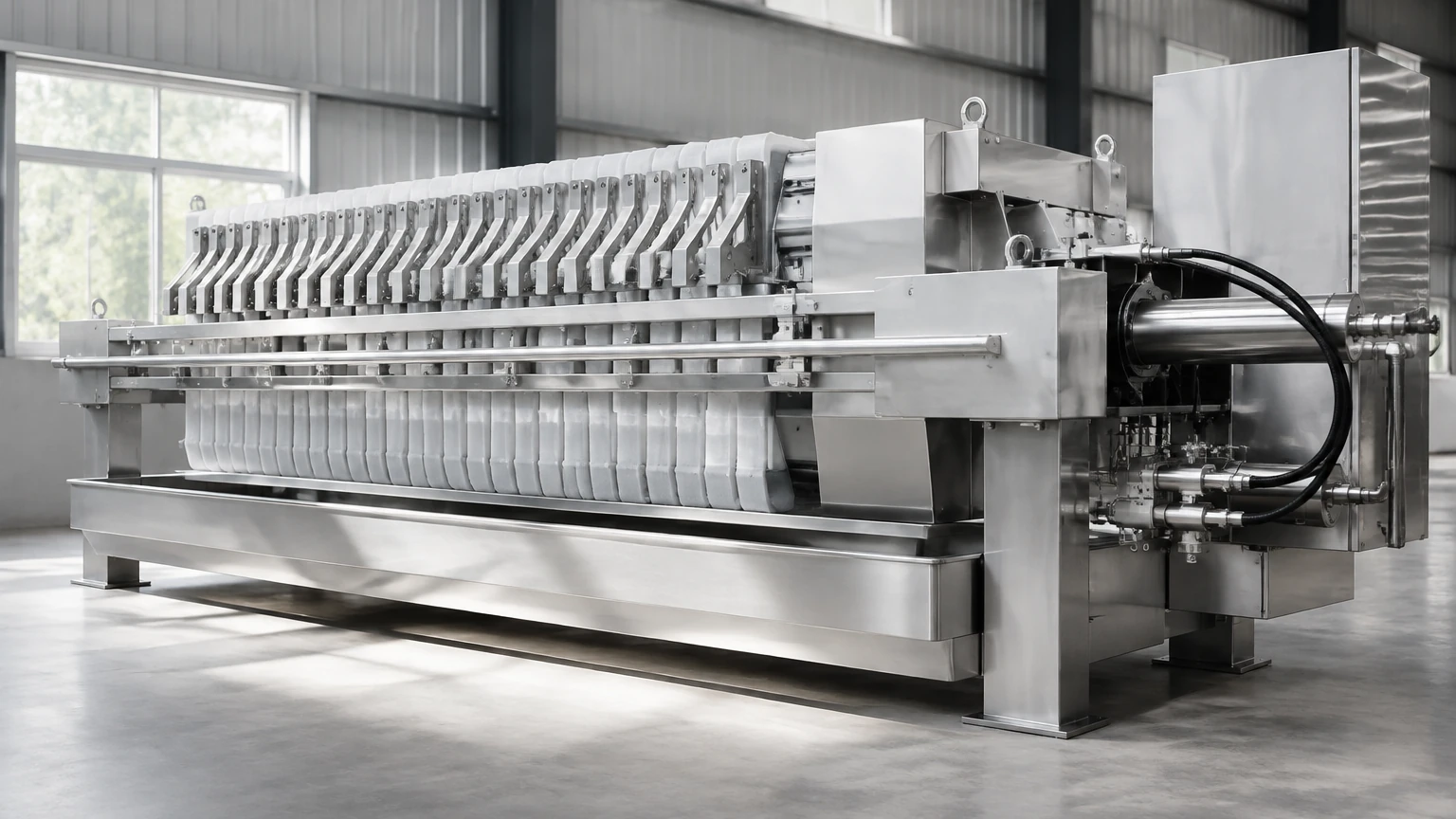
A fully automatic filter press is designed to manage the entire filtration cycle—from the initial feeding of the slurry to the final discharge of the filter cake—with minimal human intervention. This automation is typically governed by a Programmable Logic Controller (PLC), which synchronizes hydraulic movements, valve sequencing, and plate shifting. However, the efficacy of the automation is heavily dependent on the quality of the filtration media and the mechanical integrity of the internal components.
Engineering Principles of Automated Filtration
The operation of a fully automatic filter press is defined by a series of precise mechanical and hydraulic stages. The process begins with the "closing" phase, where a high-pressure hydraulic cylinder moves the follower plate to compress the stack of filter plates together, creating a sealed internal chamber.
Once the chambers are sealed, the feeding phase commences. Slurry is pumped into the chambers under pressure. The liquid (filtrate) passes through the filtration media—often a specialized cloth or, in high-demand industrial applications, a precision-engineered stainless steel wire mesh—and exits through the drainage ports. The solids are retained within the chambers, gradually forming a "cake."
In a fully automatic system, sensors monitor the pressure and flow rates in real-time. When the pressure reaches a pre-defined set point or the flow rate drops below a certain threshold, the PLC initiates the next phase. This may include cake washing to remove impurities or air blowing to reduce residual moisture. The final stage is the automatic cake discharge, where a mechanical plate shifter moves each plate individually or in groups, allowing the cake to fall into a collection hopper. This cycle is then repeated without the need for manual cleaning or plate separation.
The Role of High-Performance Filtration Media
While the automation handles the mechanical movement, the actual separation occurs at the interface of the filter media. In many heavy-duty or high-temperature applications, standard textile filter cloths may lack the necessary durability or chemical resistance. This is where the selection of specialized components becomes vital.
For engineers looking for long-term reliability, stainless steel filtration solutions offer several advantages over synthetic materials:
1. Thermal Stability: Stainless steel components can withstand extreme temperatures that would melt or degrade polymer-based cloths.
2. Chemical Compatibility: In aggressive chemical processing, 316L stainless steel provides superior resistance to corrosion, ensuring that the filtration media does not contaminate the product or fail prematurely.
3. Mechanical Strength: High-pressure automated cycles exert significant stress on the filter media. Metal mesh and sintered components maintain their structural integrity under high differential pressures, preventing "blowouts" that can occur with fabric media.
4. Precision Micron Ratings: Advanced manufacturing allows for highly accurate pore sizes, which is essential for pharmaceutical and fine chemical applications where particle retention must be absolute.
To explore specific technical specifications for these components, engineers can refer to the Main Page of specialized manufacturers to compare material grades and mesh configurations.
Key Evaluation Criteria for Industrial Selection
When specifying a fully automatic filter press for a facility, several technical parameters must be evaluated to ensure the equipment aligns with the process requirements.
Throughput and Cycle Time
The primary driver for automation is throughput. Engineers must calculate the total volume of slurry to be processed per day and determine the optimal chamber volume. A fully automatic system reduces the "dead time" between cycles—the time spent opening the press and discharging the cake. If the discharge mechanism is not fast enough, the benefits of the automation are lost.
Cake Dryness and Moisture Retention
In many mining and chemical applications, the goal is to achieve the driest cake possible to reduce disposal costs or prepare the material for further processing (like drying or smelting). Automated systems often include a membrane squeezing function, where a flexible diaphragm on the filter plate is inflated with water or air to mechanically compress the cake after the feeding phase. This can significantly reduce moisture content compared to standard recessed plate designs.
Level of Automation and Integration
Not all "automatic" presses are equal. Some may require manual intervention if the cake sticks to the plates. High-end systems feature automatic cloth washing systems and vibrating mechanisms to ensure 100% cake discharge. Furthermore, the PLC should be capable of integrating with the plant’s wider SCADA (Supervisory Control and Data Acquisition) system for remote monitoring and data logging.
Common Operational Risks and Mitigation
Despite their advanced design, fully automatic filter presses are subject to specific operational risks that can lead to downtime if not properly addressed.
* Media Blinding: Over time, fine particles can become trapped within the pores of the filter media, a phenomenon known as blinding. In an automated system, this leads to longer cycle times and higher feeding pressures. Utilizing high-quality stainless steel wire mesh can mitigate this, as these materials are often easier to clean and less prone to the deep-seated clogging seen in multi-filament fabrics.
* Misalignment of Plate Shifters: The mechanical components responsible for moving the plates are precision instruments. If the track becomes fouled with debris or if the sensors fail, the plates may misalign, leading to a failure in the closing sequence. Regular calibration and the use of robust, debris-resistant shifting mechanisms are essential.
* Seal Failure: The high hydraulic pressures required to keep the plate stack closed mean that the gaskets and seals are under constant stress. Leaks not only waste product but can also damage the structural frame of the press through corrosion.
Customization and Engineering Considerations
A "one-size-fits-all" approach rarely works in industrial filtration. Customization is often necessary to handle specific slurry characteristics. For instance, abrasive slurries require wear-resistant coatings on the internal piping and feed ports.
In the pharmaceutical industry, the focus shifts to sanitary design. Here, the fully automatic filter press must be designed for easy sterilization. This often involves the use of electropolished stainless steel surfaces and components that eliminate "dead zones" where bacteria could proliferate. Manufacturers like Kaifil specialize in providing the custom metal filter components that meet these stringent requirements, ensuring that the automated system remains compliant with industry standards.
When designing a system, engineers should confirm the following with their component suppliers:
* Material Certification: Ensure that all metal components come with mill test reports (MTRs) to verify alloy composition.
* Pressure Ratings: Confirm that the filtration media can handle the maximum feed pressure and the squeeze pressure of the membrane system.
* Cleaning Protocols: Determine if the media is compatible with the intended Clean-in-Place (CIP) chemicals.
Total Cost of Ownership (TCO) vs. Initial Investment
While the initial capital expenditure (CAPEX) for a fully automatic filter press is higher than that of a manual unit, the Total Cost of Ownership (TCO) is often lower when analyzed over a 5-to-10-year period. The reduction in labor costs is the most immediate saving; a single operator can often oversee multiple automated presses simultaneously.
However, the TCO calculation must also include maintenance and replacement parts. Choosing durable, high-quality filtration media—such as stainless steel cartridges or mesh—can extend the interval between maintenance shutdowns. While these components may have a higher upfront cost than disposable cloths, their longevity and the resulting reduction in downtime often provide a superior Return on Investment (ROI).
Conclusion: Making an Informed Decision
Selecting a fully automatic filter press requires a deep understanding of both the mechanical system and the filtration chemistry. By automating the dewatering process, facilities can achieve higher consistency, improved safety, and better resource management. However, the system is only as reliable as its most vulnerable component.
For engineers, the focus should remain on the intersection of automation and material science. Ensuring that the filtration media is perfectly suited to the chemical and thermal environment of the process is the best way to guarantee that the automation delivers on its promise of efficiency. For more information on high-performance filtration components and custom engineering support, visiting the Main Page of an experienced manufacturer is a recommended next step in the procurement process. By addressing technical questions regarding compatibility, performance expectations, and customization early in the design phase, purchasing teams can avoid costly retrofits and ensure long-term operational success.
