


Where Does Most Absorption Occur
In the context of industrial chemical processing and environmental engineering, understanding the mechanics of mass transfer is essential for optimizing system performance. A frequent technical inquiry among process engineers and system designers is: where does most absorption occur? While the term "absorption" is often associated with biological systems, in a B2B industrial environment, it refers to the critical process of a gas being dissolved into a liquid solvent. This process is fundamental to gas scrubbing, carbon capture, and the removal of contaminants from industrial exhaust streams.
For engineers designing these systems, the location and efficiency of this mass transfer determine the overall footprint, energy consumption, and cost-effectiveness of the operation. Identifying exactly where the highest rate of absorption takes place allows for the strategic selection of column internals, such as stainless steel wire mesh and structured packing, to maximize throughput and purity.
The Mechanics of Industrial Gas-Liquid Absorption
To answer where does most absorption occur, one must first look at the interface between the gas and liquid phases. Industrial absorption typically takes place within a vertical column, often referred to as a scrubber or an absorption tower. In these units, a gas stream containing a solute (the component to be removed) is brought into contact with a liquid solvent (the absorbent).
According to the Two-Film Theory, the rate of absorption is governed by the mass transfer resistance at the boundary layers of both the gas and the liquid. Most absorption occurs precisely at the gas-liquid interface. The efficiency of this transfer is directly proportional to the total surface area available for contact. Therefore, the "where" is not just a physical location within the vessel, but a functional location: the thin film of liquid that coats the internal packing material.
In a counter-current flow arrangement—where the liquid flows downward by gravity and the gas rises upward—the most intense absorption often occurs in the lower sections of the packing where the gas concentration is highest, or in the upper sections where the solvent is freshest, depending on the equilibrium curve of the specific chemical species involved. However, from a hardware perspective, the absorption is distributed across the entire surface of the column internals.
Where Does Most Absorption Occur in a Packed Tower?
In a packed tower, the answer to where does most absorption occur is found on the surfaces of the packing media. Unlike tray towers, which rely on bubbling gas through liquid pools, packed towers utilize high-surface-area media to create a continuous liquid film.
The Role of Structured Packing
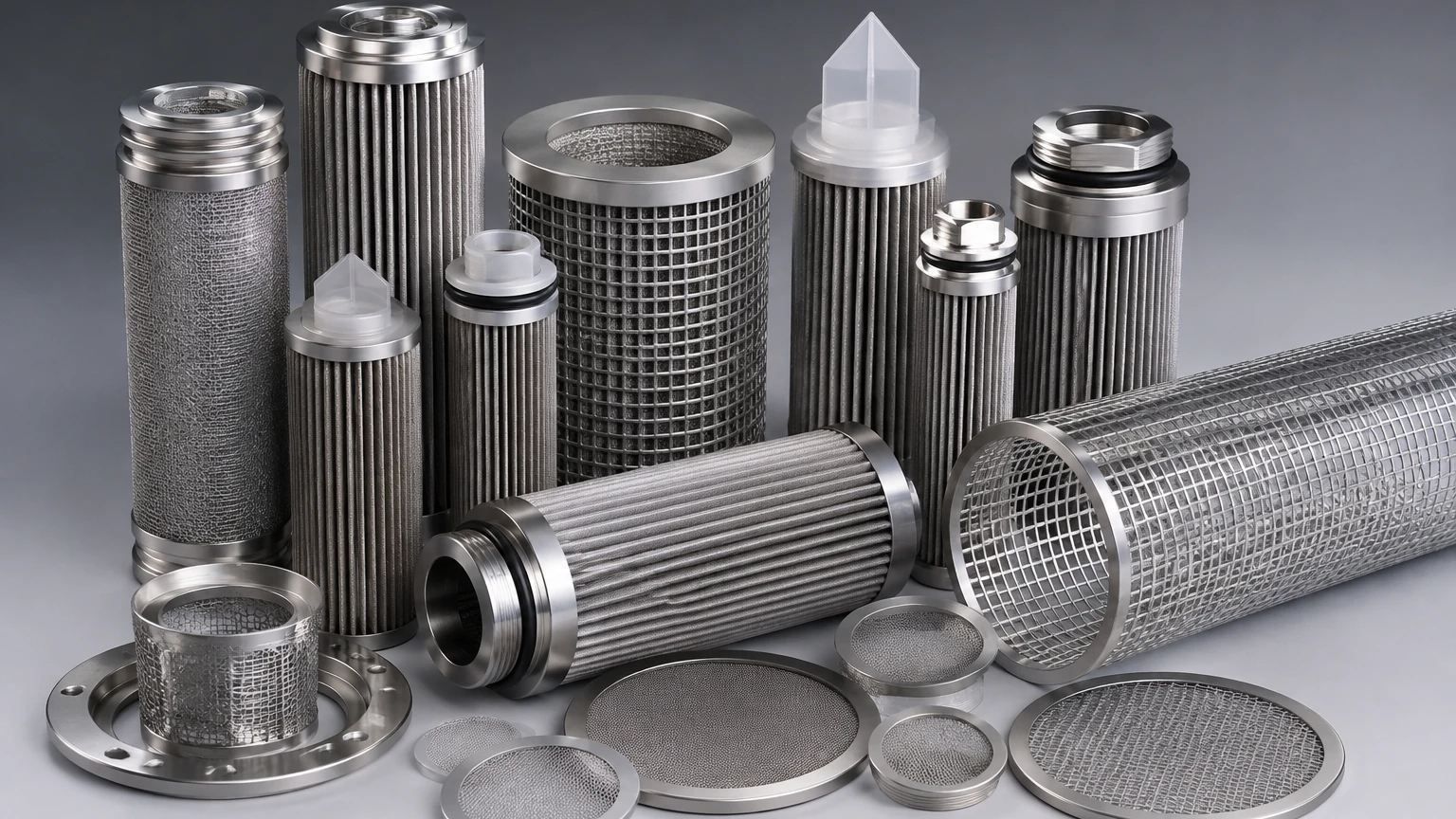
Structured packing, often manufactured from stainless steel wire mesh or corrugated metal sheets, is engineered to spread the liquid solvent into an extremely thin, uniform film. This maximizes the interfacial area. Because the gas must navigate the intricate pathways of the mesh, it is forced into intimate contact with the liquid film.
In these systems, the majority of the mass transfer happens within the "active zone" of the packing. If the liquid distribution is uneven—a phenomenon known as channeling—large portions of the packing remain dry, and the absorption efficiency drops significantly. This highlights the importance of precision-engineered support grids and liquid distributors, which you can explore on our Main Page to understand how high-quality internals prevent these operational failures.
Random Packing vs. Structured Mesh
While random packing (such as Raschig rings or Pall rings) provides decent surface area, structured wire mesh packing offers superior performance in terms of pressure drop and mass transfer efficiency. In structured mesh, the geometric arrangement ensures that the gas-liquid contact is optimized at every millimeter of the material, meaning absorption occurs more uniformly throughout the column height compared to random packing, which may have stagnant zones.
Engineering Factors Influencing Absorption Efficiency
Determining where does most absorption occur is only the first step; engineers must also optimize the conditions at that interface. Several variables dictate the rate at which a gas molecule crosses into the liquid phase:
1. Surface Area Density: This is measured in square meters of surface per cubic meter of volume ($m^2/m^3$). Higher density packing provides more "locations" for absorption to occur.
2. Wetting Rate: If the liquid does not effectively "wet" the stainless steel surface, the effective area for absorption is reduced. Surface treatments and specific wire mesh weaves can enhance the capillary action, ensuring the liquid spreads completely.
3. Contact Time: The residence time of the gas within the packing determines how much solute can be absorbed. Slower gas velocities generally increase contact time but reduce overall throughput.
4. Temperature and Pressure: Most gas absorption processes are exothermic. Lower temperatures and higher pressures generally favor the solubility of gases in liquids, shifting the equilibrium to allow more absorption to occur at the interface.
Material Selection for Corrosive Absorption Environments
Since the site where most absorption occurs is the surface of the internal media, that media must be capable of withstanding the chemical environment. Many industrial absorption processes involve aggressive substances, such as sulfuric acid, ammonia, or chlorinated hydrocarbons.
Stainless Steel 304 vs. 316L
For most standard applications, Type 304 stainless steel provides adequate corrosion resistance and structural integrity. However, in environments where the liquid solvent or the absorbed gas is highly corrosive—such as in flue gas desulfurization—Type 316L is the industry standard. The addition of molybdenum in 316L enhances resistance to pitting and crevice corrosion, ensuring that the high-surface-area mesh does not degrade over time.
Using inferior materials leads to the thinning of the wire mesh, which eventually collapses or clogs the column. When the physical structure where absorption occurs is compromised, the pressure drop increases, and the system may require an unscheduled shutdown for replacement.
Exotic Alloys
In extreme cases involving high temperatures or highly acidic halides, even 316L may be insufficient. In these scenarios, engineers look toward duplex stainless steels or nickel-based alloys. Kaifil specializes in manufacturing these components to precise specifications, ensuring that the filtration and absorption internals meet the rigorous demands of the chemical processing industry.
Optimizing Throughput and Reducing Pressure Drop
A critical challenge in designing the area where most absorption occurs is balancing mass transfer efficiency with pressure drop. A very dense packing will provide immense surface area (increasing absorption), but it will also restrict gas flow, requiring larger, more expensive blowers and increasing energy costs.
Precision-manufactured wire mesh filters and packing allow for a high "void fraction." This means that while there is a large amount of surface area for the liquid film, there is still plenty of open space for the gas to pass through with minimal resistance. For engineers, the goal is to achieve the highest possible mass transfer coefficient ($K_L$ or $K_G$) with the lowest possible pressure drop per meter of packing height.
Maintenance and Replacement of Absorption Internals
Over time, the efficiency of the region where most absorption occurs can diminish due to several factors:
* Fouling: Particulate matter in the gas stream or precipitates from the liquid solvent can coat the packing, reducing the effective surface area.
* Scaling: Mineral deposits can build up on the stainless steel mesh, especially in water treatment or hard-water scrubbing applications.
* Corrosion: Even with high-grade stainless steel, long-term exposure to certain chemicals can lead to surface degradation.
Regular inspection of the column internals is necessary. When the absorption rate drops or the pressure drop exceeds design limits, it is often a sign that the packing needs cleaning or replacement. High-quality stainless steel components are designed for longevity, but they are also designed to be serviceable. Selecting the right micron rating for pre-filtration can significantly extend the life of the absorption packing by removing solids before they reach the column.
Technical Considerations for Purchasing Teams
When sourcing components for absorption columns, purchasing teams and engineers should confirm several technical details to ensure the product matches the application requirements:
* Filtration Accuracy and Mesh Count: For mist eliminators and structured packing, the density of the weave affects both the surface area and the droplet capture efficiency.
* Material Certification: Ensure that the stainless steel used (e.g., 316L) meets international standards to prevent premature failure in corrosive environments.
* Customization Options: Every absorption column is unique. The ability to customize the diameter, thickness, and configuration of the wire mesh internals is vital for a perfect fit and optimal performance.
* Total Cost of Ownership: While high-grade stainless steel internals may have a higher upfront cost than plastic alternatives, their durability, temperature resistance, and recyclability often result in a lower total cost over the system's lifecycle.
In summary, while the question of where does most absorption occur has a simple answer—the gas-liquid interface—the engineering required to optimize that interface is complex. By utilizing advanced stainless steel filtration and packing solutions, industrial facilities can achieve superior absorption efficiency, meet environmental regulations, and maintain stable operational costs. For more information on custom metal filtration components and industrial solutions, visit our Main Page to explore our full range of capabilities.
