


Aerosol Repository Filtration Separator Database
In the landscape of industrial air quality and process safety, the management of airborne particulates and liquid droplets—collectively known as aerosols—is a critical engineering challenge. For sectors ranging from chemical processing to nuclear waste management and pharmaceutical manufacturing, the ability to access a comprehensive aerosol repository filtration separator database is essential for designing systems that ensure environmental compliance and operational efficiency. Such a database serves as a technical foundation, allowing engineers to correlate specific aerosol characteristics with the performance capabilities of various filtration media and separator designs.
Industrial aerosol separation involves the removal of fine solid particles or liquid mists from a gas stream. Unlike coarse dust collection, aerosol filtration often deals with sub-micron particles that behave according to complex physical laws. Selecting the right hardware requires a deep understanding of filtration mechanics, material science, and the specific demands of the application environment.
Understanding the Role of Aerosol Separation in Industrial Environments
Aerosols are generated in numerous industrial processes, including high-pressure hydraulic systems, chemical reactions involving volatile organic compounds (VOCs), and machining processes that utilize coolants. If left unmanaged, these aerosols can lead to equipment fouling, health hazards for personnel, and significant environmental contamination.
An aerosol repository filtration separator database acts as a centralized technical resource where performance data for different filter types—such as stainless steel wire mesh, sintered metal fibers, and coalescing elements—are recorded. By analyzing this data, engineers can determine which separator configuration will provide the necessary efficiency for a given particle size distribution. For instance, in a repository setting where hazardous materials are stored, the filtration system must be capable of near-absolute capture of fine particulates while maintaining structural integrity over long periods.
Kaifil specializes in the manufacturing of these critical components, providing the stainless steel filtration solutions that form the physical backbone of high-performance aerosol separation systems. Our focus is on delivering durability and precision in environments where standard synthetic filters would fail due to temperature, pressure, or chemical reactivity.
The Engineering Logic Behind an Aerosol Repository Filtration Separator Database
The design of an effective aerosol separator is not a one-size-fits-all process. It requires a data-driven approach to match the filter medium to the aerosol’s physical properties. An aerosol repository filtration separator database typically includes parameters such as:
* Particle Size Distribution (PSD): Data on the range of particle sizes present in the gas stream, from large droplets to sub-micron mists.
* Face Velocity: The speed at which the gas moves through the filter medium, which directly impacts filtration efficiency and pressure drop.
* Loading Capacity: How much particulate matter a filter can hold before the pressure drop becomes excessive, signaling the need for cleaning or replacement.
* Removal Efficiency: The percentage of particles captured at specific micron ratings.
By consulting these technical repositories, engineers can simulate how a specific stainless steel mesh or sintered cartridge will perform under varying load conditions. This is particularly important for "repository" applications, which often imply long-term storage or containment where maintenance access may be limited. In these scenarios, the reliability of the filtration data is paramount to ensuring the system operates within safety margins for its entire service life.
Material Selection: Why Stainless Steel Dominates Aerosol Filtration
While synthetic materials like polypropylene or fiberglass are common in general HVAC applications, industrial aerosol separation often demands the robustness of metal. Stainless steel, particularly grades 304 and 316L, is the material of choice for several reasons documented in any technical aerosol repository filtration separator database.
Corrosion and Chemical Resistance
In chemical processing and pharmaceutical environments, aerosols may be acidic, alkaline, or contain organic solvents. Stainless steel provides the necessary resistance to chemical degradation, ensuring that the filter structure does not weaken or shed fibers into the clean gas stream.
Thermal Stability
Many industrial exhaust streams operate at elevated temperatures. Synthetic filters have a low melting point and can lose structural integrity at temperatures exceeding 100°C. Stainless steel filter cartridges can withstand temperatures up to 500°C or higher, depending on the alloy and construction method, making them ideal for high-temperature aerosol separation.
Mechanical Strength
Aerosol separators often face high differential pressures, especially as the filter becomes loaded with particulates. The inherent strength of a stainless steel wire mesh or sintered metal component prevents the media from collapsing or "channeling," which occurs when high pressure forces a path through the filter, bypassing the filtration mechanism entirely.
For more detailed specifications on material performance and available configurations, engineers can visit our Main Page to review our full range of custom filtration solutions.
Technical Parameters for Evaluating Separator Performance
When evaluating a separator for an aerosol repository, engineers must look beyond simple micron ratings. The physics of aerosol capture involves three primary mechanisms: inertial impaction, interception, and Brownian diffusion.
1. Inertial Impaction: Occurs with larger, heavier particles that cannot follow the gas streamlines around a filter fiber and instead collide with it. This is the primary mechanism for particles larger than 1 micron.
2. Interception: Happens when a particle follows a streamline but comes close enough to a fiber to be captured by it. This is critical for mid-sized particles.
3. Brownian Diffusion: Governs the movement of very small particles (typically less than 0.1 microns). These particles move erratically due to collisions with gas molecules, increasing the likelihood that they will contact a filter fiber.
A robust aerosol repository filtration separator database provides the empirical data needed to balance these mechanisms. For example, increasing the density of a wire mesh may improve interception and diffusion but will also increase the pressure drop (resistance to flow). Engineering a separator involves finding the "sweet spot" where efficiency is maximized without creating an energy-intensive pressure barrier.
Customization and OEM Integration for Specialized Applications
In many industrial B2B contexts, off-the-shelf filtration products are insufficient. The specific chemistry of a process or the unique dimensions of a repository vessel may require a custom-engineered solution. This is where the integration of manufacturing expertise and technical data becomes vital.
Kaifil provides extensive OEM capabilities, allowing for the customization of:
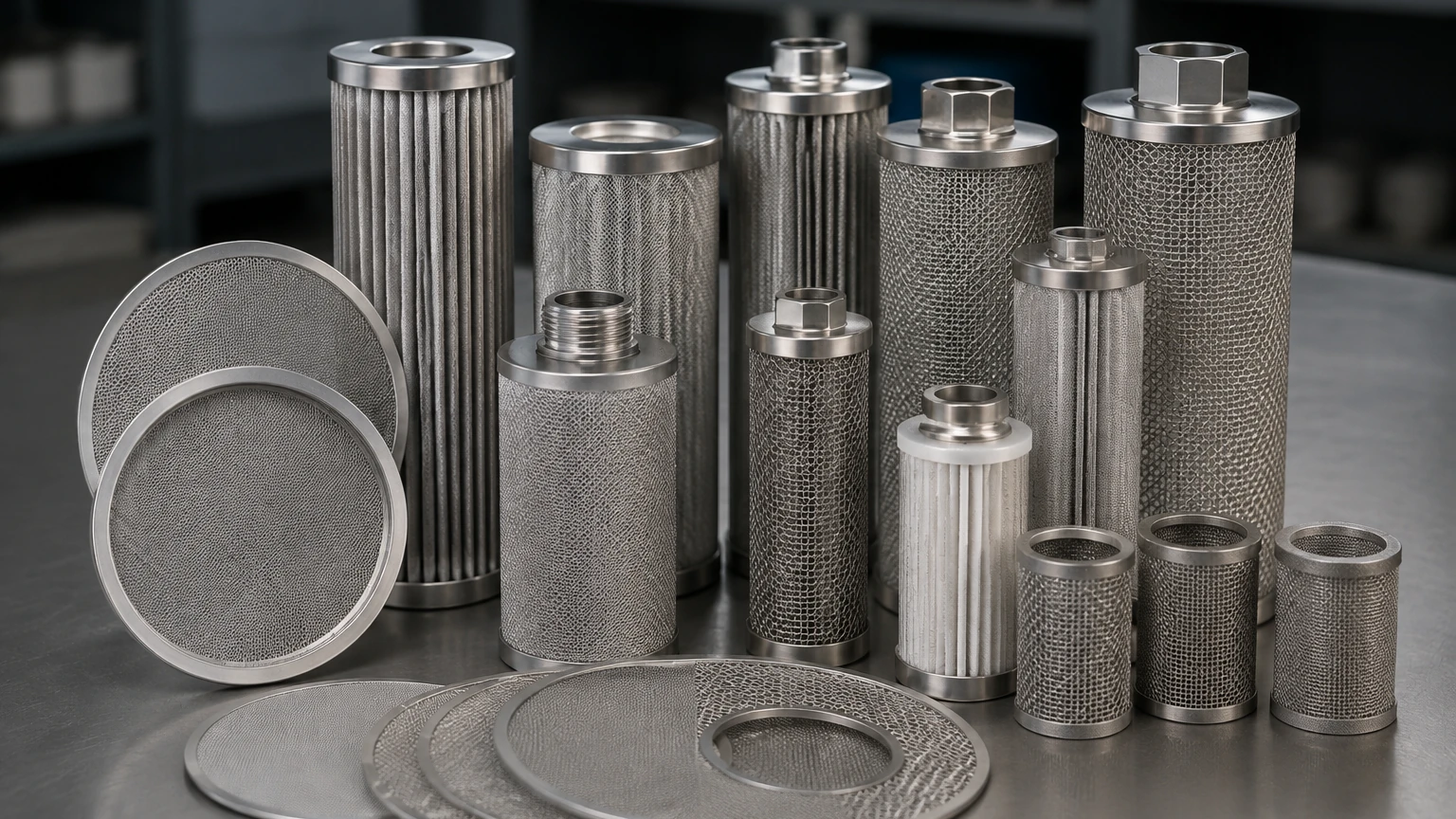
* Filter Geometry: Designing cartridges, discs, or pleated elements that fit into existing separator housings.
* Layering and Pleating: Combining multiple layers of different mesh sizes to create a graduated filtration effect, which extends the life of the filter by capturing larger particles on the outer layers and finer aerosols deep within the media.
* End Fittings: Customizing the connection points (e.g., threaded, flange, or bayonet) to ensure a leak-proof seal within the separator housing.
When developing these custom solutions, the aerosol repository filtration separator database serves as the benchmark. We compare the custom design’s theoretical performance against established data to ensure it meets the required safety and efficiency standards before production begins.
Maintenance Protocols and Total Cost of Ownership (TCO)
One of the primary advantages of stainless steel aerosol separators highlighted in technical databases is their cleanability. Unlike disposable filters, stainless steel components can often be cleaned and reused, which significantly impacts the Total Cost of Ownership (TCO).
Cleaning Methods
* Ultrasonic Cleaning: Uses high-frequency sound waves in a liquid bath to dislodge fine particulates from deep within the mesh or sintered structure.
* Backwashing: Reversing the flow of gas or liquid through the filter to push out accumulated aerosols.
* Chemical Cleaning: Using specific solvents to dissolve resins or oils that have adhered to the metal surface.
Replacement Cycles
While the initial cost of a stainless steel separator is higher than a synthetic alternative, the extended lifecycle and reduced waste often make it the more economical choice over the long term. An aerosol repository filtration separator database helps maintenance teams predict when a filter should be cleaned based on pressure drop trends, preventing unexpected downtime and ensuring the repository remains protected.
Conclusion: Selecting the Right Partner for Aerosol Filtration
The management of industrial aerosols is a complex task that sits at the intersection of safety, environmental responsibility, and process efficiency. Utilizing an aerosol repository filtration separator database allows engineers to move away from guesswork and toward a rigorous, data-driven selection process.
By focusing on high-quality materials like stainless steel and leveraging advanced manufacturing techniques, Kaifil provides the reliable components necessary to build these high-performance systems. Whether you are designing a new containment facility or optimizing an existing chemical process, understanding the technical nuances of aerosol separation is the first step toward a successful installation.
For engineers and purchasing teams seeking to implement durable, precise, and customized filtration solutions, the expertise of a dedicated manufacturer is invaluable. We encourage you to explore our technical resources and product options on our Main Page to find the ideal match for your specific industrial filtration requirements.
Download Aerosol Repository Filtration Separator Database as a PDF
