


Woven Wire Fence Ties: Engineering and Material Selection for Industrial Mesh Support
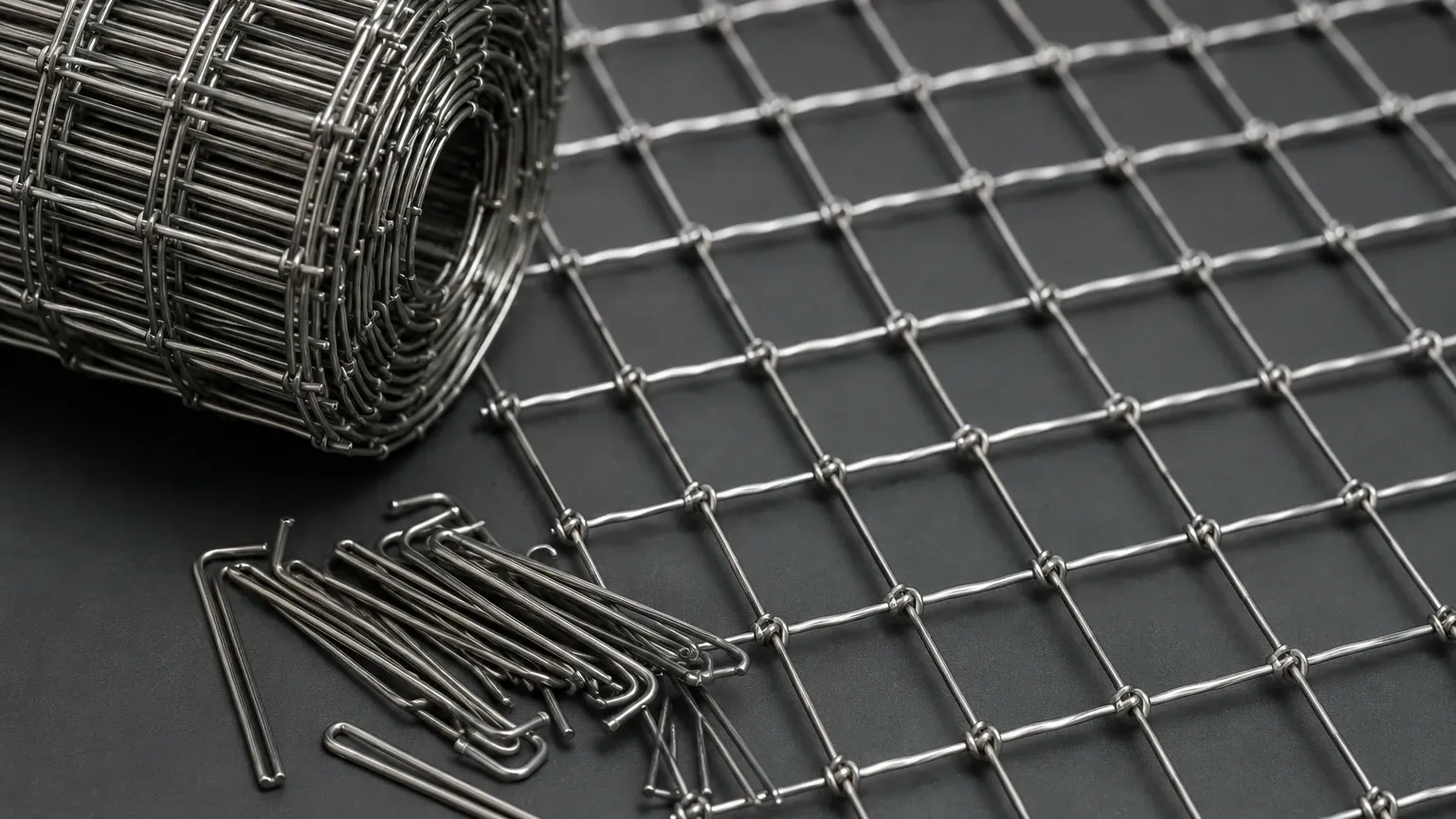
In industrial environments, the integrity of a filtration or screening system depends not only on the quality of the mesh itself but also on the reliability of the fastening components used to secure it. While the term "fence ties" often evokes agricultural applications, in a B2B and industrial context, woven wire fence ties refer to the critical mechanical fasteners used to secure heavy-duty Woven Wire Mesh to structural frames, support cylinders, or perimeter enclosures.
For engineers and procurement teams in chemical processing, food and beverage, and water treatment, selecting the correct tie material and design is essential to prevent bypass, mechanical failure, and corrosion. This guide examines the technical requirements, material considerations, and engineering best practices for securing industrial woven wire components.
The Role of Ties in Industrial Woven Wire Mesh Systems
Industrial Woven Wire Mesh is frequently subjected to high-pressure flows, mechanical vibrations, and thermal expansion. Without robust fastening, the mesh can shift, sag, or detach from its support structure. In filtration applications, even a minor gap caused by a loose tie can lead to "bypass," where unfiltered media escapes the system, potentially contaminating the final product or damaging downstream equipment.
Structural Stability and Tensioning
Properly specified woven wire fence ties ensure that the mesh remains under the correct tension. In screening applications, such as those found in mining or wastewater treatment, tension is vital for maintaining the accuracy of the separation process. If the mesh is allowed to vibrate excessively due to poor fastening, the individual wires may experience fatigue failure at the contact points, significantly shortening the service life of the filter or screen.
Load Distribution
Ties serve to distribute the load across the support frame. When securing large panels of Plain, twill and dutch woven wire mesh in SS304/316L — rolls, cut mesh and framed panels. Send mesh count or micron target for a technical quote., the spacing and strength of the ties determine how well the assembly can withstand external forces, such as the weight of the filtered cake or the impact of high-velocity fluids.
Material Selection: SS304 vs. SS316L
One of the most frequent points of failure in industrial mesh installations is the use of mismatched materials. If a high-grade stainless steel mesh is secured with low-grade or galvanized ties, galvanic corrosion can occur, leading to the rapid degradation of the fastener.
Stainless Steel 304 (SS304)
SS304 is the standard industrial grade for many mesh applications. It offers excellent strength and good corrosion resistance in most atmospheric conditions and mild chemical environments. For indoor industrial partitions, machine guards, or general-purpose water filtration, SS304 ties provide a cost-effective solution that matches the durability of the mesh.
Stainless Steel 316L (SS316L)
In more demanding environments, such as pharmaceutical manufacturing, marine applications, or chemical processing involving chlorides, SS316L is the preferred material. The addition of molybdenum in 316L provides superior resistance to pitting and crevice corrosion. When using 316L Woven Wire Mesh, it is imperative to use 316L ties to maintain the chemical integrity of the entire system. Using a lower grade tie in a corrosive environment creates a weak link that can lead to catastrophic system failure.
Engineering Considerations for Fastening Woven Wire Mesh
When designing or maintaining an industrial filtration system, engineers must consider several technical factors regarding the ties and fastening methods.
1. Mesh Count and Wire Diameter Compatibility
The thickness and strength of the woven wire fence ties must be compatible with the mesh count and wire diameter of the screen. For fine mesh (high mesh count), ties must be applied with care to avoid crushing the delicate wire structure. Conversely, for heavy-duty architectural or industrial screens with large wire diameters, the ties must have sufficient tensile strength to hold the mesh against the frame during thermal expansion.
2. Tie Spacing and Frequency
How often a tie is placed along the support member is a critical calculation. In high-vibration environments, ties should be spaced more closely to minimize the "drumming" effect of the mesh. A common industrial standard for large panels is to place a tie every 6 to 12 inches, though this varies based on the pressure differentials the mesh will encounter.
3. Thermal Expansion and Contraction
Industrial processes often involve significant temperature fluctuations. Stainless steel expands and contracts with heat. If the ties are too rigid or the mesh is over-tensioned without accounting for thermal movement, the wires may snap or the ties may shear. Engineers must select fastening methods that allow for microscopic movement while maintaining structural security.
Common Risks of Improper Fastening
Inadequate selection or installation of woven wire fence ties can lead to several operational risks that impact the total cost of ownership (TCO) of the filtration system.
* Galvanic Corrosion: As mentioned, using dissimilar metals (e.g., a galvanized tie on a stainless mesh) creates an electrochemical reaction that corrodes the less noble metal. This is particularly dangerous in aqueous or humid environments.
* Mechanical Fatigue: If the ties allow the mesh to move even slightly against the support frame, the resulting friction can wear down the wires. This eventually leads to holes in the mesh, compromising filtration accuracy.
* Contamination: In food and pharmaceutical applications, ties must be easy to clean and resistant to the harsh chemicals used in CIP (Clean-In-Place) cycles. Ties with crevices or those made from materials that flake or rust can become sources of microbial growth or particulate contamination.
* System Downtime: The failure of a single tie can lead to a mesh blowout. The cost of the resulting downtime and the replacement of the entire Woven Wire Mesh panel far exceeds the initial cost of high-quality stainless steel ties.
Installation and Maintenance Best Practices
To ensure the longevity of an industrial mesh installation, follow these professional guidelines:
Proper Tensioning Tools
Avoid using generic hand tools that can kink or damage the wire. Use specialized tensioning tools designed for stainless steel ties to ensure uniform tightness across the entire panel. This prevents localized stress concentrations that could lead to premature failure.
Edge Protection
When securing Woven Wire Mesh to a frame, ensure the edges of the mesh are properly finished or shrouded. Ties should be placed over the reinforced edge or a "U-binding" to prevent the tie from pulling through the mesh openings.
Regular Inspection Cycles
In industrial filtration, ties should be inspected during every maintenance shutdown. Look for signs of:
* Pitting or discoloration (corrosion).
* Looseness or shifting of the mesh.
* Fraying of the mesh wires at the tie contact points.
Technical Specifications to Confirm Before Purchase
Before finalizing a procurement order for woven wire fence ties or the associated mesh, purchasing teams should confirm the following data points with their manufacturer:
1. Alloy Grade: Ensure the tie material matches or exceeds the mesh material (e.g., SS304 mesh with SS304 or SS316 ties).
2. Tensile Strength: Confirm that the ties can handle the calculated mechanical load of the application.
3. Chemical Compatibility: Verify that the fastener material is resistant to the specific chemicals, cleaning agents, or solvents used in the process.
4. Dimensional Tolerance: For precision filtration, ensure the tie profile does not interfere with the flow path or the seating of the filter cartridge.
Conclusion
While they may seem like minor components, woven wire fence ties are fundamental to the performance and safety of industrial screening and filtration systems. By selecting high-quality stainless steel fasteners that match the technical specifications of your Woven Wire Mesh, you can significantly reduce the risk of system failure, minimize maintenance costs, and ensure the purity of your industrial output.
For specialized applications requiring custom filtration solutions, working with a manufacturer that understands the nuances of material science and mechanical engineering is essential. Whether you are securing a simple machine guard or a complex pharmaceutical filter, the right combination of mesh and fastening technology is the key to long-term operational success.
