


Woven Wire Mesh Texture: An Engineering Guide to Surface Performance and Selection
In industrial filtration and material processing, the term "texture" as applied to Woven Wire Mesh extends far beyond aesthetic appeal. For engineers and technical procurement teams, the surface texture of a mesh represents a complex interplay of geometric precision, mechanical stability, and fluid dynamics. The physical profile of the mesh—formed by the intersection of warp and shute wires—directly dictates how a component will perform under pressure, how easily it can be cleaned, and how effectively it will retain particles in a liquid or gas stream.
Understanding the nuances of woven wire mesh texture is essential for optimizing filtration efficiency and ensuring the longevity of industrial equipment. This guide examines the technical factors that define mesh texture, the engineering implications of different weave patterns, and the critical selection criteria for demanding B2B applications.
Defining Woven Wire Mesh Texture in Industrial Applications
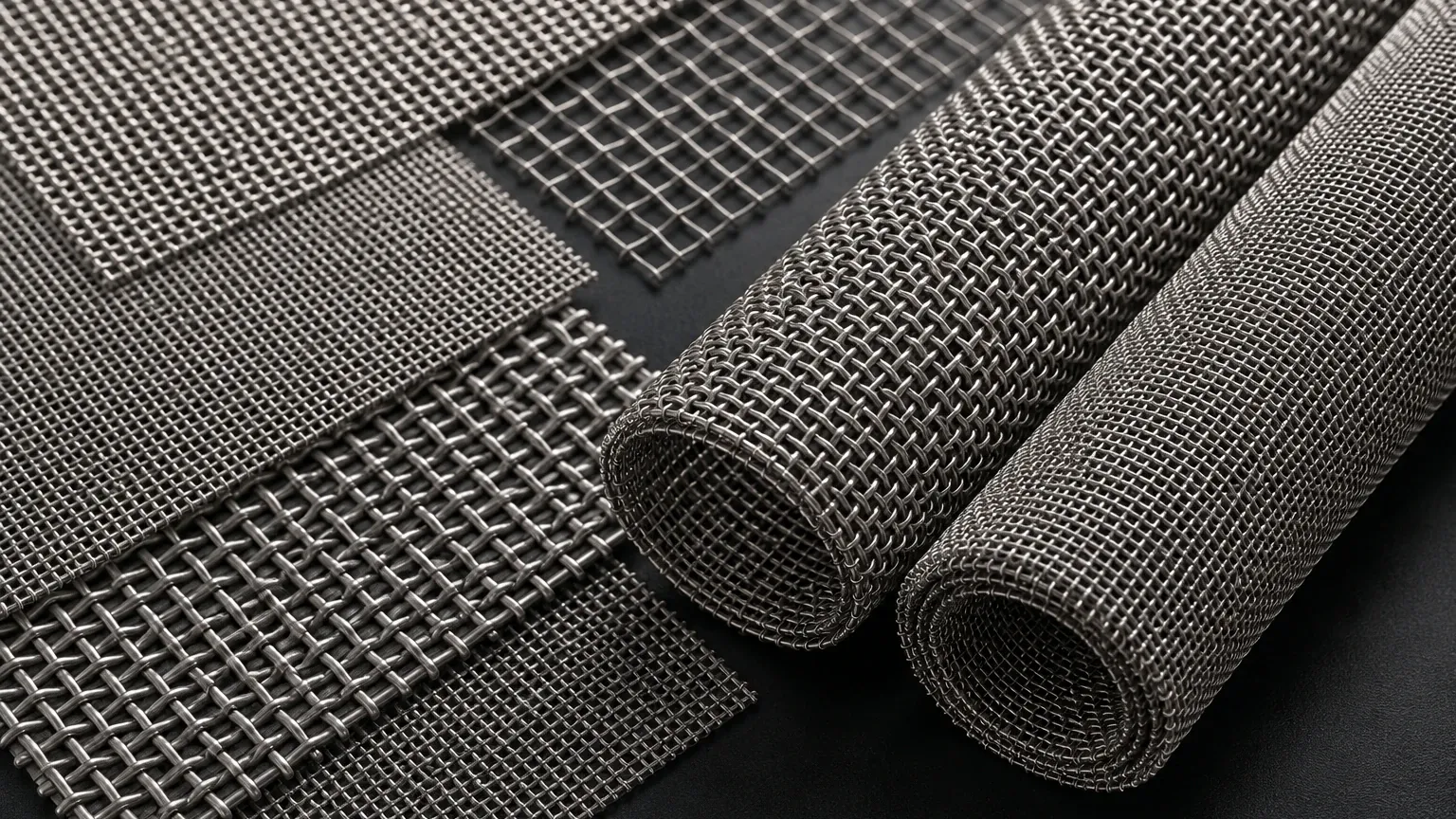
The texture of a woven wire mesh is primarily determined by the weave pattern, the wire diameter, and the mesh count (the number of openings per linear inch). Unlike solid surfaces, mesh texture is three-dimensional. It consists of "knuckles"—the points where wires cross over and under one another—and the resulting apertures.
In high-precision environments, such as pharmaceutical or chemical processing, the height of these knuckles and the regularity of the weave define the "roughness" or "smoothness" of the media. A consistent woven wire mesh texture ensures uniform flow distribution across the entire surface area, preventing localized pressure drops or premature blinding of the filter. When selecting mesh, engineers must consider how this texture interacts with the process media, particularly regarding friction, adhesion, and turbulence.
The Impact of Weave Patterns on Surface Characteristics
The method of interlacing wires creates distinct textural profiles. Each weave type offers a unique balance of mechanical strength and filtration accuracy.
Plain Weave Texture
The most common configuration is the plain weave, where each shute wire passes alternately over and under each warp wire. This results in a symmetrical texture with consistent square openings. From a functional standpoint, plain weave provides a relatively flat surface that is easy to clean and offers predictable flow characteristics. It is the standard choice for general screening and low-pressure filtration.
Twill Weave Texture
In a twill weave, each shute wire passes over and under two warp wires in a staggered pattern. This creates a distinct diagonal texture on the surface. Because the wires are bent less severely than in a plain weave, twill allows for the use of heavier wire diameters relative to the mesh count. This results in a more robust, thicker mesh with a more pronounced surface relief, often used for heavy-duty filtration where mechanical loading is a concern.
Dutch Weave Variations
Dutch weaves (including Plain Dutch and Twill Dutch) are designed specifically for high-performance filtration. By using a limited number of warp wires combined with a maximum number of shute wires driven closely together, a "zero-aperture" or "blind" texture is created. The texture of Dutch woven wire mesh is dense and firm, providing a tortuous path for fluid. This configuration offers superior pressure resistance and the ability to achieve fine micron ratings that are impossible with standard square mesh.
For those evaluating specific weave types for industrial systems, it is helpful to Review product options and application support to determine which geometric configuration aligns with your pressure and retention requirements.
Functional Implications of Mesh Texture: Flow, Friction, and Filtration
The physical profile of the mesh surface influences several critical performance metrics in industrial environments.
1. Cake Release and Cleaning: In solid-liquid separation, the texture of the mesh determines how easily the "filter cake" can be removed during backwashing or mechanical scraping. A smoother texture (low knuckle height) generally facilitates better cake release, reducing downtime and energy consumption during cleaning cycles.
2. Flow Resistance and Turbulence: As fluid passes over the knuckles of the mesh, small vortices can form. In high-velocity applications, a highly textured mesh may increase turbulence and lead to higher pressure drops. Conversely, in certain chemical mixing applications, this turbulence may be a desired characteristic.
3. Abrasive Resistance: In applications involving the processing of slurry or abrasive powders, the texture determines the wear pattern. Protruding knuckles are the first points of contact for abrasive particles. Selecting a weave that minimizes knuckle height or utilizes larger wire diameters can significantly extend the service life of the component.
4. Mechanical Grip: In architectural or industrial safety applications, the texture of the mesh provides necessary friction. For example, in vibrating screens used for mineral processing, the surface texture helps move material across the deck effectively without excessive slippage.
Material Influence: Stainless Steel Grades and Surface Finishes
While the weave pattern defines the geometry, the material and its subsequent treatment define the final surface quality. Kaifil specializes in utilizing high-grade alloys to ensure the woven wire mesh texture remains stable even in corrosive or high-temperature environments.
* SS304/304L: The standard for general industrial use, providing good corrosion resistance and excellent forming properties. The texture remains consistent through standard manufacturing processes.
* SS316/316L: Containing molybdenum, this grade offers superior resistance to chlorides and acids. In pharmaceutical and marine applications, SS316L is preferred because its surface texture is less prone to pitting corrosion, which could otherwise compromise the integrity of the filtration apertures.
* Surface Finishing: Post-weaving treatments such as electropolishing or calendering can modify the texture. Calendering—a process of passing the mesh through heavy rollers—flattens the knuckles, creating a smoother, thinner mesh with higher dimensional stability. Electropolishing removes microscopic burrs and smooths the surface at a molecular level, which is critical for preventing bacterial growth in food and beverage applications.
Evaluating Texture for High-Performance Filtration Systems
When specifying Woven Wire Mesh for a new project, engineers should move beyond simple mesh counts and look at the total geometric profile. Key evaluation criteria include:
* Effective Open Area: How much of the surface is actually available for flow? A higher texture (thicker wires) may reduce the open area, increasing the velocity through each pore.
* Pore Geometry: Are the openings square, rectangular, or triangular (as in some Dutch weaves)? The shape of the pore, combined with the texture, determines the shape-selective retention of particles.
* Thickness (Standard vs. Calendered): The overall thickness of the mesh affects its integration into filter housings and its resistance to deformation under differential pressure.
For technical teams, obtaining Plain, twill and dutch woven wire mesh in SS304/316L — rolls, cut mesh and framed panels. Send mesh count or micron target for a technical quote. is a necessary step to ensure that the material delivered meets the exact tolerances required for precision engineering.
Common Risks and Quality Assurance in Woven Wire Mesh Production
Maintaining a consistent texture across large rolls of mesh requires rigorous manufacturing controls. Deviations in texture can lead to catastrophic failures in industrial systems. Common risks include:
* Wire Displacement: If the weaving tension is not correctly managed, wires can shift, leading to irregular aperture sizes and an inconsistent surface profile. This is particularly dangerous in safety-critical hydraulic filtration.
* Surface Contamination: During the weaving process, lubricants or metallic dust can become trapped in the texture of the mesh. High-quality manufacturers like Kaifil utilize ultrasonic cleaning to ensure the mesh is free of residues before delivery.
* Mechanical Damage: Scratches or "draw marks" on the wire itself can create weak points. A visual and tactile inspection of the mesh texture is a standard part of quality control to ensure the structural integrity of the wire remains intact.
Selection Criteria: Aligning Texture with Application Requirements
To select the optimal woven wire mesh texture, purchasing and engineering teams should confirm the following details before finalizing a specification:
1. Operating Environment: Will the mesh be exposed to high pressures, corrosive chemicals, or extreme temperatures? This dictates the material grade and weave density.
2. Particle Characteristics: Are the particles being filtered hard, soft, spherical, or irregular? Irregular particles may require a more complex Dutch weave texture to prevent "pinning" (where particles become stuck in the mesh).
3. Cleaning Method: If the system uses automated backpulsing, a calendered (flattened) texture may be superior to prevent particle entrapment.
4. Structural Requirements: Does the mesh need to be self-supporting, or will it be pleated or backed by a coarser support mesh? The stiffness of the texture plays a role in how the mesh behaves during fabrication.
Conclusion
The texture of woven wire mesh is a fundamental engineering property that influences every aspect of industrial filtration and separation. From the simple regularity of a plain weave to the dense, high-pressure capabilities of a Dutch weave, the surface profile must be matched to the specific demands of the application. By focusing on material quality, weave precision, and the functional impact of surface geometry, engineers can ensure their systems operate with maximum efficiency and minimal maintenance. For customized solutions that meet stringent industrial standards, selecting a manufacturer with deep technical expertise in stainless steel filtration is the most reliable path to project success.
