


Gravity Oil Water Separator
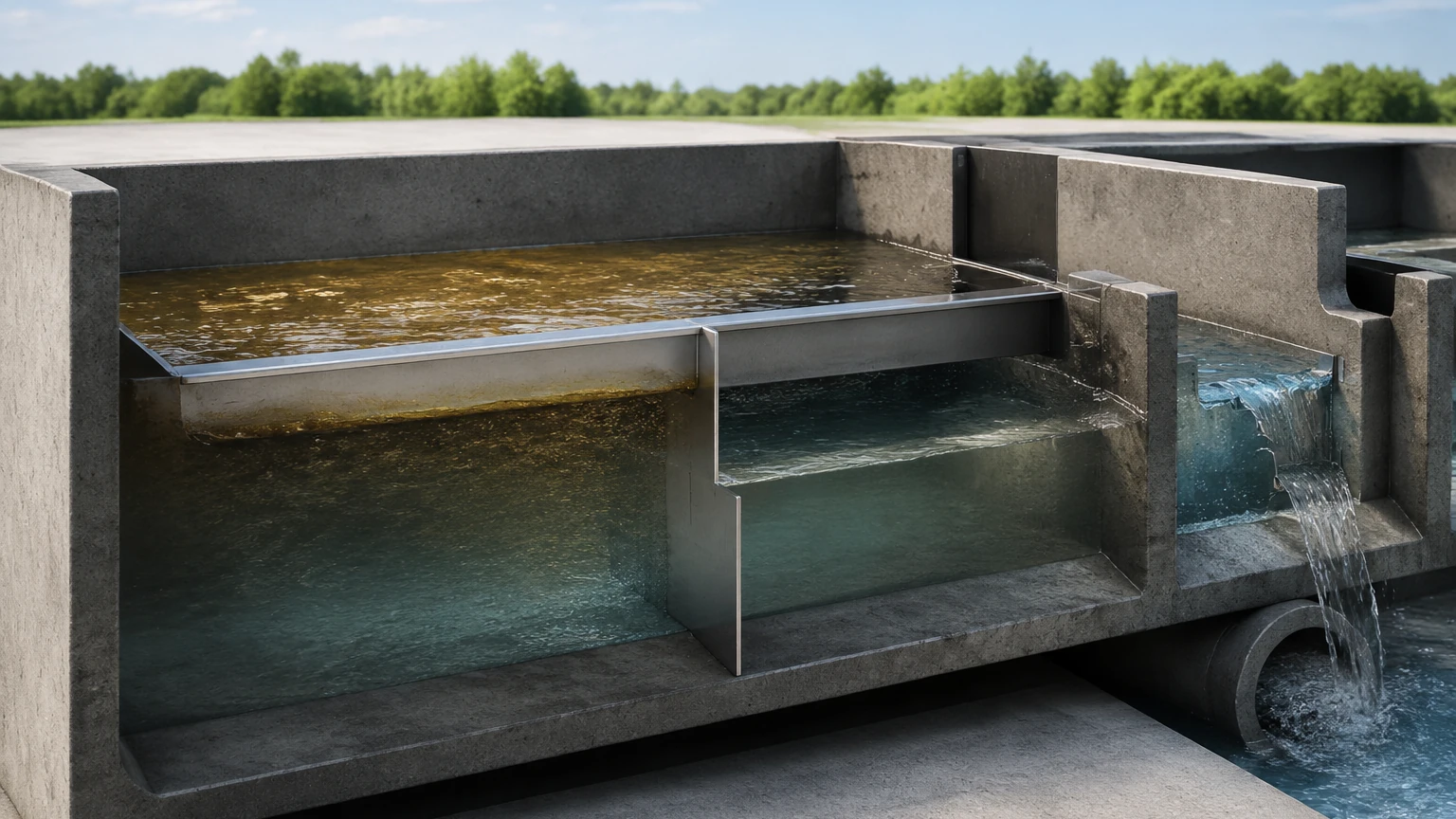
In industrial wastewater treatment and process engineering, the gravity oil water separator remains a fundamental technology for the primary treatment of oily water streams. Designed to separate non-emulsified oils, greases, and suspended solids from water, these systems rely on the physical principle of differential gravity. For engineers and facility managers, understanding the technical nuances of these systems—ranging from fluid dynamics to the selection of high-performance internal filtration components—is essential for ensuring regulatory compliance and protecting downstream equipment.
As industrial processes become more complex, the demand for durable, corrosion-resistant components within these separators has increased. Utilizing precision-engineered stainless steel mesh and filter cartridges can significantly enhance the efficiency of a gravity oil water separator by facilitating coalescence and providing fine particulate removal. This guide explores the engineering principles, design considerations, and material requirements necessary for optimizing industrial oil-water separation.
The Principles of Gravity-Based Separation
The operation of a gravity oil water separator is governed primarily by Stokes' Law, which describes the rise velocity of an oil droplet in a water column. Because oil has a lower specific gravity than water, it naturally tends to float to the surface, provided the turbulence of the flow does not overcome the buoyancy of the oil droplets.
Understanding Stokes' Law
Stokes' Law calculates the settling (or rising) velocity of a spherical particle moving through a viscous fluid. In the context of oil-water separation, the formula considers the following variables:
- The density difference between the water and the oil.
- The viscosity of the continuous phase (water).
- The size of the oil droplet.
Mathematically, the rise velocity is proportional to the square of the droplet diameter. This means that larger oil droplets rise significantly faster than smaller ones. In a standard gravity separator, the goal is to provide sufficient retention time and a laminar flow environment to allow these droplets to reach the surface before the water exits the tank.
Laminar vs. Turbulent Flow
For effective separation, the flow within the separator must be laminar. Turbulent flow creates eddies that can re-entrain oil droplets or break them into smaller, harder-to-separate particles. Engineers design these systems with specific Reynolds numbers in mind, often utilizing internal baffles and flow distributors to ensure the fluid moves uniformly across the cross-section of the separator.
Design Parameters for Industrial Oil-Water Separators
Designing or selecting a gravity oil water separator requires a detailed analysis of the influent characteristics. A "one-size-fits-all" approach often leads to premature failure or non-compliance with environmental discharge limits.
Retention Time and Tank Geometry
Retention time is the duration the oily water remains in the separator. It must be long enough for the target droplet size (typically 150 microns in standard API separators) to rise to the surface. Tank geometry, including the length-to-width ratio, is optimized to prevent "short-circuiting," where water travels directly from the inlet to the outlet without allowing for full separation.
Influent Oil Concentration and Type
Gravity separators are most effective at removing "free oil"—droplets that are not chemically or mechanically emulsified. If the influent contains high concentrations of surfactants or detergents, the oil may become emulsified, reducing the effectiveness of simple gravity separation. In such cases, secondary treatment or the integration of coalescing media is required.
Temperature Effects
Temperature significantly impacts the viscosity of water. As water temperature increases, its viscosity decreases, allowing oil droplets to rise more quickly. Conversely, in cold-weather applications, the separator may require a larger footprint or internal heating elements to maintain separation efficiency.
The Role of Coalescing Media in Enhancing Gravity Separation
While traditional gravity separators rely purely on residence time, modern industrial units often incorporate coalescing media to improve performance and reduce the overall equipment footprint. This is where precision-engineered components, such as those found on the Main Page of specialized manufacturers, play a critical role.
How Coalescence Works
Coalescing media provides a high surface area for small oil droplets to collide and merge into larger droplets. As these droplets grow in size, their rise velocity increases exponentially according to Stokes' Law. This allows the separator to capture smaller oil droplets (often down to 20 or 30 microns) that would otherwise escape a standard gravity tank.
Stainless Steel Wire Mesh and Structured Media
In demanding industrial environments, such as petrochemical or chemical processing, the choice of coalescing material is vital. Stainless steel wire mesh is frequently used due to its durability and specific surface properties.
- Surface Tension: The metallic surface can be treated or selected to be oleophilic (oil-attracting), which encourages oil droplets to attach to the mesh and coalesce.
- Structural Integrity: Unlike plastic media, stainless steel mesh can withstand high temperatures and aggressive chemical cleaning cycles without deforming or degrading.
Material Engineering: Why Stainless Steel is Standard
The internal components of a gravity oil water separator are constantly exposed to corrosive elements, including salts, acidic process fluids, and various hydrocarbons. Selecting the correct alloy is a critical engineering decision that affects the total cost of ownership.
Grade 304 vs. 316L Stainless Steel
- Type 304: Suitable for general industrial applications where moderate corrosion resistance is required. It is commonly used for baffles, supports, and standard mesh screens.
- Type 316L: Contains molybdenum, which provides superior resistance to chlorides and pitting. This is the preferred choice for marine environments, pharmaceutical processes, and chemical plants where the wastewater may have a low pH or high salt content.
Longevity and Maintenance
Stainless steel components offer a significantly longer service life than carbon steel or plastic alternatives. They are resistant to the mechanical wear caused by suspended solids and do not suffer from UV degradation if parts of the system are exposed to sunlight. Furthermore, stainless steel's smooth surface finish prevents the excessive buildup of biofilms and scale, which can clog coalescing media and reduce flow rates.
Performance Evaluation and Sizing Considerations
When evaluating a gravity oil water separator for a specific project, engineers must confirm several performance metrics to ensure the system meets local and federal discharge regulations (such as the Clean Water Act in the US or similar international standards).
Effluent Quality Standards
Most industrial discharge permits limit oil and grease (O&G) concentrations to 15 mg/L or lower. A standard gravity separator might achieve 50-100 mg/L, whereas a unit equipped with high-efficiency coalescing plates or stainless steel mesh filters can consistently reach sub-20 mg/L levels. It is essential to define the required effluent quality before finalizing the separator design.
Flow Rate Variations
Industrial processes rarely produce a constant flow. Surge flows—caused by heavy rainfall in outdoor areas or batch processing in factories—can overwhelm a separator. Engineers must size the unit based on the peak flow rate rather than the average flow to prevent the washout of captured oil.
Solid Loading
Gravity separators also act as grit chambers. Heavy solids will settle to the bottom of the tank. If the influent has a high solids content, the design must include a sloped bottom and a reliable sludge removal system to prevent the solids from occupying the volume intended for water treatment.
Maintenance and Lifecycle Management of Filtration Components
A gravity oil water separator is not a "set and forget" system. Regular maintenance is required to ensure the internals remain functional and the effluent remains within limits.
Cleaning Coalescing Media
Over time, coalescing media can become fouled with heavy oils, waxes, or biological growth. Stainless steel mesh filters are advantageous here because they can be cleaned using high-pressure steam, chemical solvents, or ultrasonic baths. This restorability is a key factor in reducing long-term operational costs compared to disposable media.
Monitoring Oil Levels
Automated sensors or manual dipsticks are used to monitor the thickness of the accumulated oil layer. If the oil layer becomes too thick, it can be re-entrained into the water stream. Scheduled skimming or pumping is necessary to maintain the separation zone.
Inspection of Seals and Baffles
Internal bypass is a common cause of poor performance. If water can leak around a baffle or a filter cartridge rather than passing through it, the efficiency of the system drops. Regular inspections of gaskets, seals, and the structural integrity of stainless steel components are essential.
Selecting a Partner for Custom Filtration Solutions
For many industrial applications, off-the-shelf separators do not provide the necessary precision or durability. Custom-engineered filtration components are often required to fit specific tank dimensions or to handle unique chemical compositions. When sourcing these components, it is important to work with a manufacturer that understands the technical requirements of industrial filtration.
Technical professionals should look for suppliers who offer:
- Material Certification: Ensuring the stainless steel used meets ASTM or ISO standards.
- Custom Fabrication: The ability to produce wire mesh, filter cartridges, and internal components to exact specifications.
- Engineering Support: Assistance in determining the correct micron rating or mesh density for specific oil droplet sizes.
By focusing on high-quality materials and precise engineering, companies can ensure their gravity oil water separator operates at peak efficiency for years. For more information on specialized stainless steel filtration components and OEM solutions, engineers can Review product options and application support to find the right fit for their specific industrial requirements.
Conclusion
The gravity oil water separator remains a cornerstone of industrial fluid management. While the basic concept is simple, the successful implementation of these systems requires careful attention to fluid dynamics, material science, and maintenance protocols. By integrating advanced coalescing media and durable stainless steel components, engineers can achieve superior separation performance, meet stringent environmental standards, and ensure the long-term reliability of their wastewater treatment infrastructure. Choosing the right materials and understanding the underlying physics of separation are the first steps toward an optimized and cost-effective filtration solution.
