


Sintered Mesh
In the landscape of industrial filtration, the requirement for materials that combine high mechanical strength with precise filtration accuracy has led to the widespread adoption of sintered mesh. Unlike standard woven wire cloth, which may suffer from pore migration or structural deformation under high pressure, sintered mesh provides a stabilized, integrated structure through a specialized thermal bonding process. For engineers and procurement specialists, understanding the technical nuances of this material is essential for optimizing filtration efficiency and ensuring the longevity of industrial equipment.
Sintered mesh is a porous material created by stacking multiple layers of stainless steel wire mesh and bonding them together using a process known as vacuum sintering. This process involves high temperature and pressure in a controlled environment, causing the contact points of the individual wires to fuse through diffusion bonding. The result is a single, robust sheet that retains the filtration characteristics of the original mesh while gaining significant mechanical integrity. For those seeking comprehensive filtration solutions, visiting the Main Page of a specialized manufacturer like Kaifil provides a deeper look into how these components are integrated into broader industrial systems.
The Sintering Process and Material Science
The production of sintered mesh begins with the selection of high-quality stainless steel wire mesh, typically in grades such as 304, 316, or 316L. The choice of material is critical, as it determines the chemical resistance and thermal limits of the final product. 316L stainless steel is often preferred in chemical and pharmaceutical applications due to its superior resistance to pitting and crevice corrosion in chloride-rich environments.
During the vacuum sintering process, the layered mesh is placed in a furnace where temperatures reach just below the melting point of the alloy. Under vacuum conditions, atoms migrate across the contact points of the overlapping wires, creating a molecular bond. This diffusion bonding eliminates the need for binders or adhesives, which could otherwise contaminate the process fluid. Because the wires are fused at every intersection, the pore size remains fixed even under extreme mechanical stress, a feature that distinguishes sintered mesh from traditional multi-layer mesh packs held together by mechanical pressure alone.
Structural Configurations: The Five-Layer Standard
While sintered mesh can be customized with various layer counts and configurations, the five-layer structure is the industry standard for general industrial filtration. This configuration is engineered to balance filtration precision, permeability, and mechanical support. Understanding the function of each layer is vital for engineers when specifying a filter for a new system.
1. The Protection Layer: The outermost layer on the upstream side, designed to protect the fine filter layer from physical damage during handling and installation. It also serves to pre-filter larger particles, preventing premature blinding of the finer internal layers.
2. The Filter Control Layer: This is the most critical component, consisting of a high-precision woven wire mesh that dictates the micron rating of the entire assembly. Because it is protected and supported by adjacent layers, it can be made of very fine wire to achieve high filtration accuracy without sacrificing durability.
3. The Dispersion Layer: Positioned directly behind the filter layer, this mesh helps distribute the fluid flow evenly across the filtration surface. By preventing localized high-velocity zones, it ensures that the entire surface area of the filter is utilized, extending the time between cleaning cycles.
4. The Support Layer: This layer provides the primary structural rigidity. It is typically a coarser mesh with thick wires that can withstand the differential pressure across the filter. It prevents the finer layers from collapsing or deforming under the weight of the fluid or the accumulation of filter cake.
5. The Reinforcement Layer: The final downstream layer, providing additional mechanical strength and ensuring the flatness and stability of the entire sintered sheet. This layer is essential when the mesh is fabricated into pleated cartridges or large-scale filter plates.
Key Performance Advantages in Industrial Applications
Sintered mesh offers several distinct advantages over other filtration media, such as ceramic, paper, or non-sintered cloth. These benefits are particularly relevant in heavy-duty industrial environments where downtime is costly.
Mechanical Strength and Stability
Because the layers are fused at the molecular level, sintered mesh possesses exceptional mechanical strength. It can withstand high operating pressures and high differential pressures (the difference in pressure between the inlet and outlet). This structural stability ensures that the pore geometry does not change during operation, providing consistent filtration performance throughout the life of the filter.
Thermal and Chemical Resistance
Stainless steel sintered mesh can operate in temperatures ranging from -200°C to 600°C, depending on the alloy and the atmosphere. This makes it suitable for cryogenic applications as well as high-temperature gas filtration. Furthermore, its resistance to a wide range of acids, alkalis, and organic solvents allows it to be used in aggressive chemical processing environments where polymer-based filters would fail.
High Permeability and Low Pressure Drop
Despite its multi-layer construction, sintered mesh is designed to maintain high porosity. The precise alignment of the layers ensures that the flow path remains relatively unobstructed, resulting in a lower initial pressure drop. For the end-user, this translates to lower energy consumption for pumps and compressors and higher flow rates for a given filter surface area.
Engineering Selection Criteria for Sintered Mesh
Selecting the appropriate sintered mesh requires a detailed analysis of the application’s operating parameters. Engineers should consider the following factors to ensure the selected filter meets the required performance standards.
Micron Rating and Filtration Efficiency
Sintered mesh is available in absolute micron ratings, typically ranging from 1 micron to 200 microns. It is important to distinguish between "nominal" and "absolute" ratings. An absolute rating implies that 99.9% of particles larger than the specified micron size will be captured. For critical applications, such as pharmaceutical sterile filtration or hydraulic system protection, absolute ratings are mandatory.
Fluid Characteristics
The viscosity, density, and chemical composition of the fluid will influence the choice of mesh. High-viscosity fluids may require a larger surface area or a coarser support structure to maintain flow. Additionally, the presence of corrosive agents will dictate whether standard 304 stainless steel is sufficient or if a higher-grade alloy like Monel, Inconel, or 316L is required.
Operating Environment
Engineers must account for the maximum operating pressure and the potential for pressure spikes. The mechanical load on the filter increases as the filter cake builds up, so the support layers must be sized to handle the maximum expected differential pressure before cleaning. Thermal cycling should also be considered, as repeated expansion and contraction can stress the bonds in lower-quality sintered products.
Common Industrial Applications and Use Cases
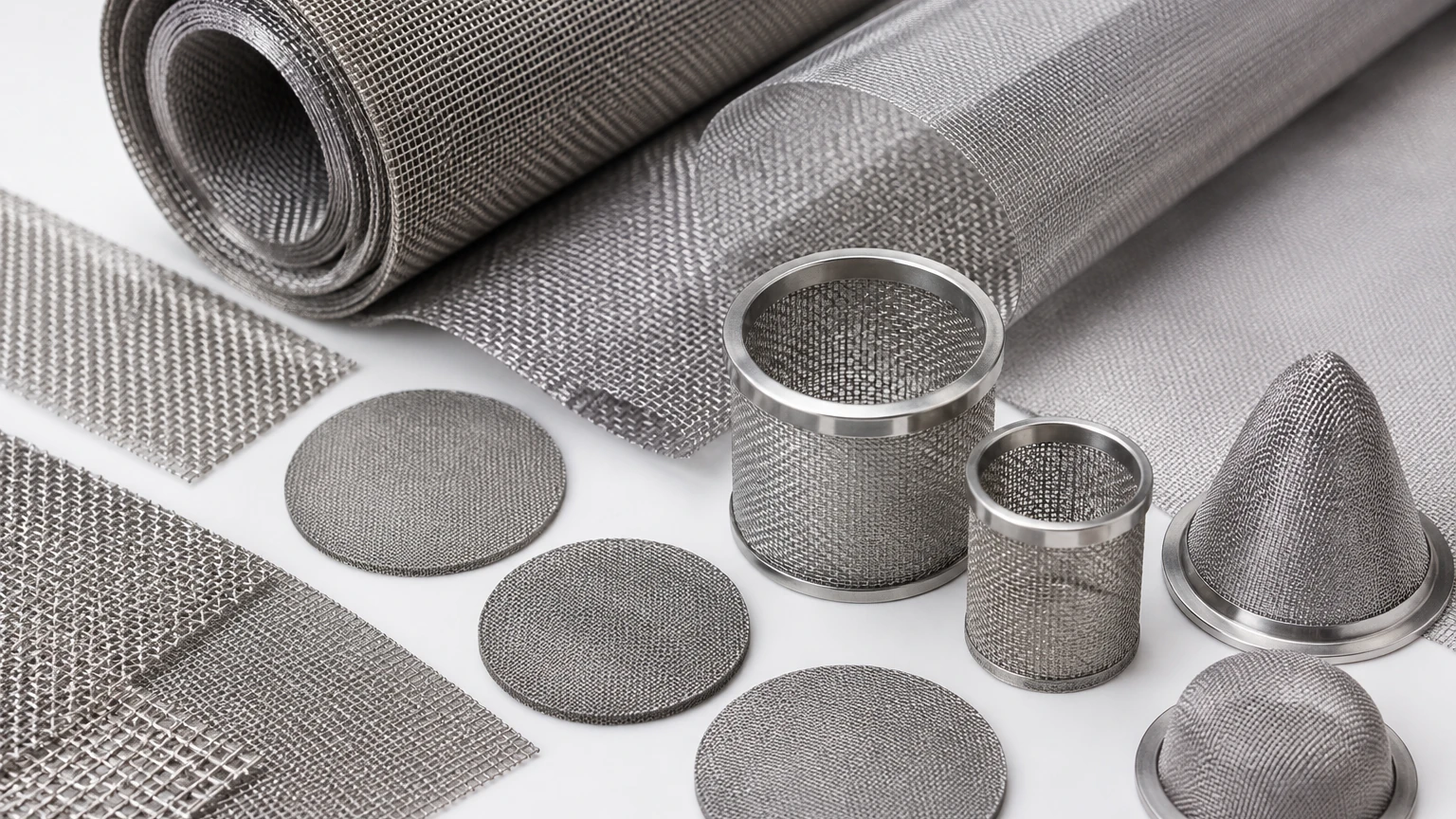
The versatility of sintered mesh allows it to be used across a broad spectrum of industries. Its ability to be fabricated into various shapes, including discs, cylinders, and pleated cartridges, makes it a preferred choice for OEM equipment manufacturers.
* Chemical Processing: Used for the filtration of catalysts, aggressive solvents, and high-purity chemicals. The cleanability of the mesh allows for the recovery of expensive catalysts.
* Food and Beverage: Sintered mesh is used in the filtration of edible oils, beverages, and steam. Its stainless steel construction meets stringent food safety standards, and its resistance to high temperatures allows for effective Clean-in-Place (CIP) sterilization.
* Pharmaceutical Industry: In the production of Active Pharmaceutical Ingredients (APIs), sintered mesh is used in nutsche filters and dryers. The smooth surface of the mesh facilitates easy cake discharge and prevents cross-contamination between batches.
* Oil and Gas: Sintered mesh filters protect high-pressure injection nozzles and serve as sand screens in downhole applications. Their ability to withstand high-velocity fluid flow without eroding is a critical advantage in this sector.
* Aerospace and Defense: Used in hydraulic systems and fuel filtration where reliability is paramount. The high strength-to-weight ratio of sintered mesh is particularly valued in these applications.
Maintenance, Cleaning, and Service Life Optimization
One of the most significant total cost of ownership (TCO) advantages of sintered mesh is its reusability. Unlike disposable depth filters, sintered mesh can be cleaned and returned to service multiple times, significantly reducing waste and replacement costs.
Cleaning Methods
The fixed pore structure of sintered mesh makes it highly responsive to various cleaning techniques:
* Backwashing/Backflushing: Using a clean fluid or gas to flow in the reverse direction through the mesh to dislodge particles trapped on the surface.
* Ultrasonic Cleaning: Using high-frequency sound waves in a cleaning solution to create cavitation bubbles that remove fine particles from deep within the mesh layers.
* Chemical Cleaning: Using solvents, acids, or alkalis to dissolve accumulated contaminants. Because the mesh is made of stainless steel, it can withstand aggressive chemical baths that would destroy other media.
* Thermal Cleaning: In cases where organic contaminants are present, the mesh can be heated in a controlled furnace to burn off the debris, provided the temperature remains within the limits of the alloy.
Determining Replacement Cycles
While sintered mesh is durable, it is not infinite. Over time, repeated cleaning and exposure to high pressures may lead to work hardening or the gradual accumulation of irrecoverable fouling. Monitoring the "clean pressure drop" after each cleaning cycle is the best way to determine the health of the filter. When the clean pressure drop significantly exceeds the original baseline, it is usually an indication that the mesh has reached the end of its effective service life.
Conclusion
Sintered mesh represents a pinnacle of filtration engineering, offering a unique combination of precision, strength, and longevity. For industrial operations, the transition to sintered metal media often results in improved product purity, reduced maintenance intervals, and a more sustainable filtration process. By carefully considering material grades, layer configurations, and cleaning protocols, engineers can leverage sintered mesh to solve the most demanding filtration challenges. To explore specific product specifications and customization options for your application, refer to the Main Page for technical support and manufacturing capabilities.
