


Suction Machine Filter
In industrial and medical vacuum systems, the suction machine filter serves as a critical barrier between the point of suction and the vacuum pump. Its primary function is to remove particulate matter, aerosols, and liquids that could otherwise compromise the integrity of the pump, contaminate the environment, or disrupt the process flow. For engineers and procurement professionals, selecting the appropriate filtration component is not merely a matter of fitment but a complex decision involving material science, fluid dynamics, and long-term operational efficiency.
As a specialized manufacturer of stainless steel filtration solutions, Kaifil provides precision-engineered components designed to meet the rigorous demands of high-vacuum applications. Understanding the technical nuances of a suction machine filter is essential for optimizing system performance and extending the service life of expensive vacuum equipment.
The Role of Filtration in Vacuum and Suction Systems
Suction systems operate by creating a pressure differential that draws air or fluid through a nozzle or intake. This process inherently pulls in debris, fine dust, or moisture. Without an effective suction machine filter, these contaminants enter the vacuum pump mechanism. In rotary vane pumps, particulates can cause abrasive wear on the vanes and cylinder walls; in liquid ring pumps, they can contaminate the sealant fluid; and in dry screw pumps, they can lead to catastrophic seizure.
Beyond pump protection, suction filters are vital for process purity. In pharmaceutical and food processing environments, the filter ensures that no external contaminants are introduced into the vacuum line, maintaining a sterile or clean-room-compliant atmosphere. The filtration stage is essentially the first line of defense in maintaining the "health" of the entire vacuum circuit.
Material Engineering: Why Stainless Steel is the Standard for Industrial Suction
While disposable plastic or paper filters may suffice for light-duty applications, industrial-grade suction machine filters typically utilize stainless steel—specifically grades 304, 316, or 316L. The choice of material is dictated by the chemical composition of the intake stream and the operating environment.
Corrosion and Chemical Resistance
In chemical processing or medical waste suction, the filter is often exposed to corrosive vapors or aggressive cleaning agents. Stainless steel 316L, with its addition of molybdenum, offers superior resistance to pitting and crevice corrosion. This ensures that the filter mesh maintains its structural integrity and pore size accuracy over hundreds of cleaning cycles.
Thermal Stability
Vacuum processes often involve elevated temperatures, either from the process itself or from the heat generated by the pump. Unlike polymer-based media that may soften or off-gas under thermal stress, stainless steel filters remain stable, ensuring that the filtration rating does not drift during operation.
Structural Integrity under Vacuum
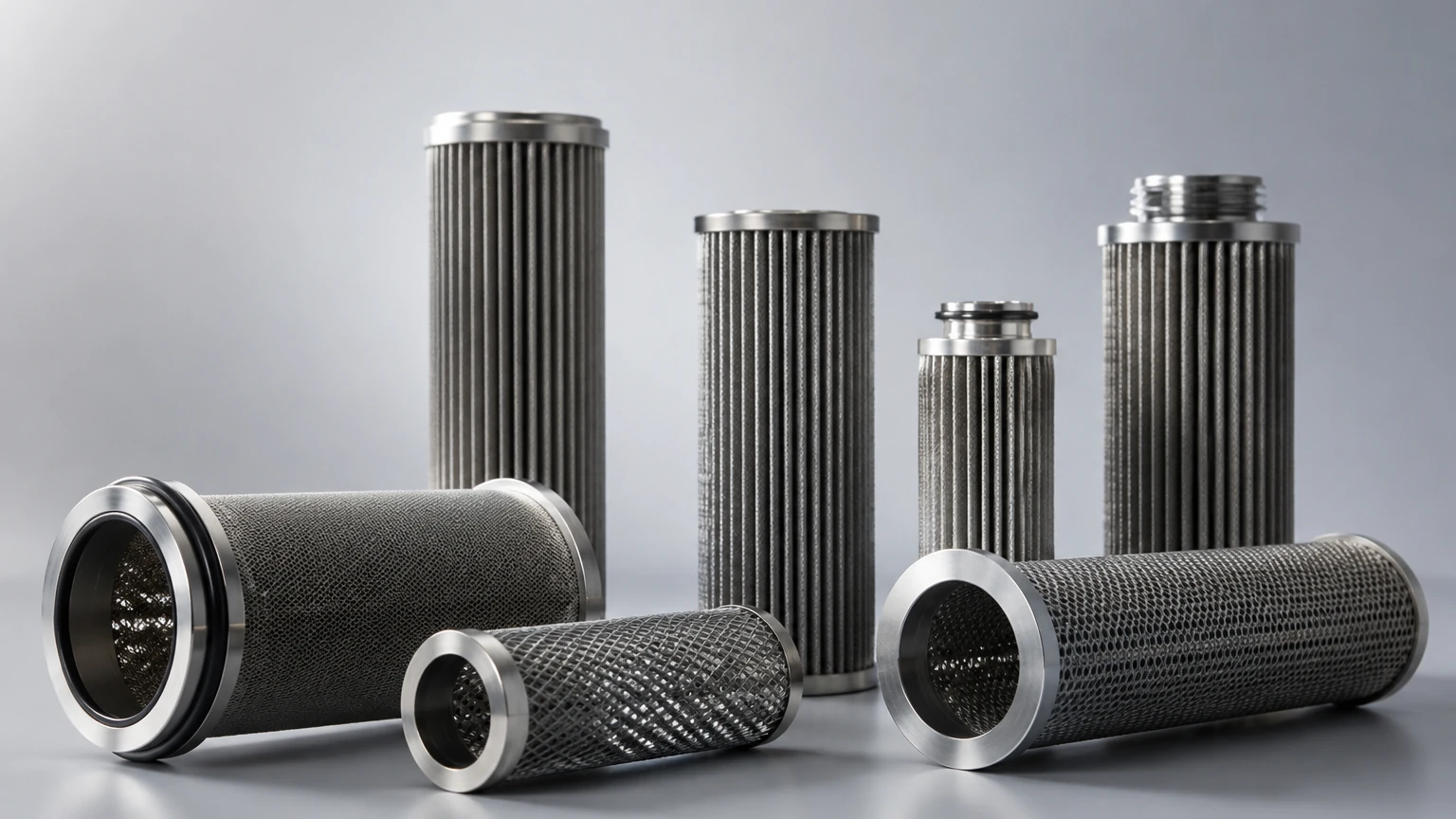
One of the most significant challenges in suction filtration is the risk of media collapse. As the filter accumulates debris, the differential pressure ($ΔP$) across the media increases. A suction machine filter must be engineered to withstand high collapse pressures without deforming. Kaifil utilizes reinforced internal cores and pleated wire mesh designs to maximize the surface area while providing the mechanical strength necessary to resist the powerful forces of industrial vacuum systems.
Critical Performance Metrics for Suction Machine Filters
When evaluating a suction machine filter, technical specifications must be aligned with the specific requirements of the vacuum pump and the nature of the contaminants.
Micron Rating and Efficiency
The micron rating defines the size of particles the filter can successfully capture. In suction applications, there is often a balance between fine filtration (low micron rating) and flow resistance. A filter that is too fine may cause an excessive pressure drop, reducing the effective suction power of the machine. Conversely, a filter that is too coarse will allow harmful particles to pass through to the pump. Engineers must determine the "nominal" versus "absolute" filtration requirements based on the pump manufacturer's tolerances.
Effective Filtration Area (EFA)
The EFA is the total surface area of the filter media exposed to the fluid flow. By pleating the stainless steel wire mesh, manufacturers can significantly increase the EFA within a compact footprint. A higher EFA results in a lower initial pressure drop and a higher dirt-holding capacity, which directly translates to longer intervals between maintenance or replacement.
Flow Rate and Pressure Drop
The relationship between flow rate and pressure drop is governed by the porosity of the filter media and the viscosity of the air or fluid. A well-designed suction machine filter minimizes the restriction of flow. It is essential to consult flow-curve data to ensure that the filter can handle the maximum CFM (cubic feet per minute) or LPM (liters per minute) of the suction machine without causing the pump to overheat or cavitate.
Design Considerations for OEM and Custom Integration
Standard off-the-shelf filters often fail to meet the specific spatial or mechanical requirements of specialized industrial equipment. This is where custom manufacturing becomes indispensable. When designing a bespoke suction machine filter, several engineering factors must be addressed:
1. Connection Types: Whether the system requires NPT threads, flange mounts, or quick-connect fittings, the filter housing and end caps must provide a leak-proof seal. In vacuum systems, even a minor leak can significantly degrade performance.
2. Housing Geometry: In many suction machines, space is at a premium. Custom-shaped filters—such as conical, cylindrical, or flat-disc configurations—allow for optimal integration into the existing machine chassis.
3. Media Layers: For complex suction tasks, a multi-layer sintered mesh may be used. This involves bonding multiple layers of wire mesh together to create a robust, high-precision filter element that combines fine filtration with high mechanical strength.
Kaifil specializes in these customized designs, working closely with OEM partners to develop filtration components that are tailored to the unique operating parameters of their suction equipment. For more information on these capabilities, you can visit the Main Page to review product options and application support.
Maintenance, Cleaning, and the Total Cost of Ownership
One of the primary advantages of utilizing stainless steel for a suction machine filter is reusability. Unlike disposable filters that contribute to waste and recurring procurement costs, stainless steel elements can be cleaned and returned to service.
Cleaning Methodologies
* Ultrasonic Cleaning: This is the most effective method for removing fine particles lodged deep within the wire mesh. High-frequency sound waves create cavitation bubbles that physically dislodge contaminants without damaging the filter structure.
* Backwashing: In some automated systems, the flow is periodically reversed to flush out accumulated debris. This is particularly common in liquid suction applications.
* Chemical Soaking: For organic or sticky contaminants, compatible solvents or detergents can be used to dissolve the buildup before rinsing.
Total Cost of Ownership (TCO)
While the initial investment in a stainless steel suction machine filter is higher than that of a disposable alternative, the TCO is significantly lower over the life of the machine. By eliminating the need for frequent replacements and reducing the risk of pump failure due to media rupture, stainless steel filters provide a more sustainable and cost-effective solution for industrial operations.
Selecting the Right Filter for Specific Industrial Applications
The requirements for a suction machine filter vary wildly across different sectors. Identifying the specific challenges of each application is the first step in successful selection.
Pharmaceutical and Laboratory Suction
In these environments, the focus is on sterility and the prevention of cross-contamination. Filters must often be autoclavable and capable of capturing sub-micron biological aerosols. Sintered metal fiber media is frequently used here for its high efficiency and ability to withstand repeated sterilization cycles.
Hydraulic and Lubrication Systems
Suction filters in hydraulic circuits (often called suction strainers) protect the hydraulic pump from large contaminants in the reservoir. These filters usually have a coarser micron rating (typically 100-150 microns) to prevent pump cavitation, which can occur if the suction line is too restricted.
Food and Beverage Processing
Filters used in food-grade suction machines must comply with FDA or equivalent regulatory standards. This requires the use of non-toxic materials and designs that eliminate "dead zones" where bacteria could proliferate. Stainless steel 316L with a high-polish finish is the preferred choice for these sanitary applications.
Heavy Industrial Vacuuming
In mining, construction, or bulk material handling, suction machine filters must deal with massive volumes of abrasive dust. These systems often employ multi-stage filtration, where a primary cyclone separator removes the bulk of the material, followed by a high-durability stainless steel mesh filter to capture the remaining fines.
Engineering Support and Procurement
When specifying a suction machine filter, it is critical to confirm the operating vacuum level, the expected temperature range, and the nature of the fluid or gas being filtered. Providing these details to the manufacturer allows for the selection of the correct mesh weave (such as plain, twilled, or dutch weave) and the appropriate reinforcement structures.
Kaifil’s engineering team assists customers in navigating these technical choices, ensuring that the resulting filtration solution provides the optimal balance of performance and durability. Whether you are replacing an existing component or designing a new suction system from the ground up, focusing on the quality of the filtration media is the most effective way to ensure long-term system reliability.
For a comprehensive look at how these components can be integrated into your specific industrial workflow, visit the Main Page to explore our full range of custom stainless steel filtration solutions and technical resources.
